
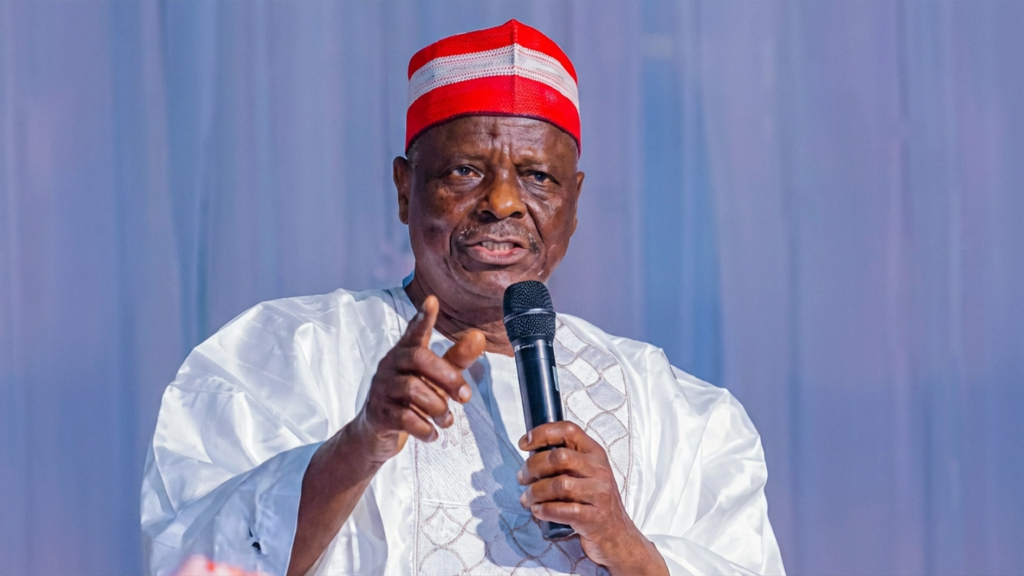
Senator Rabiu Musa Kwankwaso has dropped a heavy political bombshell ahead of the 2027 general election, accusing President Bola Ahmed Tinubu of quietly pausing the rollout of aggressive tax collections because the ruling All Progressives Congress (APC) is terrified of losing at the polls.
Kwankwaso, who is running as the Vice-Presidential candidate of the National Democratic Congress (NDC) alongside Peter Obi, made these explosive claims in Dutse, the capital of Jigawa State, during the formal inauguration of the NDC State Campaign Council. According to the former Kano State governor, the controversial tax reform bills passed by the National Assembly have already been cleared, but the presidency is holding back real enforcement to avoid triggering widespread voter outrage before ballot day.
The warnings did not stop there. Kwankwaso painted a frightening picture of what awaits ordinary citizens if the current government gets another four-year mandate, claiming tax officials will literally go from house to house searching under mattresses to collect levies.
As recorded in reports from Vanguard News, the political temperature across Northern Nigeria and the wider country is heating up rapidly. With the cost of living still biting hard, taxation is turning into the ultimate battleground issue for 2027.
What Did Kwankwaso Say in Dutse?
Standing before party faithful and campaign leaders in Jigawa State, Kwankwaso did not mince words about the federal government’s economic agenda. He argued that the current calm surrounding the implementation of the new tax laws is nothing more than an artificial pause designed to deceive voters.
The $0 Secret To Launching Your Entire Online Empire
Why pay hundreds every month for separate software? Build funnels, send emails, and make sales with Systeme.io completely free.
Get Started For $0Free Forever • No Credit Card Needed • Beginner-Friendly
“The bill has been passed into law, but the Federal Government is now afraid of losing the election. That is why it has delayed the collection,” Kwankwaso told the crowd.
He cautioned that the delay is only temporary and will vanish the moment the votes are counted.
“As soon as they get a second chance, God forbid, Nigerians will suffer from different kinds of tax collection. They will start going from house to house, checking even under your bed to collect taxes,” he added.
Kwankwaso urged voters across the country not to hand the ruling party a second term, insisting that doing so would place the economic future of everyday families in severe danger. His speech in Jigawa marks one of the sharpest opposition attacks yet on the economic direction of the Tinubu administration.
The Akpabio and Barau Angle: Unpacking the Senate Controversy
Beyond the taxes themselves, Kwankwaso opened up about the political maneuvers that took place on the floor of the National Assembly when the tax bills were debated and passed. He alleged that the legislative process was carefully orchestrated to shield top southern politicians from public backlash in the North.
Specifically, Kwankwaso pointed to the absence of Senate President Godswill Akpabio during the key approval session. According to him, Akpabio deliberately stayed away so that his hands would appear clean regarding a bill that many northern leaders strongly opposed.
Instead, the session was presided over by Deputy Senate President Barau Jibrin, who represents Kano North.
“The worst part of it is that the session for the approval of the tax bill was chaired by one of us from Kano. Even the Senate President intentionally refused to attend because he did not want to be part of it,” Kwankwaso alleged.
This accusation hits a sensitive nerve in northern politics. For months, northern governors, traditional rulers, and civil society groups had raised objections to parts of the tax framework, particularly changes to the Value Added Tax (VAT) sharing formula based on derivation. By pointing out that a Kano lawmaker presided over the bill’s passage while the Senate President stayed away, Kwankwaso is trying to ensure northern voters remember who held the gavel when the controversial law went through.
Why Taxes Have Become Such a Dangerous Topic for 2027
To understand why Kwankwaso’s accusations are spreading fast, you only need to look at what everyday Nigerians are experiencing at the market and the filling station.
When President Tinubu took office in May 2023, he announced the immediate end of the petrol subsidy and merged the foreign exchange windows. While government economic advisers insisted these were necessary steps to save the country from fiscal ruin, the immediate fallout hit households like a ton of bricks. Transportation costs surged, food prices skyrocketed, and millions saw their real income shrink.
Across Nigerian cities and rural communities, families have had to make tough sacrifices as petrol prices climbed past steep thresholds. At the same time, public figures like broadcaster Rufai Oseni have repeatedly pushed officials, demanding that tax authorities explain revenue lost to inflation while regular citizens struggle to stay afloat.
Because the public is already financially strained, any mention of new taxes, adjusted levies, or tighter collection mechanisms creates instant panic. The opposition knows this reality intimately.
Opposition figures have repeatedly argued that the administration has placed too much burden on ordinary workers while government spending remains high. When critics claim that President Tinubu has lost grip on the economy amid rising debt, warning voters about aggressive tax collectors hiding in wait after the election becomes an effective campaign message.
The 2027 Political Realignment: Kwankwaso, Obi, and the NDC Push
Kwankwaso’s fiery speech in Dutse is not happening in a vacuum. It is part of an aggressive, well-coordinated campaign strategy leading up to the 2027 presidential election.
Send, Spend & Hold Money Worldwide Without Hidden Fees
Transfer money internationally at the real exchange rate and hold 40+ currencies in one account.
Open a Wise AccountMid-market rate • Fast transfers • 40+ currencies
Following the 2023 elections, opposition parties realized that dividing their votes across multiple platforms made it simple for the APC to secure victory. That realization led to major talks behind closed doors, culminating in the historic alliance between Peter Obi and Rabiu Kwankwaso under the National Democratic Congress banner.
The political world watched closely when details emerged about the real reasons Kwankwaso agreed to run with Peter Obi. Kwankwaso also publicly addressed the alliance terms, explaining why a single-term pact with Obi offers a direct path to stability.
Obi himself has been relentless on the campaign trail, telling voters that they must scrutinize both his and Kwankwaso’s past performance in office rather than relying on empty promises. Together, they are presenting their joint ticket as a disciplined alternative to the current administration.
Kwankwaso has also dismissed claims that the ruling party is unbeatable just because it holds power in a majority of states. He made headlines when he explained why having 30 governors in your pocket does not guarantee a 2027 win, pointing to the historic defeat of the PDP in 2015 when an incumbent president was voted out of office.
With official campaign activity kicking off after top presidential candidates signed the 2027 peace accord, the NDC leadership is taking their message directly into northern strongholds like Jigawa, Kano, Katsina, and Kaduna. Accusing the APC of hiding a harsh tax regime until after the vote is central to that northern outreach.
What the Government and Tax Reformers Say in Response
While Kwankwaso paints the tax reform bills as a trap for poor Nigerians, the Federal Government and the Presidential Fiscal Policy and Tax Reforms Committee tell a completely different story.
Government economic planners argue that the tax reforms were never intended to punish everyday citizens. Instead, they insist the reforms do the following:
- Exempt low-income earners, small businesses, and petty traders from paying personal income tax.
- Eliminate nuisance taxes that cause multiple taxation across state borders.
- Shift the primary tax focus to high-net-worth individuals and large corporate profits.
- Simplify the overall tax system so businesses can grow without harassment from unauthorized tax agents.
Supporters of the administration claim that delaying or phasing in certain provisions of the tax reform bills is standard economic practice, not political cowardice. When introducing sweeping fiscal overhauls, governments often provide a transition buffer to allow businesses, tax agencies, and state governments to update their accounting systems, software, and compliance guidelines.
From the government’s viewpoint, phasing in changes helps avoid shocks to the business environment. They argue that Kwankwaso is playing politics with necessary economic modernization and using scare tactics to turn voters against genuine reforms.
Every time President Tinubu returns to the hot seat after working visits abroad, administration spokespersons reiterate that his economic policies are aimed at long-term fiscal stability, claiming that short-term pain will give way to lasting prosperity.
The $0 Secret To Launching Your Entire Online Empire
Why pay hundreds every month for separate software? Build funnels, send emails, and make sales with Systeme.io completely free.
Get Started For $0Free Forever • No Credit Card Needed • Beginner-Friendly
The North-South Tax Divide: Why the Debate is Heated
Tax policy in Nigeria is never just about numbers on a balance sheet; it is deeply tied to regional politics and resource control.
When the tax reform bills were first sent to the National Assembly, northern governors voiced serious reservations. Their main concern centered on how VAT would be credited. Under the proposed derivation model, VAT revenue would largely be attributed to the state where goods and services are consumed or where corporate headquarters are registered.
Leaders in northern states worried that because many major manufacturing conglomerates, telecom giants, and financial institutions are headquartered in Lagos and the South-West, those states would take home a disproportionate share of the national tax pie. Meanwhile, northern consumer states could see their monthly allocations shrink.
Although the presidency held town halls and consultations to address these worries, suspicions lingered. Kwankwaso is tapping directly into that lingering skepticism. By telling northern voters that the tax bill was signed in secret while southern leaders dodged the limelight, he is framing the policy as an unfair economic imposition on northern families.
He has taken a similar critical stance on other national policies, including his vocal warnings that creating state police without proper safeguards could lead to misuse during the 2027 elections. For Kwankwaso, both state police and sweeping tax reforms look like instruments of centralized control that could backfire on citizens.
What This Means for Everyday Nigerians and Business Owners
If you are running a small shop, working a 9-to-5 job, or freelancing online, you might be asking yourself: what does all this political noise actually mean for my bank account?
Here is what you need to keep in mind:
1. Taxation Will Be on the Ballot in 2027
The upcoming presidential election is shaping up to be a direct referendum on economic survival. Voters will not just be choosing a face or a party; they will be voting on fuel subsidies, currency floating, and how much money the government has the right to take from their monthly income.
2. Implementation Timelines Matter
Kwankwaso’s claim that full enforcement is being delayed holds a grain of truth regarding timing, even if people disagree on the motive. Rolling out new tax structures nationwide takes time. However, if the current administration secures a second term, tax compliance enforcement will inevitably tighten as the government tries to reduce its massive budget deficit.
3. Small Businesses Must Track Real Policy, Not Just Campaign Talk
While politicians trade insults, business owners need to pay attention to the actual text of signed tax laws. Are you exempt under the small business threshold? Do you need a tax identification number for your corporate bank accounts? Staying informed on the fine print will protect you far better than listening to campaign speeches.
Frequently Asked Questions (FAQs)
What did Rabiu Kwankwaso claim about President Tinubu’s tax reforms?
Kwankwaso alleged that President Bola Ahmed Tinubu’s administration has already passed new tax reform bills into law but is intentionally delaying their collection because the APC fears losing voter support in the 2027 general election. He warned that if re-elected, the government will enforce aggressive tax collections nationwide.
Where did Kwankwaso make this statement?
He made the remarks in Dutse, Jigawa State, while inaugurating the National Democratic Congress (NDC) campaign council.
Why was Senate President Godswill Akpabio mentioned in the controversy?
Kwankwaso alleged that Senate President Godswill Akpabio intentionally avoided presiding over the legislative session where the tax bill was approved to escape public blame. Instead, Deputy Senate President Barau Jibrin, who is from Kano State, chaired the session.
What is the Federal Government’s official position on the tax reforms?
The government and its tax committee state that the reforms are meant to streamline the tax code, eliminate multiple taxes, protect low-income earners and small businesses, and focus revenue generation on high earners and large corporations. They maintain that phased rollouts are standard procedure, not election scheming.
Who is Kwankwaso running with in the 2027 presidential election?
Kwankwaso is running as the Vice-Presidential candidate on the National Democratic Congress (NDC) ticket alongside presidential candidate Peter Obi.
As the road to 2027 shortens, the debate over who pays what to the government will only get louder. Kwankwaso’s sharp warning in Dutse has set the tone for an intense campaign season where economic policy and daily hardship take center stage. Whether voters view his comments as an honest heads-up or standard opposition politicking, one thing is certain: every Nigerian will be watching their wallets very closely when they walk into the voting booth.
