
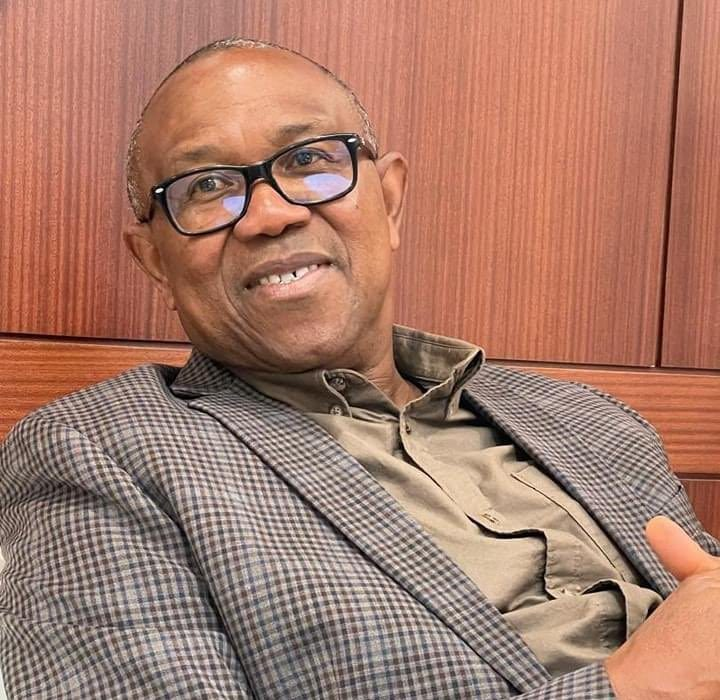
Peter Obi has publicly challenged Nigerians to look closely at his past political record and point out any evidence of wrongdoing or public funds misappropriation during his time as governor of Anambra State. Extending the challenge to former Kano State Governor Rabiu Musa Kwankwaso, Obi declared that public figures who have held executive office should be held accountable based on verifiable facts rather than unsubstantiated claims and political smear campaigns.
Obi made these remarks while addressing questions about governance, accountability, and the track records of key opposition leaders in Nigeria. He stated that both he and Kwankwaso demonstrated fiscal responsibility, prioritized human capital development, and managed public resources without leaving their respective states buried under mountain-high debts.
This statement has ignited fresh debate across Nigeria regarding political accountability, leadership integrity, and the criteria voters should use when judging public officers.
What Did Peter Obi Actually Say?
During his address, Obi challenged critics and citizens alike to put his administration under a microscope. He maintained that leadership is about service, transparency, and leaving a positive impact on the lives of ordinary citizens.
He argued that if anyone believes he mismanaged government money, awarded inflated contracts, or misappropriated public assets during his eight years as governor, they should present the evidence publicly.
The $0 Secret To Launching Your Entire Online Empire
Why pay hundreds every month for separate software? Build funnels, send emails, and make sales with Systeme.io completely free.
Get Started For $0Free Forever • No Credit Card Needed • Beginner-Friendly
Obi also brought former Kano State Governor Rabiu Musa Kwankwaso into the conversation. According to Obi, Kwankwaso’s record in Kano State demonstrates a similar commitment to public welfare, particularly in education and infrastructure. Obi stressed that instead of judging politicians by their speeches or party affiliations, Nigerians should look at what leaders actually accomplished when they had executive power.
By issuing this open challenge, Obi aims to shift the national political debate away from mudslinging and toward empirical evaluation of governance.
Examining Peter Obi’s Record in Anambra State
To understand why Obi feels confident making this challenge, it is useful to examine his tenure as the Governor of Anambra State from 2006 to 2014.
Obi entered politics as a businessman with a background in banking and international trade. When he assumed office in Anambra State, the state was facing significant political instability, poor infrastructure, and security challenges.
Financial Management and Savings
One of the most cited aspects of Obi’s tenure is his approach to state finances. Obi reduced administrative expenses by cutting back on official pageantry, governor’s convoys, and unnecessary government overhead.
At the end of his second term in March 2014, Obi reported leaving behind substantial savings in local and foreign currencies for Anambra State, alongside zero debt owed to local contractors or civil servants. While political opponents have debated the exact net liquidity left behind, independent financial reviews confirmed that Anambra was left in a solid financial position compared to many other Nigerian states.
Education and Healthcare Improvements
Under Obi’s administration, Anambra State handed back mission schools to their original owners (the churches) while providing state funding to renovate these institutions. Obi’s government purchased computers, buses, and laboratory equipment for secondary schools across the state.
These educational investments yielded measurable results. Anambra State moved from lower rankings in national examinations like WAEC and NECO to consistently ranking among the top three states nationwide during the latter half of his tenure.
In healthcare, Obi’s administration worked closely with donor agencies and local health organizations to rebuild general hospitals, rehabilitate primary health centers, and secure accreditation for medical institutions across Anambra State.
Looking at Rabiu Kwankwaso’s Legacy in Kano State
Rabiu Musa Kwankwaso served as the Governor of Kano State during two separate terms: first from 1999 to 2003, and later from 2011 to 2015. He is the founder of the Kwankwasiyya movement, a political group with a major following across Northern Nigeria.
Obi’s decision to include Kwankwaso in his challenge stems from Kwankwaso’s visible achievements in Kano State, particularly during his second term.
The Overseas Scholarship Program
One of Kwankwaso’s most prominent initiatives was his administration’s massive overseas scholarship program. Under this program, thousands of young men and women from Kano State were sponsored to pursue undergraduate and postgraduate degrees in fields like medicine, engineering, aviation, and technology across universities in Asia, Europe, and the Middle East.
Many beneficiaries of this program returned to Nigeria to work as pilots, medical doctors, engineers, and academics, creating a lasting impact on human capital development in Kano State.
Infrastructure and Urban Renewal
Kwankwaso’s second term saw significant infrastructure development in Kano. His administration constructed major flyovers, expanded road networks, built new cities like Kwankwasiyya City, and established specialized tertiary institutions, including the Northwest University Kano (now Yusuf Maitama Sule University).
Kwankwaso also focused on vocational education, establishing specialized training institutes for youth and women in areas such as agriculture, tailoring, driving, and technical crafts.
Send, Spend & Hold Money Worldwide Without Hidden Fees
Transfer money internationally at the real exchange rate and hold 40+ currencies in one account.
Open a Wise AccountMid-market rate • Fast transfers • 40+ currencies
Why Public Scrutiny Matters in Nigerian Politics
Obi’s call for scrutiny highlights a fundamental issue in Nigerian democracy: the need for evidence-based political evaluation.
For decades, political campaigns in Nigeria have often been dominated by identity politics, regional interests, and monetary influence rather than objective assessments of past performance. When political candidates make promises, voters rarely have access to clear frameworks for assessing whether those candidates kept previous promises.
Moving From Promises to Proof
Demands for public scrutiny force political leaders to defend their past actions with hard data. When leaders know that their past budgets, public contracts, asset declarations, and policy outcomes will be audited by the public, they are more likely to exercise caution while in office.
Public scrutiny also encourages citizens to take ownership of their governance. Instead of accepting claims at face value, citizens are motivated to inspect official documents, read budget reports, and compare past statements with present realities.
How Modern Technology Makes Fact-Checking Easier
Scrutinizing public leaders used to require specialized investigative journalists or legal experts who could physically visit government archives. Today, technological tools have made public information far more accessible to the average citizen.
Digital archives, open-budget platforms, and online news databases allow anyone with an internet connection to search for past government contracts, news reports, and official press releases within seconds.
Advancements in technology and AI are making this process even faster. Artificial intelligence tools can summarize lengthy audit reports, compare financial figures across different years, and detect discrepancies in official statements. Citizens can use these tools to digest complex public documents without needing a degree in finance or accounting.
Similarly, content creators and media platforms use digital tools like youtube automation to produce educational video content that breaks down national budgets, political histories, and policy track records for millions of viewers. This digital ecosystem ensures that political accountability is no longer confined to academic halls; it happens live on social media feeds every day.
Practical Ways Citizens Can Scrutinize Political Leaders
If you want to evaluate the claims made by Peter Obi, Rabiu Kwankwaso, or any other political figure in Nigeria, you do not need to rely on political propaganda. Here are practical steps anyone can take to fact-check public records independently.
1. Review Official Debt Profiles
The Debt Management Office (DMO) of Nigeria publishes quarterly and annual reports on the external and domestic debt stock of all 36 states and the Federal Government. You can visit official public portals to see how much debt a governor inherited, how much debt was accumulated during their term, and how much debt was left behind for their successor.
The $0 Secret To Launching Your Entire Online Empire
Why pay hundreds every month for separate software? Build funnels, send emails, and make sales with Systeme.io completely free.
Get Started For $0Free Forever • No Credit Card Needed • Beginner-Friendly
2. Check Budget Performance Reports
State governments publish their annual budget allocations and actual performance reports. These documents show how much money was allocated to education, healthcare, infrastructure, and administrative costs versus how much was actually spent.
3. Track Independent Third-Party Reports
Civil society organizations like BudgIT, the Center for Social Justice, and various anti-corruption bodies regularly publish non-partisan reports on state finances, project executions, and governance metrics. These reports offer clear insights into how public funds are managed across different states.
4. Cross-Reference News Archives
When a politician makes a claim about past achievements, cross-check news reports from reputable national newspapers published during the period in question. Reading articles published at the time offers an unedited picture of events as they happened.
Common Arguments and Counter-Arguments Surrounding Obi and Kwankwaso
No political leader is without critics, and Obi’s open challenge has re-ignited arguments from political analysts and opposing parties.
Criticisms Directed at Peter Obi
Critics of Peter Obi often point to the slow pace of physical infrastructure development during his early years as governor, arguing that his strict fiscal prudence sometimes delayed major capital projects.
Others argue that saving money in state accounts while social challenges exist is not always the best economic strategy, suggesting that funds should be aggressively invested immediately to stimulate economic growth.
Obi responds to these claims by arguing that saved funds provided financial security, earned interest for the state, and ensured that projects could be paid for without leaving debts for future generations.
Criticisms Directed at Rabiu Kwankwaso
Critics of Kwankwaso argue that some of his massive infrastructure projects and overseas scholarship programs placed heavy financial burdens on Kano State’s treasury, leading to liabilities for subsequent administrations.
Defenders of Kwankwaso counter that investments in human capital and critical urban infrastructure deliver long-term economic benefits that outweigh short-term fiscal constraints.
By inviting the public to investigate these exact issues, Obi is asking citizens to weigh these contrasting governance philosophies for themselves.
What This Challenge Means for Nigerian Politics
Obi’s statement reflects a broader shift in how young Nigerians interact with political figures. The 2023 election cycle demonstrated a growing appetite among the electorate for data-driven debates, town hall discussions, and record-based evaluations.
When political candidates actively challenge the public to scrutinize their track records, it sets a standard for future elections. It signals to up-and-coming politicians that public records will eventually be examined line by line.
This dynamic also impacts opposition politics in Nigeria. By highlighting Kwankwaso alongside himself, Obi reinforces the idea that alternative political platforms can present a distinct record of performance compared to traditional political parties.
Frequently Asked Questions (FAQs)
What did Peter Obi mean when he said “Say what I have done wrong”?
Peter Obi was challenging his critics and the general public to produce concrete, verifiable evidence of corruption, fund mismanagement, or illegal acts committed during his tenure as Governor of Anambra State, rather than relying on unverified political rumors.
Why did Peter Obi mention Rabiu Kwankwaso?
Obi mentioned Kwankwaso to point out that there are leaders in Nigerian politics who served as state governors and left behind visible records of development in areas like education, human capacity, and infrastructure without destroying their state’s financial standing.
How can ordinary citizens verify claims made by Nigerian politicians?
Citizens can verify claims by checking reports from the Debt Management Office (DMO), reading annual state budget performance reports, reviewing independent analysis from non-governmental organizations like BudgIT, and cross-referencing news archives from reputable media outlets.
Did Peter Obi actually leave savings behind in Anambra State?
Yes, official hand-over documents and independent financial reviews confirm that Peter Obi left behind substantial liquid savings and investments in local and foreign currencies at the end of his tenure in March 2014, alongside paying off contractual debts owed by the state.
Where can I find more updates on political news and trending stories?
You can visit our main portal to learn more about our platform or reach out directly through our contact page to share your thoughts, tips, or inquiries.
Public Scrutiny Builds Stronger Democracies
Political scrutiny is not about praising or condemning individual leaders; it is about building a political culture where public trust must be earned through verified performance. Peter Obi’s challenge to Nigerians offers an opportunity for citizens to engage in serious, fact-based political evaluation.
When citizens take the time to inspect public records, verify claims, and hold public officials accountable to their past records, governance improves for everyone.
To stay updated on the latest discussions, trending stories, and political updates across Nigeria, make sure to connect with us on social media:
Follow us on Instagram, join our community on Facebook, and join the conversation on X (Twitter).
