
Walk into any local market today, and you will notice something immediately. The price of rice, bread, cooking oil, and transport fares seems to change almost every week. Nigerians from all walks of life are feeling the squeeze, and discussions around money have become the main topic at kitchen tables, bus stops, and offices across the country.
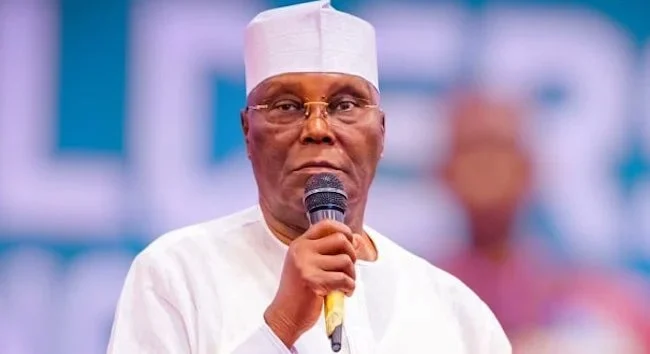
Political leaders are taking notice of this growing frustration. Recently, former Vice President and opposition leader Atiku Abubakar voiced severe concerns regarding the current direction of the nation.
He openly claimed that President Bola Ahmed Tinubu has lost control of the Nigerian economy, pointing directly to the government’s rapid accumulation of debt as a major danger sign.
Atiku argued that taking on fresh loans without a clear, productive economic roadmap is pushing the country into a deeper financial hole. His comments ignited a fiery debate across the country among economists, political analysts, and everyday citizens who are trying to make sense of where the economy is headed.
At Whatsbuzzn, we believe in breaking down complex national headlines into plain, straightforward terms so you can understand what is really happening and how it affects your daily life.
Build Funnels, Email Lists & Sell Online With One Free Tool
Create funnels, send emails, and sell online using Systeme.io without paying for multiple tools.
Create Free AccountFree forever • No credit card • Beginner-friendly
The Statement That Got Everyone Talking
Atiku Abubakar did not mince words when he addressed the media and the public about the state of the nation. He expressed deep worry over the sheer volume of loans being requested and approved by the federal government within a relatively short period.
According to Atiku, the administration is relying heavily on continuous borrowing to fund its budget rather than creating sustainable ways to generate revenue. He warned that this approach is putting immense pressure on future generations who will eventually have to pay back these massive debts.
He also pointed out that a major chunk of the national revenue is currently being used just to service existing loans. When a government spends most of its income paying back interest on past borrowings, very little cash is left over to build hospitals, repair bad roads, equip schools, or create jobs for the youth.
This sharp criticism immediately sent ripples across social media, sparking heated discussions on platforms like X (formerly Twitter). While supporters of the government argue that loans are necessary to build long-term projects, critics say the burden has simply become too heavy for the country to carry.
Understanding Nigeria’s Growing Debt Problem
To understand why this issue is causing so much worry, it helps to look at how national debt actually works. Government debt is divided into two main categories: foreign debt and domestic debt.
Foreign debt refers to money borrowed from international lenders, such as foreign banks, international financial institutions, or other countries. Domestic debt, on the other hand, is money borrowed locally from domestic commercial banks and investors through government bonds and treasury bills.
The Debt Management Office, which tracks all government borrowings, has reported steady increases in both foreign and domestic obligations over recent years. When you add up foreign loans and local borrowings, the overall debt figure runs into tens of trillions of Naira.
Foreign Loans vs Local Loans Explained Simply
Think of foreign debt like taking a loan in US Dollars. If the value of the Naira drops, paying back that dollar loan becomes much more expensive, even if the actual amount owed remains the same. This is one reason foreign loans can be risky when a local currency is weak.
Domestic loans are taken in local currency, which eliminates currency conversion risks. However, when the government borrows heavily from local banks, those banks have less money left over to lend to private businesses, entrepreneurs, and small traders. This concept is often called “crowding out” the private sector.
The Problem with Paying Interest Instead of Building
The most dangerous part of high debt is not just the total amount owed, but the cost of keeping up with payments. This is known as debt servicing.
Imagine earning 100,000 Naira every month, but spending 90,000 Naira just to pay the interest on money you borrowed in the past. That leaves you with only 10,000 Naira to feed your family, pay rent, buy medicine, and cover electricity bills.
That simple scenario mirrors the challenge facing Nigeria’s national budget. When debt servicing eats up a massive percentage of total revenue, essential public services end up suffering from severe lack of funds.
Subsidy Removal, Floating Naira, and the Rising Cost of Living
The debate over borrowing cannot be separated from the major economic policies introduced by President Tinubu shortly after taking office. Two key decisions changed the nation’s economic landscape almost overnight: the removal of the petrol subsidy and the floating of the Naira exchange rate.
For decades, the Nigerian government spent trillions of Naira keeping petrol prices artificially low. The administration argued that this subsidy was corrupt, unsustainable, and draining government coffers. The policy was ended to free up cash for infrastructure and health care.
Around the same time, the central bank decided to unify the foreign exchange market, allowing the market to determine the value of the Naira against foreign currencies.
What Happened to the Subsidy Savings?
The main argument for removing the fuel subsidy was that the saved funds would be redirected into public infrastructure, transport systems, and social welfare programs. However, many critics, including Atiku, argue that citizens have not yet seen clear, tangible benefits from these supposed savings.
Instead of seeing better public services, ordinary citizens faced an immediate jump in petrol prices, which quickly triggered a steep rise in transportation costs nationwide.
The Ripple Effect on Everyday Food Prices
When transportation costs shoot up, the price of everything else follows right behind. Food items grown in rural areas become far more expensive to transport to urban markets.
At the same time, because the Naira dropped in value following foreign exchange reforms, importing items like wheat, machinery, processing tools, and fertilizer became significantly more expensive. As a result, basic food items like bread, garri, rice, and vegetables saw unprecedented price increases.
This combination of expensive fuel, a weaker currency, and rising food costs created a massive cost-of-living shock for millions of families across the country.
How the Government Defends Its Borrowing Strategy
While the opposition presents a grim picture of the economy, the administration and its supporters maintain that their policies are essential for long-term growth. They argue that short-term pain is necessary to achieve lasting economic stability.
Government representatives state that borrowing is focused on key developmental projects that will eventually generate wealth and drive industrial growth.
Infrastructure as an Investment
The administration maintains that money borrowed today is being directed toward major national projects, including rail lines, deep sea ports, interstate highways, and power grid upgrades.
The logic behind this strategy is that better infrastructure makes doing business easier and cheaper in the long run. If goods can move faster along well-paved highways and factories have stable power, businesses can grow, create jobs, and generate tax revenue that helps pay off the loans over time.
The Debt-to-GDP Debate
Government economists often point to Nigeria’s Debt-to-GDP ratio to reassure the public. Gross Domestic Product measures the total economic output of a country.
Compared to many other nations around the world, Nigeria’s total debt relative to the size of its total economy appears relatively modest on paper. Based on this metric, government officials maintain that the country still has room to borrow safely to fund critical developmental needs.
However, financial experts quickly point out a key flaw in relying only on this metric: you cannot pay off debt with GDP alone; you pay off debt with actual government revenue. Because Nigeria struggles with low tax collection and limited non-oil revenue, debt servicing remains a major burden regardless of GDP size.
Build Funnels, Email Lists & Sell Online With One Free Tool
Create funnels, send emails, and sell online using Systeme.io without paying for multiple tools.
Create Free AccountFree forever • No credit card • Beginner-friendly
Why Millions of Nigerians Are Feeling the Pinch
Beyond official statistics, speeches, and political statements, the true test of any economic policy lies in how it affects the average household. Today, families are making difficult choices about what they can afford to eat, where they can live, and how to educate their children.
Salary earners find that their monthly income buys far less than it did just a year or two ago. Those on fixed wages have seen their actual purchasing power cut in half due to persistent inflation.
Small Businesses Facing Tough Choices
Small and medium-sized enterprises form the backbone of the Nigerian economy, employing millions of people across towns and cities. Today, these business owners face immense pressure from multiple directions.
High fuel costs make running generators extremely expensive during power outages. Meanwhile, high inflation means customers are buying fewer goods, while suppliers demand higher prices for raw materials. Many small shop owners, barbers, tailors, and food vendors are struggling to keep their doors open.
Turning to the Digital Economy for Answers
In response to tough economic conditions, many resourceful Nigerians are looking for new ways to earn income, particularly in foreign currencies. The interest in remote work, global freelancing, and digital skill building has surged across the country.
Young professionals are increasingly turning to online opportunities to safeguard their income against domestic currency devaluation. Pathways like digital content creation, content marketing, and YouTube Automation have become popular routes for creative individuals aiming to build global audiences and diversify their earnings.
At the same time, expanding knowledge in modern tech trends, such as Technology & AI, is helping many young workers stay competitive in an international job market. Adapting to digital skills has transitioned from a modern luxury to a practical economic survival strategy for many households.
What Needs to Change to Fix the Economy?
Addressing Nigeria’s economic challenges requires more than political debates and speeches. Economic experts, civil society organizations, and everyday citizens agree that concrete steps are needed to restore financial balance and ease public suffering.
Cutting the Cost of Running the Government
One of the most frequent demands from the public is a visible reduction in the cost of governance. Citizens want to see political leaders lead by example by reducing public spending on official allowances, large motorcades, non-essential overseas travel, and administrative overhead.
When government officials demonstrate fiscal discipline in running public offices, it builds public trust and ensures that scarce public funds go toward genuine developmental needs.
Supporting Local Farmers and Production
Food prices remain the biggest driver of inflation in Nigeria. To bring food prices down, the government must prioritize agriculture and address the root causes of high food costs.
This means improving security in farming communities so farmers can cultivate their fields without fear. It also means providing better rural roads, modern storage facilities to reduce post-harvest waste, and easier access to affordable credit for agricultural producers.
Demanding Transparency on Every Single Loan
Borrowing is not automatically bad if the funds are managed properly and spent strictly on projects that generate economic value.
To rebuild confidence, citizens demand complete transparency regarding every loan requested and approved. The public needs to know exactly how much is being borrowed, the interest rate terms, which specific infrastructure projects the funds will build, and the expected timeline for completion.
Frequently Asked Questions
Why is Atiku criticizing President Tinubu’s economic borrowing?
Atiku Abubakar argues that the government is taking on too much debt without a clear plan to generate revenue or boost productivity. He believes spending a massive portion of national revenue on debt servicing harms essential public services like education, healthcare, and infrastructure.
How does government debt affect the price of food and fuel?
When government debt rises sharply, it can trigger inflation, weaken the local currency, and force the government to introduce new taxes or cut subsidies. A weaker Naira makes imported goods, fuel, and farming inputs more expensive, leading to higher food prices at local markets.
What is the Debt Management Office (DMO)?
The Debt Management Office is the official Nigerian government agency responsible for managing the country’s debt portfolio. It tracks domestic and foreign loans, prepares borrowing strategies, and advises the federal government on debt sustainability.
Can a country run out of money to pay its debts?
Yes, a country can reach a point where it cannot make required payments on its loans, which is known as defaulting. Sovereign default severely damages a nation’s credit rating, making future borrowing difficult and driving up borrowing costs.
How are Nigerians coping with the current economic situation?
Many Nigerians are adapting by cutting down on non-essential spending, seeking secondary sources of income, buying food in bulk to beat price hikes, and learning digital skills to access remote work opportunities in foreign currencies.
The debate surrounding Nigeria’s borrowing habits is far from over. As political leaders exchange arguments, the true focus must remain on practical solutions that lower the cost of living, create real job opportunities, and build a stable economy for everyone.
What are your thoughts on Nigeria’s rising national debt? Do you agree with Atiku’s warning, or do you believe the government’s long-term infrastructure plan will work out?
We love hearing your perspective! Join the conversation and share your thoughts with us on our social media channels on Facebook, Instagram, and X (formerly Twitter). If you have feedback, news tips, or topics you would like us to cover next, feel free to reach out directly through our Contact Page.
