
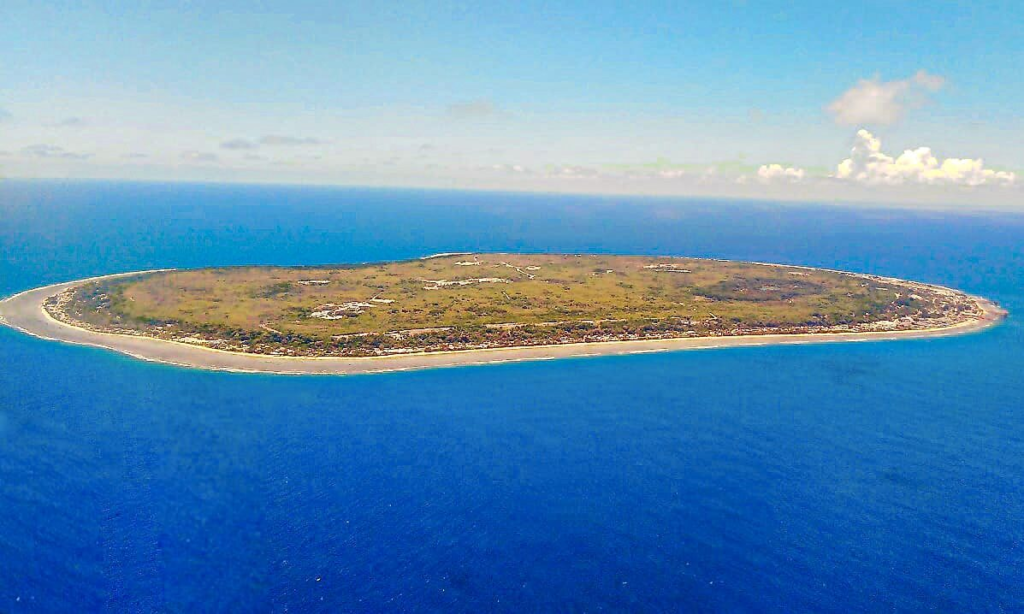
A tiny nation in the middle of the Pacific Ocean is trying a bold and unusual experiment to save itself from disappearing under rising ocean waves.
Nauru, the smallest independent republic in the world, has officially launched a new citizenship-by-investment program. The goal is simple: sell passports to foreign investors and use that money to build sea walls, elevate homes, and protect the island from severe climate change.
It is a novel approach to a terrifying global problem. While wealthy countries spend years debating international climate funds at global summits, Nauru is taking matters into its own hands by turning global migration demands into direct environmental defense.
At WhatsBuzzn, we track stories where global news, politics, and survival meet. This decision by Nauru might just change how vulnerable nations fight for their future.
The Island That Is Running Out of Space
To understand why Nauru is taking such an extreme step, you need to look at its geography and history.
The $0 Secret To Launching Your Entire Online Empire
Why pay hundreds every month for separate software? Build funnels, send emails, and make sales with Systeme.io completely free.
Get Started For $0Free Forever • No Credit Card Needed • Beginner-Friendly
Nauru is a tiny island nation in Micronesia, covering just eight square miles. It has a population of around 12,000 people. For decades, the island was famous for having massive deposits of phosphate, a valuable mineral used in fertilizer. Mining made Nauru temporarily wealthy in the mid-20th century, but it came at a terrible cost.
Decades of intensive mining stripped away the island’s interior, leaving behind jagged limestone pillars. Today, nearly 80% of the island’s central land is completely uninhabitable and uncultivable.
Because the interior is ruined, almost the entire population lives along a narrow coastal strip. This coastal fringe is barely a few feet above sea level.
As global warming causes sea levels to rise across the Pacific Ocean, Nauru finds itself caught between a rock and a hard place. Waves are breaking closer to homes, high tides are flooding roads, and saltwater is creeping into underground freshwater supplies. The people have nowhere higher to move on their own island.
How the Climate Citizenship Scheme Works
Citizenship-by-investment (CBI) programs are not completely new. Several countries, particularly in the Caribbean and Europe, have offered passports to investors for years. Usually, applicants invest in real estate, buy government bonds, or donate to a general economic fund.
Nauru’s program is different because every single dollar raised is earmarked for climate adaptation and environmental protection.
Under the new scheme, high-net-worth individuals can apply for Nauruan citizenship by making a non-refundable financial contribution to the national climate fund. In return, successful applicants receive a Nauru passport.
The passport grants visa-free or visa-on-arrival access to dozens of countries worldwide, making it appealing to international business travelers looking for greater global mobility.
The money collected goes into a dedicated treasury managed by climate and financial experts. The government plans to use these funds to build massive engineering projects aimed at keeping the island above water.
Where Will the Passport Money Actually Go?
Saving an island nation from climate change requires serious cash. Small island states often struggle to raise capital because their local economies are small and isolated. Nauru intends to use the revenue from its new citizens to fund specific, high-priority resilience projects.
Building Sea Walls and Coastal Barriers
Stronger storms and higher tides are eroding Nauru’s coastline at a steady rate. A major portion of the citizenship funds will go toward reinforced concrete sea walls, artificial reefs, and wave breakers to protect coastal communities from storm surges.
Land Restoration and Elevation
Because the interior of the island was ruined by phosphate mining, Nauru needs to reclaim that land. The government’s long-term plan, known as the Higher Ground Initiative, involves clearing the interior, leveling the terrain, and trucking in soil to elevate infrastructure above sea level. This would allow schools, hospitals, and homes to move away from the dangerous coastline.
Securing Fresh Water and Energy
As sea levels rise, salt water leaks into local wells, ruining drinking water supplies. Money from the citizenship scheme will help fund advanced desalination plants powered by solar panels. This ensures that the population has clean water and reliable renewable energy, even during severe droughts.
Why Traditional Climate Aid Is Falling Short
Many people might ask: why does a country need to sell passports to survive climate change? Why aren’t rich countries helping?
According to reports from international bodies like the United Nations Climate Change programs and coverage from outlets like Reuters, developing nations are struggling to access global climate finance.
Send, Spend & Hold Money Worldwide Without Hidden Fees
Transfer money internationally at the real exchange rate and hold 40+ currencies in one account.
Open a Wise AccountMid-market rate • Fast transfers • 40+ currencies
Years ago, wealthy nations promised to deliver $100 billion annually to help vulnerable countries adapt to climate change. However, that money has been slow to arrive, hindered by heavy bureaucracy, strict banking requirements, and political delays.
For a tiny island like Nauru, applying for international grants can take years. Meanwhile, ocean tides do not wait for paperwork to clear.
By creating its own citizenship program, Nauru is bypassing traditional foreign aid. It is creating a direct, reliable stream of income that does not depend on charity from larger powers.
This spirit of creative self-reliance mirrors how individuals and modern businesses adapt today. For instance, when traditional job markets freeze up, people pivot toward innovative digital models like YouTube Automation to generate income. Similarly, Nauru is rethinking its core assets to secure financial independence.
The Debate: Global Security vs. National Survival
While Nauru’s scheme solves an immediate funding problem, it has raised eyebrows in international political circles.
Citizenship-by-investment programs are often scrutinized by organizations like the European Union and global law enforcement agencies. Critics argue that fast-track passport programs can be exploited by individuals looking to evade taxes, bypass travel restrictions, or hide wealth.
To address these concerns, Nauru’s government has stressed that the program will feature strict vetting procedures.
Rigorous Background Checks
Applicants will go through multi-tiered background checks conducted by independent international security firms. Anyone with a criminal record, sanctions, or suspicious financial history will be rejected.
Transparency in Spending
To build trust with international partners and its own citizens, Nauru plans to publish regular financial audits showing exactly how much money the program generates and where those funds are spent.
Protecting Visa Agreements
Nauru wants to protect the diplomatic value of its passport. If a passport scheme is poorly managed, foreign governments might revoke visa-free access. Maintaining high security standards is essential for the program’s long-term success.
The $0 Secret To Launching Your Entire Online Empire
Why pay hundreds every month for separate software? Build funnels, send emails, and make sales with Systeme.io completely free.
Get Started For $0Free Forever • No Credit Card Needed • Beginner-Friendly
Could Other Islands Follow Nauru’s Lead?
Nauru is not the only nation watching its land shrink. Pacific neighbors like Tuvalu, Kiribati, and the Marshall Islands face identical threats.
Tuvalu recently signed a historic agreement with Australia allowing its citizens to migrate as climate refugees as sea levels rise. However, many Pacific islanders do not want to abandon their homelands. They prefer to stay and adapt.
If Nauru’s program succeeds in generating millions of dollars for coastal defenses, other low-lying nations may launch similar climate-focused investment initiatives.
We are seeing a massive shift in how technology, finance, and climate strategy intersect. Just as emerging tools in Technology & AI are disrupting traditional business operations, climate-linked financial models could disrupt traditional global aid.
The Bigger Picture: A New Form of Climate Justice
The story of Nauru highlights a global irony. Small island nations produce less than 0.01% of global carbon emissions, yet they suffer the most severe consequences of global warming.
For decades, leaders from small island states have taken the stage at global climate conferences to ask for help. While sympathy is common, action is often slow.
Nauru’s decision to monetize its citizenship reflects a growing feeling among vulnerable nations: waiting for help is no longer a viable strategy. By offering global investors a passport in exchange for climate resilience funding, Nauru is trying to buy the one thing money usually cannot purchase—time.
Frequently Asked Questions (FAQs)
What is Nauru’s new citizenship-by-investment program?
It is an initiative that allows foreign investors to obtain a Nauru passport by making a financial contribution to the country. The money raised is used to fund local projects that protect the island against climate change and rising sea levels.
Why is Nauru selling passports to raise money?
Nauru is severely threatened by rising sea levels and coastal erosion. Traditional international climate aid is often slow to arrive and difficult to access. Selling passports provides immediate, direct funding for vital environmental and infrastructure projects.
How will the government spend the money raised?
The funds will go directly into climate adaptation projects. Key plans include building concrete sea walls, restoring interior land to move homes higher up, building solar-powered water desalination plants, and upgrading island infrastructure.
Is anyone allowed to buy a Nauru passport?
No. Applicants must pass thorough background checks, financial audits, and security screenings conducted by third-party international agencies. Individuals with criminal records or financial red flags are disqualified.
How does Nauru’s program differ from other passport programs?
Most existing citizenship-by-investment schemes in other countries direct funds toward general economic growth, real estate markets, or government debt. Nauru’s program is unique because its proceeds are specifically pledged to climate adaptation and environmental preservation.
Final Thoughts
Nauru’s climate-funded passport scheme is one of the most unusual stories in modern geopolitics. It shows how far vulnerable nations are willing to go to protect their land, their people, and their history from environmental destruction.
Whether this model becomes a global standard for climate resilience or remains a unique policy experiment, it highlights the urgent need for creative solutions in an era of global environmental change.
Want to share your thoughts on this story? Connect with us directly through our Contact Page.
Join the conversation and keep up with daily updates on our social channels:
- Follow us on Instagram
- Like our page on Facebook
- Catch up with us on X (Twitter)
