
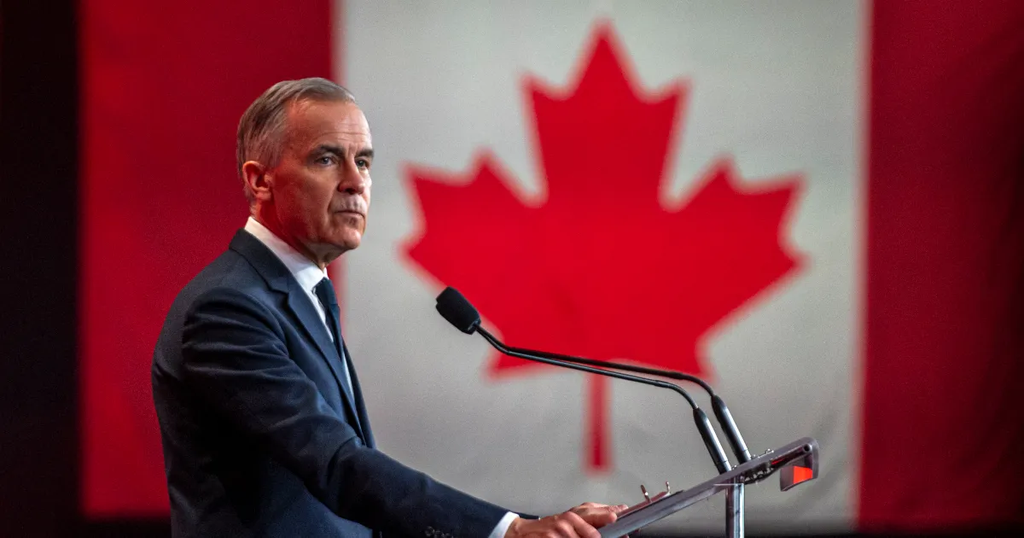
US President Donald Trump recently made headlines across the globe by signing an executive order aimed at renaming Lake Ontario to “Lake America.” The announcement came straight from the Oval Office, complete with a map displaying the proposed new name in bold red letters across the Great Lake. However, Canadian Prime Minister Mark Carney was quick to respond, offering the American leader a clear lesson in history and geography.
Carney pointed out that the name Lake Ontario is not just a label on a map. It has deep roots that stretch back hundreds of years, far predating the founding of both Canada and the United States.
Writing on the social media platform X, Carney explained that the original name comes from the Indigenous Wendat word Ontari’io, which translates to “the lake is beautiful” or “the lake is big.” With a simple post, the Canadian leader made it clear that Canada will keep using the historic name no matter what changes are made in Washington.
This dispute is about much more than just a name on a map. It comes during a time of growing tension between the two neighbouring nations over trade deals, tariffs, and economic policy. As political leaders exchange words over shared resources, this geographic debate has captured international attention and sparked major conversations online.
What Triggered the Conflict Between the Two Leaders?
To understand why a major body of water became the center of a political debate, it helps to look at the economic relationship between the United States and Canada. The two countries share the longest undefended border in the world, along with massive economic ties. For decades, goods, services, and energy have moved freely back and forth across the border under various trade agreements.
The $0 Secret To Launching Your Entire Online Empire
Why pay hundreds every month for separate software? Build funnels, send emails, and make sales with Systeme.io completely free.
Get Started For $0Free Forever • No Credit Card Needed • Beginner-Friendly
Recently, however, trade negotiations between Washington and Ottawa hit a major roadblock. Disagreements over tariffs on Canadian exports led to a breakdown in official talks. The U.S. administration announced major tariffs on Canadian goods, and Canada responded by placing its own tariffs on American products.
During a press conference at the Oval Office, President Trump criticized Canada’s trade stance, arguing that Canadian negotiators were taking advantage of American economic goodwill. He expressed frustration with the progress of bilateral trade talks and declared that changes were needed. As part of this broader push to assert American influence, the president signed an executive order to officially refer to Lake Ontario as “Lake America” within U.S. federal agencies.
Lake Ontario sits directly on the international border. New York State lies to its south, while the Canadian province of Ontario lies to its north. It connects major economic hubs, including Toronto, Canada’s largest city, and Buffalo, New York. Because both countries share equal access to the lake, any unilateral decision to rename it was bound to generate a strong reaction from Canadian officials.
The Executive Order That Started the Internet Storm
When President Donald Trump signed the executive order, the scene was carefully set for maximum public attention. Positioned behind the Resolute Desk, a large physical map displayed the Great Lakes region with the words “Lake America” printed in eye-catching red letters over Lake Ontario. The executive order instructs U.S. federal departments, official maps, and geographic databases to update their records to reflect the new title.
According to statements from the White House, the argument behind the order centers on the role the United States plays in protecting and maintaining the Great Lakes. The administration highlighted the economic value of the lake to American energy, shipping, and industrial production, arguing that the U.S. side holds a massive share of the water’s economic importance.
However, legal and geographic experts quickly pointed out the limits of such an executive order. While a U.S. president has the executive authority to mandate how domestic federal agencies refer to a geographic feature, that authority stops at the international border. The order cannot compel Canada, the province of Ontario, or any international organization to accept the name change.
News of the order spread rapidly across news channels and social networks. Many observers saw the move as a symbolic show of strength aimed at applying pressure during trade negotiations, while others viewed it as an unusual diplomatic gesture between two longtime allies. You can read more about how domestic policies impact geographic records on news outlets like Native News Online.
Mark Carney Answers Back: A 400-Year-Old Lesson in History
Canadian Prime Minister Mark Carney did not wait long to respond to the executive order. Rather than issuing a standard formal diplomatic protest, Carney chose to address the situation directly on social media by sharing the history of the lake itself.
Carney explained that the word Ontario comes from the Indigenous Wendat language. The original word, Ontari’io, was used by Indigenous peoples long before European settlers arrived in North America. The word describes the vast scale and natural splendor of the lake, meaning “the lake is beautiful” or “the lake is big.”
The Canadian leader emphasized that this name is over 400 years old. That means it existed long before the Confederation of Canada was formed in 1867, and long before the United States signed the Declaration of Independence in 1776. By highlighting this timeline, Carney demonstrated that the name belongs to the shared history of the continent rather than any modern political administration.
In his post on X, Carney wrote that while Canadians understand that the United States is making changes to its trading policies, foreign relationships, and national monuments, calling reality by its true name means continuing to call the body of water Lake Ontario. He concluded with a firm statement: “Lake Ontario – then, now and always.”
This response was widely praised across Canada for being calm, factual, and deeply rooted in historical context. It shifted the debate away from economic anger and reframed it as a matter of preserving history and cultural heritage.
Can a US President Really Rename an International Lake?
The debate over Lake Ontario brings up an interesting question: how do geographic names actually work when bodies of water are shared between nations?
In the United States, official place names used by federal agencies are managed by the U.S. Board on Geographic Names. When a president signs an executive order directing federal agencies to use a specific term, agencies such as the U.S. Geological Survey and the Department of Transportation update their internal maps and publications. That is why domestic maps produced by the U.S. government will now display the name “Lake America.”
However, international law and geographic standards work very differently. There is no single global authority that can force a sovereign country to change what it calls a geographic landmark within its own borders or shared territories.
Send, Spend & Hold Money Worldwide Without Hidden Fees
Transfer money internationally at the real exchange rate and hold 40+ currencies in one account.
Open a Wise AccountMid-market rate • Fast transfers • 40+ currencies
For international navigation and marine charting, organizations like the International Hydrographic Organization work to coordinate mapping standards between member countries. Both Canada and the United States are active members of these international bodies. When international borders run through a lake, both surrounding countries must agree if an official international name change is to be universally recognized.
Because Canada has no intention of adopting the new name, international maps and Canadian government documents will continue to use Lake Ontario. This creates a situation where the same body of water will have different official names depending on which side of the border you are standing on. Similar situations have occurred in other parts of the world where neighboring countries use different names for shared seas, rivers, or mountain ranges.
Why Language and History Matter in Modern Politics
Names carry weight, memory, and identity. This recent event demonstrates how language and history play an active role in modern international relations.
For Canadians, Lake Ontario is closely linked to national identity and heritage. The province of Ontario, which is home to nearly 40 percent of Canada’s population, took its name directly from the lake. The body of water provides drinking water to millions of people, powers hydroelectric plants, and supports major shipping lanes that keep local businesses running. Renaming the lake touches on deep feelings of regional pride and historical continuity.
For Indigenous communities, the debate highlights the importance of preserving original place names. Indigenous languages across North America named natural landmarks based on their physical traits, ecological features, and spiritual significance. The Wendat word Ontari’io reflects a relationship with the natural world that long predates modern political boundaries. Retaining these historic names helps keep Indigenous history visible in everyday life.
In the realm of diplomacy, symbolic gestures often carry deep political messages. When negotiations over trade and tariffs reach an impasse, leaders sometimes use public declarations to signal their stance to their home audiences. By asserting the right to rename a shared body of water, the U.S. administration signaled its willingness to challenge established norms. In response, Canada used historical facts to assert its sovereignty and cultural independence.
Public and Media Reactions Across North America
The public reaction to the name change debate has been swift and varied. Across social media platforms, people on both sides of the border have shared their thoughts, opinions, and analysis about the situation.
In Canada, public figures, historians, and ordinary citizens rallied around Prime Minister Carney’s statement. Many people posted photographs of the lake alongside the quote “then, now and always.” Canadian news outlets focused heavily on the Indigenous roots of the name, featuring interviews with historians and linguists who explained the cultural importance of preserving traditional placenames.
In the United States, reactions were split. Supporters of the executive order viewed the decision as a bold political move that emphasizes American industrial strength and national pride. Critics argued that the move was an unnecessary distraction from core economic issues and created potential confusion for international trade and mapping.
Radio hosts, television commentators, and online content creators have spent days debating the topic. The story has quickly become one of the most talked-about viral news events of the year, showing how political decisions can instantly dominate online conversations worldwide.
The $0 Secret To Launching Your Entire Online Empire
Why pay hundreds every month for separate software? Build funnels, send emails, and make sales with Systeme.io completely free.
Get Started For $0Free Forever • No Credit Card Needed • Beginner-Friendly
How Digital Media and Technology Shape Modern News Events
Events like the Lake Ontario naming debate spread across the world in a matter of seconds. In the past, news of diplomatic disagreements took days or weeks to travel through traditional print newspapers and diplomatic channels. Today, direct posts on social media networks mean that millions of people can follow real-time updates as leaders communicate directly with the public.
Digital platforms allow news events to break down into bite-sized videos, analytical articles, and engaging discussions. Online creators use these stories to build informative content that explains complex political and historical topics to everyday audiences. If you want to explore how content creators organize video channels around trending topics, check out our guide on YouTube automation to see how digital media spreads quickly.
Furthermore, advances in digital publishing and automated content creation mean that news reaches global audiences faster than ever before. Algorithms highlight trending topics, bringing historical lessons like the story of Ontari’io to people who might never have read about North American history otherwise. To discover more about how modern tools shape online communication, take a look at our insights on technology and AI updates.
Staying Connected and Engaged With Global News
Following fast-moving international stories helps us understand how world events impact economics, culture, and everyday life. Whether it is a trade discussion between allies or a debate over geographic names, staying informed allows you to see the bigger picture behind the headlines.
If you want to learn more about our mission to bring you simple, clear, and engaging coverage of trending world events, visit our about page. If you have questions, feedback, or a story idea you would like us to cover, feel free to reach out directly through our contact page.
You can also join our growing community on social media to share your thoughts on this story and participate in ongoing discussions about trending news:
- Follow us on Instagram for visual updates and daily news highlights.
- Join the conversation on Facebook to connect with other readers.
- Get real-time alerts and join the debate on X (formerly Twitter).
Frequently Asked Questions
Did Donald Trump really change the name of Lake Ontario?
Yes, President Donald Trump signed an executive order directing U.S. federal agencies to refer to Lake Ontario as “Lake America” in official U.S. government documents, databases, and maps. However, this change only applies domestically within U.S. government operations.
Does Canada have to call Lake Ontario ‘Lake America’ now?
No. Canada is a sovereign nation and has full authority over how it names places within its borders. Canadian Prime Minister Mark Carney confirmed that Canada will continue to officially call the body of water Lake Ontario.
What does the word ‘Ontario’ actually mean?
The word Ontario comes from the Indigenous Wendat word Ontari’io. It means “the lake is beautiful” or “the lake is big.” The name has been in continuous use for more than 400 years.
Who has the final authority to name shared international bodies of water?
There is no single global authority that can force nations to accept place name changes for shared international waters. When bodies of water cross international borders, both countries must mutually agree on official names for international charts and treaties.
Why did this naming argument start in the first place?
The argument began during a breakdown in trade negotiations between the United States and Canada. President Trump signed the executive order during a press conference about trade tariffs, using the name change as a symbolic assertion of American influence.
The debate over Lake Ontario highlights how history, language, and politics are deeply intertwined. While executive orders can change domestic government maps in Washington, centuries of shared history and cultural roots ensure that Lake Ontario will retain its historic identity for millions of people across North America and around the world.
