
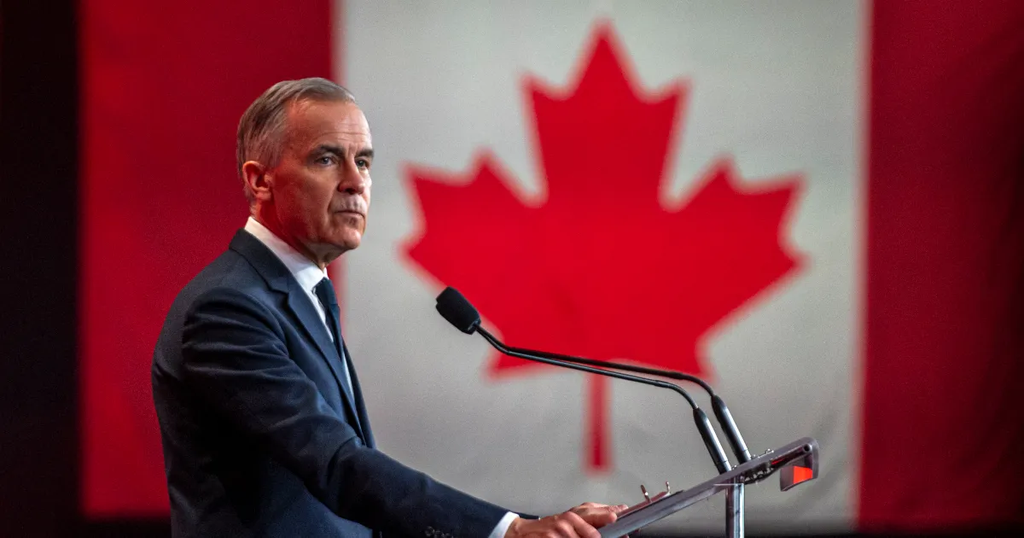
Canada’s federal government has officially scaled back major environmental review requirements for large-scale energy projects. The decision, recently published in the official Canada Gazette, marks one of the most significant shifts in Canadian environmental and energy policy in recent years.
Under the updated regulations, Prime Minister Mark Carney’s administration is removing several types of major energy developments from the comprehensive federal Impact Assessment Agency regime. Instead, the government is handing primary review authority over to a single body: the Canada Energy Regulator (CER).
This move directly alters the regulatory landscape that was established during the Justin Trudeau era. By consolidating oversight under the CER, Ottawa is aiming to eliminate duplicate reviews, shorten approval timelines, and establish a streamlined “one project, one review” system for interprovincial pipelines, transmission lines, and offshore energy infrastructure.
The policy update comes at a crucial moment for the Canadian economy. Prime Minister Carney is preparing to host the Canada Investment Summit in Toronto, where the federal government hopes to attract up to $1 trillion in new infrastructure and clean energy investments over the next five years. However, while energy executives and industry groups have welcomed the reform as a necessary step to boost economic competitiveness, environmental organizations have strongly criticized the decision, warning that reduced oversight could harm fragile ecosystems and undermine climate commitments.
What Changed in Canada’s Environmental Review System?
To understand why this update is causing such a massive debate across the country, it helps to look at how major energy projects were evaluated in Canada prior to this policy shift.
Build Funnels, Email Lists & Sell Online With One Free Tool
Create funnels, send emails, and sell online using Systeme.io without paying for multiple tools.
Create Free AccountFree forever • No credit card • Beginner-friendly
Moving Away from the Trudeau-Era Framework
Back in 2019, the Canadian government introduced the Impact Assessment Act (IAA). The law was designed to give federal officials a broad lens when reviewing industrial proposals. Under the IAA framework, project evaluations went beyond simple environmental footprints; regulators were required to assess long-term climate impacts, social implications, gender-based analysis, and health considerations.
While proponents argued that the IAA created a rigorous and fair process, critics across the energy sector argued that it created endless bureaucratic delays. Major project reviews often dragged on for five years or more, leaving investors uncertain about whether a project would ever get built.
The new rules published in the Canada Gazette scale back that heavy federal footprint. Rather than requiring multi-agency federal evaluations for every major proposal, several key energy categories are being removed from the Impact Assessment Agency list entirely.
The “One Project, One Review” Concept
The core pillar of the Carney government’s reform is the principle of “one project, one review.” Under this approach, interprovincial pipelines, cross-border energy corridors, and specific offshore facilities will no longer be subjected to multiple overlapping reviews from separate federal bodies and agencies.
Instead, the Canada Energy Regulator will serve as the single, lead regulatory authority for these projects. According to official federal filings, the government expects this administrative shift to cut review times down from five years to roughly two years. The goal is to provide project developers with clear timelines and predictable outcomes while avoiding situations where provincial and federal regulators perform duplicate studies on the very same piece of land or body of water.
Why Mark Carney Is Pushing for Fast-Track Approvals
Prime Minister Mark Carney came into office promising to revitalize the Canadian economy, boost national productivity, and position Canada as a global clean energy superpower. Fast-tracking energy decisions is a central piece of that economic playbook.
Unlocking the $1 Trillion Investment Target
Capital flows to wherever rules are clear and decisions are predictable. For years, major international investors expressed hesitation about funding large-scale Canadian infrastructure due to extended regulatory delays and legal uncertainty.
By streamlining federal oversight, Ottawa is trying to send a loud message to global markets right before major industrial gatherings like the Canada Investment Summit 2026. The federal government has set an ambitious target to secure $1 trillion in private capital over the next five years to fund major clean power projects, transmission lines, critical mineral extraction, and upgraded trade corridors. Reducing regulatory friction is seen as essential to getting those private commitments over the finish line.
Economic Pressure and U.S. Trade Tension
This regulatory shift is also happening against a tense geopolitical backdrop. Trade relations between Canada and the United States have faced significant strain following aggressive tariff threats and protectionist statements from Washington. Tensions escalated after Trump labeled Canada ‘worst abuser’ in trade discussions, prompting Ottawa to defend domestic industries aggressively.
In response to trade friction, the federal government has made it a top priority to strengthen internal economic sovereignty and expand domestic infrastructure. You can learn more about how the prime minister has responded to international economic shifts in this article on how Mark Carney promises government support as U.S. trade war deepens.
Building independent energy corridors, connecting provincial power grids, and expanding export capacity to non-U.S. global markets require building major physical assets quickly. Eliminating unnecessary federal delay is viewed as a national security and economic self-reliance priority.
Sustaining Post-Recession Economic Growth
Canada’s domestic economy has shown resilience recently, with official data indicating that Canada’s GDP bounced back with strong growth. To keep that momentum going, federal policymakers know they cannot afford to let billions of dollars in planned capital expenditures sit idle in administrative limbo. Fast-tracking energy approvals ensures that construction jobs, engineering contracts, and municipal supply chains receive immediate investment injections.
Industry Support vs. Climate Backlash: The Reaction to the Policy
Whenever federal governments touch environmental assessment laws, strong reactions follow. Prime Minister Carney’s decision has created a clear divide between industrial stakeholders and environmental advocates.
Why Industry Leaders Support the Change
Energy companies, pipeline operators, construction unions, and business groups have expressed strong support for the updated regulations. In official regulatory analysis documents, industry representatives noted that moving to single-regulator reviews under the CER significantly reduces administrative costs and eliminates redundant paperwork.
Key benefits highlighted by industry leaders include:
- Predictable Timelines: Developers can plan financial schedules around a concrete two-year evaluation timeline rather than unpredictable multi-year delays.
- Clarity on Regulatory Responsibility: Having a single main point of contact at the Canada Energy Regulator prevents conflicting directives from different government departments.
- Enhanced Global Competitiveness: Faster approvals help Canadian energy and mineral projects reach international markets before rival exporters take market share.
For energy developers trying to move both conventional fuels and clean energy projects forward, the streamlined process provides much-needed clarity.
Why Environmental Advocates Are Concerned
On the other side of the issue, environmental groups, climate scientists, and ecological advocates have strongly condemned the changes. Organizations like Environmental Defence argue that stripping major oil pipelines, natural gas plants, and offshore projects from the Impact Assessment Agency process weakens democratic oversight and environmental safety.
Julia Levin, Associate Director at Environmental Defence, publicly criticized the government’s decision, arguing that Ottawa is abdicating its responsibility to conduct comprehensive environmental evaluations on high-polluting projects during an urgent climate crisis.
Climate advocates raise several key concerns:
- Reduced Scope of Assessment: The CER traditionally focuses heavily on technical safety, pipeline integrity, and operational feasibility, whereas the Impact Assessment Agency conducted broader evaluations of cumulative regional climate impacts and overall ecosystem health.
- Public Participation: Critics fear that shifting projects strictly to the CER could limit opportunities for public input and community-led challenges compared to the public hearing processes built into the IAA.
- Precedent for Environmental Deregulation: Environmental organizations worry that modifying review rules to satisfy economic goals sets a dangerous precedent for future environmental standards.
This balancing act between aggressive economic growth and environmental protection is not unique to Canada. Similar policy shifts are happening internationally, such as in the United Kingdom where political leaders faced intense debate after Andy Burnham dropped green tax plans to relieve economic pressure on consumers.
How Indigenous Communities and Local Stakeholders Are Impacted
One of the most delicate aspects of major project development in Canada is the duty to consult and partner with Indigenous communities. Fast-tracking projects naturally raises questions about how Indigenous rights and territorial sovereignty will be respected under a compressed review timeline.
Indigenous Consultation Obligations Remain Law
The federal government has repeatedly emphasized that scaling back federal review duplication does not mean bypassing Indigenous consultation. Section 35 of the Canadian Constitution legally binds the Crown to consult and accommodate Indigenous peoples on decisions that impact their traditional territories.
The Canada Energy Regulator is legally obligated to maintain rigorous Indigenous engagement protocols throughout its review processes. Furthermore, Prime Minister Carney’s administration has made Indigenous economic equity a core requirement for fast-tracked national interest projects.
Equity Ownership and the Indigenous Loan Guarantee Program
Rather than viewing First Nations and Inuit communities solely through the lens of consultation, the federal framework focuses heavily on economic partnership. Ottawa recently doubled the Indigenous Loan Guarantee Program from $5 billion to $10 billion.
This program enables Indigenous communities to borrow capital at favorable government rates to buy equity stakes in major energy corridors, pipelines, clean hydro facilities, and transmission lines built on their lands. By becoming direct owners and profit-sharers in these major projects, local communities gain long-term financial streams while ensuring that environmental monitoring happens directly at the local level.
Natural resource officials have reiterated that no major nation-building project can realistically move forward without direct First Nations partnership and consent.
Energy, Infrastructure, and the Modern Economy
Energy policy does not exist in a vacuum. The decision to streamline major project reviews directly connects to broader changes happening across the global economy, including technological advancement, industrial manufacturing, and regional development.
Build Funnels, Email Lists & Sell Online With One Free Tool
Create funnels, send emails, and sell online using Systeme.io without paying for multiple tools.
Create Free AccountFree forever • No credit card • Beginner-friendly
Powering Next-Generation Industries
Modern technology requires massive amounts of power. The rapid expansion of artificial intelligence, high-performance computing, and automated industrial manufacturing has created an unprecedented surge in global electricity demand.
Canada’s ability to host advanced tech infrastructure depends directly on building clean, reliable energy capacity fast enough to supply new facility demands. You can read more about how technology trends are shaping industries on our Technology & AI category page.
The Role of Independent Media and Public Information
As governments make swift policy decisions that shape energy bills, local environments, and job markets, access to reliable, easy-to-understand news is critical. Media outlets and digital creators play an essential role in breaking down these complex legislative updates into plain English so everyday citizens understand how federal policies affect their daily lives.
To explore how modern content creators build audiences and share informational news at scale, check out our guide on YouTube Automation strategies.
Frequently Asked Questions (FAQs)
What is the Canada Energy Regulator (CER) and what is its role?
The Canada Energy Regulator is an independent federal agency responsible for regulating pipelines, power lines, and energy development that cross provincial or international borders. Unlike the Impact Assessment Agency, which conducts broad environmental and social impact studies, the CER specializes directly in energy infrastructure safety, technical standards, and operational oversight.
Does scaling back federal reviews mean environmental standards are canceled?
No. The regulatory changes remove duplicate federal reviews, but they do not eliminate environmental oversight altogether. Projects handed to the Canada Energy Regulator must still comply with strict technical, safety, and environmental protection laws, as well as provincial environmental assessment requirements where applicable.
How much faster will energy projects be approved under the new rules?
The federal government estimates that shifting to a streamlined “one project, one review” system under the CER will reduce review times from approximately five years down to about two years.
Which specific types of energy projects are affected by this policy?
The changes primarily affect interprovincial and international oil and gas pipelines, cross-border electricity transmission lines, certain offshore energy projects, and designated natural gas infrastructure proposals.
Why is Prime Minister Mark Carney making this change right now?
The timing aligns with the federal government’s push to secure $1 trillion in private capital at the upcoming Canada Investment Summit, as well as efforts to build independent Canadian energy infrastructure amid ongoing trade friction with the United States.
How does this policy affect everyday Canadians?
In the short term, streamlining project approvals is intended to spur construction jobs, boost regional capital investment, and strengthen energy security. In the long term, faster development of power transmission and energy infrastructure could help stabilize domestic energy supplies and keep electricity rates predictable.
Final Thoughts
The Carney government’s decision to scale back federal reviews for major energy projects represents a calculated pivot toward economic speed and administrative efficiency. By shifting primary review power to the Canada Energy Regulator and promoting a “one project, one review” system, Ottawa is betting that clear rules and two-year timelines will attract the massive private investments needed to secure Canada’s economic future.
While energy sector leaders celebrate the reduction in red tape, the pushback from environmental advocates highlights the ongoing challenge facing modern governments: how to build national infrastructure at record speed without compromising ecological safety or long-term climate goals. As these new review rules take effect, the true measure of success will depend on whether Canada can deliver shovel-ready projects efficiently while maintaining meaningful environmental standards and genuine Indigenous partnerships.
Stay informed on the latest political shifts, economic news, and global trends by visiting our About Us page or reaching out directly through our Contact Us portal. You can also join our growing online community by following our official social media channels on Instagram, Facebook, and X (formerly Twitter).
