
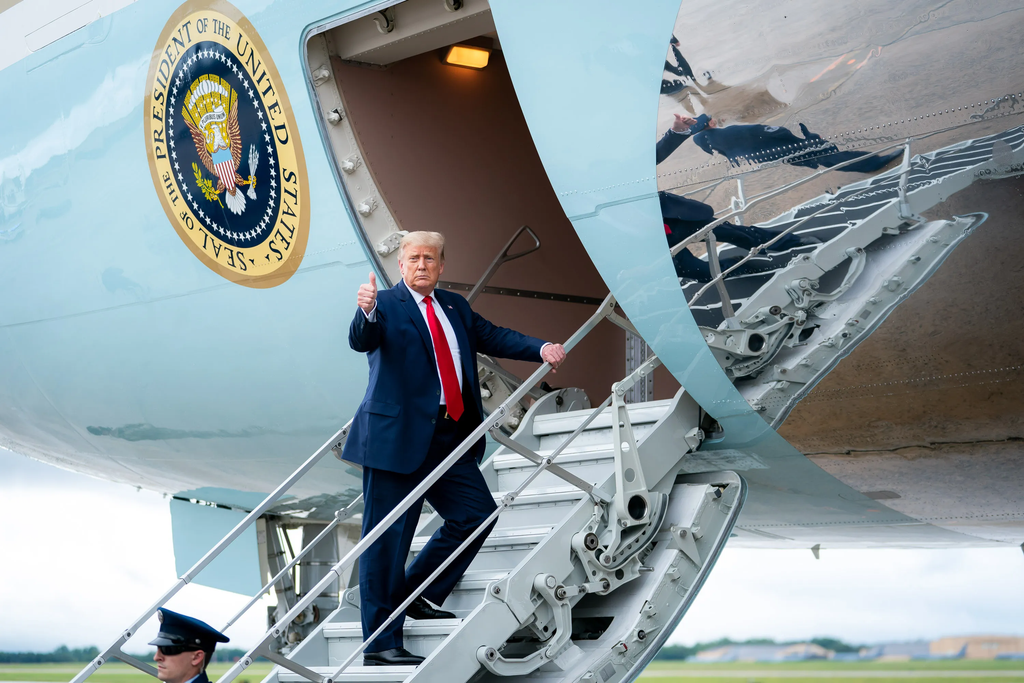
In an unprecedented move that sent shockwaves across the political and media landscape, major American television networks collectively decided to halt their shared video coverage of President Donald Trump. ABC, CBS, CNN, Fox News, and NBC—the five major broadcast networks that form the official White House television pool—agreed to suspend their joint coverage.
This dramatic decision came immediately after the Trump administration banned journalists from CNN, MS NOW, and Politico from entering the White House grounds. Secret Service officers confiscated press passes from reporters as they arrived for work, sparking a fierce showdown over press freedom, First Amendment rights, and public transparency.
Rather than allowing another network to step in and replace CNN during its scheduled rotation, competing news outlets made a rare show of unity. They pulled their shared broadcast cameras and audio crews entirely. The blackout created an immediate public spectacle during a high-profile White House event, demonstrating how dependent the government and the public are on independent media coverage.
How the Conflict Started: The Ban That Sparked a Media Revolt
The dispute began when President Trump announced on social media that CNN, MS NOW, and Politico were officially barred from White House press events. He claimed the outlets were publishing false stories and reporting fiction, calling them unfair to his administration.
When reporters and technical staff from those news outlets tried to enter the White House complex the following morning, Secret Service officers turned them away at the gates and revoked their official credentials. The administration defended the action by claiming it was necessary for national security and government decorum, but media advocacy groups quickly condemned the move as an attack on free reporting.
The $0 Secret To Launching Your Entire Online Empire
Why pay hundreds every month for separate software? Build funnels, send emails, and make sales with Systeme.io completely free.
Get Started For $0Free Forever • No Credit Card Needed • Beginner-Friendly
The banned news organizations did not wait long to respond. CNN, MS NOW, and Politico filed a joint lawsuit in a Washington, D.C. federal court. They asked a judge to issue an emergency restraining order to restore their credentials, arguing that blocking press access based on news reporting violates the First Amendment of the U.S. Constitution.
This legal showdown added to a growing list of courtroom battles over administrative decisions, similar to how federal judges have intervened in past disputes over executive orders, such as when a federal court blocked President Trump’s attempt to limit birthright citizenship.
The TV Press Pool Explained: Why This Boycott Is a Massive Deal
To understand why the networks’ decision is so important, it helps to understand how White House press coverage actually works behind the scenes.
For decades, space inside the White House and around presidential travel has been extremely limited. Every single television network cannot fit its own camera crew, sound technician, and bulky gear into every room or helicopter departure zone. To solve this problem, the major networks established a system called the press pool back in 1950.
Under this agreement, ABC, CBS, CNN, Fox News, and NBC rotate duties every quarter. One network sends its technical crew to record live video and audio of presidential speeches, ribbon cuttings, and official ceremonies. That designated crew then shares the raw video feed with all other outlets worldwide, including cable channels and international broadcasters.
When the White House barred CNN, it was CNN’s turned to act as the pool host for the day. Instead of letting the administration dictate who could participate, the network coalition took a stand. Bryan Boughton, the Washington bureau chief for Fox News who was serving as the TV pool chairman, sent an email to all member organizations confirming that the pool would suspend all designated presidential coverage effective immediately.
The five major networks released a joint statement explaining their stance: “The public has a vital interest in receiving accurate, independent information about its government. No administration should restrict a news organization because it objects to its reporting.”
The Unintended Result: Helicopter Engines Drown Out President Trump Live on Air
The real-world impact of the media boycott became obvious within hours during a major event on the White House South Lawn. President Trump scheduled a ceremonial event to unveil a brand-new White House helipad, cut a ribbon, and speak with construction workers on site.
Because the television pool refused to send its official camera and audio setup, there were no standard boom microphones or broadcast-quality audio feeds placed near the president. The White House attempted to stream the event on its own official internet feed, but the results were chaotic.
The engine of Marine One, the presidential helicopter idling nearby, produced a loud roar that completely drowned out the president’s voice. view clips shared online showed President Trump speaking, smiling, and cutting the ribbon, but his words were completely inaudible to viewers watching live.
Even commentators on conservative news networks noticed the awkward silence. Bianca de la Garza, a host on Newsmax, noted during a live broadcast that there were no pool microphones on the walkway because of the press boycott. She pointed out that without standard press equipment present, the public simply could not hear what the president was saying.
Furthermore, C-SPAN announced that it would not air the helipad ceremony because it relies entirely on the shared television pool feed to carry presidential events live.
The Launch of “Trump TV” and the Shift to Direct Communication
In response to the broadcast blackout, the administration took matters into its own hands. The White House officially launched “Trump TV,” a 24/7 streaming platform designed to air presidential speeches, press briefings, and administration announcements directly to the public online.
By launching its own platform, the White House hopes to bypass traditional news outlets and talk directly to supporters. This move fits into a broader trend where political leaders use digital tools, social media channels, and independent streaming services rather than relying on legacy television broadcasts.
This shift mirrors how creators and media entrepreneurs use new technology, direct video platforms, and YouTube automation tools to build independent audiences without relying on traditional network distributors.
Send, Spend & Hold Money Worldwide Without Hidden Fees
Transfer money internationally at the real exchange rate and hold 40+ currencies in one account.
Open a Wise AccountMid-market rate • Fast transfers • 40+ currencies
Vice President JD Vance publicly defended the media ban during interviews, stating that excluding certain outlets was appropriate when reporting became biased or inaccurate. The administration’s aggressive stance toward legacy media has been a core strategy as political leaders prepare for upcoming electoral battles, much like how JD Vance has stepped into the spotlight for future MAGA leadership.
Print Media and Photo Journalists Join the Solidarity Movement
The boycott was not limited to television camera crews. Print journalists, radio reporters, and photojournalists quickly rallied around the barred outlets.
Major news organizations including The Washington Post, The New York Times, and the Associated Press announced that they would hold back photographs taken during White House events. They agreed not to publish or distribute official pool images of presidential activities—such as departures on Marine One or events at the United Nations—until after midnight each day.
This delay prevented real-time photo coverage from appearing on front pages and digital news sites while the ban remained in effect. In statement, media executives explained that a unified response was necessary to preserve free press protections for all journalists, regardless of political affiliation.
The dispute has drawn comparisons to past regulatory fights between the administration and broadcast companies, including previous instances where Trump demanded FCC action against news anchors over political coverage.
What Does This Mean for Free Press and Public Information?
The standoff between the White House and the press pool raises important questions about democracy, government transparency, and how citizens receive political news.
When a government restricts press access based on whether it likes a news outlet’s reporting, it creates a dangerous precedent. If one administration can ban specific journalists, future administrations could do the exact same thing to different news organizations.
On the other hand, the administration argues that news organizations must remain fair and objective, claiming that biased reporting harms national debate. This conflict has left many Americans wondering how to find reliable, unbiased news in an increasingly divided media landscape.
Many citizens now turn to independent publications, email newsletters, and alternative platforms to stay informed. Writers and researchers are increasingly exploring how Substack and paid newsletters earn money by offering direct subscription models that operate outside of network television.
At the same time, social platforms are updating their rules to manage online political discussions, such as how Instagram’s updated policy targets fake accounts and AI influencers to keep digital conversations authentic.
The $0 Secret To Launching Your Entire Online Empire
Why pay hundreds every month for separate software? Build funnels, send emails, and make sales with Systeme.io completely free.
Get Started For $0Free Forever • No Credit Card Needed • Beginner-Friendly
Political Consequences Ahead of Upcoming Midterms
This battle with television networks arrives at a sensitive time for Washington politicians. With key legislative debates taking place and congressional elections approaching, both parties are watching how voters react to the ongoing media war.
Political analysts note that voters often view media battles differently depending on their political party. Some supporters view the press ban as a bold stand against unfair media coverage, while critics view it as an attempt to avoid public scrutiny during key political moments.
Republicans are carefully monitoring how these public disputes impact voter sentiment as campaign season ramps up, especially with Donald Trump promising a full campaign blitz for the midterms.
Simultaneously, political strategists are watching how public debates over executive power affect election predictions, which is why Republicans and political insiders continue analyzing midterm strategy.
Even major government construction projects have drawn political attention during this period, including when the Supreme Court greenlit construction on the White House ballroom.
How Technology Is Changing Political Reporting
The conflict between traditional TV networks and the White House highlights how modern technology is reshaping political communication.
In past decades, if broadcast networks stopped filming the president, public visibility would drop significantly. Today, live streaming apps, social media feeds, and artificial intelligence tools give government officials and independent journalists new ways to produce and distribute content instantly.
From digital tools used in modern journalism to advancements featured in our Technology & AI news section, digital technology continues to change how news travels across the world.
Whether political events are captured by professional network crews or broadcast via official administration streams, technology ensures that news spreads instantly across global platforms.
Frequently Asked Questions (FAQs)
Why did major TV networks halt coverage of Donald Trump?
The five major television networks in the U.S. press pool (ABC, CBS, CNN, Fox News, and NBC) suspended shared video coverage after the White House banned CNN, MS NOW, and Politico from presidential press events. The networks took this joint action to support press freedom and oppose government restrictions on news reporting.
Did networks stop reporting on Donald Trump completely?
No. The television networks suspended their shared “press pool” camera feed, which provides raw footage of official White House events. Reporters and journalists from non-banned outlets continue to report on the administration, write articles, and cover stories from outside restricted pool areas.
What is the White House television press pool?
The White House press pool is a long-standing system where news outlets share the cost and responsibility of filming presidential events. One network provides a live camera feed and clear audio, which is shared with all other networks so everyone gets equal access without crowding the president.
What is “Trump TV”?
“Trump TV” is a 24/7 streaming service launched by the White House following the network boycott. It broadcasts presidential speeches, official statements, and administration announcements directly to the public online without relying on traditional TV networks.
What legal action was taken after the White House ban?
CNN, MS NOW, and Politico filed a joint lawsuit against the Trump administration in a Washington, D.C. federal court. They argued that revoking press credentials based on editorial content violates their First Amendment rights and requested an emergency court order to restore access.
Looking Ahead to the Future of White House Coverage
The standoff between the White House and major news networks marks a significant turning point in modern political reporting. As federal judges review the First Amendment lawsuit filed by banned outlets, both sides remain firm in their positions.
Whether the White House restores credentials or continues pushing its own “Trump TV” platform, this event shows how quickly media relations can transform in the digital age. Independent reporting remains essential for keeping the public informed about government decisions, major policies, and national leaders.
To learn more about our mission to bring you clear, relatable stories on trending news, political events, entertainment, and technology, visit our About Us page. If you have questions, feedback, or news tips you would like to share with our team, feel free to reach out directly through our Contact Us page.
Stay connected with us across all social media channels for real-time updates and breaking stories:
- Connect with us on Instagram
- Follow our official page on Facebook
- Join the conversation on X (formerly Twitter)
