
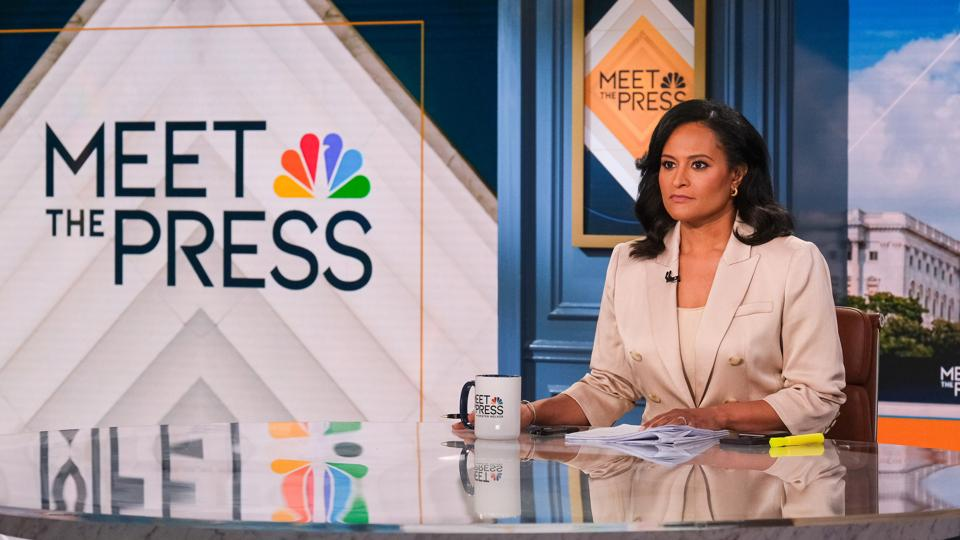
President Donald Trump has launched a fierce public attack against NBC News anchor Kristen Welker, calling for federal regulators to issue a official rebuke or punishment against her. The dispute centers on comments Welker made regarding Trump’s track record when endorsing political candidates ahead of the upcoming midterm elections.
Speaking on Truth Social, Trump expressed deep anger over Welker’s assessment that his endorsement primary record had produced mixed results. Trump insisted that his primary success rate sits near perfection and argued that describing his political influence as mixed amounts to purposeful inaccuracy. He urged the Federal Communications Commission to intervene and take action against the veteran television journalist.
The sharp criticism marks another major escalation in the ongoing friction between the White House and major national news networks. With the 2026 midterm campaign season heating up across the country, this confrontation has reopened intense debates about press freedom, government regulation, and the role of news media in modern politics.
What Triggered Donald Trump’s Outburst?
The disagreement began during a live Sunday morning broadcast on a local NBC affiliate in Washington, D.C. Kristen Welker, who hosts NBC’s flagship Sunday program Meet the Press, appeared on the segment to give an preview of the morning’s political coverage.
During the broadcast, Welker discussed the primary election season and how political figures were faring across various states. She noted that Donald Trump continues to loom large over the midterm elections and remains the most influential endorsement in the Republican party. However, she added a short comment stating that his endorsed slate of candidates had seen some mixed results in recent primary battles.
The $0 Secret To Launching Your Entire Online Empire
Why pay hundreds every month for separate software? Build funnels, send emails, and make sales with Systeme.io completely free.
Get Started For $0Free Forever • No Credit Card Needed • Beginner-Friendly
Welker balanced her observation by pointing out recent high-profile primary wins by Trump-backed candidates. She specifically mentioned the primary victory of Senator Darline Graham as an example of his continued strength among primary voters. Despite that context, the phrase mixed results quickly caught the attention of Trump and his staff.
Within hours, Trump went online to contest her wording. He claimed that using two words like mixed results was an attempt to downplay his political strength and mislead the public about his endorsement record.
The Truth Social Attack: Inside the Posts
Trump took directly to his Truth Social platform to voice his frustration. In a lengthy post, he targeted Welker’s personal performance and questioned her credibility as a news anchor.
He described Welker as the unpopular hostess of what he called Meet the Fake Press. Trump argued that her statement was factually wrong because his chosen candidates had won almost every primary race they entered. He pointed to specific numbers, claiming a 100 percent win rate in U.S. Senate primary endorsements and a 98 percent win rate in U.S. House races.
In his message, Trump wrote that because of this purposeful inaccuracy, she will be reported to the FCC for rebuke or punishment. He argued that television networks operate using public airwaves and should not be allowed to present what he considers unfair commentary.
Trump also addressed the head of the regulatory body directly. He called upon Federal Communications Commission Chairman Brendan Carr and other commissioners to look into the matter. Trump described the reporting as a threat to the country and asked the commission to take serious action against what he calls fake news reporting.
How NBC News and Industry Leaders Responded
Following Trump’s comments, network executives and press freedom advocates responded quickly. NBC News issued a firm statement standing behind their star journalist.
A network spokesperson stated that Kristen Welker is one of the top journalists in the business and made it clear that the network fully stands by her reporting. NBC defended her coverage as fair, accurate, and grounded in standard political analysis.
Inside the regulatory agency itself, opinion was divided along party lines. Democratic FCC Commissioner Anna Gomez publicly rejected the idea that the commission should penalize journalists for news commentary. She posted on social media that the agency lacks legal authority to punish reporters simply because an administration disagrees with their statements. Gomez emphasized that government threats against press freedom are dangerous to democratic institutions.
Press freedom organizations also spoke out against the calls for punishment. Many legal experts noted that news organizations are protected under the law when analyzing political figures and election results.
A History of Tension Between Trump and Kristen Welker
This latest public dispute is not the first time Trump and Kristen Welker have clashed over political reporting. The two figures have shared a complex relationship spanning several years.
Welker gained national recognition in 2020 when she moderated the final presidential debate between Trump and Joe Biden. At the time, her firm control of the debate earned widespread praise from both political parties and media critics. Even Trump gave her positive marks following that event, noting her professional handling of the debate stage.
However, relations between the two grew significantly more tense in recent times. During a recorded Meet the Press interview in June, the conversation turned heated during questions about foreign policy and election integrity claims. Trump expressed frustration over Welker’s questioning, accused her of running a one-sided interview, and abruptly cut the discussion short before removing his microphone and leaving the room.
The ongoing back-and-forth illustrates how political interviews can quickly turn contentious when high-stakes campaign seasons approach. Both sides have maintained their positions, setting up a continuing standoff whenever news coverage touches on sensitive political topics.
Can the FCC Actually Punish a Journalist?
Trump’s demand for the government agency to punish a news anchor raises important questions about what federal regulators can and cannot do.
Send, Spend & Hold Money Worldwide Without Hidden Fees
Transfer money internationally at the real exchange rate and hold 40+ currencies in one account.
Open a Wise AccountMid-market rate • Fast transfers • 40+ currencies
The Federal Communications Commission was established by Congress to oversee radio, television, wire, satellite, and cable communications across the United States. Its primary role involves granting broadcast licenses to local television and radio stations that operate on public airwaves.
Here is how the agency’s authority actually works when it comes to news reporting:
- License Oversight: The agency regulates local broadcast stations rather than individual journalists or national network personalities.
- Speech Protections: The First Amendment of the U.S. Constitution strongly protects news media from government interference or censorship.
- Distortion Standards: The regulatory body only investigates news complaints if there is clear proof that a station intentionally staged or falsified a major event.
- Editorial Opinions: Ordinary political analysis, commentary, and candidate assessments are considered protected speech and do not violate federal rules.
Because of these constitutional boundaries, legal scholars point out that the regulatory commission lacks authority to penalize a reporter over a dispute regarding political statistics or campaign analysis.
Understanding Trump’s Midterm Endorsement Record
To understand why this issue became so heated, it helps to examine the actual political numbers behind the debate. Both sides are looking at the same primary election results but interpreting them from completely different angles.
On one hand, Trump’s team points to raw win-loss totals. In overwhelmingly Republican districts and states, candidates who receive Trump’s backing almost always win their primary contests. In the 2026 primary cycle, hundreds of Trump-backed candidates won their party nominations, including key primary victories in Senate and House races. From this viewpoint, his endorsement remains the most powerful force in primary politics.
On the other hand, political analysts and news organizations look at a broader picture. They point out that many of those wins occurred in uncontested races or heavily favored districts where any Republican candidate was likely to win. Furthermore, in several high-profile competitive primaries, a few Trump-endorsed candidates suffered unexpected defeats against rival Republicans.
Because some high-visibility candidates lost while many others won, news outlets frequently describe the overall outcome as mixed. Trump views that description as an attempt to diminish his political standing, leading directly to the conflict with broadcast journalists.
How Digital Media and Technology Are Changing Political News
The clash between public figures and legacy media highlights how rapidly news delivery is evolving. Today, political debates no longer stay confined to traditional television broadcasts or morning papers.
Social platforms like Truth Social, X, and Facebook allow political leaders to bypass traditional news outlets and communicate directly with millions of voters. At the same time, creators and independent media publishers are using automated publishing systems to deliver breaking updates faster than ever before. If you want to learn how digital creators build automated video channels to share news updates, explore our guide on YouTube automation.
Artificial intelligence is also changing how news is created, monitored, and analyzed across digital networks. Modern algorithms track trending stories in real time, helping readers discover breaking developments as they happen. To understand how automated tools and algorithms shape modern online publishing, check out our coverage of technology and AI.
The $0 Secret To Launching Your Entire Online Empire
Why pay hundreds every month for separate software? Build funnels, send emails, and make sales with Systeme.io completely free.
Get Started For $0Free Forever • No Credit Card Needed • Beginner-Friendly
As online media keeps growing, readers need reliable places to find straightforward information about current events. You can learn more about our commitment to balanced reporting on our about page or reach out to our team directly through our contact page.
You can also follow the conversation on social media and join our community on Facebook, connect with us on Instagram, and follow our updates on X to share your thoughts on this story.
Frequently Asked Questions (FAQs)
Why did Donald Trump ask the FCC to punish Kristen Welker?
Donald Trump objected to comments made by Kristen Welker on a local NBC broadcast, where she described his midterm candidate endorsement record as having mixed results. Trump argued the description was false and demanded that federal regulators issue a rebuke or punishment.
Does the FCC have authority to fire or penalize television reporters?
No. The Federal Communications Commission regulates broadcast licenses for stations, but it does not have legal authority to penalize individual reporters or censor news commentary under First Amendment protections.
What did NBC News say in response to the criticism?
NBC News issued a statement defending Kristen Welker. The network stated that Welker is one of the top journalists in the industry and confirmed that they fully stand behind her and her reporting.
What is Donald Trump’s actual primary endorsement record?
Trump’s candidate endorsements have won a vast majority of Republican primary races, with success rates over 90 percent. However, analysts often describe the record as mixed because several high-profile candidates backed by Trump lost competitive primary contests.
How can I stay updated on political news and press freedom stories?
You can follow major news outlets like NBC News, read official statements from regulatory bodies like the FCC, or follow along on social platforms for continuous updates.
The ongoing feud between Donald Trump and Kristen Welker underscores the sharp tension that often exists between political leaders and the press during major election cycles. As midterm elections draw near, discussions around endorsement power, press freedom, and regulatory limits will remain at the forefront of public debate. How news outlets and public officials navigate these high-pressure moments will continue to shape how political news is delivered to audiences everywhere.
