
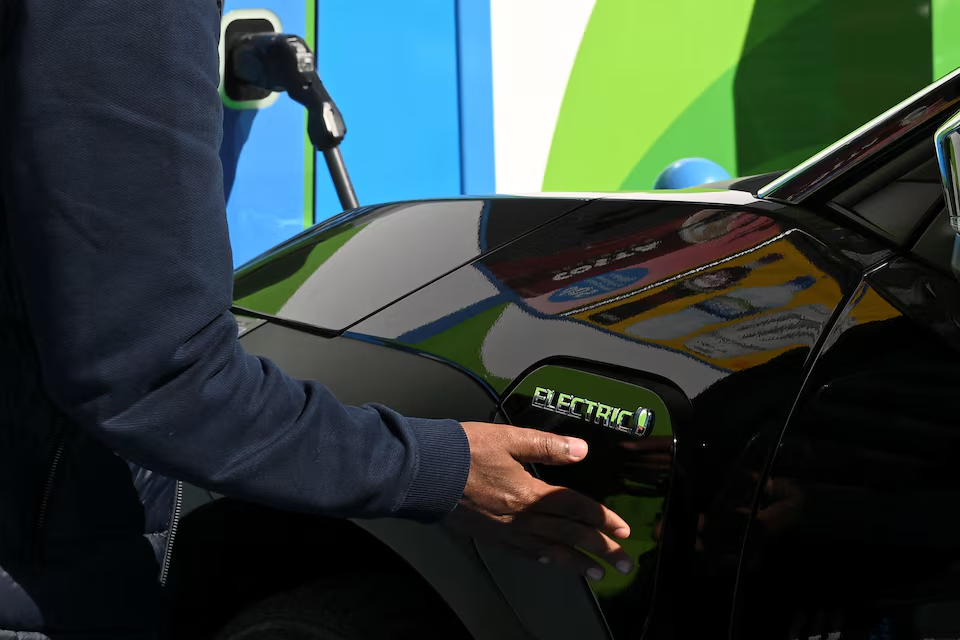
British drivers bought electric vehicles at a record-breaking pace in October 2026, pushing pure battery models past traditional petrol and hybrid engines to capture almost a third of all new car sales in the country. Official registration figures reveal that battery electric vehicle sales climbed roughly 54% compared to the same month last year.
Dealership lots and shipping docks across the United Kingdom delivered 49,155 brand-new, battery-powered cars to buyers in just thirty-one days. That massive haul gave pure electric cars a 31.8% share of the overall new vehicle market. For the first time in modern automotive history, fully electric cars stood as the single most popular powertrain category across the country for a full calendar month.
The total UK car market enjoyed a strong month as well, jumping 26.9% year-on-year to reach 154,407 total registrations across all fuel types. Yet, the real headline is the sheer speed at which electric motors are taking over British driveways. The electric revolution did not just nudge forward; it kicked the door wide open.
The October 2026 Surge Explained
The numbers published by independent transport research group New Automotive surprised even optimistic industry analysts. Climbing from roughly 31,000 units in October 2025 to 49,155 units in October 2026 represents one of the steepest single-month gains the UK automotive sector has ever documented.
Ben Nelmes, Chief Executive Officer of New Automotive, pointed out that almost one in three new cars sold during October was fully electric. That is higher than any other fuel type on the market. He highlighted that electric car sales are up by more than half compared to twelve months ago, showing that British buyers are shifting their habits rapidly when the price is right.
The $0 Secret To Launching Your Entire Online Empire
Why pay hundreds every month for separate software? Build funnels, send emails, and make sales with Systeme.io completely free.
Get Started For $0Free Forever • No Credit Card Needed • Beginner-Friendly
While petrol-powered vehicles used to rule British roads without question, their market share has steadily dropped. Pure petrol engines held well over 40% of the market in prior years, but they are now retreating as drivers opt for zero-emission alternatives. Standard hybrid cars and plug-in hybrids also saw healthy registrations, but neither could match the raw momentum of pure electric battery cars.
Industry bodies like the Society of Motor Manufacturers and Traders had already predicted that 2026 would set a high watermark for clean vehicle adoption. However, October outpaced those forecasts. A mix of aggressive showroom discounting, attractive business finance packages, and lower running costs gave buyers the confidence to make the leap.
Why Car Brands Are Slashing Prices Right Now
To understand why electric registrations exploded in October, you have to look at the strict rules hanging over car makers. The British government enforces the Zero Emission Vehicle mandate. This policy requires every car manufacturer selling in the UK to ensure that a set percentage of their total sales are completely zero-emission.
For 2026, that target sits at a demanding 33% of total sales. If an automaker misses that target, the financial penalties are brutal. The government can fine a company up to £15,000 for every single non-compliant vehicle it sells above its quota.
Rather than handing millions of pounds to the government in fines, car brands decided to spend that money on massive discounts for everyday buyers. Dealerships spent October rolling out zero-percent interest finance deals, direct manufacturer deposit contributions worth thousands of pounds, and aggressive lease rates.
When you make a brand-new electric hatchback or family SUV cheaper per month than a petrol car, buyers pay attention. Automakers essentially took their potential penalty money and used it to subsidize customer purchases. The result was a dramatic buyer rush that pushed electric adoption straight through the roof.
Broader national discussions around environmental policies have also played a role in how consumers view energy costs. When regional leaders adjust clean air schemes and clean energy taxes, as seen in how Andy Burnham dropped green tax plans during debates on household utility bills, drivers look for ways to cut fuel costs on their own terms. Electric cars represent one of the clearest paths to dodging fuel station receipts.
The Brand Wars: Tesla, BYD, and Kia Fight for the Top
The battle for electric dominance in the UK is turning into a fierce international showdown. American giant Tesla still holds the crown as the overall market leader year-to-date, capturing a 9.53% share of all electric vehicle sales across Britain. Tesla saw its registrations rise by 25.4% compared to this time last year, driven by steady demand for the refreshed Model 3 and the Model Y crossover.
However, Tesla is feeling intense heat from Asian manufacturers who are bringing high-spec cars to market at lower price points. South Korea’s Kia and China’s BYD are locked in an intense battle for the number two position in the UK electric market.
Kia holds second place by a whisker with a 6.9% market share, powered by its popular EV6 and the boxy EV9 family hauler. Right on its rear bumper is BYD, holding a 6.8% market share.
BYD’s rapid ascent in the UK is a huge talking point across the motor trade. The Chinese company was barely known to British drivers three years ago. Today, models like the Dolphin, the Atto 3, and the Seal are selling in thousands of units every month. While BYD beats Tesla in global EV sales, its rapid capture of the UK market shows that British consumers care more about build quality, range, and monthly price than brand heritage.
European legacy carmakers are racing to catch up. Volkswagen, BMW, and MG continue to pull in steady numbers, but they are working against stiff price competition. The arrival of cheaper Chinese models has forced everyone to lower their prices, and British buyers are the clear winners of this price war.
Salary Sacrifice Schemes: The Secret Engine of the EV Boom
Look at who is signing the paperwork for these 49,155 new electric cars, and you will find an interesting pattern. Private buyers paying cash or using standard personal loans make up a growing share, but company fleets and corporate salary sacrifice schemes are doing the heaviest lifting.
The UK tax system gives electric company cars a massive advantage over petrol and diesel equivalents. The Benefit-in-Kind tax rate for a pure electric car sits at just 2% to 3%, compared to rates above 30% for high-polluting petrol engines.
Through workplace salary sacrifice programs, an employee can pay for an electric car directly out of their gross salary before income tax and National Insurance are deducted. That tax break routinely saves an employee hundreds of pounds every month. It also covers the cost of insurance, routine servicing, and breakdown recovery in a single monthly deduction.
Send, Spend & Hold Money Worldwide Without Hidden Fees
Transfer money internationally at the real exchange rate and hold 40+ currencies in one account.
Open a Wise AccountMid-market rate • Fast transfers • 40+ currencies
For thousands of British professionals, choosing an electric car through their employer has become an absolute no-brainer. It allows a middle-income worker to drive a premium German saloon or a cutting-edge electric crossover for less money than running a five-year-old petrol hatchback on personal finance. As more businesses introduce these programs to hit their own corporate sustainability goals, electric vehicle registrations will continue to rise.
What Does Charging Actually Cost in the Real World?
One of the biggest questions for anyone watching this electric sales surge is simple: does charging an electric car actually save you money compared to buying petrol? The honest answer depends entirely on where and how you plug it in.
If you have a driveway or dedicated off-street parking, charging at home offers incredible savings. British energy suppliers now offer dedicated electric vehicle tariffs that charge rock-bottom rates during off-peak overnight hours, typically between midnight and 5:00 AM.
Charging a typical 60 kilowatt-hour battery overnight on an off-peak rate costs roughly £5 to £6. That gives the car around 220 to 250 miles of driving range. To cover that same distance in a standard petrol car averaging 40 miles per gallon, a driver would spend around £35 to £40 at the pump. Over a year of driving 10,000 miles, a homeowner charging off-peak can easily save over £1,200 on fuel alone.
Public charging is a different story. If you rely entirely on public fast chargers at motorway service stations or retail parks, the cost per kilowatt-hour can climb to 70p or 85p. At those peak rates, running an electric car costs almost the exact same as driving an efficient petrol car.
Fortunately, public charging infrastructure is growing fast. Data from charging tracker Zapmap shows that thousands of new public charging bays are coming online every single quarter. More on-street chargers, lamppost charging points, and rapid suburban charging hubs are being installed across residential areas. This helps bridge the gap for drivers who live in flats or terraced homes without private driveways.
Winter Range and Cold Weather: Busting the Myths
As Britain moves into the chillier months of late autumn and winter, range anxiety naturally comes up in conversation. Cold weather reduces battery performance because lithium-ion chemistry slows down in low temperatures, and heating a car cabin requires battery power.
Most modern electric cars lose around 15% to 20% of their maximum driving range during typical British winter weather. That means a car rated for 250 miles might only deliver 200 miles on a freezing morning.
Automakers are solving this issue with smarter engineering. Most new models now come standard with heat pumps, which work like a reverse refrigerator to warm the cabin using very little electrical power. Many cars also allow drivers to pre-condition their battery and warm the interior through a mobile app while the vehicle is still plugged into a home wallbox. This preserves battery range for the road ahead.
Automotive engineers around the globe have been testing these limits in extreme environments. Innovative designs have shown how electric cars can survive minus 40 degrees without breaking down, proving that ordinary British winter rain and light frost pose no real threat to modern electric vehicles.
The $0 Secret To Launching Your Entire Online Empire
Why pay hundreds every month for separate software? Build funnels, send emails, and make sales with Systeme.io completely free.
Get Started For $0Free Forever • No Credit Card Needed • Beginner-Friendly
Beyond weather, concerns about battery lifespan are also fading. Modern battery packs routinely outlast the warranty periods set by manufacturers. At the end of their automotive life, these batteries do not simply end up in scrap heaps. Global recyclers are advancing rapidly, with breakthroughs showing how firms recover over 99 percent of battery metals to build the next generation of power packs without digging up fresh raw materials.
Inside the Tech: Why Software Is Selling These Cars
People are not just buying electric cars for the environmental benefits or the cheaper fuel. They are buying them because the driving experience feels like stepping into a modern smartphone.
Electric drivetrains are whisper-quiet and provide instantaneous acceleration without the clunky gear changes of a petrol engine. Inside the cabin, modern software has changed how people interact with their vehicles.
Major car manufacturers are partnering directly with leading technology companies to revamp their infotainment dashboards. We are seeing major moves like Ford picking Apple Maps for its next EV platform to enable seamless route planning that automatically calculates charging stops and optimizes battery health along the way.
From smart driver-assistance systems that handle stop-and-go motorway traffic to over-the-air software updates that fix bugs while you sleep, new electric cars deliver a level of tech integration that older petrol cars simply cannot match. For younger drivers and tech-savvy buyers, going back to a noisy, vibrating internal combustion engine feels like trading in an iPhone for a flip phone.
The Honest Drawbacks: What You Need to Know Before Buying
While a 54% jump in sales demonstrates that the market is booming, buying an electric car is not without its headaches. Anyone considering the switch deserves a clear, honest look at the downsides.
Depreciation on New Cars
Electric cars have experienced heavy depreciation in recent years. Because battery technology improves so quickly and carmakers keep slashing the prices of brand-new models, used EV values have dropped faster than traditional petrol vehicles. If you buy a brand-new electric car outright with cash, you must be prepared to keep it for five or more years to absorb that early drop in value. Leasing or salary sacrifice avoids this problem because the finance company takes on the depreciation risk instead of you.
High Insurance Premiums
Insuring an electric car can cost noticeably more than insuring an equivalent petrol or diesel car. Electric vehicles are heavy, packed with expensive sensors in the bumpers, and require specialized mechanics to repair after a collision. Some insurance underwriters have been slow to train their assessment teams, leading to higher premiums for electric owners in certain postcodes. Always get an insurance quote on a specific model before signing a purchase agreement.
Public Charger Etiquette and Reliability
While the public charging network is much larger than it was two years ago, broken chargers and blocked bays still frustrate drivers. Finding a rapid charger occupied by someone who left their car plugged in while shopping can turn a quick twenty-minute stop into a forty-five-minute wait. Using mobile apps to check charger availability in advance is still a necessary habit for long-distance road trips.
Frequently Asked Questions About the UK Electric Car Market
How much did UK electric car registrations increase in October 2026?
Battery electric vehicle registrations in the UK jumped approximately 54% in October 2026 compared to October 2025, reaching a total of 49,155 new units sold during the month.
What share of the UK car market do electric vehicles currently hold?
In October 2026, pure battery electric vehicles captured 31.8% of the total new car market in the UK, representing nearly one out of every three new cars registered.
Which brand is leading the UK electric vehicle market?
Tesla remains the overall market leader year-to-date in the UK, controlling a 9.53% share of the battery electric market. However, Kia and China’s BYD are closely trailing in second and third place with 6.9% and 6.8% market share, respectively.
Why did electric car sales spike so suddenly in late 2026?
The spike was driven by car manufacturers offering deep discounts, zero-percent finance, and large deposit contributions. Automakers took this aggressive approach to meet the UK Zero Emission Vehicle mandate target of 33% and avoid steep government fines of up to £15,000 per non-compliant car.
Is an electric car cheaper to run than a petrol car in the UK?
Yes, provided you can charge at home using an off-peak overnight electricity tariff. Home charging can save a typical driver over £1,000 per year compared to buying petrol. However, if you rely exclusively on expensive public rapid chargers, running costs are roughly equal to a fuel-efficient petrol car.
The record-shattering numbers from October prove that Britain’s switch to electric motoring is no longer a distant projection. With pure battery models taking nearly a third of the market in a single month, clean vehicles have officially moved from early-adopter novelties into the mainstream heart of the automotive world. As price wars keep vehicle costs reasonable and charging plugs continue popping up across residential streets, the momentum behind zero-emission driving shows no signs of slowing down.
