
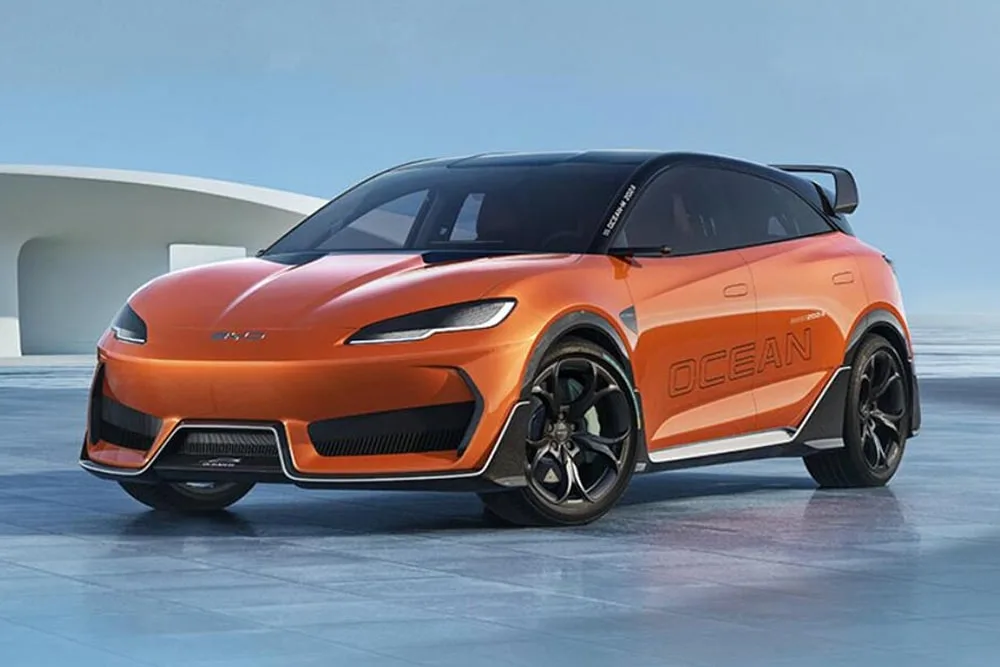
The global car industry just witnessed a historic shift. Chinese automaker BYD has officially passed Tesla in global sales for pure battery electric vehicles.
For years, Tesla held the crown as the undisputed leader of electric cars. Elon Musk’s brand became synonymous with modern electric driving across North America, Europe, and Asia. But quietly and rapidly, BYD built an empire of affordable, high-tech electric vehicles. They sold millions of cars worldwide, leaving competitors scrambling to catch up.
Yet, if you live in the United States, you cannot walk into a local car dealership to buy one. You will not see BYD showrooms popping up in American shopping malls anytime soon.
This creates a fascinating divide in the automotive market. Drivers in Europe, Latin America, Southeast Asia, and Australia are snapping up BYD vehicles by the thousands. Meanwhile, American car buyers remain completely locked out of the world’s top-selling electric car lineup.
Understanding this global shift requires looking at how BYD achieved this victory, why American shores remain off-limits, and which BYD car models are dominating roads across the globe.
The $0 Secret To Launching Your Entire Online Empire
Why pay hundreds every month for separate software? Build funnels, send emails, and make sales with Systeme.io completely free.
Get Started For $0Free Forever • No Credit Card Needed • Beginner-Friendly
How BYD Overtook Tesla on the Global Stage
The story of BYD is not an overnight success. The company started back in 1995 as a rechargeable battery manufacturer for cell phones and consumer electronics. Over the decades, they transitioned into building electric buses, commercial trucks, and eventual passenger cars.
While legacy automakers struggled with battery supply chains, BYD held a massive advantage. They already owned the battery technology. In the electric vehicle world, the battery is the single most expensive component of the car. By manufacturing their own battery cells in-house, BYD slashed production costs far below what traditional car brands could manage.
BYD also embraced vertical integration to an extreme degree. They do not just buy parts from third-party suppliers. They design and build their own electric motors, microchips, software platforms, and even own their cargo ships to export cars across oceans.
This control over production allowed BYD to launch electric vehicles at astonishingly low prices. While the average electric car in Western markets often starts above forty thousand dollars, BYD introduced reliable city EVs priced under ten thousand dollars in China.
Tesla remains a powerhouse, especially in North America. However, Tesla’s limited model lineup faced intense competition as BYD flooded global markets with dozens of options. From budget hatchbacks to ultra-luxurious off-road SUVs, BYD created something for every type of driver. This wide variety helped them secure the global sales crown.
Why You Can’t Buy a BYD Car in the United States
If BYD is selling millions of electric cars globally, why are they absent from American roads? The short answer comes down to taxes, trade policy, and political tensions.
The primary obstacle is heavy import tariffs. The United States government placed a steep 100 percent tariff on Chinese-made electric vehicles. This tax effectively doubles the cost of importing a BYD car into the country. A budget-friendly electric hatchback that costs fifteen thousand dollars overseas would instantly become thirty thousand dollars upon entering North America, eliminating its core price advantage.
The United States also offers federal tax credits for electric vehicles, but those subsidies require cars and their batteries to be assembled in North America or with trade-partner components. BYD vehicles do not qualify for these domestic incentives.
Beyond financial tariffs, political and regulatory barriers stand in the way. Government leaders have raised concerns regarding data security and connected vehicle software. Because modern electric vehicles collect massive amounts of mapping, driving, and camera data, carmakers face intense scrutiny over how user information is stored and processed.
Establishing a sales network in America is another huge hurdle. Building dealerships, service centers, parts distribution hubs, and warranty support systems requires billions of dollars. With trade rules shifting constantly, BYD has publicly stated that it prefers focusing its energy on friendly markets across Europe, South America, and Asia rather than fighting uphill in the United States.
However, auto enthusiasts and tech watchers tracking global Technology & AI advancements know that BYD’s influence is already felt globally, even if American garages remain empty of their logo.
The Best BYD Electric Models Taking Over Global Roads
Even though you cannot buy them in America, BYD offers an impressive lineup of electric vehicles worldwide. Here is a close look at their top-performing models making waves across the globe.
BYD Seagull (Dolphin Surf) – The Ultra-Budget City Car
The BYD Seagull, known in some international markets as the Dolphin Surf, is arguably the most disruptive electric car on the planet. It represents a massive leap forward for affordable electric mobility.
Priced around ten thousand dollars in its home market, this compact hatchback offers a surprisingly modern cabin, dynamic exterior styling, and a real-world driving range of around one hundred and ninety miles per charge.
Inside, drivers get a rotating touchscreen infotainment display, digital instrument cluster, and solid safety features. It is not designed for long cross-country highway trips, but as a daily commuter car, it offers unbelievable value that no Western automaker can match right now.
Send, Spend & Hold Money Worldwide Without Hidden Fees
Transfer money internationally at the real exchange rate and hold 40+ currencies in one account.
Open a Wise AccountMid-market rate • Fast transfers • 40+ currencies
BYD Dolphin – The Practical Everyday Hatchback
Slightly larger than the Seagull, the BYD Dolphin is designed to compete with popular compact cars like the Nissan Leaf and Volkswagen ID.3. It has quickly become a best-seller in Europe, Australia, and Thailand.
The Dolphin sits on BYD’s dedicated electric vehicle platform, which provides a completely flat floor and a surprisingly roomy interior for a small car. It features a fun, playful design language inspired by ocean life.
With a range of up to two hundred and sixty miles on a single charge and fast-charging capability, the Dolphin delivers a smooth, quiet ride. It is practical, safe, and priced well below most rival electric hatchbacks in overseas markets.
BYD Atto 3 (Yuan Plus) – The Global Family Crossover
The BYD Atto 3 is the car that spearheaded BYD’s expansion into major international markets. It is a compact crossover SUV designed specifically to appeal to families seeking space, safety, and modern features.
Underneath its polished exterior is a unique interior design. The cabin features gym-inspired design elements, including guitar-string door pockets, muscle-fiber dashboard lines, and a massive central touchscreen that rotates from portrait to landscape at the touch of a button.
The Atto 3 delivers strong acceleration, a driving range of roughly two hundred and sixty miles, and top-tier safety scores in European crash testing. According to automotive industry reports published by outlets like Reuters, the Atto 3 has consistently ranked among the top-selling electric vehicles in countries like Australia and New Zealand.
BYD Seal – The Sleek Tesla Model 3 Rival
If there is one car in BYD’s lineup built specifically to challenge Tesla head-on, it is the BYD Seal. This sleek, aerodynamic sports sedan takes aim directly at the Tesla Model 3.
The Seal features a striking design with sharp headlights, a low stance, and a highly aerodynamic body. It utilizes BYD’s advanced Cell-to-Body technology, where the battery pack is integrated directly into the car’s structural frame. This increases chassis stiffness, improves handling, and maximizes interior cabin space.
Performance models of the Seal feature dual-motor all-wheel drive, launching the sedan from zero to sixty miles per hour in under 3.8 seconds. With an available driving range exceeding three hundred and thirty miles and luxury interior materials, the Seal offers a premium driving experience at a lower price point than its main American rival.
BYD Sealion 7 – The Performance Electric SUV
Designed to go head-to-head with the Tesla Model Y, the BYD Sealion 7 is a fastback electric SUV that combines sportiness with everyday practical utility.
The $0 Secret To Launching Your Entire Online Empire
Why pay hundreds every month for separate software? Build funnels, send emails, and make sales with Systeme.io completely free.
Get Started For $0Free Forever • No Credit Card Needed • Beginner-Friendly
It offers a roomier cabin than traditional compact crossovers, making it an ideal vehicle for growing families. The interior is packed with soft-touch materials, panoramic sunroof options, and advanced driver assistance features.
The Sealion 7 also debuts BYD’s upgraded high-voltage charging system, allowing drivers to recharge rapidly at public charging stations. Its combination of sharp handling, quick acceleration, and spacious cargo capacity makes it one of the most complete electric SUVs on the market today.
BYD Han – The Executive Luxury Sedan
The BYD Han serves as the flagship luxury sedan for the brand, targeting buyers who want executive-level comfort without paying six-figure prices.
The Han sports a bold front grille design, ambient interior lighting, Nappa leather seating, and wood trim accents. Rear passengers get dedicated climate controls and executive seating controls usually found in luxury German sedans.
Equipped with high-performance battery options, the Han offers rapid acceleration alongside a long driving range. It showcases BYD’s ability to build sophisticated, high-end luxury vehicles alongside their budget-friendly hatchbacks.
Yangwang U8 – The Mind-Blowing Super SUV
At the absolute top of BYD’s lineup sits the Yangwang U8, an ultra-luxury off-road SUV built under BYD’s high-end sub-brand. This massive vehicle is packed with mind-boggling technology that has captivated car enthusiasts worldwide.
The Yangwang U8 features four independent electric motors—one at each wheel—producing over one thousand horsepower. This quad-motor setup allows the vehicle to perform a full tank turn, spinning 360 degrees in place on asphalt.
Even more impressive is its emergency floating capability. If the vehicle is accidentally driven into deep water, it can seal its cabin, float on the water surface, and use its spinning wheels as propellers to steer back to safety. It proves that BYD is pushing technical boundaries beyond standard electric transport.
What Makes BYD’s Blade Battery Technology So Unique?
You cannot talk about BYD’s success without highlighting their secret weapon: the Blade Battery.
Traditional electric vehicle batteries rely on nickel, cobalt, and manganese chemistries. While energy-dense, these batteries can be expensive and carry a risk of thermal runaway if damaged or punctured.
BYD developed a unique lithium iron phosphate (LFP) chemistry arranged in long, thin structural blades. This design provides several distinct advantages:
- Extreme Safety: The Blade Battery passed the famous nail penetration test without catching fire or smoking, demonstrating remarkable thermal stability.
- Longer Lifespan: LFP batteries can endure thousands of charge cycles with minimal degradation, often lasting far longer than traditional lithium-ion packs.
- Lower Production Costs: By eliminating expensive cobalt and nickel, BYD dramatically reduced battery production expenses.
- Structural Efficiency: The long blade shape serves as a structural beam within the battery pack, reinforcing the car frame while packing more usable battery material into a smaller space.
This battery technology is so reliable that even competing car companies buy battery packs from BYD for their own electric vehicles.
How BYD Compares Directly to Tesla
Comparing BYD and Tesla is a tale of two entirely different manufacturing philosophies. Both companies dominate the EV market, but they take very different paths to reach drivers.
Tesla focuses heavily on software innovation, autonomous driving technology, minimalist interiors, and an incredible global Supercharger network. Tesla keeps its vehicle model lineup intentionally small, focusing on high manufacturing volume for a few key models like the Model 3 and Model Y.
BYD takes a hardware-first, highly diverse approach. They release dozens of different vehicle models under various sub-brands to target every single price point imaginable. Where Tesla offers a premium product with sleek software, BYD offers practical choices ranging from ultra-budget transportation to extreme luxury off-roaders.
When analyzing major global business models, media strategists and digital creators studying trends—like those working in YouTube Automation—frequently break down how BYD’s rapid expansion strategy reshaped global trade dynamics.
While Tesla maintains a massive lead in brand prestige and self-driving software development, BYD’s sheer scale, lower price points, and battery manufacturing dominance have turned them into a formidable global leader.
What the Future Holds for Global Electric Cars
The rivalry between BYD and Tesla is transforming the entire automotive landscape. Legacy automakers in Europe, Asia, and North America are feeling immense pressure to lower prices and speed up their EV development.
As BYD continues opening new factories in South America, Southeast Asia, and Europe, their global footprint will only grow larger. The global transition away from internal combustion engines is moving faster than ever, driven by aggressive pricing and rapid technological innovation.
Even if American consumers cannot buy a BYD car today, the competitive pressure from overseas will force all car brands operating in North America to deliver cheaper, more efficient electric vehicles in the coming years.
Frequently Asked Questions (FAQs)
Why is BYD not selling cars in the United States?
BYD does not sell passenger cars in the U.S. primarily due to heavy 100 percent import tariffs on Chinese electric vehicles, strict regulatory requirements, lack of a domestic dealership network, and political trade tensions.
Is BYD bigger than Tesla now?
Yes, in terms of global battery electric vehicle (BEV) sales volume, BYD surpassed Tesla. When including plug-in hybrid electric vehicles (PHEVs), BYD’s total sales volume is significantly larger.
What is the cheapest BYD electric car?
The BYD Seagull (also sold as the Dolphin Surf in some markets) is the cheapest model, starting around ten thousand dollars in China.
How long does a BYD Blade Battery last?
BYD’s Blade Battery uses lithium iron phosphate (LFP) chemistry, which is rated for up to three thousand to five thousand charge cycles. This translates to hundreds of thousands of miles of driving with minimal capacity loss.
Can an individual import a BYD car privately into America?
Under United States law, importing a modern car that was not originally certified for the U.S. market is extremely difficult and usually illegal unless the vehicle is twenty-five years old or imported under rare display exemptions.
Final Thoughts
The global electric vehicle landscape is changing faster than ever. BYD’s rise to become the world’s top electric car seller proves that high quality, innovative battery technology, and affordable pricing are a winning formula. While drivers in North America will have to wait and see if trade policies ever shift, the rest of the world is already experiencing the BYD revolution firsthand.
To learn more about our mission and get to know our team, check out our About Us page. Have thoughts or questions on electric vehicles? We would love to hear from you through our Contact Us page.
Stay connected with us across all our social platforms for the latest updates on technology, car trends, and global news! Follow us on Instagram, join our community on Facebook, and join the conversation on X (Twitter).
