
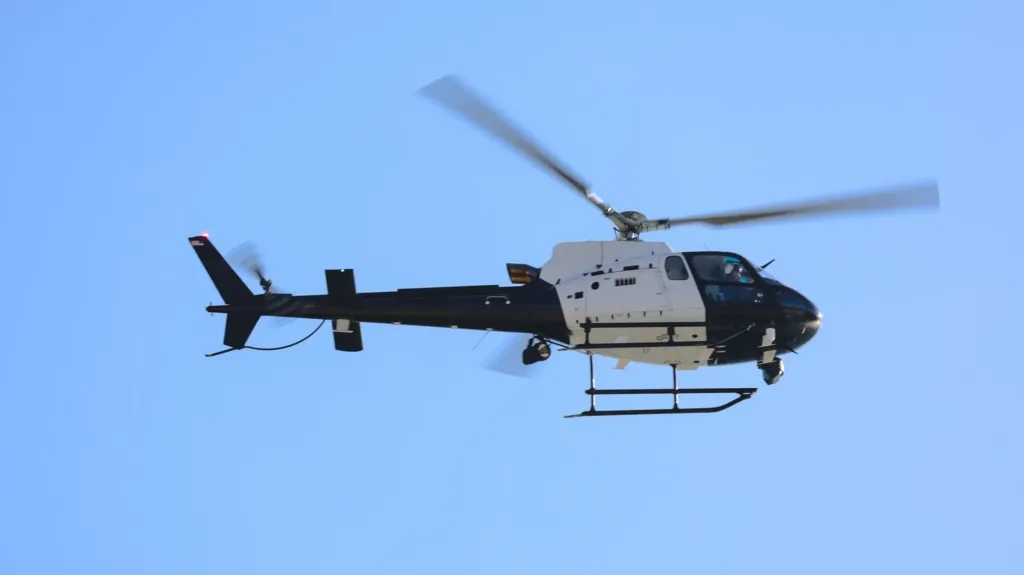
A terrible air accident has claimed the lives of four people in southern Quebec. Emergency responders rushed to a farm field in Sainte-Brigide-d’Iberville on Saturday afternoon after receiving urgent reports of a helicopter in distress. By the time rescue teams arrived at the scene, the aircraft was completely engulfed in flames. Authorities confirmed that all four individuals on board died at the scene.
The accident happened around 2:30 PM local time in a quiet rural community located about 50 kilometers southeast of Montreal. The crash site sits near Rang des Écossais, just off Highway 10. Local emergency crews and firefighters managed to bring the intense fire under control within an hour, but the damage to the aircraft was severe.
Police officers and forensic teams remained at the crash site late into the night to secure evidence and begin the delicate task of examining what went wrong. Provincial police confirmed that the victims could not be identified right away due to the severity of the fire and impact. Official identification is expected to take several days as coroners and forensic specialists complete their work.
News of the fatal crash spread quickly across the region, drawing condolences from government officials and community members alike. Federal Transport Minister Steven MacKinnon expressed deep sorrow over the tragedy, confirming that federal safety monitors are actively following the situation. As investigators search through the charred wreckage, families and observers are left waiting for answers about what caused this sudden flight disaster.
What We Know About The Quebec Helicopter Crash Site And Emergency Response
The quiet countryside of Sainte-Brigide-d’Iberville became the site of an intense emergency effort on Saturday. Sainte-Brigide-d’Iberville is a small municipality in the Montérégie region, known mostly for its scenic farmland and proximity to major highways connecting Montreal to the Eastern Townships. When the distress call came in at 2:30 PM, local dispatchers immediately mobilized police officers, paramedics, and local fire departments.
The $0 Secret To Launching Your Entire Online Empire
Why pay hundreds every month for separate software? Build funnels, send emails, and make sales with Systeme.io completely free.
Get Started For $0Free Forever • No Credit Card Needed • Beginner-Friendly
Witnesses in the area reported seeing an aircraft that appeared to be struggling in the sky shortly before it went down. Within moments of hitting the ground near Rang des Écossais, the helicopter caught fire. The resulting smoke could be seen from nearby roadways, including Highway 10, which serves as a major commuter artery for southern Quebec.
Firefighters arrived quickly and used heavy suppression tactics to put out the blaze. Despite their rapid response, the fire had already consumed much of the fuselage. Sergeant Audrey-Anne Bilodeau, a spokesperson for the Sûreté du Québec, confirmed to reporters that all four occupants were pronounced dead on the scene by medical personnel.
Emergency teams established a wide security perimeter around the field to preserve fragile evidence. Because helicopter fires can destroy critical electronic components and light structural materials, initial responders had to take extra care not to disturb key fragments of the wreckage. Rescue workers worked straight through the evening under heavy spotlighting to secure the perimeter before weather conditions or overnight darkness could disrupt the site.
Who Is Leading The Investigation And What Happens Next?
Understanding why an aircraft crashes requires a careful, step-by-step scientific investigation. Multiple law enforcement and aviation regulatory bodies have launched joint investigations into the Sainte-Brigide-d’Iberville incident.
The Sûreté du Québec has assigned its Major Crime Unit to lead the criminal and circumstantial investigation alongside specialized crime scene technicians. In Canada, police units automatically investigate fatal crashes to rule out criminal foul play, examine witness testimonies, and assist the coroner’s office in establishing the timeline leading up to the incident.
At the same time, the Transportation Safety Board of Canada deployed a dedicated team of air safety investigators directly to the field. The TSB is an independent federal agency responsible for advancing transportation safety by conducting thorough inquiries into aviation, rail, marine, and pipeline accidents. Their primary goal is not to assign blame or civil liability, but to uncover the root causes of the crash so that similar accidents can be prevented in the future.
Federal Transport Minister Steven MacKinnon announced that his department is closely tracking the progress of the investigation and will appoint a Minister’s Observer. This official will keep the federal government informed on any immediate safety concerns that might affect similar helicopter models operating across Canadian airspace.
Investigating a private helicopter crash involves several detailed steps:
- Wreckage Analysis: Investigators carefully examine the position of rotor blades, engine components, flight controls, and fuel lines to determine whether mechanical failure occurred before impact.
- Flight Path Reconstruction: Radar data, GPS records, and mobile phone signals are analyzed to map out the helicopter’s exact takeoff point, flight altitude, speed, and turns.
- Weather Evaluation: Weather conditions at 2:30 PM, including wind gusts, visibility, temperature, and cloud cover, are studied to see if environmental factors played a role.
- Maintenance and Pilot Records: Authorities review the aircraft’s maintenance logs, inspection history, and the pilot’s flight hours, certifications, and recent rest cycles.
Because the helicopter was privately owned and operated, it may not have been equipped with the heavy-duty flight data recorders often found on large commercial passenger planes. This means investigators will rely heavily on physical wreckage examination, witness reports, and ground radar records to piece together the final minutes of the flight. When major incidents affect public transport and flight systems, thorough investigations are crucial for public confidence, as seen during major events like the UK air traffic control system failure.
Why Victim Identification Takes Time In Aviation Fatalities
One of the most agonizing aspects of a fatal air crash for families is the waiting period for official victim identification. Authorities in Quebec have asked for patience as the coroner’s office works through a rigorous verification process.
In severe high-impact crashes followed by post-impact fires, visual identification is rarely possible or safe for legal standards. Medical examiners must rely on scientific methods to ensure complete accuracy before releasing official names to the public and surviving relatives.
The identification process typically involves:
- Dental Records Comparison: Forensic dentists compare dental records provided by family dentists with findings from the crash site.
- DNA Profiling: Genetic samples taken from the scene are matched against reference samples provided by immediate family members.
- Medical and Physical Indicators: Unique medical markers, such as former surgical implants or distinct physical characteristics, are verified.
Sergeant Audrey-Anne Bilodeau noted that this meticulous process could take several days to complete. Police want to ensure that families are notified privately and with absolute certainty before any names are released to news outlets or published online.
Understanding Private Helicopter Flight Hazards
Helicopters are versatile, remarkable machines that can land in tight spaces and hover in ways fixed-wing airplanes cannot. However, operating a private helicopter comes with unique operational realities and safety considerations that differ significantly from commercial airline flights.
Private aviation in Canada operates under regulatory safety frameworks established by Transport Canada. While private pilots undergo rigorous training and regular check-rides, smaller private helicopters generally operate without the double-redundancy systems and co-pilot setups standard on commercial flights.
Send, Spend & Hold Money Worldwide Without Hidden Fees
Transfer money internationally at the real exchange rate and hold 40+ currencies in one account.
Open a Wise AccountMid-market rate • Fast transfers • 40+ currencies
Low-Altitude Flying Risks
Helicopters frequently fly at much lower altitudes than commercial jetliners. Low-altitude flight leaves pilots with significantly less time and altitude to react if an engine power loss or tail-rotor malfunction occurs. In open farmland areas, low-hanging utility wires, sudden wind shifts, and localized weather bursts can create unexpected hazards for low-flying aircraft.
Thermal and Engine Demands
Helicopter engines and rotor gearboxes operate under high stress. A sudden mechanical defect in the main rotor transmission or fuel delivery system can cause an immediate loss of lift. While pilots are trained in a technique called autorotation—which uses air flowing up through the rotor blades to land safely without engine power—executing autorotation successfully requires adequate altitude, speed, and suitable landing terrain.
Weather Sensitivity
Small rotary-aircraft are far more sensitive to sudden weather shifts than heavy airliners. Low clouds, fog, strong crosswinds, or sudden downdrafts can reduce visibility or affect stability within seconds. Investigators in Sainte-Brigide-d’Iberville will look closely at weather reports from nearby airports to see if localized wind conditions contributed to the aircraft entering distress.
People traveling across North America often follow regular updates on infrastructure, safety regulations, and government policies. Whether you follow stories about Canada’s economy and infrastructure projects or keep track of regional safety updates, air safety remains a critical focus for both government leaders and everyday travelers.
How Helicopter Emergency Protocols Work In Canada
When an aircraft encounters trouble in Canadian airspace, a series of automated and manual emergency alerts are triggered to summon help as quickly as possible.
Emergency Locator Transmitters (ELTs)
Most Canadian aircraft are equipped with an Emergency Locator Transmitter. An ELT is designed to activate automatically upon detecting a sudden, heavy impact. The device broadcasts a distress signal on international emergency radio frequencies, sending precise GPS location coordinates to satellite rescue networks operated by military and civilian search-and-rescue centers.
Air Traffic Control Distress Calls
If a pilot notices a mechanical problem or instrument failure while airborne, they broadcast a distress call over aviation radio frequencies. Using standard callwords like “Mayday” for immediate grave danger or “Pan-Pan” for urgent technical trouble, the pilot alerts air traffic controllers and nearby aircraft of their position and situation.
In the Sainte-Brigide-d’Iberville incident, emergency services received calls reporting a helicopter visibly in distress shortly before 2:30 PM. This indicates that observers on the ground or local radio monitors noticed trouble unfolding in real time before the aircraft made contact with the terrain.
Community Impact And Condolences Flow In Across Quebec
Tragedies like this leave deep marks on local communities. Sainte-Brigide-d’Iberville is a close-knit municipal district where residents are accustomed to peaceful farm routines. The sudden arrival of fire engines, police cruisers, and news helicopters brought quiet rural life to a standstill on Saturday.
Local residents expressed shock over the incident, with many taking to social media to share sympathies for the victims and praise the prompt action of local first responders. Local fire crews were commended for containing the post-crash fire quickly under challenging field conditions.
The $0 Secret To Launching Your Entire Online Empire
Why pay hundreds every month for separate software? Build funnels, send emails, and make sales with Systeme.io completely free.
Get Started For $0Free Forever • No Credit Card Needed • Beginner-Friendly
Canadian Transport Minister Steven MacKinnon posted a public statement on X, writing that his thoughts are with the families affected by the tragic crash. He assured the public that federal safety personnel will remain actively engaged until the root causes of the accident are fully understood.
As Canada monitors safety trends across aviation, municipal infrastructure, and regional travel systems, incidents like this highlight the importance of continuous safety reviews. From major urban centers like Montreal to growing suburban regions tracked in reports like StatCan’s Canadian demographic studies, public safety and emergency preparedness remain top priorities for communities nationwide.
Practical Travel And Emergency Preparedness Tips
While air accidents involving private helicopters are statistically rare, unexpected emergencies during travel can happen anywhere. Whether you are taking regional flights, driving long distances, or exploring new destinations, staying prepared gives you peace of mind.
Here are a few practical safety habits everyone can practice when traveling:
- Keep Emergency Contacts Updated: Always share your travel itinerary and estimated arrival times with a family member or trusted friend before departing on private or regional trips.
- Use Modern Location Tools: Consider carrying personal safety beacons or smart tracking devices when traveling through rural or remote areas. You can learn simple setup methods by reading how to track your items and location securely.
- Download Travel Safety Apps: Equipping your smartphone with real-time weather alerts and emergency radar tools can help you avoid sudden severe weather. Take time to explore essential travel apps for safety and navigation before heading out on your next journey.
- Know Local Emergency Numbers: When traveling across different provinces or countries, verify local emergency response numbers and hospital locations along your route.
Frequently Asked Questions (FAQs)
Where did the helicopter crash happen?
The helicopter crashed in a farm field near Rang des Écossais, close to Highway 10, in the town of Sainte-Brigide-d’Iberville, Quebec. This area is about 50 kilometers (31 miles) southeast of Montreal.
How many people died in the Quebec helicopter crash?
Police confirmed that all four people on board the private helicopter died in the crash. There were no survivors.
Have the victims of the crash been identified?
Not yet. Quebec provincial police stated that victim identification could take several days because of the severe fire that broke out after the impact. Coroners and forensic specialists are using DNA and medical records to confirm identities.
Who is investigating the cause of the helicopter crash?
The investigation is being conducted jointly by the Sûreté du Québec’s Major Crime Unit and the Transportation Safety Board of Canada (TSB). Transport Canada is also monitoring the progress of the inquiry.
Was the helicopter a commercial or private aircraft?
Sûreté du Québec officials confirmed that the aircraft appeared to be a privately owned helicopter. Further details about the owner and flight origin will be released as the TSB completes its preliminary report.
The Sainte-Brigide-d’Iberville helicopter crash is a sobering reminder of how fast situations can change in the air. As crash investigators from the Transportation Safety Board of Canada continue to sift through evidence in the coming days, more details regarding the aircraft’s maintenance history, flight plan, and pilot actions will clear up remaining questions. For now, the focus remains on identifying the victims, comforting grieving families, and ensuring that any safety lessons learned from this disaster help make Canadian skies safer for everyone.
To stay updated on breaking news, viral stories, and detailed coverage from around the world, visit our About Page to learn more about our mission. Have questions, tips, or comments? Feel free to reach out directly through our Contact Page.
You can also join our growing community on social media to follow breaking updates as they happen:
- Follow us on Instagram
- Connect with us on Facebook
- Stay updated on X (formerly Twitter)
