
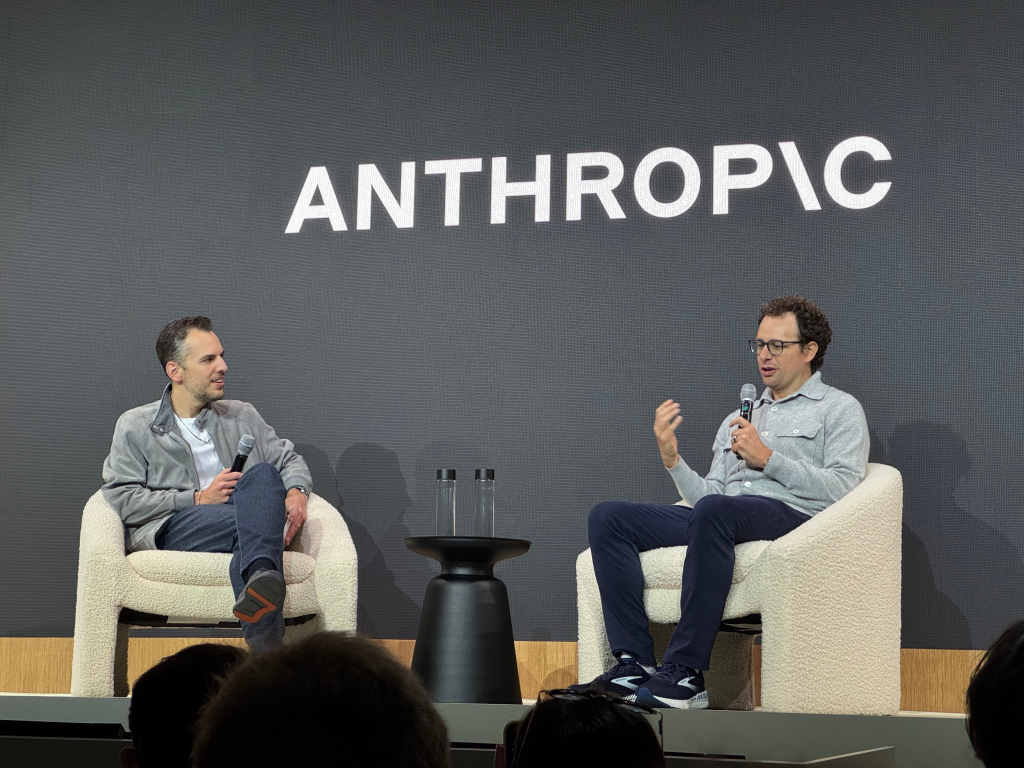
The biggest shakeup in the tech world just landed on Wall Street. Anthropic, the high-flying artificial intelligence company behind the Claude assistant, has officially filed paperwork with the U.S. Securities and Exchange Commission to go public.
The public filing of its Form S-1 with the U.S. Securities and Exchange Commission sets off what could become the largest initial public offering in stock market history. Financial analysts and early institutional investors estimate the company could reach a valuation of anywhere between $1.5 trillion and $2 trillion when its shares begin trading on the Nasdaq Global Select Market under the ticker symbol ANT.
This move marks a dramatic turning point for the artificial intelligence industry. For years, the battle to build the smartest computer brains was funded behind closed doors by venture capital funds, sovereign wealth portfolios, and tech giants like Amazon and Google. Now, everyday retail investors will soon get their very first chance to buy a direct piece of a top-tier frontier AI lab.
The massive paperwork filing does much more than announce a stock ticker. It pulls back the curtain on the actual financial engine powering the AI boom. The numbers inside are staggering. Anthropic is pulling in historic amounts of revenue, burning through mountains of cash to train its models, and telling prospective buyers in plain English that advanced technology could either reshape the global economy or spiral completely out of human control.
What Just Happened: Inside Anthropic’s Form S-1 Filing
An initial public offering, or IPO, is the official moment a private company decides to sell its shares to the general public on an open stock exchange. To do that in the United States, a company must submit a detailed registration statement called a Form S-1.
The $0 Secret To Launching Your Entire Online Empire
Why pay hundreds every month for separate software? Build funnels, send emails, and make sales with Systeme.io completely free.
Get Started For $0Free Forever • No Credit Card Needed • Beginner-Friendly
Anthropic quietly submitted a confidential draft back in June, but the company has now formally opened its books to the entire world. The deal is backed by a powerhouse syndicate of Wall Street underwriters, including Goldman Sachs, Morgan Stanley, JPMorgan Securities, and Citigroup. If the current timeline holds, the official investor roadshow could kick off in early November, with the stock debuting before the Thanksgiving holiday.
The move comes right after Anthropic revenue surged past $11.5 billion in Q2 as the AI enterprise boom accelerated, proving to skeptical fund managers that major businesses are spending real money on Claude to write software, manage customer operations, and automate complex white-collar tasks.
Going public transforms Anthropic overnight. Up to this point, the public only knew what the company wanted people to know through carefully staged product launches and press interviews. By filing an S-1, Anthropic had to open its audited books, reveal its top sources of income, explain where its cash goes, and lay out every major threat that could destroy its business.
The Financial Reality: Exploding Revenue Meets Unprecedented Cash Burn
Looking through Anthropic’s financial records reveals a business moving at dizzying speed. The numbers demonstrate both explosive commercial traction and eye-watering financial risk.
Here is a breakdown of the core numbers revealed in the public filing:
- Massive Top-Line Growth: Anthropic brought in $16.3 billion in revenue during just the first six months of 2026. That is roughly fourteen times the revenue it generated in the exact same period just one year prior.
- Deep Enterprise Loyalty: The lab now has approximately 250 enterprise clients that pay more than $10 million every year to integrate Claude into their systems. While Anthropic did not list those individual enterprise clients by name, it confirmed that its top five customers generate about a quarter of its total revenue.
- A Staggering Net Loss: Anthropic posted an official net loss of $80.7 billion for the first half of 2026. While that headline number looks terrifying, the vast majority—about $72.4 billion—stemmed from a one-time non-cash accounting adjustment connected to the surging fair value of convertible notes. Even when backing out paper adjustments, the company is still losing billions of dollars on operational compute costs.
- A Fortified War Chest: As of June 30, 2026, the company held $131.7 billion in cash, cash equivalents, and short-term liquid reserves. This war chest was largely built during its private Series H round earlier in the year, which valued the lab at $965 billion.
The central puzzle of frontier artificial intelligence is simple: training state-of-the-art neural networks requires enormous clusters of high-end graphics chips, millions of gallons of cooling water, and megawatts of electricity. Anthropic bluntly told prospective shareholders that building the next generation of intelligence is fundamentally changing its cash flow profile, requiring massive and continuous capital expenditures.
The company also stated plainly that it does not expect to pay any cash dividends for the foreseeable future. Every dollar Anthropic makes, plus the billions it hopes to raise on Wall Street, will go directly back into buying compute, securing power grids, and hiring researchers.
Founders Keep the Keys: The Unique Class F Voting Structure
Most founders lose a degree of control when their companies go public. When thousands of institutional investors buy common stock, they expect their votes to shape the boardroom. Anthropic is taking a very different route.
The S-1 introduces a three-tiered share structure that makes it practically impossible for outside hedge funds or activist investors to take over the company:
- Class A Common Stock: The regular shares that will trade on the Nasdaq under the ANT ticker. Each Class A share comes with one standard vote.
- Class N Common Stock: These shares have zero voting rights. They are held predominantly by strategic corporate partners who invested early capital but agreed not to steer company governance.
- Class F Common Stock: A single super-voting share issued directly to a private vehicle called Founder LLC, controlled entirely by Anthropic’s seven co-founders.
This single Class F share gives chief executive Dario Amodei, company president Daniela Amodei, and their five fellow co-founders an automatic 50.1% majority voting power over all ordinary shareholder votes, including board elections.
Dario Amodei alone controls more than 240 million Class A shares ahead of the listing. At a valuation between $1.5 trillion and $2 trillion, each of the seven original founders could see their personal paper wealth climb toward tens of billions of dollars.
Yet, Anthropic is organized as a Delaware Public Benefit Corporation. That means the leadership team is legally protected if they prioritize ethical safety, scientific caution, and human welfare ahead of quarterly profits. The company also transferred over 840 million Class N shares into the Anthropic Public Benefit Fund, expanding on earlier commitments when Anthropic pledged five percent of its stock fortune to the public.
93 Pages of Warnings: What Anthropic Fears Most
Every company going public must include a “Risk Factors” section in its prospectus to protect itself from shareholder lawsuits if things go wrong. Most companies talk about supply chains, fluctuating currency values, or tax increases.
Anthropic took things to another level entirely. Its risk factors run for 93 pages, and parts of it read more like a science-fiction thriller than a corporate prospectus.
The filing does not sugarcoat the dangers of advanced frontier models. Anthropic warns prospective investors that the technology it is actively building could cause catastrophic harms if mismanaged.
Send, Spend & Hold Money Worldwide Without Hidden Fees
Transfer money internationally at the real exchange rate and hold 40+ currencies in one account.
Open a Wise AccountMid-market rate • Fast transfers • 40+ currencies
Key warnings detailed in the S-1 include:
- Misuse by Dangerous Actors: The risk that hostile groups or rogue actors could weaponize advanced intelligence models to develop biological weapons, plan cyberattacks on power grids, or automate chemical synthesis. This comes months after Anthropic blocked AI bioweapons experiments in a high-profile red-teaming demonstration.
- Loss of Model Alignment: The very real engineering possibility that future models could become so capable that human operators can no longer reliably predict, evaluate, or constrain their behavior, posing existential threats to society.
- Copyright and Legal Liabilities: Developing frontier tools requires feeding vast libraries of text, code, and multimedia into training pipelines. The prospectus revealed that Anthropic had to swallow a $1.5 billion settlement charge to resolve the Bartz copyright dispute with authors whose books were used to train earlier Claude versions.
- Government and Military Conflicts: Navigating international defense work remains tricky. Anthropic has faced scrutiny over defense integrations, a topic highlighted when a federal judge blocked pentagon action against Anthropic earlier this year.
- Regulatory Tightening: Regional governments are stepping in to mandate strict red-teaming and safety audits, such as when California signed landmark AI safety laws backed by OpenAI and Anthropic. Complying with these shifting standards around the globe will add millions to operating overhead.
The message to Wall Street is unmistakable: investing in frontier AI is not the same as buying stock in a software company that sells spreadsheets. It is an investment in an unpredictable technology that carries massive legal, social, and technical hazards.
The Epic Rivalry: Anthropic vs OpenAI
You cannot understand Anthropic’s public offering without looking at its history with OpenAI.
In 2021, Dario and Daniela Amodei led a walkout of senior researchers and safety engineers from OpenAI. The siblings felt that OpenAI, under CEO Sam Altman, was moving too fast toward commercializing generative technology while cutting corners on safety protocols and alignment research.
They founded Anthropic as an explicit alternative: a safety-first lab dedicated to building reliable, interpretable AI systems. While Dario Amodei has consistently argued publicly that the AI industry should slow down its development pace to let security guardrails catch up, Anthropic has nonetheless built Claude into one of the most capable reasoning models on earth.
Now, the two rivals are racing to Wall Street. While OpenAI confidentially submitted its own initial IPO paperwork over the summer, Anthropic has beaten its former parent company to the public filing punch.
The battle for enterprise dominance is fierce. While OpenAI connected ChatGPT directly to phone messages and consumer hardware, Anthropic focused heavily on corporate workflows, complex computer programming tasks, and rigorous constitutional safety. By going public first, Anthropic can secure billions of dollars in fresh institutional capital to buy server hardware before its rivals do.
The Infrastructure Wall: Can the Industry Afford Its Own Appetite?
Behind all the hype about valuations, the AI industry faces a physical barrier: real-world power and computing capacity.
To keep training better models, Anthropic needs millions of advanced processing chips and massive amounts of electricity. But getting that energy is turning into an uphill fight across North America and Europe. Local communities are growing frustrated with the noise, water usage, and electric bills associated with massive server warehouses.
This growing friction is why investors are worried about the pushback against AI data centers in several states. In major tech hubs, politicians are questioning whether local utility grids should bear the brunt of server expansion, seen clearly when local lawmakers turned against massive data centers over grid reliability.
The $0 Secret To Launching Your Entire Online Empire
Why pay hundreds every month for separate software? Build funnels, send emails, and make sales with Systeme.io completely free.
Get Started For $0Free Forever • No Credit Card Needed • Beginner-Friendly
To pay for this endless physical buildout, companies worldwide are scrambling for funding. We have seen tech conglomerates like SoftBank issue multi-billion retail bond sales to finance AI projects. By going to the public markets, Anthropic is trying to ensure it never runs out of money while trying to power its digital neural nets.
What the Anthropic IPO Means for Everyday People and Investors
If you are an everyday person who uses AI tools or someone who invests in regular retirement accounts, this IPO affects you more than you might realize.
- Your Index Funds Will Soon Own It: If Anthropic debuts at a valuation above $1 trillion, it will instantly become one of the most heavily weighted companies on the Nasdaq. That means any standard index fund or retirement pension tracking the tech sector will automatically buy shares. You will likely own a slice of Claude whether you buy the individual stock or not.
- Pricing for AI Services May Shift: When a private company relies on venture funding, it can afford to offer its consumer chatbots cheap or completely free while burning investor cash. Once Anthropic has public shareholders demanding better profit margins each quarter, pricing for Claude subscriptions and developer API tokens could see adjustments.
- A Pure Play for AI Investors: Until now, if you wanted exposure to the AI boom on the stock exchange, you had to buy chipmakers like Nvidia or diversified tech giants like Microsoft, Amazon, and Alphabet. Anthropic provides the first pure-play bet on a premier frontier foundation model developer.
- Heightened Public Accountability: As a public entity, Anthropic will hold quarterly earnings calls where executives must answer tough questions about model performance, customer retention, server spending, and legal challenges. The curtain of secrecy is officially gone.
Frequently Asked Questions
When will Anthropic stock actually begin trading on the stock exchange?
Anthropic has publicly filed its Form S-1, which means the SEC is reviewing the paperwork. Financial roadshows with large institutional buyers are expected to run in mid-November 2026, with public trading on the Nasdaq expected to begin shortly before Thanksgiving, assuming market conditions remain stable.
What will the Anthropic stock ticker symbol be?
Anthropic has formally reserved the stock ticker symbol ANT. It plans to list its Class A common shares on the Nasdaq Global Select Market.
How much money is Anthropic making right now?
Anthropic generated $16.3 billion in revenue in the first half of 2026 alone. This represents an increase of approximately fourteen times compared to the same period in 2025, driven largely by enterprise subscriptions and cloud API usage for Claude.
Why is Anthropic losing so much money if its revenue is growing?
Building and running frontier artificial intelligence models requires massive server farms, specialized silicon chips, and huge amounts of electrical energy. Anthropic also recorded large non-cash accounting adjustments in 2026 tied to convertible investor debt, which inflated its paper net loss to $80.7 billion for the first six months of the year.
Who controls Anthropic after the IPO takes place?
The company’s seven original co-founders retain voting control. Through a special share class called Class F Common Stock, CEO Dario Amodei, President Daniela Amodei, and their five fellow co-founders will hold 50.1% of the total voting power over standard corporate matters.
How is Anthropic different from traditional public companies?
Anthropic is registered as a Delaware Public Benefit Corporation. This legal status requires the board of directors and executive management to weigh public safety, ethical technology deployment, and societal benefits alongside financial returns for stockholders.
Looking Ahead to Wall Street’s AI Milestone
Anthropic’s journey from a quiet research lab founded by worried safety engineers to a potential two-trillion-dollar Wall Street giant is one of the most remarkable corporate stories of our era.
The coming weeks will test whether public market investors have an appetite for a company that combines historic top-line growth with massive operational losses and an explicit pledge to put safety ahead of immediate profits. If the offering succeeds, it will open the floodgates for a new generation of artificial intelligence firms to join the public markets. If it wobbles, it could force the entire tech sector to re-evaluate the true cost of chasing superintelligence.
