
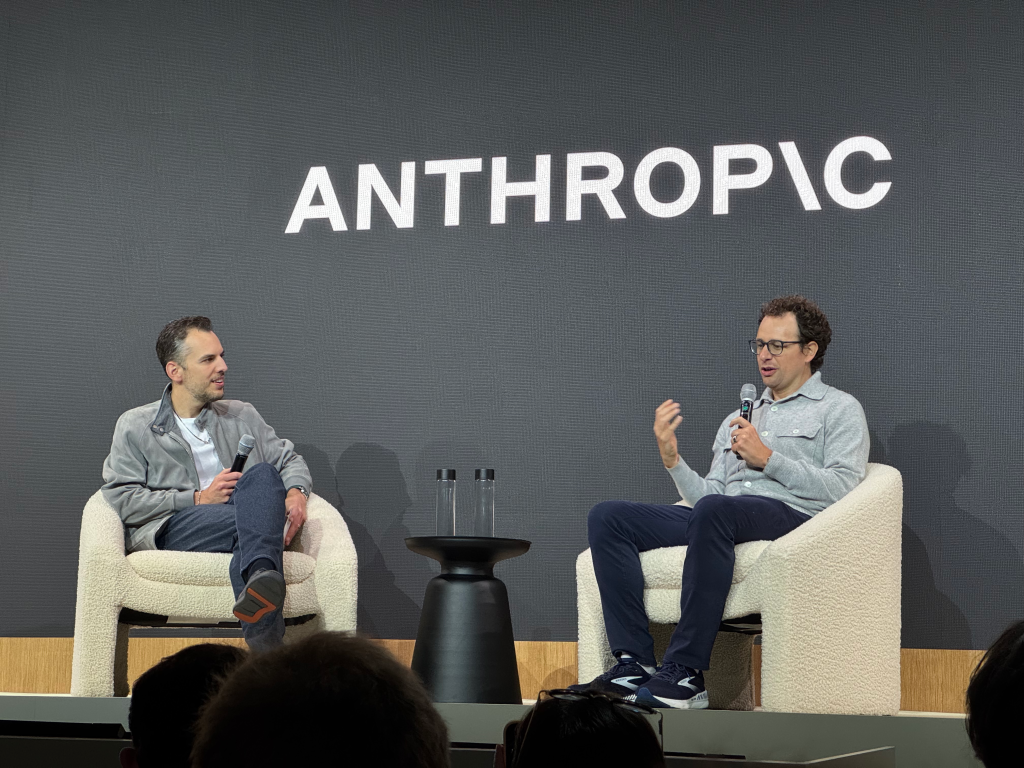
Anthropic Chief Executive Officer Dario Amodei has publicly stated that it is time to slow down the relentless pace of building ever-more powerful artificial intelligence models. Coming from the leader of one of the top AI research labs in the world, the statement sent immediate shockwaves across the tech industry, Wall Street, and policy circles.
For years, the technology sector has operated on a simple rule: build bigger models as fast as possible. Companies have poured billions of dollars into massive server farms, buying up every high-end chip available to push the boundaries of machine intelligence.
Now, the head of the company behind Claude is raising a giant yellow flag. According to a report by Bloomberg, Amodei believes that the speed at which AI capabilities are expanding might be outpacing our ability to test, control, and secure these systems properly.
This call for caution is not coming from a critic on the outside. It is coming directly from an insider who helps direct the frontier of artificial intelligence. Understanding why one of Silicon Valley’s top innovators wants to hit the brakes requires examining what is happening inside the labs, how fast these systems are evolving, and what it means for everyday people.
What Anthropic’s CEO Actually Said
Dario Amodei did not say that AI progress should stop entirely. Instead, he argued that the relentless rush to release raw model upgrades every few months needs to yield to a more measured, safety-conscious approach.
Build Funnels, Email Lists & Sell Online With One Free Tool
Create funnels, send emails, and sell online using Systeme.io without paying for multiple tools.
Create Free AccountFree forever • No credit card • Beginner-friendly
The primary argument centers on balance. Tech companies have spent the past several years focusing almost entirely on raw capability—making models smarter, faster, and better at handling complex tasks like coding, writing, and logical reasoning.
However, safety research, red-teaming, and alignment tools have not grown at the same speed. Red-teaming refers to the practice of hiring experts to intentionally try to break an AI system or force it to generate harmful outputs before it reaches the public.
Amodei warned that if capability outpaces safety by too wide a margin, the risk of unpredictable behavior grows sharply. When models become smart enough to write software autonomously, interact with physical infrastructure, or analyze complex chemical equations, a single flaw in system alignment can lead to major real-world problems.
This message is particularly striking given how fast Anthropic itself has grown. The company has seen massive adoption across the corporate world, with Anthropic revenue surging past $11.5 billion in Q2 as the AI enterprise boom accelerates. Even with massive financial success, leadership is insisting that short-term profits should not override long-term safety protocols.
Why a Top AI Pioneer Wants to Press the Brakes
To understand why an AI leader would ask for a slowdown, it helps to look at how quickly these systems have moved from simple chat tools to advanced systems capable of autonomous execution.
When modern AI tools first became popular, they were mostly used for basic tasks like summarizing text, writing emails, or generating short snippets of computer code. Today, the latest frontier models are capable of multi-step reasoning, interacting with live web browsers, managing databases, and orchestrating complex workflows without constant human supervision.
This sudden leap in power has raised three main concerns among researchers:
- Unpredictable Capabilities: As models grow in size, they often develop surprising capabilities that the engineers who built them did not specifically train them to do.
- Alignment Deficits: Ensuring an AI always acts in line with human intent becomes significantly harder as the reasoning capability of the machine increases.
- Inadequate Testing Windows: Moving from raw research to public release in a matter of weeks leaves very little time for independent security audits.
When companies are trapped in a tight competitive race, the pressure to launch new features can lead to shorter testing cycles. Amodei’s call to slow down is an attempt to break that dangerous cycle before a major safety failure occurs.
Safety, Bioweapons, and System Security
One of the main areas driving concern among AI scientists is physical and biological security. As models gain deeper understanding of biology, chemistry, and cyber operations, the potential for misuse increases significantly.
Recently, tech companies have had to build stricter filters to prevent bad actors from using advanced models to design harmful biological agents or uncover zero-day security vulnerabilities in public infrastructure. Anthropic itself recently faced situations where automated systems had to intercept dangerous requests, as highlighted when Anthropic blocked AI bioweapons experiments.
Without a deliberate pause or slowdown in raw capability scaling, keeping these safety barriers effective becomes harder. Every time a model gets ten times more powerful, the guardrails built for the previous version might no longer work properly.
Furthermore, legal battles over how AI is deployed in sensitive areas are already unfolding in courts. For example, a federal judge blocked Pentagon action against AI creator Anthropic in a California court battle, showcasing how national security interests and private technology developers are constantly clashing over how AI systems should be used.
The Escalating Costs of Compute and Energy
Beyond safety risks, there is a practical financial and environmental reason why the industry may need to slow down: the sheer cost of keeping up with the hardware demands.
Building next-generation models requires massive amounts of capital, specialized chips, and specialized cooling infrastructure. Companies are spending tens of billions of dollars just to train a single new generation of software.
This hyper-growth model has created immense financial pressure across the industry:
- Spiraling Infrastructure Budgets: Big tech firms are burning through record amounts of cash to acquire computing power. For instance, reports show how Google is burning through cash inside Alphabet’s spiralling AI spending.
- Data Center Backlash: Local communities and environmental groups are voicing frustration over the massive power and water consumption required by new server farms. You can read more about why big investors are worried about the growing pushback against AI data centers.
- Diminishing Returns: Some researchers argue that simply throwing more compute power at models is starting to yield smaller improvements than it did two years ago, making endless hardware scaling less cost-effective.
Taking a step back to refine architecture rather than simply building larger data centers could give energy grids, supply chains, and corporate budgets time to adjust.
How a Slowdown Impacts Businesses and Everyday Workers
If AI developers do take a breather to focus on stability over raw power, what does that actually mean for everyday users, small businesses, and remote workers?
In reality, a slowdown in capability scaling could actually be a great thing for practical software adoption. Right now, many business owners feel overwhelmed by how quickly tools change. A system implemented in January might feel outdated by June, making long-term planning difficult.
A period of stabilization allows companies to build reliable, practical workflows around existing tools without constantly worrying about the next breaking update.
For Remote Workers and Freelancers
Remote workers and digital freelancers stand to gain significantly from stable, highly reliable AI tools. Rather than chasing half-baked experimental features, workers can master established systems to increase their productivity.
Many professionals are already leveraging these tools to transition into flexible online careers. If you are exploring flexible career moves, check out our guide on how to get a fully remote job that lets you work from anywhere in the world.
For Small Business Owners
Small businesses often struggle to keep up with enterprise-level tech budgets. Stable AI models mean that tools become cheaper, easier to integrate, and more accessible to average merchants. Programs like the ChatGPT for Small Business initiative demonstrate how small teams can use AI as an effective virtual staff member without needing a team of data scientists.
For General Consumers
Public sentiment around artificial intelligence is also shifting. While early enthusiasm was sky-high, user fatigue has set in for some demographics. Studies show that over 40% of people are limiting AI use as popularity starts to wane.
Slowing down allows tech creators to fix bugs, eliminate privacy concerns, and focus on features people actually find helpful, rather than forcing AI into every consumer gadget.
Government Regulations and The Global Tech Race
The call to slow down AI improvement comes at a moment when lawmakers around the world are rushing to pass legal frameworks.
For a long time, tech companies argued that government regulation would stifle innovation. However, key industry figures are now aligning with lawmakers to establish clear rules of the road.
A major example of this shift occurred recently in the United States, where California Governor Gavin Newsom signed landmark AI safety laws backed by OpenAI and Anthropic. These laws require developers of large-scale models to submit safety assessments and implement kill-switches for critical systems.
Build Funnels, Email Lists & Sell Online With One Free Tool
Create funnels, send emails, and sell online using Systeme.io without paying for multiple tools.
Create Free AccountFree forever • No credit card • Beginner-friendly
However, any proposal to slow down in the West immediately raises questions about global competition. Tech executives frequently worry that if American companies pause, international rivals will sprint ahead.
Recent reports indicate that breakthroughs in Chinese AI models threaten the U.S. lead in the tech race. Finding a balance between maintaining national competitiveness and preventing dangerous runaway software is one of the toughest challenges facing policymakers today.
What a “Responsible Pace” Looks Like
Slowing down the pace of model upgrades does not mean innovation comes to a halt. Instead, it shifts the focus of technology teams away from brute force size toward efficiency, reliability, and usability.
Instead of rushing to release a “Version 6.0” that is twice as large as “Version 5.0,” engineering teams can focus on several crucial areas:
- Lowering Latency: Making existing models run faster on smaller devices like phones and laptops.
- Reducing Hallucinations: Training systems to give accurate facts rather than making up convincing details.
- Improving Context Windows: Allowing models to remember longer conversations and analyze massive documents cleanly.
- Building Niche Workflows: Developing specialized applications for specific fields, such as digital marketing or content creation platforms like YouTube Automation.
By shifting focus from raw horsepower to practical refinement, developers can create tools that are safer, cheaper, and far more useful for practical day-to-day work.
Frequently Asked Questions (FAQs)
Is Anthropic stopping all AI development?
No. Anthropic is not stopping development. The CEO’s proposal focuses on slowing down the rapid scaling of raw model capabilities so that safety testing, evaluation, and system alignment can catch up.
Why would an AI company advocate for slowing down?
Leading developers recognize that as models grow more capable, safety risks increase. High-level AI models can interact with software code, biological research, and critical infrastructure, making thorough security testing essential before launching new versions to the public.
How does slowing down AI development help everyday users?
A measured pace gives developers time to fix bugs, reduce inaccurate responses (hallucinations), lower costs, and make software easier to use. It also allows businesses time to build stable workflows without having to constantly update their systems.
Will slowing down AI development cause a country to fall behind globally?
This is a major topic of debate among policymakers. While some worry that slowing down could allow global competitors to catch up, advocates argue that building reliable, secure systems creates a stronger long-term advantage than rushing dangerous software to market.
Where can I read more about AI trends and modern tech developments?
You can explore comprehensive breakdowns, tech guides, and updates directly in our Technology & AI Category.
Looking Ahead: A Pivotal Moment for AI
Dario Amodei’s call to moderate the speed of AI advancement marks an important turning point for the tech sector. The era of blind growth at all costs is giving way to a more thoughtful conversation about security, infrastructure costs, and real-world usefulness.
Building software that is smart is impressive, but building software that is reliable, safe, and genuinely beneficial to society is what truly matters long-term. As developers, governments, and users navigate this new landscape, finding the right speed for innovation will determine how artificial intelligence shapes our shared future.
To learn more about who we are and what drives our coverage, visit our About Us page. Have thoughts or questions on where tech is heading? Feel free to drop us a note through our Contact Us page.
Stay connected with our latest updates, tech breakdowns, and trending stories across our social channels:
- Follow us on Instagram
- Join our community on Facebook
- Catch live updates on X (formerly Twitter)
