
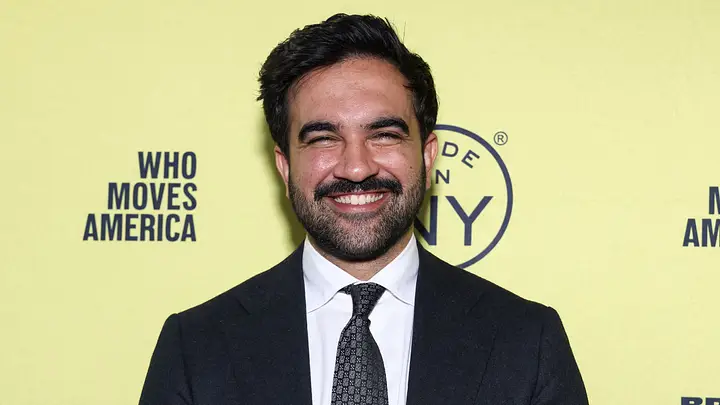
New York City Mayor Zohran Mamdani has officially ordered a department-wide review of the New York Police Department’s use-of-force policies, kicking off the first comprehensive overhaul of how city officers use physical restraint and lethal weapons in over a decade. The directive instructs City Hall and police leadership to examine every level of force used against civilians, backed by a broader package of legal measures designed to hold officers accountable for misconduct and open up investigations to public scrutiny.
Mamdani announced the order on Monday, declaring that government authority must carry the strictest possible standard of accountability when directed at civilians. His administration affirmed that every New Yorker deserves to know that police force will only ever be applied when lawful, measured, and strictly necessary.
The decision arrives during intense public scrutiny surrounding street policing, high-profile shooting incidents, and growing demands from community organizers for structural reform across the nation’s largest police department. Along with the policy review, City Hall confirmed plans to boost financial backing for independent watchdogs, introduce stricter disciplinary tracking mechanisms, and enforce clear deadlines for releasing reports and evidence to families hurt by police encounters.
Why Is This Overhaul Happening Now?
The NYPD has not seen a full-scale review of its use-of-force guidelines since 2016. In the ten years since that last update, public expectations around safety, accountability, and civil rights have changed drastically. High-profile incidents involving civilians, individuals experiencing severe mental health distress, and massive street demonstrations have repeatedly tested the department’s standard operating procedures.
Public attention reached a boiling point following recent events, including the 2024 police shooting of nineteen-year-old Win Rozario in Queens, which sparked widespread outrage over how officers manage mental health emergencies in private homes. Frustration mounted further after an October operation in the Bronx, where a federal Immigration and Customs Enforcement agent opened fire on an SUV carrying twenty-eight-year-old Oscar Belgal and his five-year-old child.
The $0 Secret To Launching Your Entire Online Empire
Why pay hundreds every month for separate software? Build funnels, send emails, and make sales with Systeme.io completely free.
Get Started For $0Free Forever • No Credit Card Needed • Beginner-Friendly
The Bronx shooting triggered immediate protests across city streets, prompting rapid deployment of the NYPD’s heavily equipped Strategic Response Group. Progressive state legislators and local leaders quickly demanded the complete disbanding of the unit, pointing to tense confrontations between police lines and street demonstrators. Similar crowd-control issues and tactical disputes have appeared in past mass gatherings, including when major street protests shut down Manhattan traffic outside international events.
City Hall representatives stated that plans for the use-of-force review had been drafted before the Bronx shooting occurred. Nevertheless, the recent clash accelerated public pressure. Activists, community groups, and progressive allies pushed City Hall to move fast and prove that the new administration would not back away from its campaign promises to reform law enforcement.
The broader public debate mirrors challenges seen across the Atlantic, where major urban centers struggle to balance street security and public trust, as explored in discussions on crime, policing, and civilian safety in London.
Breaking Down the Core Reforms in the Review
The executive action touches multiple areas of everyday police work, internal discipline, and civilian oversight. City Hall is not simply asking officers to reread their patrol guides; it is rewriting the rulebook from top to bottom.
Re-evaluating the Use-of-Force Continuum
Under standard NYPD guidelines, officers follow a continuum of force that dictates how they respond to resistance. This spectrum begins with verbal commands, moves to physical hands-on restraint, escalates to intermediate weapons such as tasers, batons, and pepper spray, and reaches deadly physical force with service firearms.
The upcoming review will re-evaluate every step of that sequence:
- De-escalation First: Officers will face clearer legal obligations to exhaust verbal strategies, tactical repositioning, and time-delay tactics before resorting to physical takedowns.
- Stricter Rules for Intermediate Weapons: The administration plans to evaluate how and when conducted energy devices (tasers) and chemical sprays are used during protests and low-level street stops.
- Mental Health Emergency Protocols: The city is studying new limits on when armed officers can use physical restraint against individuals who are in the middle of psychological crises, prioritizing medical professionals and crisis intervention workers.
Similar concerns about intelligence gathering, preemptive containment, and tactical control have surfaced worldwide when authorities manage public disorder, a pattern detailed in analyses of police intelligence handling during controversial protests.
Supercharging Independent Oversight
Internal police accountability has faced public skepticism for decades because the department has historically investigated its own personnel through the Internal Affairs Bureau. To counter that skepticism, Mamdani’s plan includes an immediate funding boost for the Office of the Inspector General for the NYPD.
The Inspector General acts as an independent watchdog outside the police department’s chain of command. With added funding, the office will hire more investigative analysts, expand data collection on stop-and-frisk encounters, and examine recurring patterns of misconduct inside individual precincts.
City Hall is also introducing a centralized disciplinary tracking system. In the past, internal disciplinary records could remain obscured or delayed behind complex departmental hearings. The new system aims to track substantiated complaints against repeat offenders in real time, making it much harder for bad actors to avoid consequences or transfer quietly between commands.
Transparency for Families and the Public
One of the most consequential changes in the new package directly affects the families of people injured or killed during police encounters.
Families have spent years demanding prompt access to unedited body-worn camera footage, 911 dispatch audio, and preliminary ballistic reports following fatal interactions. Under the new City Hall guidelines, the city will establish standard timelines for delivering investigative reports directly to victims’ relatives.
By removing unnecessary delays and standardizing the disclosure process, the administration aims to eliminate the painful information blackouts that often follow critical incidents.
City Hall vs. Police Culture: The Political Battle
Mayor Mamdani’s announcement represents a defining shift in New York City politics. As an outspoken democratic socialist who spent years in the New York State Assembly organizing tenant unions and challenging establishment politics, Mamdani entered City Hall with a clear commitment to rethink criminal justice.
His administration has already signaled a willingness to use executive authority aggressively across different sectors, mirroring the tough municipal stance seen when the mayor cracked down on major corporate violations.
Send, Spend & Hold Money Worldwide Without Hidden Fees
Transfer money internationally at the real exchange rate and hold 40+ currencies in one account.
Open a Wise AccountMid-market rate • Fast transfers • 40+ currencies
Taking on the internal structure of the NYPD is a massive undertaking. The department employs over 34,000 uniformed officers and thousands of civilian personnel, operating with deep-seated institutional traditions and formidable labor unions.
Reorganizing Command Lines
The relationship between City Hall and the NYPD has shifted. The Police Commissioner no longer operates on an entirely separate, untouchable track; instead, the commissioner works in closer coordination with deputy mayors dedicated to public safety and social services.
This restructuring has irritated traditionalists within the law enforcement community, who argue that professional policing should remain free from political interference. Progressive activists, however, argue that direct civilian control over armed municipal agencies is fundamental to a functioning democracy.
The Debate Over Resources and Response Times
The administration’s efforts to trim excessive police overtime spending have created friction. Union leaders argue that mandatory overtime covers critical shift shortages and maintains neighborhood patrols across high-density transit corridors.
Critics from police unions warn that slashing overtime without hiring waves of replacement personnel could strain precinct response times. Supporters of the mayor counter that bloated overtime budgets incentivize unnecessary arrests for minor infractions, pulling resources away from neighborhood investments, youth programs, and community mental health services.
The challenge of securing a major metropolis while safeguarding constitutional rights connects directly to debates over safety infrastructure and protection measures across major American cities.
How Frontline Officers and Unions Are Responding
The reaction from law enforcement unions has been swift and skeptical. Rank-and-file officers frequently point out that policing the five boroughs involves sudden, unpredictable violence, requiring quick decisions under extreme stress.
The Fear of Hesitation
Union representatives often raise concerns that stacking new procedural hurdles and disciplinary threats on top of officers will cause dangerous hesitation on the street.
From the union perspective, if an officer worries that an ordinary physical arrest could result in an immediate Inspector General inquiry or disciplinary sanctions, that officer might pause when facing an armed suspect. Police leaders argue that clear authority to use force is what keeps officers and innocent bystanders alive during life-threatening encounters.
Low Morale and Recruitment Challenges
Police departments across the United States have faced a persistent recruitment shortage over recent years. Experienced officers have taken early retirements, and younger generations show less interest in pursuing law enforcement careers.
The $0 Secret To Launching Your Entire Online Empire
Why pay hundreds every month for separate software? Build funnels, send emails, and make sales with Systeme.io completely free.
Get Started For $0Free Forever • No Credit Card Needed • Beginner-Friendly
Union officials argue that constant public criticism from the mayor’s office damages morale, pushes veteran detectives to retire early, and discourages qualified recruits from joining the NYPD academy. They maintain that the city needs to show genuine appreciation for the risks officers face on patrol every single day.
What Community Organizers and Reformers Want
Civil rights attorneys, racial justice advocates, and neighborhood leaders view the mayor’s order as a necessary first step, though many insist it does not go far enough.
Disbanding the Strategic Response Group
The demand to dissolve the Strategic Response Group remains a primary goal for grassroots organizations. The unit was initially created to combat terrorism and handle severe active shooter emergencies. Over the years, however, the city deployed the unit to police political demonstrations, racial justice marches, and labor pickets.
Advocates point to repeated incidents where bike-mounted and riot-geared officers charged into crowds, trapped marchers with barricades, and used aggressive physical tactics against peaceful protesters. Reformers argue that keeping an aggressive paramilitary unit on city streets undermines any peaceful intent behind reviewing use-of-force policies.
Shifting Focus Away from Low-Level Offenses
Community groups want the NYPD to stop using aggressive force during low-level quality-of-life interactions. Encounters over subway fare evasion, street vending, and public drinking frequently spark physical confrontations that escalate into serious injuries.
Advocates argue that true public safety comes from removing armed officers from low-level civil infractions entirely, allowing social service workers, transit ambassadors, and community mediators to address minor neighborhood disputes.
What Changes for Everyday New Yorkers?
For the millions of people who live and work across the five boroughs, the upcoming policy review could change daily interactions with the justice system.
Clearer Rights During Street Encounters
When the city finalizes and publishes its updated rules, civilians will have a clearer understanding of what officers are legally permitted to do during an investigation. New Yorkers will have stronger grounds to challenge improper physical force or reckless chemical weapon usage through official oversight channels.
Better Access to Incident Records
If a family member is injured during an interaction with law enforcement, relatives will no longer have to endure years of bureaucratic silence to learn the truth. Standardized disclosures mean faster access to audio recordings, medical examiner conclusions, and camera footage.
Increased Civilian Participation
City Hall confirmed that the review will incorporate structured public hearings and community input sessions. New Yorkers from all five boroughs will have direct opportunities to speak with policy directors, share personal experiences, and voice their expectations for local precinct conduct.
Frequently Asked Questions
What did Mayor Zohran Mamdani order regarding the NYPD?
Mayor Zohran Mamdani ordered a department-wide review of the NYPD’s use-of-force policies. The order mandates an examination of how officers use physical restraint, non-lethal weapons, and firearms against civilians, while introducing new accountability and transparency reforms.
When was the last time the NYPD reviewed its use-of-force rules?
The last comprehensive review of the NYPD’s use-of-force guidelines took place in 2016. The current review marks the first department-wide overhaul of these rules in ten years.
What is the Office of the Inspector General for the NYPD?
The Office of the Inspector General for the NYPD is an independent city oversight body outside the police chain of command. It monitors police operations, investigates systemic issues within the department, and recommends structural changes. Under the mayor’s new plan, this office will receive extra funding to expand its investigations.
Did the recent ICE shooting in the Bronx cause this review?
City Hall stated that the review was planned before the October ICE shooting in the Bronx occurred. However, the shooting and the intense street protests that followed accelerated public pressure on the administration to announce and implement the reforms immediately.
What is the Strategic Response Group, and why are people protesting it?
The Strategic Response Group is a specialized NYPD unit created for counterterrorism and large emergencies. Critics and community organizers argue that the unit is frequently deployed with riot gear against peaceful demonstrators, leading to excessive force and unnecessary arrests. Multiple political leaders have called for the group to be disbanded.
How are police unions reacting to the mayor’s announcement?
Police unions have expressed deep skepticism. They argue that additional oversight rules and disciplinary threats could cause officers to hesitate during life-threatening encounters, hurt department morale, and worsen ongoing police staffing shortages.
How can ordinary citizens participate in the policy review?
City Hall plans to hold public listening sessions, collect written community feedback, and consult neighborhood groups throughout the review process. Residents can submit testimony on local policing experiences to help shape the final policy recommendations.
The upcoming months will test Mayor Mamdani’s ability to turn campaign promises into lasting institutional change. Reforming the police department requires balancing the safety concerns of neighborhood residents, the operational realities of frontline officers, and the legal demands of justice advocates.
If City Hall can successfully bridge these divides, New York City could build a modern model of public safety rooted in accountability, restraint, and mutual respect.
Have thoughts on city leadership, police reform, or community safety? Reach out to the team directly through the WhatsBuzzn Contact Page to share your story.
Follow the latest cultural updates, breaking news, and political discussions on our social channels:
