
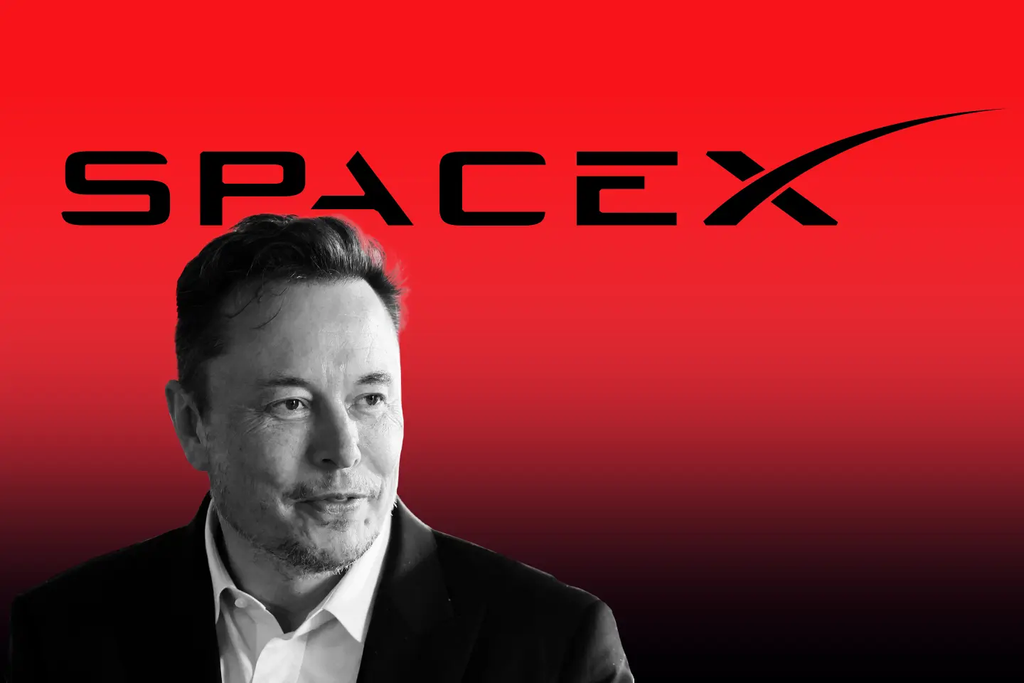
SpaceX has officially made its biggest move yet into the mobile phone industry. The space exploration company owned by Elon Musk has reached a massive agreement to acquire nationwide low-band wireless spectrum licenses. This deal gives Starlink Mobile the exact radio frequencies it needs to transform from a satellite internet provider into a full-fledged global phone carrier.
The announcement sent shockwaves through Wall Street and the entire telecommunications market. Immediately after the news broke, shares of traditional wireless giants like AT&T, Verizon, and T-Mobile took a noticeable hit. Investors realize that SpaceX is no longer just helping people get high-speed internet on rural farms or boats. It is now preparing to connect standard smartphones directly to space without needing traditional cell towers nearby.
For decades, mobile phone users have accepted a basic reality: if you walk into a deep forest, climb a remote mountain, or drive through a desert, your phone loses service. You see the dreaded “No Service” label at the top of your screen. SpaceX wants to make that frustrating experience a relic of the past. By locking down these vital low-frequency airwaves, Starlink Mobile is setting up a system where your ordinary smartphone can stay connected wherever you can see the open sky.
Here is a full look at what this massive spectrum deal actually means, why traditional phone carriers are worried, and how this will change the way you use your phone in the near future.
What Is Wireless Spectrum and Why Did SpaceX Need It?
To understand why this acquisition is such a huge deal, it helps to understand how mobile phones communicate. Invisible airwaves surround us all the time. These airwaves are called radio spectrum. Government agencies regulate this spectrum and divide it into different frequency bands. Companies must purchase licenses from the government or private owners to send signals across these specific frequencies.
The $0 Secret To Launching Your Entire Online Empire
Why pay hundreds every month for separate software? Build funnels, send emails, and make sales with Systeme.io completely free.
Get Started For $0Free Forever • No Credit Card Needed • Beginner-Friendly
Up until now, SpaceX relied primarily on mid-band spectrum around the 2 GHz range for its satellite network. Mid-band spectrum is great for carrying lots of data very quickly. It allows Starlink to stream high-definition videos and support online gaming for home dish users. However, mid-band signals have a major weakness. They struggle to pass through thick physical barriers like concrete walls, dense tree foliage, or rainy weather.
High Frequency vs Low Frequency Explained Simply
Think of wireless spectrum like sound waves. High-frequency signals are like high-pitched sounds. They carry a lot of energy and detail over short distances, but a thick pillow or a closed door can easily muffle them.
Low-frequency signals are like deep, heavy bass lines from a speaker. You can feel a deep bass beat right through heavy brick walls and from several blocks away. That is exactly what low-band spectrum does for mobile phones.
Low-frequency airwaves travel over vast distances and easily bend around hills or punch through buildings, car roofs, and thick trees. By acquiring a nationwide low-band spectrum portfolio, SpaceX gets access to the heavy bass of wireless communication. This makes Starlink Mobile signals much more reliable for standard handheld phones.
Fixing the Dead Zone Problem
The biggest limitation of satellite-to-phone connections in early tests was signal strength inside ordinary environments. If you were sitting inside a moving car or standing under a dense canopy of trees, the signal from a satellite thousands of miles in orbit could drop.
With this new low-band spectrum in hand, Starlink satellites can push signals right through those obstacles. That means you will not need to stand on top of a hill or wave your arm in the air to get a text message through. The signal can reach your pocket even when you are in tough conditions.
How Starlink Mobile Works Without Extra Gear
Many people wonder if they will have to buy a special satellite phone or attach a bulky antenna to their device to use Starlink Mobile. The simple answer is no. SpaceX designed Starlink Mobile to work directly with the standard smartphone you already carry in your pocket.
Traditional satellite phones require long, thick plastic antennas and costly custom hardware. They were built for sea captains, oil rig workers, and backcountry explorers with big budgets. Starlink Mobile flips that concept on its head by moving all the heavy work into space.
Satellites as Flying Cell Towers in Orbit
Instead of building thousands of physical cell towers on the ground, SpaceX is placing the cell towers directly into Low Earth Orbit (LEO). These advanced satellites carry custom direct-to-cell payloads.
When your regular phone loses connection with ground towers, it automatically looks for available signals. The Starlink satellite floating overhead acts just like a cell tower standing on a nearby hill. Your phone communicates with the satellite using standard cellular protocols like LTE and 5G.
Laser Connectivity Between Satellites
Once the satellite receives your text or phone call, it uses high-speed space lasers to bounce that data to other nearby Starlink satellites in seconds. The signal quickly beams down to a ground station connected to the global internet or telephone network.
Because Low Earth Orbit satellites sit only about 300 to 350 miles above the planet—compared to traditional weather satellites thousands of miles away—the delay is minimal. You can hold a natural conversation without annoying delays or voice cutouts.
Why Traditional Phone Companies Are Getting Nervous
The traditional telecommunications industry relies on a business model that has remained unchanged for decades. Companies like AT&T, Verizon, and T-Mobile spend tens of billions of dollars building, maintaining, and leasing thousands of cell towers across cities, highways, and rural towns.
When SpaceX announced this spectrum acquisition, investors reacted immediately. Shares of major carriers tumbled because Starlink Mobile represents a fundamentally different threat.
Eliminating the Need for Tower Infrastructure
Building physical cell towers in remote areas is extremely expensive. A carrier might spend millions of dollars putting up a single tower on a mountain pass just to serve a handful of drivers each day. In many wilderness areas, environmental laws or rough terrain make building towers completely impossible.
Send, Spend & Hold Money Worldwide Without Hidden Fees
Transfer money internationally at the real exchange rate and hold 40+ currencies in one account.
Open a Wise AccountMid-market rate • Fast transfers • 40+ currencies
SpaceX completely bypasses this expensive ground infrastructure. One satellite launched on a Falcon 9 rocket can cover thousands of square miles of land and ocean simultaneously. SpaceX can cover dead zones across an entire continent at a fraction of the cost required to build ground towers.
Shifts in Cellular Partnerships
Previously, SpaceX worked closely with carriers like T-Mobile to test direct-to-cell messaging using existing carrier spectrum. While those partnerships demonstrated that the technology works, acquiring its own nationwide low-band spectrum gives SpaceX full independence.
SpaceX is no longer just a partner supplying satellite backup to traditional phone companies. It now holds the key ingredients to operate as an independent national carrier. This gives Elon Musk total freedom to set prices, create consumer phone plans, and bundle services on his own terms.
What This Means for Everyday Phone Users
The primary benefit of this spectrum acquisition is peace of mind. Almost everyone has experienced losing cell signal during a road trip, while hiking, or during a natural disaster when power grids fail. Starlink Mobile aims to eliminate those scary situations completely.
Emergency Help During Natural Disasters
When hurricanes, wildfires, or severe winter storms strike, physical cell towers are often the first things to go offline. Wind knocks down utility poles, power cuts off tower generators, and floodwaters destroy sensitive electronic equipment on the ground.
Satellites in space are immune to weather events happening on Earth’s surface. Even if an entire state loses power and every local cell tower goes dark, Starlink Mobile satellites remain fully operational overhead. Disaster victims will still be able to text emergency services, send location pins to family members, and call for help.
Continuous Coverage on Oceans and Off the Grid
If you enjoy camping, national parks, off-road driving, or boating, keeping a reliable cell signal is nearly impossible today. Once you sail a few miles off the coast or venture deep into a national park, your phone becomes little more than an offline camera.
With Starlink Mobile backed by low-band spectrum, coverage follows you wherever you travel. You can text your family from a distant hiking trail, check weather updates on a boat, or send photos from a remote cabin in the woods.
Regulatory Approvals and the FCC Battle Ahead
While acquiring the spectrum licenses is a massive milestone, SpaceX still faces regulatory hurdles before launching full commercial service. The Federal Communications Commission (FCC) oversees all airwave spectrum usage in the United States to prevent radio signals from interfering with one another.
Preventing Signal Interference
Traditional phone carriers are closely watching the FCC review process. They argue that powerful satellite signals beaming down from space could potentially cause radio interference with nearby ground-based phone networks.
The $0 Secret To Launching Your Entire Online Empire
Why pay hundreds every month for separate software? Build funnels, send emails, and make sales with Systeme.io completely free.
Get Started For $0Free Forever • No Credit Card Needed • Beginner-Friendly
SpaceX has invested heavily in software and advanced satellite steering technology to ensure its signals stay within precise frequency borders. The company has already conducted extensive testing to prove that direct-to-cell satellite signals can operate cleanly alongside ground networks without disruption.
Global Expansion Challenges
While this spectrum deal strengthens Starlink Mobile’s position in North America, mobile signals do not stop at international borders. SpaceX must negotiate with telecom regulators in every country where it wants to offer mobile service.
In many countries, governments protect local state-owned telecom monopolies. However, as more nations see the life-saving potential of satellite mobile coverage during natural disasters, regulators worldwide are moving faster to grant permissions.
What Comes Next for Elon Musk’s Tech Ecosystem?
Industry analysts believe this spectrum deal is just one piece of a much larger puzzle for SpaceX and Elon Musk’s broader technology ecosystem.
AI Integration and Smart Features
Musk’s artificial intelligence company, xAI, recently launched its Grok AI assistant. Analysts predict that SpaceX could bundle Starlink Mobile service with Grok AI features directly on your phone. Imagine having an AI assistant on your device that can translate languages, summarize information, or provide navigation aid even when you are completely offline in the middle of nowhere.
Autonomous Vehicles and Tesla Integration
Tesla’s growing fleet of electric vehicles relies heavily on real-time internet connectivity for navigation, over-the-air software updates, and full self-driving data. By combining Starlink satellite broadband with Starlink Mobile spectrum, Tesla vehicles can maintain a constant, uninterrupted link to the internet no matter where they drive across the continent.
Frequently Asked Questions (FAQs)
Do I need to buy a special phone to use Starlink Mobile?
No, you do not need to purchase a new phone or buy any extra accessories. Starlink Mobile is designed to work with standard 4G LTE and 5G smartphones currently available on the market.
Will Starlink Mobile replace my local phone company completely?
Initially, Starlink Mobile will serve primarily as a gap-filler for dead zones and emergency coverage. While ground-based cell towers in crowded cities still offer faster high-density speeds, Starlink Mobile ensures you never lose signal when traveling outside city limits.
How much will Starlink Mobile service cost?
Official consumer pricing details have not yet been announced by SpaceX. However, industry experts expect SpaceX to offer affordable add-on plans for existing phone users, as well as full standalone mobile packages in the future.
Will Starlink Mobile work indoors?
Thanks to the newly acquired low-band spectrum, signals penetrate physical structures much better than previous satellite tests. While ultra-thick concrete basements may still reduce signal strength, general indoor coverage in homes, wood-frame buildings, and vehicles will be significantly improved.
When will Starlink Mobile be fully available to the public?
SpaceX has already begun testing basic text messaging via satellite. With this new spectrum deal moving forward and pending final regulatory approvals, expanded voice calling and mobile data features are expected to roll out progressively.
SpaceX acquiring nationwide low-band spectrum represents a massive shift in how humanity stays connected. By eliminating the physical boundaries of ground-based cell towers, Elon Musk is building a world where getting lost without a signal becomes a thing of the past.
To stay updated on the latest news in technology, science, and global trends, check out our About Page to learn more about what we do. If you have any thoughts, questions, or tips to share, feel free to visit our Contact Us page.
Follow our official social media channels to join the conversation and never miss a breaking story:
- Follow us on Instagram
- Connect with us on Facebook
- Stay updated on X (Twitter)
