
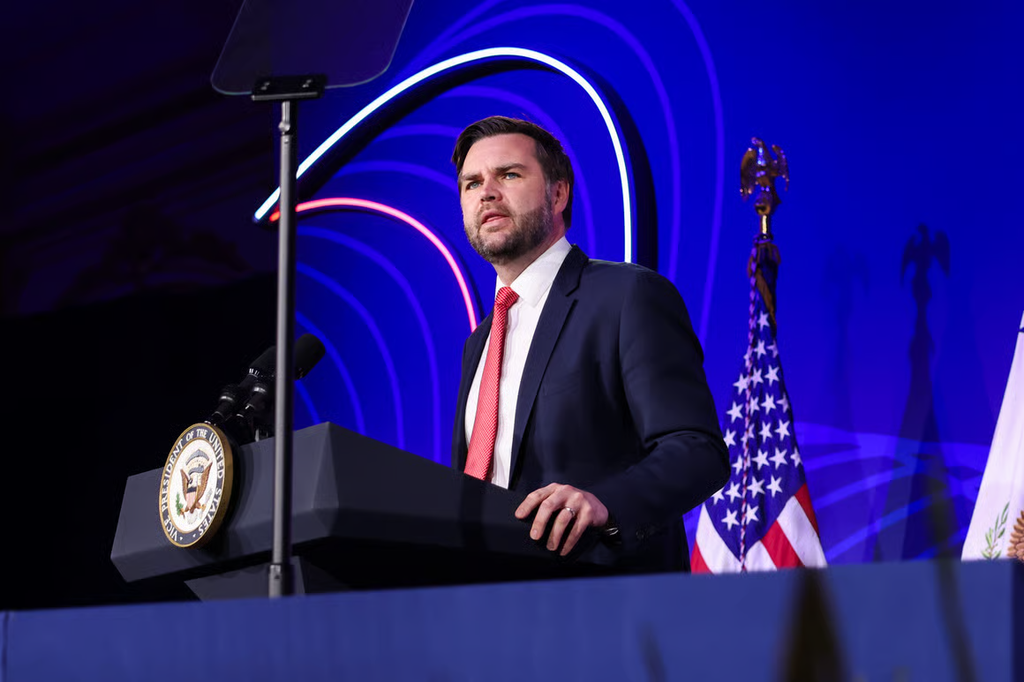
A major political argument has broken out between India and the United States after United States Vice President JD Vance made a controversial comment about foreign tech workers. During a public address discussing American employment policies, Vice President Vance referred to foreign professionals working in the United States on H-1B visas as foreign indentured servants.
The Vice President went on to argue that foreign workers were taking jobs away from born-and-bred American workers. He stated that American tech companies should not lay off domestic workers only to replace them with foreign workers who he claimed should not be in the country in the first place. He insisted that the United States should only allow top-level elite talent into the country when no qualified American worker is available to fill the position.
The reaction from New Delhi was fast and firm. The Ministry of External Affairs in India released an official statement calling the remarks deeply offensive, completely unwarranted, and totally out of line with reality. The statement pointed out that calling skilled professionals indentured servants brings back painful memories of colonial history and ignores the huge value these workers bring to the American economy.
This public dispute has quickly become one of the hottest news stories in global politics and international business. As reported by major outlets like the Times of India and Open Magazine, this issue touches on key topics like visa rules, immigrant rights, economic growth, and diplomatic ties between two of the world’s biggest democracies.
What Does “Indentured Servant” Mean and Why Did It Hurt So Much?
To understand why India reacted so strongly, it helps to look at what the term indentured servant actually means in history.
The $0 Secret To Launching Your Entire Online Empire
Why pay hundreds every month for separate software? Build funnels, send emails, and make sales with Systeme.io completely free.
Get Started For $0Free Forever • No Credit Card Needed • Beginner-Friendly
Historically, an indentured servant was a worker who signed a contract to work for an employer without pay for a set number of years. In many cases, these workers were transported across the world under terrible conditions, working long hours to pay off a debt or earn their passage to a new country. During the 19th and early 20th centuries, hundreds of thousands of Indian workers were taken around the globe under harsh indentured labor systems following the abolition of slavery. It was a system filled with legal traps, low freedom, and deep human suffering.
Using that specific phrase to describe modern, highly educated Indian tech workers is what made the remark so insulting. Modern H-1B visa holders are software engineers, data scientists, medical doctors, financial analysts, and research scientists. They hold university degrees, earn high competitive salaries, pay full tax rates to the American government, and freely choose where they work within the boundaries of immigration laws.
Comparing these accomplished professionals to colonial-era bonded laborers strips away their dignity and hard work. That is why India’s government felt forced to push back so hard against the statement.
The Backstory: PERM Green Card Suspensions and the H-1B Visa Crackdown
The Vice President’s comment did not happen out of nowhere. It came right on the heels of a massive policy shift by the United States government involving permanent employment visas.
The United States recently announced the suspension of several major tech companies from the PERM Green Card program. PERM stands for Program Electronic Review Management, which is a key step that allows companies to sponsor foreign workers for permanent residency in the United States. Big names in the tech industry, including Microsoft, Adobe, and several prominent Indian IT services firms, were hit by this sudden suspension.
The United States government claimed that these companies requested foreign labor approvals for hundreds of thousands of positions while laying off thousands of American workers at the same time. Officials argued that this practice undercut local workers and suppressed domestic wages in the technology sector.
While the PERM suspension pauses the green card application process for eligible workers at those companies, it does not immediately cancel existing valid H-1B visas or force current visa holders out of the country. However, it creates massive uncertainty for thousands of families who have spent years living and working in the United States while waiting for permanent residency.
Vance used the PERM suspension announcement to double down on his strict stance regarding foreign labor. His harsh phrasing turned an administrative policy change into a major international public relations disaster.
India’s Strong Official Response
India’s Ministry of External Affairs did not hold back when addressing the Vice President’s comments. Official spokesperson Randhir Jaiswal delivered a sharp response during a news briefing, highlighting India’s total disappointment with the language used by top American leadership.
The official statement reminded Washington that generations of hardworking immigrants have played a vital role in building the United States into an economic powerhouse. The Indian government stressed that Indian professionals moving to America are not taking handouts or living as second-class laborers. They are highly educated, law-abiding individuals who contribute billions of dollars through taxes, consumer spending, and technical innovation.
India also pointed out that using words tied to colonial exploitation creates unnecessary friction between two nations that are supposed to be close strategic partners. The response made it clear that New Delhi will stand up for the dignity of its diaspora, no matter who is speaking on the other side.
The government noted that it is keeping a close watch on the entire situation, especially as thousands of Indian families face uncertainty over green card timelines and visa renewals.
Highlighting the Contributions of Indian Professionals in America
It is impossible to discuss the technology sector in the United States without talking about the impact of Indian talent. Over the last three decades, Indian engineers and innovators have helped build some of the biggest and most successful companies in human history.
- Indian immigrants lead major corporate giants like Google, Microsoft, Adobe, and IBM as senior executives and Chief Executive Officers.
- Thousands of startups across Silicon Valley and other tech hubs were founded or co-founded by Indian immigrants, creating millions of jobs for American citizens.
- Indian professionals make up a huge percentage of medical specialists, scientific researchers, and university professors across the United States.
- Highly skilled foreign workers contribute billions of dollars every single year into Social Security and Medicare funds, even when many may never stay long enough to collect those benefits.
Far from being a burden or dependent workforce, Indian H-1B visa holders pay top-bracket federal and state income taxes. They buy homes, start local businesses, support local economies, and help keep American companies ahead of global competition in artificial intelligence, software engineering, and biotechnology.
Framing these skilled professionals as foreign laborers who shouldn’t be in the country ignores basic economic facts and the everyday reality of modern tech innovation.
Send, Spend & Hold Money Worldwide Without Hidden Fees
Transfer money internationally at the real exchange rate and hold 40+ currencies in one account.
Open a Wise AccountMid-market rate • Fast transfers • 40+ currencies
How Indian IT Workers and the Global Diaspora Are Reacting
Inside the tech community, the Vice President’s remarks sent shockwaves through forums, workplace groups, and online social spaces. Many foreign workers expressed feeling deeply hurt, misunderstood, and unappreciated after giving the best years of their careers to American companies.
On social media platforms, tech workers shared personal stories about the stress of living on temporary work visas. Working on an H-1B visa often means living with constant anxiety. If a worker gets laid off, they typically have only 60 days to find a new employer willing to sponsor their visa, or they must pack up their lives and leave the country.
Many workers pointed out the ironic truth: if anyone is trapped in a slow system, it is because of the US immigration backlog, not because they are uneducated or cheap labor. Due to country-based caps on green cards, skilled Indian workers often have to wait decades for permanent residency, even while following every law and paying high taxes.
The phrase indentured servants felt like adding insult to injury for people who are already dealing with years of bureaucratic delays and visa uncertainty.
What This Means for Tech Companies and Foreign Workers Moving Forward
This recent fallout creates a lot of big questions for the future of tech hiring, global talent mobility, and corporate strategies.
American tech companies rely heavily on global talent to stay competitive. If visa rules become too restrictive or if the public atmosphere becomes hostile, top engineers might choose to go elsewhere. Countries like Canada, Germany, Australia, and the United Kingdom are actively building friendly visa paths to attract the very same tech talent that the United States might push away.
Here are a few ways this situation could shape the near future:
- Companies may shift more engineering and product development roles to offshore offices in India, Europe, or South America rather than bringing workers to the United States.
- Top global talent might skip the United States entirely, choosing countries with clearer, faster, and more welcoming permanent residency options.
- Legal battles could break out as tech firms and immigration advocacy groups challenge green card suspensions and workplace restrictions in federal court.
- US tech firms may face higher labor costs and talent shortages in specialized fields like artificial intelligence, cybersecurity, and advanced computing.
The Diplomatic Fallout and US-India Strategic Relations
The timing of this conflict is especially awkward for international relations. The United States and India have spent years building a strong partnership focused on defense, trade, energy, and geopolitical balance in Asia.
Diplomatic visits between senior leaders from both countries were already scheduled around the time of these remarks. Having top leaders exchange sharp criticism publicly makes those diplomatic talks much more complicated.
While both nations share crucial long-term goals in security and trade, human mobility and immigration remain sensitive friction points. India has repeatedly asked the United States to streamline visa processing times, raise green card caps, and protect the legal rights of foreign workers.
The $0 Secret To Launching Your Entire Online Empire
Why pay hundreds every month for separate software? Build funnels, send emails, and make sales with Systeme.io completely free.
Get Started For $0Free Forever • No Credit Card Needed • Beginner-Friendly
When top leaders use language that offends the foreign workforce, it creates friction that goes beyond economic policy. It becomes a matter of national pride and mutual respect between nations.
Frequently Asked Questions (FAQs)
What did US Vice President JD Vance say about H-1B visa holders?
US Vice President JD Vance called foreign tech workers on H-1B visas “foreign indentured servants”. He argued that American companies were laying off native workers and replacing them with foreign workers who should not be in the country in the first place.
Why did India find the term “indentured servants” so offensive?
India found the term deeply offensive because indentured labor refers to a painful historical era where Indian workers were exploited under harsh, forced labor conditions following colonial rule. Applying that term to highly educated, well-paid modern tech professionals ignores their hard work and damages their dignity.
How did India officially respond to JD Vance’s comments?
India’s Ministry of External Affairs released a strong official statement calling the comments deeply offensive and unwarranted. India emphasized that skilled Indian workers make massive contributions to America’s economy, technology, and innovation ecosystem.
What is the PERM Green Card program suspension?
The PERM Green Card program suspension is a recent US government decision that pauses labor certification processing for permanent residency at certain major tech companies. The government claimed these companies were applying for foreign labor while simultaneously laying off domestic American workers.
Does the PERM suspension cancel current H-1B visas?
No, the PERM suspension does not cancel current valid H-1B visas or force visa holders to leave immediately. It affects the process of applying for permanent green cards through sponsored employers, causing delays for those seeking permanent residency.
Will this argument affect US-India relations?
While the United States and India maintain strong strategic and trade partnerships, public disputes over immigration and respectful communication create political friction. Both governments are working through diplomatic channels to address visa delays and trade concerns.
This heated debate between India and the United States shows how closely political rhetoric, economic policy, and human lives are connected. Highly skilled immigrants are not just numbers on a visa application or talking points in a political debate. They are human beings who bring valuable skills, fresh ideas, and energy to the places they call home.
As immigration policies continue to evolve in Washington, how leaders talk about international workers matters just as much as the policies themselves. Treating global talent with respect and fairness is essential for keeping trade and diplomatic relationships healthy.
Want to stay updated on the biggest political stories, economic shifts, and trending news around the world? Get in touch with our team directly through our Contact Page. You can also follow all the latest updates on our social channels: follow us on Instagram, like our page on Facebook, and join the discussion on X (Twitter).
