
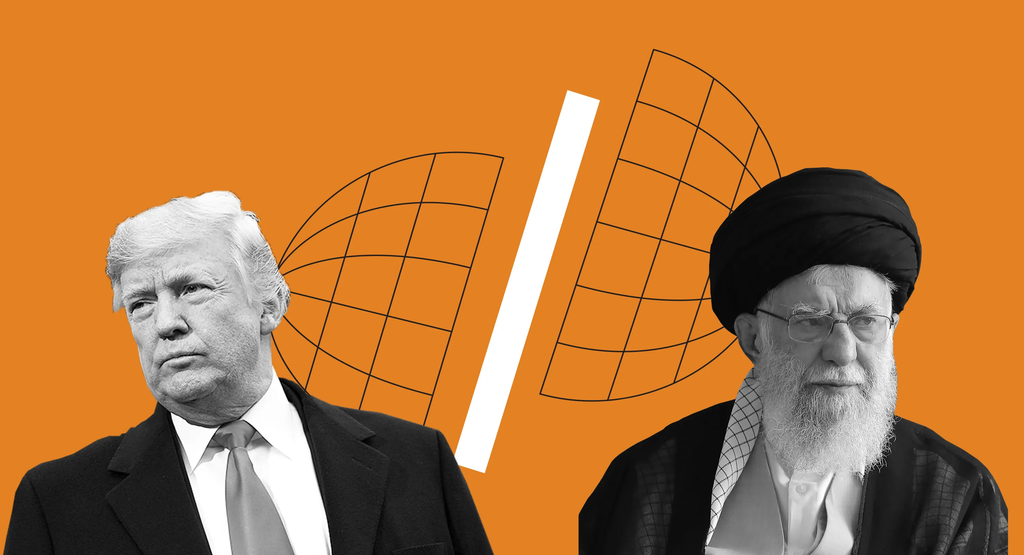
Donald Trump sent shockwaves across the nation during a campaign event in Nebraska when he raised concerns about potential Iranian long-range attacks reaching major American cities. Highlighting cities like Los Angeles and San Diego, the president claimed that ongoing military actions abroad were necessary to prevent adversary missiles from targeting domestic metropolitan areas. The statements ignited a firestorm of political debate, with West Coast leaders calling the remarks reckless while military planners quietly reinforce defensive protocols around key infrastructure across the country.
While federal defense officials maintain that Iran currently lacks the operational capacity to launch intercontinental ballistic missiles directly at the U.S. mainland, the warning has drawn renewed attention to the country’s domestic security posture. Homeland defense agencies, local law enforcement, and military commands are taking no chances. From high-tech missile defense proposals to expanded radiological monitoring, extra security safeguards are being deployed to protect high-risk U.S. urban hubs and strategic ports.
What Prompted the Warning? Inside the Escalating Conflict
The president’s alarming warning did not occur in a vacuum. It follows months of intense military exchanges in the Middle East, where U.S. forces have repeatedly targeted missile sites, naval assets, and military infrastructure. After months of back-and-forth drone strikes, naval blockades, and targeted strikes in strategic waterways, tension between Washington and Tehran reached historic highs. You can read more about how U.S. and Iran exchange military fire to understand how this conflict escalated into a global headline.
Military experts point out that while direct missile strikes on the U.S. mainland remain unlikely, asymmetric threats are a genuine concern. Asymmetric warfare includes cyberattacks on power grids, covert drone operations, coordinated harassment of maritime shipping, or proxy group activities. As the White House reinforces its stance, officials are moving aggressively to plug potential gaps in domestic air defense and critical infrastructure monitoring.
Previous military engagements, including operations where U.S. forces struck Iranian oil tankers, have shown how quickly regional clashes can ripple across global trade routes and domestic security agendas. As diplomatic channels remain strained, national defense planners are treated to a stark reality: protecting the homeland requires constant vigilance at home, not just overseas.
The $0 Secret To Launching Your Entire Online Empire
Why pay hundreds every month for separate software? Build funnels, send emails, and make sales with Systeme.io completely free.
Get Started For $0Free Forever • No Credit Card Needed • Beginner-Friendly
The Cities on High Alert: Where Extra Safeguards Are Being Deployed
When foreign policy tensions spike, specific U.S. cities naturally move to the top of the security priority list. These urban areas are chosen because they host critical military bases, key financial networks, massive shipping ports, or dense populations. Federal agencies prioritize funding and security equipment based on risk evaluations conducted by the Department of Homeland Security and the Pentagon.
Los Angeles and San Diego: West Coast Military Hubs Under the Spotlight
Los Angeles and San Diego found themselves at the center of national discussion after recent Presidential comments highlighted the West Coast as potentially vulnerable. San Diego hosts the largest naval fleet concentration in the Pacific, including supercarriers, naval air stations, and Marine Corps bases. Meanwhile, the Port of Los Angeles and nearby Port of Long Beach handle over 20 percent of all cargo entering the United States.
Because of their immense economic and military significance, both cities receive extensive federal security support. Extra safeguards in southern California include upgraded coastal radar arrays, heightened maritime patrols by the U.S. Coast Guard, and expanded drone-jamming equipment around port facilities. State officials have assured residents that emergency response networks remain at peak readiness to handle any potential threat.
Washington D.C.: Protecting the Nation’s Power Center
As the seat of the federal government, Washington D.C. always operates under the highest level of airspace security in the nation. The National Capital Region is shielded by an advanced air defense shield consisting of surface-to-air missile batteries, short-range interceptors, and continuous radar coverage managed by NORAD.
In light of recent threats, security protocols around the White House, Capitol Building, and Pentagon have been tightened even further. Federal authorities have increased low-altitude radar monitoring to detect potential small unmanned aerial systems (drones) and enhanced cyber-defense protocols across critical government communications networks.
New York City: Financial Heart and High-Density Target Security
New York City remains one of the most heavily monitored urban environments on Earth. Following global security alerts, the New York City Police Department (NYPD) Counterterrorism Bureau routinely ramps up visible and unseen protections. Major transit centers like Grand Central Terminal, Penn Station, and JFK International Airport see increased presence from armed tactical units and bomb-detection K-9 teams.
Furthermore, New York hosts critical financial systems like the Wall Street stock exchanges, making cyber defense a paramount concern. Federal agencies work closely with private financial institutions to monitor potential cyber intrusions originating from foreign state-sponsored hackers.
Chicago and Houston: Energy, Transportation, and Infrastructure Gates
Chicago serves as the primary rail hub of North America, connecting eastern and western freight systems. Disruption to Chicago’s logistical infrastructure could freeze supply chains nationwide. Extra security measures in the Midwest focus heavily on securing rail bottlenecks, water treatment facilities, and regional power grid switching stations.
Down south, Houston represents the beating heart of America’s energy refining capacity. With massive chemical plants, oil refineries, and the Port of Houston, energy security in Texas is treated as a matter of national survival. Homeland security grants have funded continuous air quality sensors, perimeter surveillance, and counter-drone systems around major Gulf Coast refineries.
Pacific Ports and Island Outposts: San Francisco, Seattle, and Pearl Harbor
Strategic locations across the Pacific Northwest and Hawaii play a critical role in Pacific defense. Naval Base Kitsap near Seattle houses strategic nuclear submarines, while Pearl Harbor in Hawaii remains a vital hub for Pacific Fleet command. These locations feature restricted airspace, underwater sonar monitoring networks, and constant satellite surveillance to track any suspicious activity near military assets.
What “Extra Safeguards” Actually Mean on the Ground
When government officials talk about deploying extra safeguards, everyday citizens often wonder what changes on the ground. Domestic defense in the 21st century extends far beyond soldiers standing guard on street corners. It involves a sophisticated mixture of physical hardware, digital shields, and behind-the-scenes intelligence sharing.
The “Golden Dome” Concept and Air Defense Upgrades
One of the most talked-about defense initiatives is the proposed “Golden Dome” missile shield project for the U.S. mainland. Inspired by Israel’s Iron Dome but built on a vast continental scale, this concept aims to layer space-based tracking sensors, high-altitude interceptors, and ground-based radar arrays to neutralize incoming airborne threats. While full implementation remains years away, existing air defense batteries near sensitive military bases have received software and targeting upgrades.
Enhanced Nuclear and Radiological Detection Sensors
Federal agencies operate subtle, highly accurate radiation detection equipment across major metropolitan entrances. Mobile detection units disguised as standard commercial vehicles regularly scan bridges, tunnels, and shipping ports for potential dirty bomb materials or illegal nuclear components. These sensors feed real-time data directly to federal threat monitoring hubs.
Cybersecurity Shielding for Critical Infrastructure
Modern conflicts are fought on digital battlefields long before kinetic weapons are ever used. Foreign adversaries often target municipal water plants, electrical power grids, hospital systems, and oil pipelines through malware attacks. The Cybersecurity and Infrastructure Security Agency (CISA) works directly with local utility companies to patch software vulnerabilities and implement emergency isolation protocols to prevent widespread blackouts.
Counter-Drone Defenses Around Ports and Harbors
Small, low-cost commercial drones present a major headache for security teams worldwide. Extra safeguards include specialized electronic jamming systems installed around military ports, petroleum depots, and government buildings. These devices can sever the control link between a drone and its operator or force the aircraft to land safely before reaching a restricted zone.
Send, Spend & Hold Money Worldwide Without Hidden Fees
Transfer money internationally at the real exchange rate and hold 40+ currencies in one account.
Open a Wise AccountMid-market rate • Fast transfers • 40+ currencies
Political Pushback and Local Reaction: California and Beyond
The president’s public comments linking Iranian threats to West Coast cities provoked immediate political fallout. California leaders pushed back forcefully against the suggestion that cities like Los Angeles or San Diego were in imminent danger. State officials argued that casual references to catastrophic attacks create unnecessary public anxiety and harm local economic confidence.
Former California officials and Democratic candidates voiced strong objections, emphasizing that the safety of millions of residents should never be used as a political talking point. Public health leaders pointed out that spreading fear without providing clear, actionable safety steps can lead to confusion and panic rather than productive preparedness.
On the other side of the aisle, administration supporters argue that tough talk is necessary to justify robust military budgets and maintain deterrence against rogue regimes. They point to past incidents where diplomatic talks broke down, arguing that weakness invites aggression. To understand the political debate surrounding Washington’s broader strategy, check out our report on how Trump revived calls for regime change.
Despite the heated political rhetoric, professional security personnel at the local, state, and federal levels continue to coordinate behind the scenes. Career intelligence officers emphasize that national defense relies on calm, methodical planning rather than political posturing.
How Homeland Security and Military Defense Work Behind the Scenes
Securing a nation of over 330 million people requires constant coordination across dozens of government entities. When global tensions rise, a structured response network spring into action automatically.
- NORAD (North American Aerospace Defense Command): Monitors North American skies 24/7 using satellite networks, ground radars, and fighter jet scrambles to identify unknown aircraft or missile launches.
- Department of Homeland Security (DHS): Distributes grant funding to major cities through programs like the Urban Area Security Initiative (UASI) to help police and fire departments purchase specialized equipment.
- Federal Bureau of Investigation (FBI): Leads counterterrorism investigations inside the United States, working with local police through Joint Terrorism Task Forces (JTTFs) to track suspicious activity.
- Federal Emergency Management Agency (FEMA): Coordinates disaster response plans, ensuring local communities have emergency supplies, communications systems, and evacuation routes ready if crisis strikes.
These agencies share intelligence in real time. If an intelligence agency flags a potential threat overseas, local police departments in cities like New York, Chicago, or Los Angeles receive immediate updates to adjust their patrol postures accordingly.
What Everyday Citizens Should Know About Domestic Security
Hearing news about international conflicts and potential domestic threats can feel overwhelming. However, security experts emphasize that individual awareness and basic emergency preparedness are far more useful than worry or panic.
Living in or near a major U.S. city does not mean you should live in fear. The actual probability of an individual citizen experiencing a foreign military attack on domestic soil remains extremely low. However, taking simple, sensible steps to prepare for general emergencies—like power outages, severe weather events, or local disruptions—is always a smart move.
Here are a few practical, real-world steps every household can take:
- Build a Basic Emergency Kit: Keep a three-day supply of bottled water, non-perishable food, flashlight, batteries, first-aid supplies, and necessary medications in an accessible location.
- Stay Informed Through Official Channels: Sign up for emergency notification alerts from your local city or county emergency management agency. Avoid sharing unverified rumors on social media during a crisis.
- Have a Family Communication Plan: Make sure family members know how to contact each other and where to meet if cell phone networks become overloaded or unavailable.
- Practice Cyber Hygiene: Use strong, unique passwords for online accounts, enable two-factor authentication, and avoid clicking on suspicious links or attachments in unsolicited emails.
Taking charge of your own household preparedness provides peace of mind, no matter what happens in national or international news.
The $0 Secret To Launching Your Entire Online Empire
Why pay hundreds every month for separate software? Build funnels, send emails, and make sales with Systeme.io completely free.
Get Started For $0Free Forever • No Credit Card Needed • Beginner-Friendly
Frequently Asked Questions (FAQs)
Does Iran have missiles that can reach U.S. cities?
According to military analysts and defense intelligence agencies, Iran does not currently possess operational intercontinental ballistic missiles (ICBMs) capable of hitting the U.S. mainland from its territory. However, defense officials monitor Iran’s space launch program closely, as space launch technology shares similar engineering principles with long-range missile development.
Which U.S. cities get the most federal security funding?
Cities with high population density, major economic hubs, and critical infrastructure receive the largest share of federal homeland security grants. New York City, Washington D.C., Los Angeles, Chicago, and Houston consistently rank near the top of federal threat-funding allocation lists.
What is the “Golden Dome” missile defense shield?
The “Golden Dome” is a proposed multi-layered missile defense system designed to protect the entire U.S. homeland against incoming missile threats. Inspired by regional systems like Israel’s Iron Dome, it involves satellite tracking, ground radar, and interceptor missiles. The concept is currently under policy evaluation and development.
How can I sign up for local emergency alerts in my city?
Most municipal governments offer free emergency alert services sent via text message or email. Visit your local city or county government website and look for the Emergency Management or Public Safety department to register your mobile phone number.
How do U.S. authorities protect critical infrastructure from cyberattacks?
The Cybersecurity and Infrastructure Security Agency (CISA) collaborates with private utility companies, financial institutions, and transportation providers. They conduct security audits, share real-time threat intelligence, and help organizations build digital firewalls to prevent cyber intrusions from foreign state actors.
Are West Coast military bases at higher risk during Pacific conflicts?
West Coast bases in California, Washington, and Hawaii serve as primary logistics and command nodes for U.S. operations in the Pacific. Because of their strategic role, these facilities maintain high physical and electronic security protocols at all times to deter potential threats.
The ongoing back-and-forth between national leadership and local officials highlights a delicate balance: maintaining strong national defense without creating unnecessary panic at home. As military posture shifts across global hotspots, domestic agencies remain focused on protecting critical infrastructure and keeping public transit, energy networks, and urban centers running safely. Staying informed through reliable news channels and taking basic household emergency steps ensures you remain grounded and prepared no matter how foreign policy headlines unfold.
For more deep dives into global affairs, breaking national news, and practical lifestyle guides, visit our About Us page to learn more about our mission. If you have questions, story tips, or feedback, feel free to reach out via our Contact Us page. You can also stay connected with our community on social media by checking out our Instagram, Facebook, and X (Twitter) pages for live updates on trending topics worldwide.
