
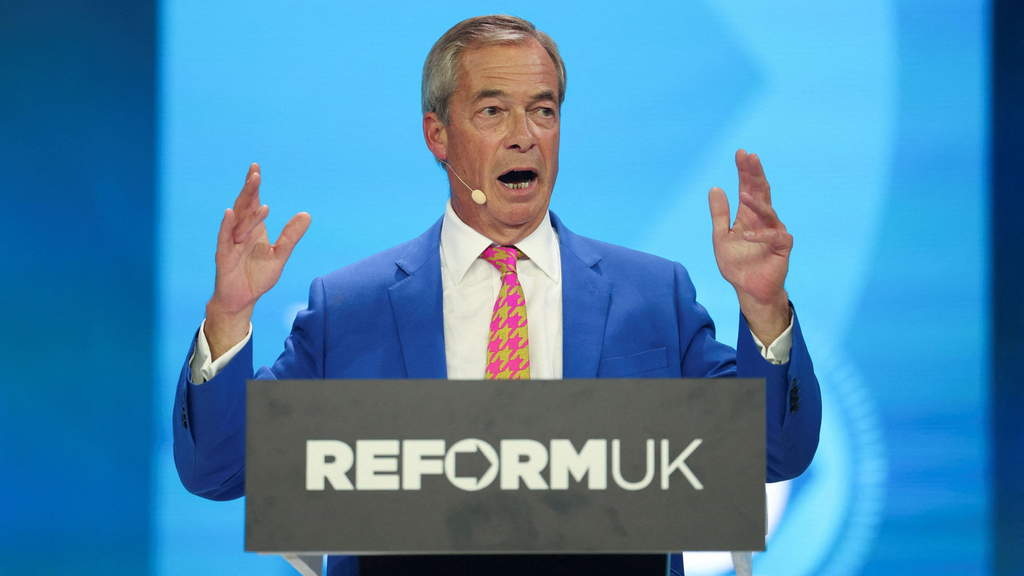
British politics just took a dramatic turn that almost nobody saw coming. A brand-new national poll reveals that voter backing for Reform UK has experienced a steep downward drop. The party that once looked unstoppable in working-class communities and regional strongholds has lost serious momentum in a matter of weeks.
This unexpected tumble provides a massive political boost to Andy Burnham. As Reform’s numbers take a hit across former industrial towns and red-wall territory, voters who previously flirted with protest parties are swinging directly behind Burnham’s pragmatic leadership.
The political map is shifting quickly. What seemed like a permanent rise in populist support has run into a hard wall of economic reality and voter fatigue. To understand how we arrived at this turning point, we need to examine what the latest numbers show, why Reform UK suddenly hit reverse gear, and what this power shift means for the future of British politics.
Inside the Numbers: How Far Reform UK Has Slumped
The latest polling data gathered by research organizations like YouGov paints an unmistakable picture of an electorate rethinking its options. After months of hovering at record highs and threatening to overtake the traditional political establishment, Reform UK has shed points in nearly every major demographic group.
Public surveys show Reform’s national voting intention falling by several critical points over a single tracking period. While minor fluctuations happen all the time in politics, this dip is different because of where the losses are concentrated. The party has seen noticeable drop-offs in northern English towns, the Midlands, and coastal communities where dissatisfaction with mainstream governance was previously at a boiling point.
The $0 Secret To Launching Your Entire Online Empire
Why pay hundreds every month for separate software? Build funnels, send emails, and make sales with Systeme.io completely free.
Get Started For $0Free Forever • No Credit Card Needed • Beginner-Friendly
At the exact same time, Burnham has experienced a sharp personal rating increase. Voters who were asked who they trust most to handle public transport, local services, and household budgets gave Burnham some of his highest marks to date.
The polling swing highlights three major changes on the ground:
- Working-class voters who backed populist candidates as a protest vote are beginning to return to pragmatic regional options.
- Older voters who prioritize economic stability are growing nervous about chaotic public messaging and internal party drama.
- Undecided voters are breaking heavily toward leadership that focuses on daily living issues rather than constant culture arguments.
For Burnham, this swing comes at a crucial moment. Having established himself as a defender of public services and balanced regional investment, his standing with everyday families is yielding clear dividends.
Why the Reform UK Momentum Suddenly Stalled
When a political movement rises rapidly, its fall can happen just as quickly if the underlying foundation is unstable. Reform UK spent months capturing headlines by tapping into genuine frustration over public services and national direction. However, maintaining long-term voter loyalty requires far more than loud press conferences and viral soundbites.
Several key missteps and brewing frustrations have contributed directly to Reform’s sudden decline.
Unforced Blunders on the Campaign Trail
Voters pay close attention to whether political figures take their hometowns seriously. When party leaders look distracted or make embarrassing public mistakes, it chips away at voter confidence.
The mood noticeably cooled after high-profile missteps on the road. Public reaction soured significantly when party leaders showed visible confusion during local events, including the widely reported moment Nigel Farage was booed off-guard after forgetting which city he was in. For voters who felt ignored by Westminster for years, watching a national politician fail basic local geography was an immediate turn-off. It signaled a lack of genuine care for the places being courted for votes.
The Problem With Massive Megadonor Money
Another sore spot for working-class supporters has been the rapid influx of ultra-wealthy donors. Reform often pitched itself as an everyday working person’s movement standing up against the wealthy elite. That narrative became difficult to sell when headlines revealed that a second crypto billionaire dropped a record 36 million donation on Reform UK.
When regular families are counting pennies to cover grocery bills and local bus fares, seeing a political outfit bankrolled by tens of millions of pounds from global crypto investors creates an uncomfortable disconnect. Many voters started asking whether the party was truly fighting for local communities or simply serving as a sandbox for high-net-worth speculators.
Pushing Cultural Battles Over Pocketbook Basics
While everyday people are worried about doctor appointments, rising rents, and crumbling local roads, Reform shifted much of its energy toward divisive social debates. A prime example was the recent push when Reform UK called for a complete ban on full face coverings in public spaces.
While hardline talking points generate noise in comment sections, they rarely fix broken trains or lower winter energy bills. As the party focused more on social controversies and fringe proposals, working families who wanted concrete plans for local jobs and hospital waiting lists began tuning out.
The Farage Factor: When Populist Charm Wears Off
For years, Nigel Farage was seen as an unavoidable powerhouse of British insurgent politics. He possessed an uncanny ability to dominate news cycles and rally a dedicated base of supporters. However, repeated public exposure without concrete policy answers has begun to backfire.
Recent findings reveal that Nigel Farage hit record-low popularity in new YouGov polling. The very personal brand that built the party is now dragging it down.
Why is this happening? British voters tend to have a low tolerance for perpetual agitation once an initial point has been made. People wanted politicians to acknowledge their pain, but after that acknowledgment, they expected realistic plans to build something better.
When Farage’s public appearances turned into predictable complaints without actionable solutions for healthcare or neighborhood safety, swing voters decided they had seen enough. The constant drama no longer felt fresh; it felt tiring.
Send, Spend & Hold Money Worldwide Without Hidden Fees
Transfer money internationally at the real exchange rate and hold 40+ currencies in one account.
Open a Wise AccountMid-market rate • Fast transfers • 40+ currencies
How Andy Burnham Capitalized on the Moment
While his rivals were trading barbs on cable news and arguing on social platforms, Andy Burnham stuck to a playbook built around everyday basics.
Burnham has built a brand centered on competence, local advocacy, and practical fixes. When people hear him speak, he talks about regional transport caps, council house construction, vocational training for young people, and keeping local wealth inside local communities.
Several deliberate strategic moves allowed Burnham to scoop up voters who felt let down by the populist right.
Listening to Voters on Energy and Cost of Living
One of Burnham’s biggest strengths has been his willingness to adapt when public feedback tells him a policy is hitting people’s wallets too hard. Rather than rigidly sticking to unpopular proposals, he demonstrated political flexibility when Andy Burnham dropped green tax plans in a major net-zero shift.
By cutting back charges that would have inflated household energy bills, Burnham demonstrated that he understood the financial pressures facing ordinary families. That decision took away a primary weapon Reform UK had been using to attack mainstream politicians. It showed that leaders can care about the environment while still protecting the financial security of regular people.
Delivering Tangible Results on the Ground
Burnham’s work on regional infrastructure has given voters concrete proof of delivery. Bringing local buses back under municipal control, capping fares at affordable rates, and integrating commuter travel into a unified system gave people a visible, daily improvement in their quality of life.
When voters see real buses running on time with cheaper tickets, that tangible reality outweighs angry social media posts. Burnham offered voters practical stability at a time when people were desperate for a break from political instability.
Where Does This Leave Kemi Badenoch and the Conservatives?
The collapse of Reform UK’s numbers does not automatically mean plain sailing for the Conservative Party. Under the leadership of Kemi Badenoch, the Tories have been fighting a two-front war, trying to win back disaffected voters on their right while keeping moderate suburban voters from drifting away.
Badenoch has attempted to challenge both flanks with aggressive rhetoric. She made headlines when Kemi Badenoch claimed Britain is addicted to welfare, a speech designed to project toughness on state spending. She has also gone directly on the offensive against government fiscal planning, declaring that Labour’s upcoming budget is built on fictional cuts.
Yet, the strategic dilemma facing the Conservatives remains unresolved:
The $0 Secret To Launching Your Entire Online Empire
Why pay hundreds every month for separate software? Build funnels, send emails, and make sales with Systeme.io completely free.
Get Started For $0Free Forever • No Credit Card Needed • Beginner-Friendly
- If the Conservatives lean too far to the right to mop up leftover Reform votes, they risk alienating moderate voters in the south and suburbs.
- If they move toward the political center, they leave open space for another populist resurgence in the future.
- Badenoch has struggled to land direct punches on Burnham because Burnham operates outside the usual Westminster bubble, making standard party attacks far less effective, as seen in the ongoing breakdown of Kemi Badenoch vs. Andy Burnham.
Rather than rushing back to the Tories, voters leaving Reform seem far more interested in Burnham’s pragmatic, solution-driven approach than Badenoch’s sharp ideological attacks.
The Public Fatigue With Street Chaos and Protests
Another crucial element behind Reform’s polling decline is public weariness regarding street demonstrations and social disorder. While people support peaceful free speech, widespread disruption quickly drains public sympathy.
Following tense demonstrations across coastal towns and harbors, the conversation shifted away from legitimate border management toward questions of community safety. Public sentiment turned sharply critical after authorities were pushed to act when police were urged to fix intelligence gathering following far-right port protests.
Regular voters do not want constant chaos in their town centers. When right-wing populist messaging becomes associated with disruptive street clashes and aggressive rhetoric, moderate working-class voters quietly step away. People want safe streets, functional borders, and calm governance, not unending public conflict.
The Real Battle for the Working-Class Heartlands
For years, commentators argued that Britain’s industrial towns had permanently broken ties with center-left politics. The narrative claimed that cultural identity had completely replaced economic interest as the driving force of British elections.
This latest poll tells a very different story.
When the political conversation is dominated by abstract culture wars, populist parties thrive because anger is an easy emotion to stir up. But when daily economic pressures bite, voters prioritize practical solutions. They want to know:
- Will my local health clinic have enough staff to see my kids?
- Can I afford to put the heating on this winter?
- Are local bus and train fares cheap enough for me to get to work?
- Is someone investing in decent apprenticeships so young people do not have to move away?
Andy Burnham’s political strategy addresses these exact questions. By putting physical infrastructure, local wages, and community services at the heart of his platform, he has offered working-class communities a credible alternative to political cynicism.
Key Lessons Political Parties Must Learn From This Shift
This poll is more than just a temporary snapshot; it offers crucial lessons for every political organization operating in modern Britain.
1. Protest Votes Have an Expiration Date
A political party can easily score 15 or 20 percent in the polls by being angry on behalf of the public. But anger without viable policy solutions eventually turns stale. Voters will use a protest vote to send a warning shot to the establishment, but they rarely want to hand the steering wheel to someone who only knows how to honk the horn.
2. Local Delivery Beats Online Hype
Online views, viral clips, and podcast appearances do not equal votes in ballot boxes. While populist figures frequently win the battle for social media algorithms, regional leaders who fix broken bus routes, build community hubs, and protect local services win the battle for actual votes.
3. Pragmatism Trumps Ideological Purity
Voters respect politicians who can look at a problem honestly and change course when necessary. Burnham’s willingness to drop controversial green taxes to protect household finances showed an ability to prioritize people over party dogma. Voters noticed, and they rewarded that pragmatism.
Frequently Asked Questions
What caused the sudden collapse in Reform UK’s polling support?
The drop was triggered by several compounding factors: repeated high-profile blunders on the campaign trail, growing discomfort over massive multimillion-pound donations from crypto figures, fatigue with divisive cultural arguments, and voter weariness with street protests. When faced with practical economic challenges, voters decided Reform lacked workable solutions.
Why does this polling shift help Andy Burnham specifically?
Burnham has spent years cultivating a reputation as a pragmatic regional champion focused on public transit, housing, and everyday cost-of-living issues. As working-class voters grew tired of populist rhetoric, Burnham was perfectly positioned as a steady, experienced leader who delivers real improvements to local communities.
Is Nigel Farage still a major force in British politics?
Farage remains a well-known media figure, but his personal popularity has dropped to historic lows. While he retains a dedicated core of followers, his broader appeal among swing voters and suburban families has shrunk substantially due to repetitive messaging and policy missteps.
How does this affect Kemi Badenoch and the Conservative Party?
The polling shift creates a tricky problem for Badenoch. While the Tories hoped to absorb disillusioned Reform voters, many of those voters are choosing Burnham’s practical governance instead. Badenoch faces the difficult challenge of trying to appeal to right-wing populists without alienating moderate voters in key constituencies.
Could Reform UK bounce back in future polls?
In politics, numbers can always change if major events shift public attention. However, for Reform UK to mount a serious comeback, the party must do more than complain about national problems. It will need to present realistic, fully funded policies and demonstrate that it is focused on local communities rather than high-stakes donor drama.
The sudden cratering of Reform UK’s poll numbers serves as a powerful reminder of how quickly political fortunes can turn when voters demand real delivery over loud talk. Andy Burnham’s steady rise proves that practical, community-first leadership still carries immense weight with everyday families across the nation.
