
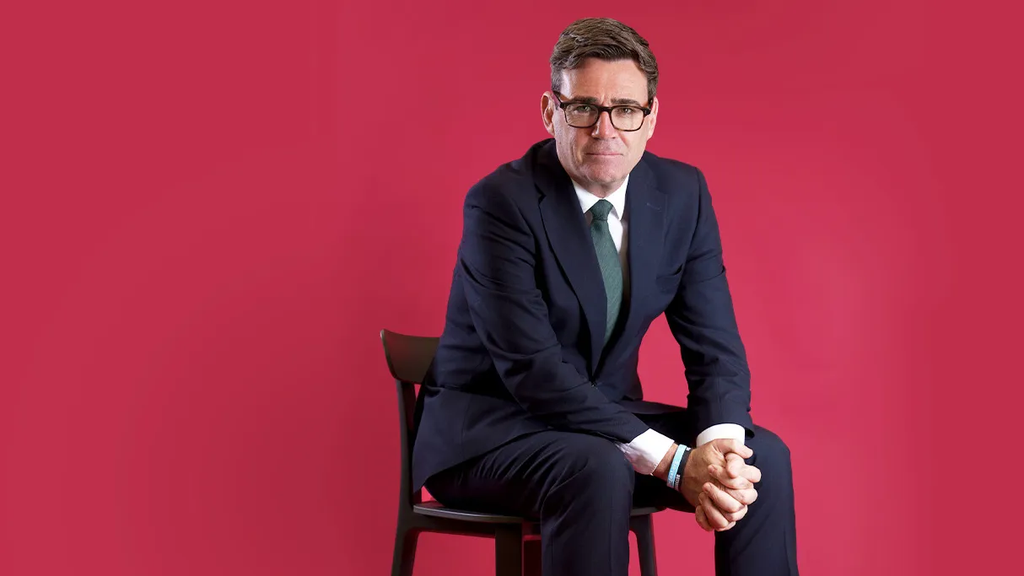
Andy Burnham has reached his first 100 days as British Prime Minister, marking one of the sharpest stylistic and operational turns in modern Downing Street history. Taking power following the sudden departure of Keir Starmer in July 2026, Burnham walked through the black door of Number 10 promising to bridge a fractured party, restore public faith, and replace dry Whitehall technocracy with plain-speaking leadership.
His opening stretch in office has been defined by a clear formula: chase quick, visible policy wins to give struggling households immediate breathing room, while preparing the public for long-term structural reforms that previous leaders avoided. At the same time, the reality of running the United Kingdom has brought fresh political friction, cabinet disagreements over migration, and fierce scrutiny ahead of his first major budget. An in-depth investigation by The Guardian outlines how his opening moves have divided opinion between those who see practical common sense and critics who warn of half-measures.
Here is the complete breakdown of how Andy Burnham spent his first 100 days in power, what has changed for ordinary people, and the big battles waiting around the corner.
From Manchester to Downing Street: A Whole New Style of Power
When Andy Burnham served as Mayor of Greater Manchester, he earned a reputation as an outsider who was not afraid to fight central government in London. That regional background became his biggest political calling card during the leadership transition. British voters were exhausted by months of grim warnings, economic doom, and political scandals. Burnham entered Number 10 with a completely different mood, arguing that government exists to solve the everyday headaches that drain people’s patience and wallets.
His first 100 days have been treated not as an academic exercise in drafting white papers, but as a rapid-fire demonstration of intent. Instead of promising grand transformations a decade down the line, Burnham prioritized practical actions that voters could feel on their morning commute, their monthly utility statements, and their local high streets.
The $0 Secret To Launching Your Entire Online Empire
Why pay hundreds every month for separate software? Build funnels, send emails, and make sales with Systeme.io completely free.
Get Started For $0Free Forever • No Credit Card Needed • Beginner-Friendly
That shift in tone helped reset the atmosphere in Westminster. Yet running an entire country with an overstretched public purse is vastly different from managing a combined authority. As the honeymoon period fades, Burnham faces the tough reality of delivering major structural changes without running out of cash or political capital.
1. The Strategy of Everyday Fixes: Relieving Daily Pressure
Downing Street insiders have dubbed Burnham’s immediate economic strategy the “everyday fixes” agenda. Rather than waiting years for complex legislation to pass through Parliament, Burnham rolled out a series of targeted interventions designed to tackle daily expenses and common consumer frustrations.
Scrapping VAT on Domestic Electricity
The earliest headline move of Burnham’s premiership took effect on October 1, when his administration officially eliminated the 5 percent Value Added Tax (VAT) on domestic electricity bills across Great Britain.
The policy was aimed straight at households feeling battered by persistent energy expenses. Downing Street estimated that the change provides an annual saving of around £45 for a typical home. While government spokespeople championed the tax cut as an immediate sign that help had arrived, independent analysts noted its limitations. The temporary tax relief is currently funded only through March, and because it targets electricity rather than gas, lower-income households that rely primarily on gas heating may see only minimal benefit during the colder winter months.
The £2 Bus Fare Cap and Tackling Digital Subscriptions
Burnham also exported one of his signature Manchester transport policies to the national stage by announcing a nationwide £2 single-fare cap on participating bus routes in England outside London, scheduled to launch in January.
To fund the national bus subsidy, the government made the controversial choice to switch portions of international climate finance from traditional grants into loans. The move drew immediate criticism from global development organizations, but Downing Street defended the decision as a necessary trade-off to keep public transport affordable for working families.
Alongside transit fares, Burnham took aim at consumer rip-offs. The Department for Business introduced streamlined statutory instruments targeting digital subscription traps and fake online discounts, making it mandatory for companies to let customers cancel auto-renewing subscriptions with a single click.
Crackdown on Anti-Social Behavior on Public Transit
In another move aimed at daily quality of life, the Prime Minister launched an active enforcement campaign targeting anti-social behavior on public transport networks. The initiative zeroed in on passenger etiquette, including widespread complaints about commuters blasting loud music and videos from mobile devices without headphones. Transport safety marshals and rail operators were given expanded authority to issue fines for disruptive conduct, signaling that common courtesies in public spaces are once again being enforced by the state.
2. Ending Rough Sleeping and Overhauling Social Care
Beyond quick consumer wins, Burnham brought his most personal policy crusade to Downing Street: ending rough sleeping and fixing Britain’s broken adult social care system.
An £874 Million Offensive on Homelessness
Having pioneered the “A Bed Every Night” initiative in Greater Manchester, Burnham made street homelessness an immediate national priority. Within his first weeks, the government set aside £442 million in emergency funding, followed by an additional £432 million injection, bringing the administration’s total commitment to £874 million across targeted local council programs.
Burnham set a high-stakes goal: ensuring that every rough sleeper in England is offered a clear route off the streets and emergency accommodation before Christmas. Local housing charities have praised the urgency and scale of the funding, but frontline providers have cautioned that hotel rooms and temporary shelters are only first steps. Without a permanent supply of affordable social housing and mental health caseworkers, councils risk moving vulnerable people into temporary holding patterns rather than lasting stability.
The Bold Move to Fund a National Care Service
Burnham’s biggest gamble of his first 100 days was reopening the debate on adult social care. successive governments have avoided social care reform for decades due to the staggering costs involved. Burnham announced plans to introduce legislation for a National Care Service in England, guaranteeing baseline care standards and capping lifetime care expenses for older citizens.
To pay for this ambitious service, Burnham proposed phasing out the state pension triple lock starting in 2030, replacing it with a more sustainable earnings-linked uprating formula. The proposal broke an unspoken political taboo. While polling revealed that a surprising 48 percent of voters backed adjusting pension formulas to rescue social care, financial watchdogs like the Institute for Fiscal Studies pointed out that projected savings from pension tweaks remain highly unpredictable and will not completely cover the ballooning costs of universal care.
3. Energy Realism and the Shift on Green Taxes
One of the most consequential turns of Burnham’s early premiership has been his pragmatic recalibration of the UK’s green agenda. Recognizing that aggressive climate mandates were driving up living expenses for blue-collar households, Burnham made calculated policy adjustments to balance environmental goals with economic survival.
Detailed reporting on how Andy Burnham dropped green tax plans revealed how his administration dialed back controversial environmental levies on residential energy bills to shield families from soaring winter inflation.
Send, Spend & Hold Money Worldwide Without Hidden Fees
Transfer money internationally at the real exchange rate and hold 40+ currencies in one account.
Open a Wise AccountMid-market rate • Fast transfers • 40+ currencies
Burnham took a similarly realistic stance on domestic energy production. Rather than shutting down offshore projects overnight, his government defended domestic gas extraction in the North Sea, including operations connected to the Jackdaw gas field. Downing Street argued that domestic transition fuel is vital for keeping the power grid stable and protecting industrial jobs across Scotland and the North of England. While environmental groups criticized the approvals as a retreat from climate commitments, Burnham insisted that environmental policy must never sacrifice working-class financial stability.
4. Cabinet Tensions and Internal Party Management
Managing the Labour parliamentary party was one of the major challenges that unraveled previous leadership. Burnham arrived in Downing Street promising a more collegiate, open leadership style, reducing the reliance on strict party enforcers to silence backbench debate.
A New Approach to Backbench Consultation
Burnham introduced regular open consultation forums with Labour MPs and trade union leaders, seeking early feedback on proposed legislation rather than presenting policy as a done deal. By including various party wings in early policy discussions, he successfully navigated his first three months without experiencing a major backbench rebellion in the House of Commons.
Clashes Over Immigration and Settlement Rules
The collaborative approach has not prevented deep cracks from forming inside his cabinet. The most significant clash erupted over immigration policy, spearheaded by Home Secretary Shabana Mahmood.
Mahmood proposed strict reforms that would require certain categories of foreign workers to wait up to 15 years before becoming eligible for permanent settlement in the UK. The proposal caused immediate friction across the cabinet. Energy Secretary Miatta Fahnbulleh publicly avoided endorsing the 15-year rule before Downing Street stepped in to manage the fallout. Burnham backed the broad concept of “earned settlement” while quietly working behind the scenes to soften the specific terms, underscoring the delicate tightrope he must walk between reassuring voters anxious about border control and maintaining cabinet unity.
At the same time, the administration has faced intense scrutiny over criminal justice administration. Controversial measures such as the massive UK prison release wave were put in place to prevent total system collapse inside overcrowded jails, triggering fierce criticism from opposition benches.
5. Communications: The Gogglebox Prime Minister
How a Prime Minister talks to the country is often just as important as the policies they sign. Burnham has completely rewritten the Downing Street communications playbook, ditching stiff podium lectures in favor of direct, informal engagement.
Going Around the Westminster Bubble
Burnham has built an enormous social media footprint, posting almost daily, unvarnished video explainers directly to camera. He regularly teams up with popular public figures like Sir Mo Farah and modern digital creators to explain government actions in plain language that anyone can follow.
He even took part in a special charity broadcast of Channel 4’s Gogglebox alongside Liverpool Metro Mayor Steve Rotheram. The appearance showed a sitting Prime Minister sitting on a sofa in casual clothes, reacting naturally to television programs like an ordinary citizen.
Academic experts in political communications have noted that Burnham’s approach creates a strong sense of accessibility. For millions of voters who normally ignore political news broadcasts, Burnham feels like an approachable neighbor rather than a distant Westminster bureaucrat. However, political strategists note that charm and casual videos can only carry an administration so far; eventually, voters will judge him on whether their hospital wait times shrink and their bank balances improve.
The $0 Secret To Launching Your Entire Online Empire
Why pay hundreds every month for separate software? Build funnels, send emails, and make sales with Systeme.io completely free.
Get Started For $0Free Forever • No Credit Card Needed • Beginner-Friendly
6. What the Public Thinks: Polling Numbers and Political Rivals
Burnham’s first 100 days have produced an undeniable political bounce for the governing party. When he took office in July, Labour was trailing badly in public surveys, dangerously close to being overtaken by populist insurgencies.
Rebounding in the Polls
Over the course of his first 100 days, Labour’s national polling climbed from 23 percent up to 29 percent, edging past Nigel Farage’s Reform UK at 21 percent and the Conservatives at 22 percent. Independent trackers reported that Reform UK slipped in recent polls as Burnham captured the attention of working-class voters who had felt abandoned by traditional politicians.
Burnham remains the only party leader in the UK holding a positive net personal approval rating, maintaining a healthy lead over both Kemi Badenoch and Nigel Farage when pollsters ask who would make the better Prime Minister.
The Looming Budget and Opposition Pressure
The honeymoon phase will face its ultimate test with the delivery of the autumn budget. Conservative leader Kemi Badenoch has gone on the offensive, arguing that Burnham’s early wins are smoke and mirrors. Recent analysis of the Conservative strategy against Burnham shows the opposition preparing a sustained assault on his financial plans.
Badenoch has warned that Labour’s upcoming budget relies on questionable math and that without deep spending cuts, taxes on middle earners will inevitably rise. Meanwhile, leaders across the devolved nations have made their own demands, with Sinn Fein warning Downing Street that Burnham cannot ignore ongoing constitutional questions in Northern Ireland, Scotland, and Wales.
Key Takeaways from Burnham’s First 100 Days
Burnham’s opening chapter shows an administration working hard to regain public trust through concrete, sensible actions. Here are the core pillars that defined this period:
- Tackling Everyday Expenses: Removed VAT from home electricity bills through March and locked in a £2 regional bus fare cap starting in January.
- Massive Drive Against Homelessness: Committed £874 million to provide emergency shelter and comprehensive support to rough sleepers before winter sets in.
- Long-Term Social Care Reform: Proposed a brand-new National Care Service for England, funded by retooling the pension triple lock from 2030.
- Pragmatic Climate Policy: Paused punitive green consumer taxes and protected domestic offshore energy to safeguard local jobs and energy security.
- Casual, Direct Communication: Replaced stuffy press briefings with daily online videos, creator collaborations, and mainstream TV appearances.
- Polling Recovery: Rebuilt a national lead in voter intention and retained the country’s highest personal favorability rating among major party leaders.
Frequently Asked Questions
What are the main achievements of Andy Burnham’s first 100 days?
Andy Burnham prioritized tangible relief: he removed the 5 percent VAT on domestic electricity bills, set up a £2 national bus fare cap outside London beginning in January, invested £874 million into ending rough sleeping, banned tricky subscription traps, and drafted plans for a National Care Service.
How is Andy Burnham planning to pay for the National Care Service?
The Prime Minister proposed adjusting the state pension triple lock starting in 2030, shifting pension increases toward earnings growth rather than the current multi-metric formula. The projected savings from that adjustment would be redirected to establish and fund universal social care in England.
Why did Burnham change course on green taxes?
To protect working households from rising living costs, Burnham paused green taxes on domestic energy bills. His administration opted for a balanced approach to net zero, maintaining domestic North Sea energy production while transitioning toward clean power without driving up fuel poverty.
How do Burnham’s approval ratings compare to other UK political leaders?
Burnham is currently the only major UK political party leader with a positive net approval rating. He leads both Conservative leader Kemi Badenoch and Reform UK leader Nigel Farage by double digits on the question of who would make the best Prime Minister.
What are the biggest challenges facing Burnham now that the 100 days are over?
His greatest immediate hurdles include presenting a balanced autumn budget without triggering steep tax rises, resolving cabinet arguments over migration rules, and proving that short-term fixes can turn into lasting improvements for the NHS and public services.
Andy Burnham used his first 100 days to prove that British politics can feel less distant, less combative, and more connected to the everyday concerns of ordinary families. By focusing on practical fixes, cutting small taxes where possible, and showing up where real people spend their time, he managed to pull his party out of a polling slump and generate genuine public goodwill.
The months ahead will demand much more than relatability. As the government prepares its autumn budget and tackles deep structural backlogs in healthcare, housing, and local council funding, Burnham will have to show whether his knack for everyday problem-solving can withstand the relentless financial pressures of governing the United Kingdom.
