
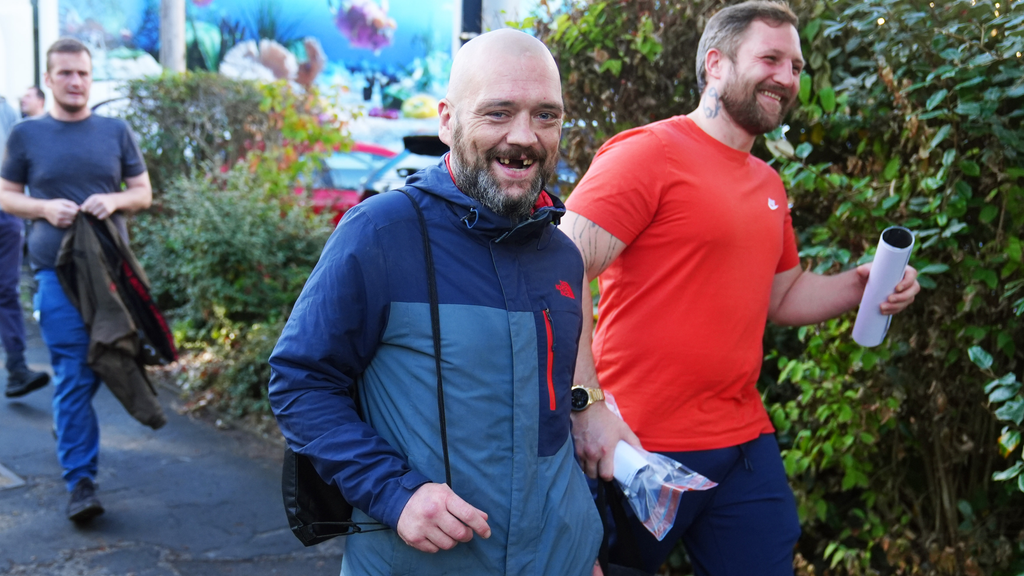
Hundreds of prisoners across England and Wales walked out of prison gates early on October 1, 2026, popping sparkling wine, cheering, and shouting direct messages of gratitude to government leaders. Videos captured former inmates outside facilities like HMP Cardiff celebrating their unexpected freedom as the first official wave of the government’s expanded early release scheme took effect. Outside cell doors, the mood among departing inmates was pure jubilation, with several shouting “Thank you Andy Burnham!” and “Thank you bro!” into waiting television cameras.
Beyond the popping corks and loud cheers lies a deeply contentious legal and social crisis. The government launched this mass release program to prevent the complete collapse of Britain’s prison system, which has been hovering within days of reaching absolute maximum capacity. While ministers insist the emergency policy was the only way to keep law enforcement functioning, the sudden rollout has triggered widespread public alarm, intense political battles, and deep anxiety among crime victims across the nation.
Wild Celebrations Outside Prison Gates
The scenes unfolding outside correctional facilities across the country looked more like street parties than routine prison discharges. At HMP Cardiff, groups of newly released men embraced family members, cracked open drinks, and spoke candidly to news reporters who had gathered outside the gates. Many of those set free admitted they were caught off guard by how fast their release dates had been moved up under the new policy.
For many freed individuals, the sudden departure brought immediate joy, but for others, it highlighted a raw and troubling reality. A 32-year-old former inmate named Tom, who was serving time for burglary, gave a surprisingly blunt assessment of his own release. He explained that while others inside were buzzing with excitement, he felt completely unprepared for life on the outside. Being homeless and lacking a stable support network, he admitted that without shelter or work, he would likely find himself back behind bars within a few months.
Another former inmate, Bogle, who has over 100 convictions and has been jailed five separate times, echoed similar worries. He noted that while prison conditions were terrible and overrun with drugs, walking out without a secure home left him vulnerable to shoplifting just to afford food. These honest admissions from released prisoners have added fuel to an already burning national debate over whether releasing people early without solid housing or support plans really solves anything in the long run.
The $0 Secret To Launching Your Entire Online Empire
Why pay hundreds every month for separate software? Build funnels, send emails, and make sales with Systeme.io completely free.
Get Started For $0Free Forever • No Credit Card Needed • Beginner-Friendly
Why Were Hundreds of Inmates Freed Early?
To understand why this drastic step was taken, you have to look at the severe numbers facing the Ministry of Justice. The prison population across England and Wales reached an all-time critical level of over 87,499 inmates. Official forecasts showed that without immediate government intervention, every single prison cell in the country would be completely full before the end of autumn.
When prisons run entirely out of space, the criminal justice system hits a total standstill. Police officers cannot put newly arrested suspects into cells, courts are forced to delay trials, and judges cannot hand down custodial sentences. Faced with the prospect of police holding cells overflowing and court dockets freezing up, ministers used powers under the Sentencing Act 2026 to lower the threshold of time inmates must serve behind bars before becoming eligible for release on licence.
Under standard procedures, prisoners serving fixed-term sentences were required to serve 50% of their time in custody before being considered for probation. The new progression model temporarily slashes that requirement down to roughly 40% or even one-third for specific categories of offenders. By lowering this threshold, the government expects to free up approximately 5,000 prison beds in controlled stages over the next twelve months, giving the system just enough breathing room to stay operational.
How the Early Release Scheme Works: Who Gets Released and Who Stays Behind
The policy does not mean a blanket opening of prison doors for every convict in the country. The government created specific rules to dictate exactly who qualifies for early release and who must remain locked up. The scheme targets adult offenders serving what are known as standard determinate sentences—fixed term sentences handed down by a judge without a mandatory life or public protection requirement.
Following massive public pushback when the plan was first outlined, ministers were forced to narrow the eligibility rules significantly to protect public safety. Serious categories of crime were explicitly excluded from the early release program.
- Sex Offenders: Anyone serving time for rape, sexual assault, child sexual exploitation, or grooming remains strictly excluded and must serve their original sentence timeline.
- Unlawful Killing: Offenders convicted of manslaughter, causing death by dangerous driving, or causing the death of a child are barred from early release.
- Domestic Violence and Stalking: Specific domestic abuse offenses and persistent stalking charges have been carved out to limit exposure to vulnerable victims.
- Terrorism and Violent Crime: High-risk offenders, individuals convicted of terror offenses, and those serving life sentences or indeterminate sentences are completely ineligible.
For those who do qualify, leaving prison early does not mean they are free of court control. Former inmates remain on licence for the remainder of their original sentence duration. During this time, they are supervised by the Probation Service and must follow strict conditions. Many are fitted with electronic monitoring tags, subjected to strict curfews, barred from entering specific geographic zones, and required to submit to random drug tests. If an offender breaks any of these licence terms, they can be immediately arrested and returned to prison.
The Raw Reality on the Streets: Homelessness and Reoffending Risks
While policy papers talk about progression models and capacity management, the reality on local streets is much more chaotic. Probation officers and charity organizations have raised urgent red flags about what happens the moment these former inmates walk past the prison gates. A significant portion of those released early have no permanent address, no job lined up, and very little money in their pockets.
When individuals are released into homelessness, the likelihood of reoffending skyrockets. Local authorities and housing support services across major urban centers are already stretched to their absolute limits. Without temporary housing or immediate access to social services, many newly freed individuals end up sleeping on the streets within hours of release.
Crime experts point out that releasing people early into the exact same unstable environments that led to their arrests creates a revolving door effect. If someone leaves prison without housing or addiction treatment, they are very likely to commit low-level theft or public order offenses to survive, landing them right back in court. This dynamic threatens to undo the very space savings the government is trying to create.
Public Outrage, Victim Fear, and Political Firestorms
The early release of hundreds of inmates has ignited a fierce political storm inside Parliament and across the country. Opposition politicians have slammed the government for risking public safety to cover up years of infrastructure neglect and poor planning. Shadow ministers argue that law-abiding citizens will ultimately pay the price for sending criminals home early.
Prominent political leaders, including Conservative leader Kemi Badenoch, have criticized the broader policy direction of the government, pointing out that releasing offenders into communities without adequate supervision places an unfair burden on local working families. Similar debates surrounding public safety and enforcement can be seen in discussions over crime and safety across the capital.
Victims’ rights organizations have been among the most vocal critics of the scheme. Domestic violence advocates and victim support groups stress that early release policies cause severe psychological trauma to survivors. Many victims who were told their abusers would serve a specific duration behind bars were suddenly informed that those individuals were being released months ahead of schedule.
Even with special exclusions added for certain violent crimes, survivors express deep fear that probation officers will not have the time or resources to monitor released offenders properly. For families who built safety plans around specific release dates, the sudden shift in timelines feels like a deep betrayal by the justice system.
Is Probation Ready for Thousands of Early Releases?
The Probation Service is the critical safety net meant to hold this entire scheme together. However, probation officers across the United Kingdom have been warning for years that their workload is unsustainable. Staff shortages, heavy caseloads, and high turnover rates have plagued the service, raising serious questions about whether officers can handle thousands of additional supervisory cases landing on their desks all at once.
Supervising an offender on early release requires constant attention and administrative work. Officers must set up accommodation checks, coordinate electronic tagging, arrange drug rehabilitation sessions, and enforce exclusion zone boundaries. When an officer is already managing dozens of high-risk cases, adding dozens more means less time spent evaluating each individual.
Send, Spend & Hold Money Worldwide Without Hidden Fees
Transfer money internationally at the real exchange rate and hold 40+ currencies in one account.
Open a Wise AccountMid-market rate • Fast transfers • 40+ currencies
If probation supervision becomes stretched too thin, subtle warning signs that an offender is slipping back into criminal activity can easily be missed. According to reporting by mainstream news organizations like The Guardian, legal experts warn that a sudden surge in releases will inevitably lead to a higher volume of licence recalls, sending hundreds of people straight back into custody and clogging up the system all over again.
What This Means for the Future of UK Justice
This emergency early release scheme is a temporary fix for a structural problem that has been building up for decades. Britain’s prison population has grown steadily due to longer sentences, tougher prosecution guidelines, and systemic delays in processing court trials. Simply releasing people early buys a few weeks or months of space, but it does not fix the fundamental mismatch between prison capacity and sentencing policy.
To solve this problem permanently, the government is pursuing a multi-pronged strategy that includes building new modern prison facilities, updating court procedures, and reforming community sentence alternatives. However, constructing new prisons takes years of planning, environmental reviews, and significant financial investment. In the short term, law enforcement agencies must adapt to tight budgets and shifting priorities, much like the ongoing operational shifts seen in police intelligence gathering strategies.
Until new prison space actually opens up, ministers will remain caught between two difficult choices: either continue releasing eligible inmates early under strict supervision or risk watching the national prison network overflow completely.
Frequently Asked Questions (FAQs)
Why were prisoners shouting ‘Thank you Andy Burnham’ upon release?
Many newly released inmates directed their verbal thanks toward prominent political leaders and the Labour administration because the government implemented the updated early release scheme that shortened their time behind bars. Scenes of inmates cheering and thanking political figures went viral on social media as the first wave took effect on October 1, 2026.
Are dangerous criminals or sex offenders being released early?
No. The government specifically excluded high-risk offenders, sex offenders (including rape and grooming convictions), terrorists, and individuals convicted of manslaughter or death by dangerous driving from this early release program. Only adult offenders serving standard determinate sentences for less severe crimes are eligible.
How many prisoners are expected to be released under this policy?
Around 700 prisoners were released in the initial wave on October 1, 2026. Over the course of the next twelve months, the government estimates that approximately 5,000 eligible prisoners will be released in planned, phased tranches across England and Wales to relieve prison overcrowding.
What happens if a released prisoner violates their release conditions?
Prisoners released under this scheme remain on licence for the remainder of their sentence. If they breach their licence conditions—such as failing a drug test, breaking a curfew, or entering a restricted zone—they can be immediately arrested by police and returned to prison custody.
How does the government plan to stop released prisoners from becoming homeless?
The government states it is working alongside local housing authorities, charities, and the Probation Service to secure temporary accommodation for departing inmates. However, support groups warn that severe national housing shortages mean many released individuals still struggle to find stable shelter.
Why didn’t the government just build more prisons instead of releasing inmates?
Building new prison infrastructure takes years to plan, fund, and construct. Because the national prison capacity reached over 99% fullness in late 2026, ministers needed an immediate emergency measure to prevent prisons from becoming completely full while long-term construction projects are underway.
The $0 Secret To Launching Your Entire Online Empire
Why pay hundreds every month for separate software? Build funnels, send emails, and make sales with Systeme.io completely free.
Get Started For $0Free Forever • No Credit Card Needed • Beginner-Friendly
The scene outside Britain’s prisons on October 1 highlighted a nation grappling with a justice system at a critical breaking point. While hundreds of former inmates celebrated their unexpected return to freedom, the broader public, victim advocates, and law enforcement officers are left dealing with the massive ripple effects. Balancing public safety with practical prison capacity remains one of the most delicate challenges facing the country today. To stay updated on breaking political news, societal trends, and insightful commentary, visit WhatsBuzzn About or reach out directly through our WhatsBuzzn Contact page. You can also follow the conversation on our social media channels on Instagram, Facebook, and X.
