
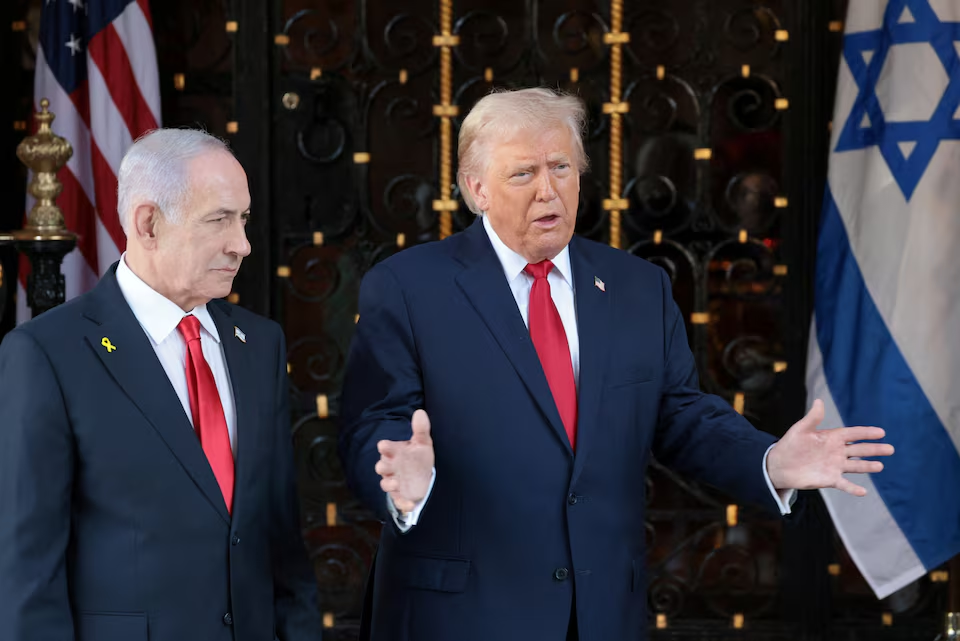
President Donald Trump announced that the United States will stop its multi-billion dollar annual military funding to Israel by the close of 2026. In a live television interview, Trump revealed that he reached an agreement with Israeli Prime Minister Benjamin Netanyahu to end the long-standing direct cash transfers. The declaration represents one of the sharpest pivots in American foreign policy in modern history, challenging decades of guaranteed bipartisan security commitments.
The sudden announcement targets a 10-year security assistance package that has provided Israel with roughly $3.8 billion to $4 billion every single year. The formal pact was not scheduled to expire until 2028. Trump stated that Israel has developed into a wealthy, technologically advanced nation that no longer requires American financial support to protect itself.
The decision instantly sent shockwaves through Capitol Hill, Tel Aviv, and defense circles worldwide. It reopens intense debates over federal spending, foreign aid, and the constitutional balance of power between the White House and the United States Congress.
What Did Donald Trump Say on Fox News?
Speaking during an appearance on Fox News’ Fox & Friends, Trump outlined what he called a finished deal with Prime Minister Benjamin Netanyahu. He explained that discussions regarding the future of direct financial assistance had been underway for several months.
“Now, as far as paying Israel, Bibi Netanyahu and I have made a deal that we give Israel $4 billion a year, and we made a deal months ago that we’re stopping,” Trump stated. “We’ve already agreed that by the end of this year we won’t be paying Israel. Now we’ll help Israel if they need it”.
The $0 Secret To Launching Your Entire Online Empire
Why pay hundreds every month for separate software? Build funnels, send emails, and make sales with Systeme.io completely free.
Get Started For $0Free Forever • No Credit Card Needed • Beginner-Friendly
Trump offered two primary justifications for cutting off the money. First, he argued that Israel possesses an advanced economy and a formidable defense industry, making continuous financial subsidies unnecessary. Second, he addressed domestic political pressures, arguing that left-wing lawmakers frequently point to the aid package as a weapon to attack conservative lawmakers and administration policies.
The announcement distinguishes between routine annual cash grants and emergency military intervention. Trump emphasized that cutting off scheduled budget allocations does not mean the United States is abandoning its ally in an existential crisis. If severe conflict threatens Israel, American assistance remains on the table. However, the era of automatic, multi-billion dollar annual wire transfers is slated to conclude.
Understanding the $38 Billion Deal: Why 2026 Matters
To grasp why this announcement carries such heavy political weight, you have to look back at how the current funding structure came into existence. In 2016, the Obama administration signed a landmark 10-year Memorandum of Understanding (MOU) with Israel.
The agreement committed the United States to providing $38 billion in military aid spanning from fiscal year 2019 through fiscal year 2028. That total breaks down into:
- $3.3 billion per year in Foreign Military Financing (FMF) grants.
- $500 million per year dedicated exclusively to joint missile defense research and procurement, funding systems like the Iron Dome, David’s Sling, and Arrow.
Because the official pact was drawn up to run through late 2028, Trump’s plan to end funding at the end of 2026 cuts the arrangement short by two full years. That cuts off roughly $7.6 billion to $8 billion in projected foreign assistance that Israeli military planners had factored into their long-term budget forecasts.
The tension over weapons and direct aid has been simmering for months on Capitol Hill. Legislative pushback has grown increasingly common, as seen when a top Democrat moved to block a $2.8 billion bomb sale to Israel during high-stakes committee debates. Trump’s proposed termination of baseline assistance takes those isolated budget fights and turns them into official executive policy.
Does Israel Still Need American Aid?
When the United States began sending substantial foreign assistance to Israel following the 1973 Yom Kippur War, Israel was an economically vulnerable country facing hostile neighbors on multiple fronts. Over the past three decades, that situation changed dramatically.
Israel today is a global technological powerhouse with a high-income gross domestic product per capita that rivals several Western European economies. Its domestic defense companies produce world-class radar systems, cyber defense software, and advanced drones that are exported to militaries worldwide.
Decades ago, American aid made up nearly half of Israel’s national defense budget. Today, standard US military assistance represents only about 12% to 15% of total Israeli defense spending. While $4 billion is a significant sum, the Israeli economy is capable of absorbing the shortfall by reallocating domestic revenues.
Israeli defense leaders have also recognized the hidden costs of American aid. Under the terms of the 2016 MOU, a provision known as Offshore Procurement was systematically phased out. In past decades, Israel was allowed to convert a portion of its US aid dollars into local currency to invest in its own domestic defense contractors. The newer agreement required all funds to be spent strictly on American-manufactured equipment.
Netanyahu himself has remarked in past interviews that Israel’s ultimate strategic goal should be complete economic self-reliance. Ending the aid package could grant the Israeli government greater diplomatic freedom to make independent defense decisions without feeling bound to Washington’s political conditions.
On the other hand, Israeli defense planners emphasize that joint missile defense programs remain uniquely expensive. Intercepting hundreds of incoming rockets and ballistic missiles requires specialized interceptor missiles that cost millions of dollars each. Losing guaranteed subsidies could force Israeli taxpayers to shoulder higher defense surcharges.
Can the President Stop Funding Without Congress?
The biggest question surrounding Trump’s announcement is whether he has the legal authority to cancel the funding unilaterally.
Under Article I of the United States Constitution, Congress holds the exclusive power of the purse. Presidents can propose federal budgets and negotiate diplomatic memorandums, but only the Senate and the House of Representatives can appropriate taxpayer dollars.
The 2016 Memorandum of Understanding is a non-binding political commitment rather than a ratified treaty. It serves as a pledge of intent between two governments, but it relies entirely on Congress to approve the money in annual defense appropriations bills.
Send, Spend & Hold Money Worldwide Without Hidden Fees
Transfer money internationally at the real exchange rate and hold 40+ currencies in one account.
Open a Wise AccountMid-market rate • Fast transfers • 40+ currencies
Several legal realities will shape how this policy plays out:
The Impoundment Control Act of 1974
If Congress passes a federal budget that explicitly appropriates money for Israel, the president is legally required under the Impoundment Control Act to disburse those funds. A commander-in-chief cannot simply refuse to spend money that Congress mandated by law unless lawmakers approve a formal rescission request.
Strong Bipartisan Coalitions
Support for Israel has historically remained high among mainstream Republicans and moderate Democrats in both chambers of Congress. Lawmakers who favor robust foreign assistance may choose to write the $3.8 billion package directly into upcoming defense bills regardless of the White House’s public statements.
Presidential Veto Power
If Congress includes aid to Israel against Trump’s wishes, Trump could threaten to veto entire federal spending bills or issue specific executive directives to delay the processing of foreign military financing paperwork.
Until Congress formally debates the next round of defense authorizations, Trump’s announcement stands as an executive policy directive that will face direct legislative scrutiny on Capitol Hill.
Geopolitical Fallout Across the Middle East
Shifting the flow of military funds will send reverberations across regional alliances. The Middle East remains caught in widespread instability, driven by recurring clashes with regional proxies and direct confrontations with Tehran.
As tensions simmer, the United States has frequently altered its troop presence and combat ready assets. Readers tracking international security will remember reports showing how the US sent a third aircraft carrier to the Middle East to deter wider warfare. Shifting funding levels introduces a new variable into those delicate deterrence calculations.
Regional adversaries like Iran monitor every adjustment in the American-Israeli defense relationship. Any public signal that the White House is pulling back financial commitments can easily be interpreted by adversaries as a crack in the alliance. Earlier this year, debates surfaced when Trump claimed Iran was in deep trouble as conflict expanded. How Tehran responds to this funding shift will be critical for regional stability.
Global rivals are also searching for opportunities to expand their influence. Over the past five years, Beijing has invested billions in infrastructure and diplomacy throughout the Persian Gulf and Levant. The dynamics of how China challenges US power across the Middle East highlight why international observers worry that any pullback in American engagement creates a vacuum for competing superpowers to fill.
The Domestic Political Debate: America First vs. Traditional Alliances
Trump’s move is tied directly to domestic politics and federal spending battles in the United States.
The $0 Secret To Launching Your Entire Online Empire
Why pay hundreds every month for separate software? Build funnels, send emails, and make sales with Systeme.io completely free.
Get Started For $0Free Forever • No Credit Card Needed • Beginner-Friendly
For years, the “America First” movement has argued that the United States cannot afford to fund foreign governments while running trillion-dollar budget deficits and struggling with domestic issues. By calling for an end to the $4 billion annual aid to Israel, Trump is directly addressing that populist voter base.
The announcement creates unexpected political dynamics across both major parties:
- Progressive and Left-Wing Lawmakers: Many progressive Democrats have spent years demanding restrictions or reductions in military aid to Israel. Trump’s declaration co-opts a talking point that the political left has used for years, stripping them of a major campaign issue while surprising foreign policy hawks.
- Establishment Republicans: Traditional neoconservative Republicans view military aid to Israel as an untouchable core priority. Lawmakers in this camp argue that funding Israel directly strengthens American security by providing valuable intelligence, battle-tested defense data, and joint technological innovations.
- The American Defense Industry: A substantial portion of foreign military aid is not cash handed over in a suitcase. It operates as procurement vouchers that must be spent buying products from American defense contractors like Lockheed Martin, Boeing, RTX, and General Dynamics. When the US government cuts $3.3 billion in foreign military financing, American defense plants feel the pinch. Defense lobbyists will likely mount fierce resistance behind closed doors on Capitol Hill.
Frequently Asked Questions (FAQs)
Is the US stopping all military aid to Israel at the end of 2026?
According to President Donald Trump, scheduled annual military aid of $4 billion will terminate at the end of 2026 under a deal he says was agreed with Israeli Prime Minister Benjamin Netanyahu. However, emergency military assistance during an active crisis would still be evaluated on a case-by-case basis.
How much money does the US send to Israel each year?
Under the 2016 Memorandum of Understanding, the United States provides approximately $3.8 billion each year. This consists of $3.3 billion in Foreign Military Financing and $500 million for joint missile defense programs like the Iron Dome, David’s Sling, and Arrow systems.
When was the original US-Israel aid agreement set to expire?
The 10-year security assistance pact was signed in 2016 under President Barack Obama and officially took effect in fiscal year 2019. It was scheduled to run through fiscal year 2028, meaning an end date in late 2026 halts the program two years early.
Can Donald Trump cancel this funding without approval from Congress?
Congress holds the power of the purse under the US Constitution. The Memorandum of Understanding is a non-binding executive framework, but actual funding must be appropriated by lawmakers. If Congress mandates funding for Israel in future defense budgets, the White House could face legal challenges under the Impoundment Control Act if it refuses to spend the money.
Did Benjamin Netanyahu agree to end US military assistance?
Trump stated publicly that he and Netanyahu reached an agreement months ago to wind down the payments. Israeli officials have historically discussed the long-term goal of weaning the country off foreign aid to achieve complete self-reliance, though Israeli government spokespeople have not published a signed agreement confirming an immediate halt by 2026.
Will Israel still be able to buy American military weapons?
Ending foreign aid grants does not prohibit Israel from buying American military equipment. It simply means that Israel would have to pay for those weapon systems using its own national revenue rather than relying on American taxpayer grants.
The coming months will determine whether Trump’s bold declaration transforms into binding federal law or runs into resistance on Capitol Hill. Congress will soon begin drafting next year’s defense authorizations, forcing lawmakers on both sides of the aisle to take a public stand. Between balancing federal budgets at home and navigating unpredictable alliances abroad, this move signals a turning point in how America handles foreign commitments.
