
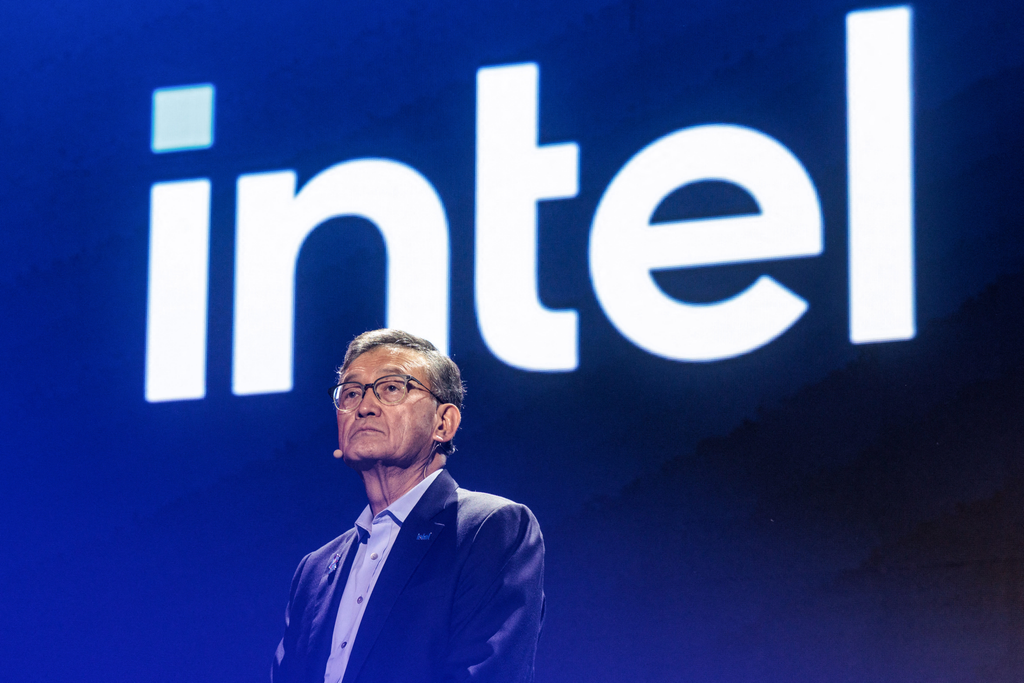
Intel Capital just made a power move that caught Wall Street completely off guard. The legacy chipmaker joined forces with direct competitors Nvidia and AMD to pour over $700 million into Hark, an artificial intelligence startup created by tech entrepreneur Brett Adcock. The Series A round rocketed Hark to a jaw-dropping $6 billion valuation, marking one of the boldest computing bets of the year.
Big tech companies usually fight tooth and nail for market share, especially in semiconductor hardware. Seeing Intel (INTC) sign a check alongside Nvidia, AMD Ventures, Qualcomm Ventures, and Salesforce Ventures is the kind of rare industry alignment that signals a massive shift in where consumer technology is headed.
What Is Hark, and Why Are Chip Rivals Suddenly Teaming Up?
Founded by Brett Adcock—the entrepreneur behind robotics powerhouse Figure AI and electric aircraft pioneer Archer Aviation—Hark operates as an AI hardware and intelligence lab. Instead of building another generic web chatbot, the San Jose startup is working on next-generation personal intelligent systems.
Hark designs AI models that combine continuous voice interaction, advanced computer vision, and persistent memory. The platform operates a cloud computer directly for users, running everyday digital chores like sorting through messy email threads, managing calendar schedules, buying groceries, and booking flights. Adcock envisions an assistant that does actual work rather than just generating paragraphs of text.
The $700 million round was led by Parkway Venture Capital, with participation from ARK Invest, Greycroft, and Prime Movers Lab alongside the major semiconductor titans. The fact that Intel, Nvidia, and Qualcomm are sitting at the same table proves that the race for the next AI breakthrough goes far beyond basic software prompts.
The $0 Secret To Launching Your Entire Online Empire
Why pay hundreds every month for separate software? Build funnels, send emails, and make sales with Systeme.io completely free.
Get Started For $0Free Forever • No Credit Card Needed • Beginner-Friendly
Why Intel Capital Is Making Such a Big AI Bet Right Now
Intel has been navigating a high-stakes transition. While rival chipmakers have enjoyed surging valuations during the artificial intelligence wave, Intel has faced pressure to prove its long-term strategy across enterprise chips and consumer hardware.
By backing Hark through Intel Capital, the company buys itself a prime seat at the table of what could become the next dominant computing platform. This move helps Intel in three major ways:
- Hardware Diversification: AI requires more than standard data centers. Building personal devices that think, listen, and see demands specialized processing architecture.
- Software-Ecosystem Alignment: Investing early gives Intel a direct window into how next-generation foundation models interact with underlying silicon.
- Strategic Hedging: Joining forces with rivals like Nvidia and AMD allows Intel to share risk while ensuring it is not locked out if Hark’s hardware gains mass adoption.
Market analysts have watched big tech companies pour billions into foundational tech over the past two years, similar to when Wall Street dropped billions on custom AI chips to break hardware bottlenecks. For Intel, this check is about relevance, speed, and securing a stake in where future consumer devices are heading.
Moving Past Ordinary Chatbots to Real AI Hardware
The broader tech landscape is experiencing chatbot fatigue. People have tested generative tools, but switching between tabs and typing text prompts into a browser window still requires manual effort. The next battle is about personal agency—systems that execute physical and digital tasks seamlessly.
Hark plans to expand its GPU infrastructure, grow its engineering team from 70 people to around 200 developers, and build dedicated hardware designed from the ground up for personal intelligence. While current market leaders like OpenAI and Anthropic dominate enterprise software, the race to own consumer devices is still completely up for grabs.
We have already seen giants scramble for device territory, such as OpenAI pushing new workspace features to replace everyday tools and hardware makers trying to build dedicated pocket gadgets. If Hark successfully produces intuitive, voice-and-vision-driven consumer hardware, it could fundamentally disrupt how people use laptops and phones.
How the $6 Billion Valuation Compares to Other Mega-Rounds
A $6 billion post-money valuation for a Series A startup is enormous by any historical benchmark. Just a few years ago, achieving a valuation like that took a decade of steady revenue growth. Today, deep-tech investors are willing to pay massive premiums upfront to secure equity in teams capable of building custom models and proprietary silicon.
This pattern is playing out across the entire industry. Venture rounds have exploded as startups attempt to take on tech incumbents, mirrored by moves like DeepSeek securing massive funding rounds to challenge American computing power.
For everyday consumers, these massive dollar amounts mean one thing: tech giants are throwing serious resources into making computing invisible, voice-driven, and truly automated.
The Growing Infrastructure Race Behind Consumer Devices
Building AI that lives with you in real time requires unprecedented computational power. Consumer devices with persistent memory and instant video understanding cannot rely entirely on slow cloud round-trips; they need efficient local chips, robust edge processing, and lightning-fast server networks.
This explains why hardware manufacturers are driving the investment. As modern neural networks grow more demanding, tech giants are spending historic amounts on computing power, echoing how Elon Musk spent billions on AI chips to feed ambitious infrastructure goals.
Intel wants to ensure that whether the future runs on localized edge silicon, desktop processors, or cloud clusters, its architecture plays a central role. Backing Hark gives Intel immediate feedback on what high-performance models require at the chip level.
What This Means for Everyday Consumers
You might wonder how a nine-figure venture round impacts your daily routine. In short, it accelerates the timeline for when you can stop doing repetitive digital chores yourself.
Here is what this next wave of development aims to deliver:
- True Hands-Free Assistance: Instead of dictating a simple timer, an assistant can understand context, spot an overdue bill, and help arrange payment.
- Fewer App Silos: Operating a cloud computer means an AI can navigate websites and services on your behalf, so you do not have to download separate apps for bookings and schedules.
- Smarter Workflows: Routine administrative headaches like sorting receipts, organizing digital documents, and transcribing team updates can run quietly in the background.
While software developers continue to iterate rapidly, the companies building the physical silicon are clearly betting that voice and vision hardware will define the next decade of personal technology.
Send, Spend & Hold Money Worldwide Without Hidden Fees
Transfer money internationally at the real exchange rate and hold 40+ currencies in one account.
Open a Wise AccountMid-market rate • Fast transfers • 40+ currencies
Frequently Asked Questions (FAQs)
What is Hark AI?
Hark is an artificial intelligence startup founded by Brett Adcock. The company develops foundation models, intelligent software, and custom hardware focused on personal, voice-driven computing and automated digital tasks.
Why did Intel invest in Hark alongside Nvidia and AMD?
Intel Capital joined the round to support advanced consumer hardware development, ensure its semiconductor architecture aligns with next-generation AI needs, and partner on high-growth technology alongside leading industry players.
Who led the $700 million Series A funding round?
The round was led by Parkway Venture Capital, with participation from Intel Capital, Nvidia, AMD Ventures, Qualcomm Ventures, Salesforce Ventures, ARK Invest, and several other venture firms.
What will the $700 million be used for?
Hark stated that the funds will go toward scaling GPU computing infrastructure, expanding its engineering workforce from roughly 70 to 200 specialists, refining its foundation models, and accelerating hardware development.
The massive $700 million funding round proves that the artificial intelligence landscape is evolving from text prompts into full-fledged intelligent machines and dedicated consumer devices. With Intel, Nvidia, and AMD all backing the exact same vision, the race to build the ultimate personal assistant is officially running at full speed.
