
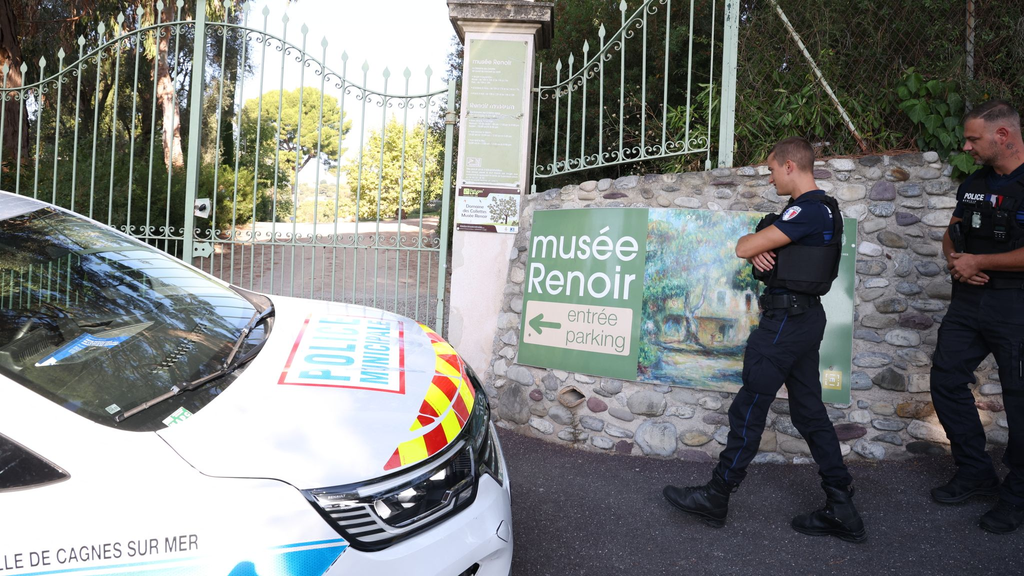
Early Tuesday morning, a quiet coastal town on the French Riviera became the scene of a fast-paced art robbery. Two well-equipped thieves sliced through a fence, broke into the famous Renoir Museum in Cagnes-sur-Mer, and made off with priceless artwork created by the Impressionist master Pierre-Auguste Renoir.
The entire operation took less than three minutes from start to finish. The thieves managed to grab four paintings off the wall, but their escape route fell apart when police arrived at the scene just five minutes after the security alarm went off. As the suspects panicked and fled through the dark museum gardens, they dropped two of the paintings on the ground. However, they still managed to slip away into the night with two missing masterworks, launching a nationwide manhunt across France.
The Early Morning Break-In: Step by Step
The break-in happened shortly before 6:00 AM at the Renoir Museum, situated on a hilltop in Cagnes-sur-Mer, a small town located between Nice and Cannes. Everything started at 5:48 AM local time when the property’s security alarm began ringing.
Police officials report that the intruders came thoroughly prepared for the job. They brought specialized tools, including an electric saw or motorized metal cutter, which allowed them to cut a hole directly through the outer garden fence without attracting attention from neighbors. Once inside the estate grounds, they moved toward the main building.
Entering the Museum Building
The thieves gained entry into the house through a ground-floor window. Inside the quiet rooms, they knew exactly where to go. They did not waste time looking through drawers or bothering with smaller decorative items. Instead, they walked straight to the main display walls and used metal cutters to snip the clips holding the heavy picture frames in place.
Build Funnels, Email Lists & Sell Online With One Free Tool
Create funnels, send emails, and sell online using Systeme.io without paying for multiple tools.
Create Free AccountFree forever • No credit card • Beginner-friendly
The Fast Police Response
The loud ringing of the alarm system left the intruders with very little time to complete their plan. Officers from the regional police force responded immediately, pulling up to the estate grounds within five minutes. That fast arrival surprised the thieves right in the middle of their escape. Hearing sirens coming up the hill, the pair fled through the garden in total panic, leaving part of their stolen loot behind as they squeezed back out through the fence.
The Stolen Treasures: What Was Taken and What Was Left Behind
In total, four paintings were pulled off the display walls during the quick raid. The total combined value of all four items is estimated at around 9 million euros, which equals roughly 10.5 million US dollars.
The Missing Masterpieces
The two paintings that the criminals successfully carried away are famous, historic works of art:
- Portrait of Madame Colonna Romano: A classic canvas depicting a famous Italian theater actress who posed for Renoir during the early 20th century.
- Young Woman at the Well: A peaceful scene showing a young woman standing near an outdoor water well, painted with Renoir’s characteristic soft light and rich colors.
Both of these missing artworks were actually on special long-term loan to the Renoir Museum from the world-famous Musée d’Orsay in Paris. Their disappearance is considered a major loss to French cultural history.
The Paintings Found in the Garden
As police officers closed in on the estate, the thieves scrambled through the hole cut into the wire fence. In their rush to get away, they dropped two of the four canvases onto the dirt and grass in the garden:
- Portrait of Madame Pichon: A gentle portrait of a family friend.
- Coco Reading: A beloved portrait depicting Renoir’s youngest son, Claude, who was fondly nicknamed “Coco” by his family.
Officers found both paintings resting against plants near the property wall. Although the dropped canvases were briefly exposed to the morning humidity, investigators confirmed that both pieces remained in good condition.
Inside the Renoir Museum: A Historic Landmark
To understand why this break-in caused such an uproar in France, it helps to understand the history of the museum itself. The site is not a massive modern glass building like those found in giant capital cities. It is a beautiful historic estate called Les Collettes, surrounded by ancient olive trees.
Pierre-Auguste Renoir moved to this estate in 1907. He was looking for warm Mediterranean sunshine to help ease his severe joint pain caused by rheumatoid arthritis. He spent the last twelve years of his life living and painting on this property until he passed away in 1919. The estate was converted into a public museum in 1960 so people could honor his legacy.
What the Museum Houses
The property displays 13 original paintings by Renoir, around 40 original sculptures, personal family photographs, historic furniture, and the artist’s personal easel and wheelchair. Because the museum retains the cozy feel of a private home, visitors travel from all over the world to see how the famous Impressionist lived and worked.
Why Small Museums Face Higher Risks
Unlike giant institutions, smaller regional museums face unique challenges when it comes to protection. They usually operate on much smaller budgets and cannot afford dozens of security guards patrolling the hallways at night. While they have modern alarm systems connected to local police stations, their large outdoor gardens and quiet locations can give intruders extra places to hide.
The mayor of Cagnes-sur-Mer, Bryan Masson, expressed strong outrage following the robbery. He stated that breaking into the Renoir Museum is a direct attack on local heritage and history. He called on government officials to provide more funding and better physical protection for smaller museums located outside major cities.
Can Stolen Masterpiece Paintings Actually Be Sold?
When high-value art disappears, people often wonder what criminals expect to do with it. Movie plots usually suggest that a hidden billionaire will pay millions to keep stolen art in a secret basement room. But art crime specialists say that real life works very differently.
The Black Market Problem
Selling a famous Renoir painting on the open market is nearly impossible. Major masterworks are registered in global databases that track stolen property. Any art dealer, auction house, collector, or gallery owner would recognize a stolen Renoir immediately if someone tried to offer it for sale.
According to security experts at the Art Loss Register, which maintains the world’s largest database of stolen artwork, thieves who take famous paintings usually end up stuck with items they cannot turn into cash.
How Criminal Gangs Use Stolen Art
If selling the art directly is so difficult, why do thieves keep taking fine art? Investigators point to a few common reasons:
- Collateral for Criminal Deals: Criminal networks sometimes use stolen artwork as security deposits or guarantees when making illegal deals on the black market.
- Ransom Negotiations: Thieves occasionally try to contact insurance companies or property owners to ask for a cash reward in exchange for returning the art safely.
- Lack of Real Planning: Many art thieves are simply opportunistic criminals who do not realize how hard it is to sell world-famous art until after the crime is done.
A Wave of Art Crimes Across Europe
This Riviera break-in is not an isolated event. It comes during a noticeable rise in bold art thefts and museum break-ins across European countries.
High-Profile Crimes in Recent Months
Not long ago, brazen thieves carried out a daytime robbery at the Louvre Museum in Paris, walking away with historic crown jewels worth tens of millions of euros. Meanwhile, in Italy, thieves broke into a museum in Messina and stole several rare Renaissance panel paintings by Antonello da Messina.
Changing Tactics Used by Criminals
A recent report published by Europol warned that art crimes across Europe are becoming more aggressive. In past years, art thefts were usually carried out by quiet, specialized groups that worked in total secret. Today, law enforcement sees more gang members using heavy power tools, saws, and sledgehammers to smash through doors and fences in fast “grab-and-go” attacks.
Europol also noted that organized crime groups are using social media platforms to recruit local workers to carry out these quick break-ins, creating new headaches for police departments everywhere.
How Modern Technology and AI Are Changing Museum Security
Because criminals are changing their methods, cultural venues everywhere are looking for better ways to protect their historic collections. Security teams are turning toward modern hardware and digital tools to stay one step ahead.
Smart Cameras and Sensor Networks
Modern security setups now use artificial intelligence programs to monitor camera feeds around the clock. Smart systems can recognize unusual movements near a garden fence long before an intruder reaches a door or window. Infrared sensors, laser grid lines, and intelligent alarms are replacing basic motion detectors.
If you are interested in seeing how fresh tech tools are transforming different fields, check out the latest technology and AI updates on our site.
Micro-Trackers and Hidden Identifiers
Some museums are now placing tiny tracking devices and special invisible markers directly inside picture frames or canvas backings. These small transponders allow police to track the physical location of stolen items using GPS or radio signals if they are taken off museum property.
Digital News, Online Creators, and Breaking Stories
When a major event like a French Riviera art heist happens, news spreads across the internet in a matter of minutes. Online news blogs, social channels, and video creators work quickly to share timelines, photos, and deep explanations of how the crime unfolded.
Modern media teams rely on digital tools and automated platforms to curate breaking stories efficiently for thousands of daily readers. For anyone interested in building online channels or learning how creators run successful digital platforms, exploring YouTube automation tips is a great way to learn how modern content publishing works.
What Happens Next in the Investigation?
The search for the missing Renoir paintings is moving quickly. The regional prosecutor’s office in Marseille has opened a formal investigation into organized gang robbery, and France’s specialized National Office for Traffic in Cultural Goods has joined the case.
International Border Alerts
Police have sent detailed descriptions and high-resolution photos of “Portrait of Madame Colonna Romano” and “Young Woman at the Well” to border control posts, airports, shipping ports, and international police databases managed by Interpol.
Build Funnels, Email Lists & Sell Online With One Free Tool
Create funnels, send emails, and sell online using Systeme.io without paying for multiple tools.
Create Free AccountFree forever • No credit card • Beginner-friendly
Hopes for Safe Recovery
Even though the theft of these two paintings is a serious tragedy, art recovery specialists remain hopeful. Because the stolen pieces are so widely recognized, it is nearly impossible for the thieves to sell them. In many past cases, criminals eventually abandon stolen masterworks or leave them where authorities can find them once they realize they cannot profit from the crime.
Frequently Asked Questions (FAQs)
Which paintings were stolen from the Renoir Museum?
Four paintings were initially taken during the break-in: “Portrait of Madame Colonna Romano,” “Young Woman at the Well,” “Portrait of Madame Pichon,” and “Coco Reading”. The thieves dropped “Portrait of Madame Pichon” and “Coco Reading” in the garden while escaping, but “Portrait of Madame Colonna Romano” and “Young Woman at the Well” remain missing.
How much are the stolen Renoir paintings worth?
The four paintings taken during the robbery have a combined estimated value of roughly 9 million euros, which is about 10.5 million US dollars. The two missing pieces represent a large portion of that financial and cultural value.
How did the thieves break into the museum building?
The intruders used an electric saw or motorized cutter to slice a hole in the outer garden fence. They then entered the ground floor through a window, cut the metal clips holding the painting frames to the wall, and tried to escape back through the garden.
Why do art thieves target smaller regional museums?
Smaller museums often have lower operating budgets, fewer security guards on duty overnight, and grounds surrounded by large trees or gardens that give intruders cover. Criminals view these locations as softer targets compared to massive city galleries.
Can the thieves sell these stolen Renoir paintings?
No, selling them legally is practically impossible. Major artworks are registered in international stolen property databases. Any legitimate auction house, dealer, or private buyer would instantly recognize the stolen works, making a regular sale impossible.
The theft of Pierre-Auguste Renoir’s paintings from his former home on the French Riviera is a stark reminder of the ongoing challenges involved in preserving world art and culture. As investigators continue their search across France and beyond, art lovers everywhere remain hopeful that these two priceless canvases will soon be safely returned to public display.
If you enjoyed reading this story and want to discover more about our background, head over to our story page. Do you have thoughts, questions, or news tips you want to share with us? Feel free to reach out through our contact page. You can also join our online community by following us on Instagram, connecting with us on Facebook, and catching up on real-time news updates on X (formerly Twitter).
