
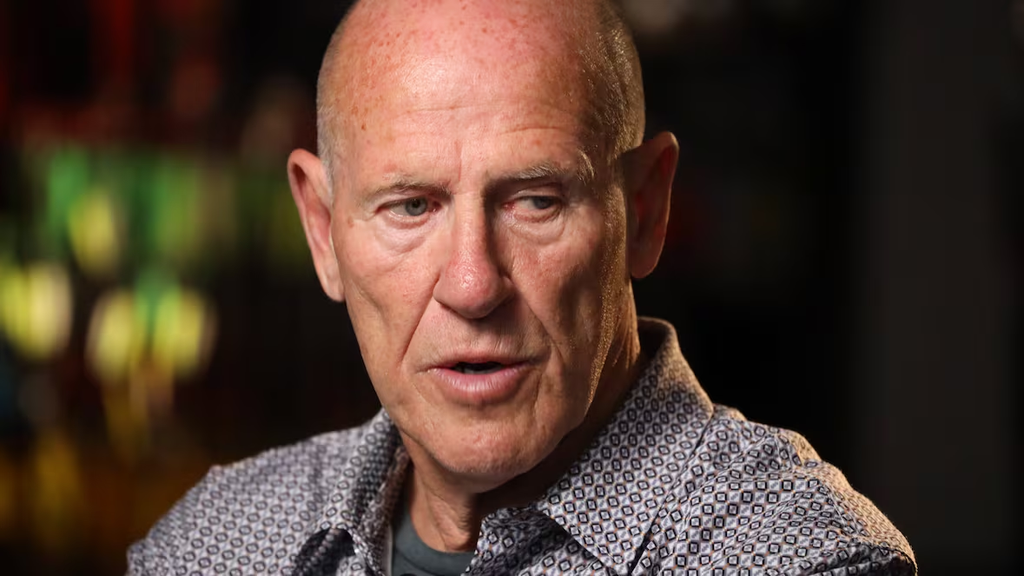
Albertans are preparing to head to the polls for a historic October 19 referendum, but the leaders pushing for separation have delivered a striking message to the country: the battle for Alberta’s independence is far from over, regardless of what happens on voting day.
Mitch Sylvestre, the Chief Executive Officer of the Alberta Prosperity Project, made it clear that a negative vote at the ballot box will not put an end to their campaign to pull the energy-rich province out of the Canadian Confederation. Speaking openly about the upcoming vote, Sylvestre questioned why anyone would expect his group to simply pack up and walk away when they believe the province is facing a structural crisis within Canada.
The upcoming ballot presents voters with ten distinct questions. Nine of those questions focus on expanding provincial autonomy over areas like immigration, taxation, and constitutional reform. The tenth and most contentious question asks Albertans whether the province should remain part of Canada or begin the legal process required under the Canadian Constitution to hold a binding referendum on separation.
While recent public opinion polls suggest that a clear majority of Albertans prefer staying in Canada, separatist organizers view the referendum as just one milestone in a much longer political campaign. This defiance has re-ignited intense debate across the country about Western alienation, constitutional law, and the future unity of Canada.
What the Alberta Prosperity Project Is Really Saying
The Alberta Prosperity Project has emerged as one of the primary advocacy groups spearheading the push for Alberta sovereignty. Founded as a non-profit educational society, the organization argues that federal policies in Ottawa continuously undermine Alberta’s economic potential, energy sector, and personal freedoms.
The $0 Secret To Launching Your Entire Online Empire
Why pay hundreds every month for separate software? Build funnels, send emails, and make sales with Systeme.io completely free.
Get Started For $0Free Forever • No Credit Card Needed • Beginner-Friendly
Mitch Sylvestre expressed firm determination when addressing questions about the future of the movement post-referendum. He explained that the core motivations driving separatism will not magically disappear when the votes are counted.
“Why would we stop this movement? We’re not doing it for any reason other than that we think that the sky is falling here,” Sylvestre said. “What would give anybody the impression that we would abandon this? We think that we’re right. We think there is a problem here.”
For Sylvestre and his supporters, the struggle is rooted in what they see as decades of unfair treatment by federal authorities. They point to federal carbon pricing, restrictions on pipeline construction, federal environmental regulations, and equalisation payments as proof that the Canadian federal structure works against Alberta’s wealth creators.
Even if the “Remain” vote wins on October 19, the Alberta Prosperity Project intends to keep organizing, holding rallies, and lobbying politicians. Their core argument is that as long as Ottawa retains overarching authority over provincial resources and policy, the fundamental friction between Alberta and the federal government will persist.
Separation advocates also addressed questions surrounding trust in the electoral process itself. Sylvestre noted that while his group has scrutinized mail-in ballot procedures, they have recruited a large number of official scrutineers to monitor the counting process closely across the province. Elections Alberta has reiterated that safeguards are firmly in place and that voting fraud remains exceptionally rare in provincial elections.
Inside the October 19 Referendum: 10 Questions That Could Reshape Canada
The October 19 vote is one of the most complex exercises in direct democracy ever conducted in Canadian history. Premier Danielle Smith and the United Conservative Party government structured the referendum to address a wide range of provincial grievances against Ottawa.
The ballot is divided into two distinct parts:
- Questions 1 to 9 (Provincial Autonomy and Reforms): These questions ask voters for a mandate to demand greater control over local affairs. Proposals include creating a provincial immigration system, establishing an independent provincial tax collection agency, opting out of federal social programs with full financial compensation, and limiting federal jurisdiction over natural resources.
- Question 10 (The Separation Question): The final question directly addresses Alberta’s place in Confederation. It asks whether Alberta should remain a province of Canada or whether the provincial government should commence legal steps toward a binding referendum on leaving Canada altogether.
Premier Danielle Smith called the vote after competing citizen-led petition drives swept across the province over the past year. One petition, organized by the separatist group Stay Free Alberta, called for a separation vote. Another massive petition, organized by the group Alberta Forever Canada and led by former politician Thomas Lukaszuk, gathered over 400,000 verified signatures from Albertans demanding that the province stay in Canada.
Faced with massive public pressure from both federalist and separatist camps, the provincial government opted to place the issue directly in the hands of voters. Premier Smith herself has stated publicly that she plans to vote in favor of remaining in Canada, while using the referendum to secure a powerful negotiating mandate against Ottawa.
The political atmosphere surrounding this vote comes at a time when national economic policy and international trade pressures are heavily impacting the country. Canadians have been watching closely as federal leaders navigate trade tensions and national economic strategies, as seen in recent coverage on PM Mark Carney’s economic policies and public reactions to Canada rejecting US trade demands. These broader national dynamics have only amplified the debate inside Alberta over economic self-reliance.
The Separatist Blueprint: What an Independent Alberta Would Look Like
To show voters what an independent nation of Alberta might look like, the Alberta Prosperity Project published a detailed 18-section discussion paper. The document outlines a dramatic departure from Canada’s existing constitutional and parliamentary system.
Key features of the proposed independent Alberta model include:
- A Republic System of Government: Replacing the constitutional monarchy and parliamentary system with a directly elected president. The president would hold veto power over legislation, which could only be overridden by a two-thirds vote in a newly created two-chamber legislature.
- Strict Tax Caps: Constitutionally capping both personal income tax and consumption tax at 10 percent, while prohibiting the government from accumulating public debt during normal economic conditions.
- An Independent Oversight Branch: Establishing a powerful, elected body made up of an Elector General, Auditor General, Inspector General, Solicitor General, and Attorney General. This branch would have authority to investigate public officials and convene citizen grand juries.
- New Citizenship and Travel Documents: Issuing Alberta passports at no cost to all residents and establishing independent border management.
- Recall and Direct Democracy: Allowing citizens to initiate binding referendums or recall elected officials if 3 percent of registered voters in a constituency sign a petition.
While the Alberta Prosperity Project views this proposal as a bold blueprint for freedom and prosperity, other figures in the independence movement have offered differing views. Cory Morgan, a veteran conservative commentator and founder of Pathway to Independence, noted that while the document serves as a helpful starting point, some elements—like the elected Oversight Branch—might create unnecessary layers of bureaucracy.
This division highlights a broader reality within the separatist movement: advocates do not always agree on what separation should look like in practice. Some envision an independent republic, others favor joining the United States as a new territory or state, and some simply want maximum independence while maintaining economic alliances with neighboring provinces.
Lessons From History: Why Separatist Movements Rarely Die With One Vote
Political historians and legal experts point out that separatist movements rarely vanish after losing a single vote. Canada has a long history with constitutional tension, most notably in Quebec.
Send, Spend & Hold Money Worldwide Without Hidden Fees
Transfer money internationally at the real exchange rate and hold 40+ currencies in one account.
Open a Wise AccountMid-market rate • Fast transfers • 40+ currencies
Quebec held its first independence referendum in 1980, where 60 percent of voters chose to remain in Canada. Despite that decisive defeat, the sovereignist movement regrouped over the following decade. In 1995, Quebec held a second referendum that came extraordinarily close to breaking up the country, with the “No” side winning by less than one percentage point (50.58% to 49.42%).
Western alienation in Alberta has similar historical roots that span more than a century. Frustration over federal control of natural resources dates back to the early 20th century and deepened significantly during the National Energy Program of the 1980s under Prime Minister Pierre Trudeau.
Even when economic conditions fluctuate, as tracked in broader reports on Canada’s GDP growth and economic shifts, political sentiment in Western Canada often remains sensitive to federal regulation and spending priorities.
From a legal standpoint, exiting Canada is not a simple process. In 1998, the Supreme Court of Canada issued its landmark Reference Re Secession of Quebec ruling. The court established that under constitutional law:
- No Canadian province has the right to secede unilaterally under domestic or international law.
- A province can only initiate negotiations toward separation if a clear majority of voters answer a clear question in favor of leaving.
- If a clear majority votes “Yes,” the federal government and all other provinces are constitutionally obligated to enter into negotiations in good faith.
- Any final separation would require comprehensive constitutional amendments addressing national debt division, trade agreements, currency, Indigenous treaties, and shared national assets.
Because of these complex legal requirements, a single referendum question—especially an advisory one—is only the beginning of a lengthy legal and political process.
The Government and Opposition Pushback
The declaration by separatist leaders that the fight will continue has drawn strong reactions from political leaders, Indigenous communities, and federalist groups across Alberta.
Premier Danielle Smith’s office responded to the comments by emphasizing the importance of respecting democratic outcomes. Spokesperson Sam Blackett stated that the government expects all Albertans to abide by the results of the referendum once the votes are counted.
“We expect all Albertans to do the same,” Blackett said in a public statement. “We hope to get a strong mandate from Albertans on our other nine questions and for remaining in Canada, so that we can continue our work to build a stronger Alberta within a united Canada.”
Federalist campaign group Alberta Forever Canada, led by Thomas Lukaszuk, warned that prolonged talk of separation hurts Alberta’s economy by creating unnecessary uncertainty for investors. Business leaders have voiced similar concerns, noting that major capital projects and international investments depend on political stability, a theme frequently discussed at major gatherings such as the Canada Investment Summit.
Indigenous leaders across Alberta have also taken a firm stand against separation. The Assembly of Treaty Chiefs, representing First Nations across Treaty 6, Treaty 7, and Treaty 8 territories, unanimously expressed deep opposition to any attempt to alter Alberta’s status within Canada. Sovereign First Nations signed numbered treaties directly with the British Crown and the federal government of Canada, not the provincial government of Alberta. Indigenous leaders have emphasized that Alberta has no legal or moral right to alter treaty boundaries or separate without the explicit consent of Treaty First Nations.
The $0 Secret To Launching Your Entire Online Empire
Why pay hundreds every month for separate software? Build funnels, send emails, and make sales with Systeme.io completely free.
Get Started For $0Free Forever • No Credit Card Needed • Beginner-Friendly
Meanwhile, the official opposition Alberta NDP has argued that Premier Smith’s decision to put the separation question on the ballot has given national visibility to fringe political movements, creating unnecessary division at a time when the province should focus on healthcare, education, and inflation.
Frequently Asked Questions (FAQs)
What is the Alberta Prosperity Project?
The Alberta Prosperity Project is a non-profit advocacy group that promotes Alberta sovereignty and political independence from Canada. Led by CEO Mitch Sylvestre and other prominent conservative activists, the group organizes public events, produces policy papers, and advocates for constitutional reform or complete separation.
Is the October 19 referendum binding on separation?
No. Question 10 asks voters whether Alberta should remain in Canada or begin the legal process toward holding a future binding referendum on separation. It does not automatically result in Alberta leaving Canada on October 20.
What happens if the “Remain” vote wins?
If a majority of Albertans vote to stay in Canada, the provincial government will focus on using the outcomes of Questions 1 through 9 to negotiate greater provincial autonomy with the federal government in Ottawa. However, separatist groups like the Alberta Prosperity Project have stated they will continue campaigning for independence regardless.
Can a province legally leave Canada on its own?
No. According to the Supreme Court of Canada’s 1998 ruling on secession, no province can unilaterally declare independence. Separation would require constitutional negotiations involving the federal government, all Canadian provinces, and Indigenous treaty partners.
Why are separatists saying the fight won’t end after the vote?
Separatist leaders believe that the fundamental issues—such as federal taxation, energy policy, and equalisation—cannot be fixed within the current Canadian Constitution. They view the referendum as one step in a long-term movement rather than a final conclusion.
The upcoming October 19 referendum marks a monumental moment in Canadian politics. Whether Albertans deliver a resounding vote for unity or signal a desire for deeper autonomy, the conversations surrounding federalism, Western grievances, and provincial rights will continue to shape the political landscape for years to come.
To stay updated on breaking political developments, economic trends, and viral stories from around the globe, explore more on our website or get in touch with our team through our contact page. You can also learn more about our mission and vision by visiting our about page.
Follow our official social channels to join the conversation online:
- Follow us on Instagram
- Connect with us on Facebook
- Join the discussion on X (formerly Twitter)
