
Four astronauts are officially back on solid ground after living in outer space for nearly eight months. Their SpaceX Dragon capsule sliced through Earth’s atmosphere and parachuted safely into the waters of the Pacific Ocean off the coast of Southern California.
The international crew spent 237 days floating high above our planet aboard the International Space Station. That is nearly two-thirds of a full year living in zero gravity, looking down at Earth, and floating through narrow metal corridors.
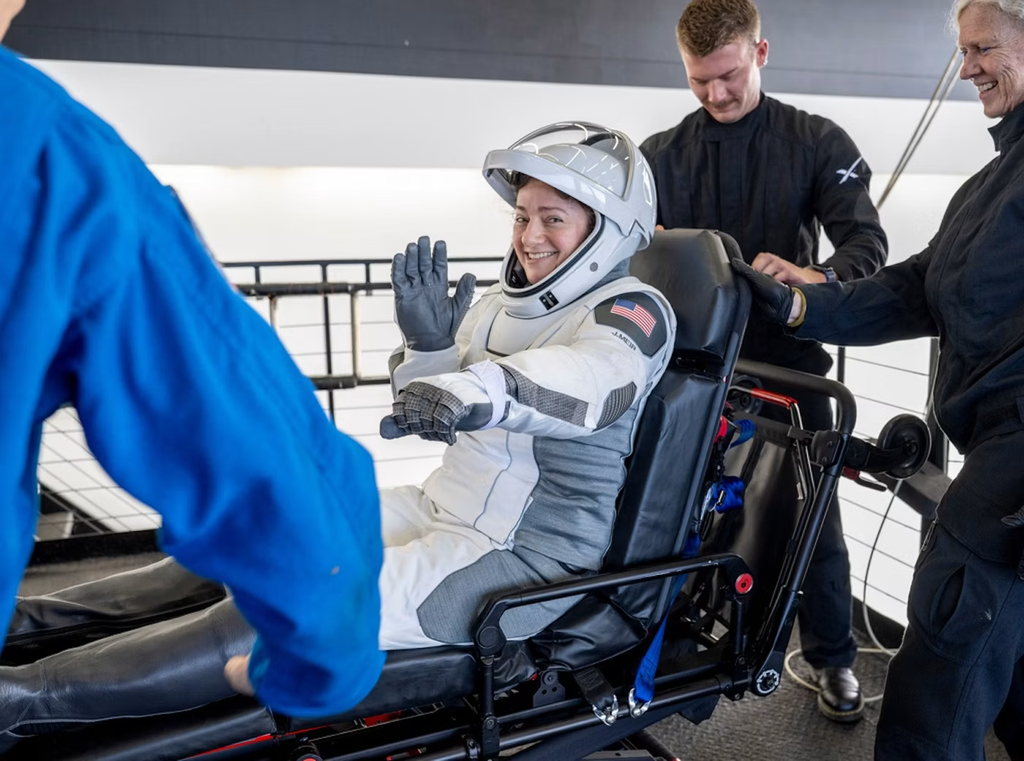
When the capsule bobbed in the ocean waves, recovery boats rushed to the scene. Within an hour, all four crew members were pulled out of the spacecraft. They smiled, waved at the cameras, and pumped their fists in the air, clearly thrilled to breathe fresh ocean air once again.
This mission was not just another routine trip to space. It was a high-stakes emergency deployment that started under intense pressure, lasted longer than planned, and tested the limits of human endurance.
Here is the full story of their dramatic journey, why they were sent up there in the first place, and what it actually takes to survive nearly a year off the face of the Earth.
The $0 Secret To Launching Your Entire Online Empire
Why pay hundreds every month for separate software? Build funnels, send emails, and make sales with Systeme.io completely free.
Get Started For $0Free Forever • No Credit Card Needed • Beginner-Friendly
The Big Return: Splashing Down After 237 Days in Orbit
The journey back to Earth began high above the planet when the SpaceX Dragon Freedom capsule unlocked its hatches and undocked from the International Space Station. The crew fired their thrusters to push away from the station and started their gradual fall toward home.
Sailing through the thick upper layer of Earth’s atmosphere is one of the most intense parts of any spaceflight. The capsule hits air molecules at thousands of miles per hour, generating extreme heat on the heat shield. Inside, the astronauts feel gravity slamming back into their bodies for the first time in eight months.
Once the capsule slowed down enough, giant parachutes opened up overhead to catch the breeze. The spacecraft drifted gently down until it made a huge splash in the Pacific Ocean.
Teams aboard the SpaceX recovery ship Shannon moved quickly to secure the capsule. Specialized boats hooked cables onto the craft and lifted it onto the deck of the main ship.
When workers opened the hatch, medical teams checked on the astronauts immediately. After eight months without gravity, even standing up can make a person feel dizzy or heavy. But all four spacefarers looked in great spirits as they were helped into comfortable chairs and taken by helicopter toward the mainland.
From California, the team was scheduled to fly straight to Houston, Texas, where NASA medical specialists will monitor their physical recovery over the coming weeks.
Who Were the Four Astronauts on Board?
Space missions take immense teamwork, and this specific crew brought together experts from around the globe. The four-person team represented three different space agencies, proving how international cooperation keeps the space station running smoothly.
NASA Astronaut Jessica Meir
Jessica Meir is a veteran NASA astronaut and marine biologist who already had extensive spaceflight experience under her belt. She previously made history by participating in the first all-female spacewalks. On this mission, her calm leadership and scientific background helped keep the crew focused during demanding experiments.
NASA Astronaut Jack Hathaway
Jack Hathaway served as a key crew member on his first long-duration mission. A former military test pilot, Hathaway brought sharp problem-solving skills to the capsule and helped oversee complex maneuvers during undocking and re-entry operations.
ESA Astronaut Sophie Adenot
Sophie Adenot represented the European Space Agency. Hailing from France, Adenot is a helicopter test pilot with an engineering background. Her work on the station focused heavily on European scientific payloads and technological demonstrations.
Roscosmos Cosmonaut Andrey Fedyaev
Andrey Fedyaev represented Russia’s space agency, Roscosmos. Under cross-flight agreements between NASA and Roscosmos, astronauts and cosmonauts regularly ride together on SpaceX and Soyuz spacecraft to ensure both nations have qualified operators aboard the space station.
Seeing crew members from the United States, France, and Russia working side-by-side shows that space exploration remains a place where nations can cooperate peacefully for the good of science.
Why Did They Stay in Space for Eight Months?
Most standard missions to the International Space Station last around five to six months. Spending eight months in orbit is unusual and requires extra physical and mental preparation.
This crew’s trip got extended due to a series of unexpected events that began before they even left Earth.
Back in February, an astronaut serving on the previous station mission experienced a sudden health issue. Out of an abundance of caution, NASA arranged an emergency medical evacuation to bring that individual home safely.
Send, Spend & Hold Money Worldwide Without Hidden Fees
Transfer money internationally at the real exchange rate and hold 40+ currencies in one account.
Open a Wise AccountMid-market rate • Fast transfers • 40+ currencies
Because the space station always needs a full crew to keep systems running, NASA and SpaceX hurried this team into orbit earlier than originally scheduled. They stepped up to fill the gap without hesitation.
Later in their mission, return plans were shifted again. Small repairs needed on the spacecraft, combined with unfavorable weather and high ocean waves in the landing zones, pushed back their splashdown date.
Space agencies will never risk astronaut safety just to stick to a calendar. If high winds or rough seas make a Pacific or Atlantic splashdown dangerous, the crew simply stays aboard the station until weather conditions clear up.
By the time all clear signals were given, the team had spent 237 days off the planet.
What Did They Actually Do Up There for Eight Months?
Living on the space station is not a vacation. Every single day is carefully scheduled by flight controllers on Earth, down to five-minute blocks.
The primary goal of the International Space Station is scientific research that cannot be done anywhere on Earth. In zero gravity, liquids move differently, fire burns in strange spherical shapes, and biological cells grow in unique patterns.
During their eight months in orbit, the four crew members completed hundreds of scientific studies.
They tested how plants grow without gravity, which is crucial for future long-distance missions to Mars. If humans ever want to travel to the Red Planet, they will need to grow fresh food along the way.
They also ran experiments on human tissue samples to see how microgravity affects cardiovascular health and aging. Understanding how space alters the human body helps scientists design better medicines for patients back on Earth.
Beyond science, the crew performed essential maintenance. The space station is as large as a six-bedroom house and travels at 17,500 miles per hour. Keeping it running requires constant plumbing repairs, air filter changes, software updates, and battery maintenance.
The $0 Secret To Launching Your Entire Online Empire
Why pay hundreds every month for separate software? Build funnels, send emails, and make sales with Systeme.io completely free.
Get Started For $0Free Forever • No Credit Card Needed • Beginner-Friendly
They also assisted with installing upgraded solar panels on the outside of the station to ensure the orbital laboratory has plenty of electrical power for years to come.
What Happens to the Body After 8 Months Without Gravity?
Floating looks fun in videos, but zero gravity takes a serious physical toll on the human body over time.
On Earth, your muscles and bones work constantly against gravity just to keep you standing up. In space, your body does not need to support its own weight. If astronauts do not exercise, their bodies rapidly lose muscle mass and bone density.
To prevent this, every crew member on the station must exercise for at least two hours every day using specialized treadmills, exercise bikes, and weight-lifting machines that use resistance springs instead of heavy weights.
Even with daily workouts, long space missions cause noticeable changes:
- Fluid shifts: Fluids in the body move upward toward the head, causing puffy faces and subtle changes in vision.
- Balance disruption: The inner ear, which controls your sense of balance, gets used to weightlessness. When returning to Earth, the brain gets confused by gravity, making astronauts feel dizzy or nauseous.
- Muscle weakness: Leg and core muscles weaken because they are not used for walking or sitting upright.
- Bone loss: Astronauts can lose up to one percent of their bone mass for every month spent in space.
That is why you often see ground crews helping astronauts sit down as soon as they exit their capsule. It takes several days or weeks of physical therapy for their bodies to readapt to Earth’s heavy pull.
How Astronauts Eat, Sleep, and Live in Space
Have you ever wondered how basic human routines work when everything floats?
Eating in space requires careful planning. Most food comes in vacuum-sealed pouches. Some meals are dehydrated and need hot water added before eating, while others can be warmed up in a small food warmer. Crumbs are a major hazard because they can float into delicate electronics or get sucked into air vents, so bread is replaced by soft tortillas.
Sleeping is another unique experience. Astronauts do not have regular beds or pillows. Instead, they sleep inside small private crew cabins inside padded sleeping bags tied directly to the wall. This prevents them from floating around the station and bumping into control panels while asleep.
As for hygiene, there are no traditional showers in space. Water does not flow downward; it forms floating blobs. Astronauts use rinseless soap, wet towels, and special dry shampoo to stay clean.
Despite these challenges, spacefarers often describe living on the station as an unforgettable privilege. Watching sixteen sunrises and sunsets every single day through the station’s Cupola window provides a view of Earth that very few humans ever get to see.
What Is Next for the Space Station?
Even though four astronauts just departed, the International Space Station is far from empty. Seven astronauts remain on board to continue scientific research, daily maintenance, and upcoming spacewalks.
The crew that stayed behind includes three Americans, three Russians, and one astronaut from the United Arab Emirates. Their replacements arrived over a week ago, ensuring the station remains fully staffed without interruption.
Commercial space companies like SpaceX are already preparing for upcoming cargo missions. These uncrewed cargo ships will carry thousands of pounds of fresh supplies, scientific gear, new clothing, and fresh fruit for the remaining crew members.
As public space agencies and private companies push toward returning to the Moon and eventually reaching Mars, missions like this eight-month voyage provide vital data on how human beings survive long exposure to deep space.
Staying Connected with Space and Beyond
Keeping up with breaking news across space exploration, scientific breakthroughs, and world events can feel overwhelming with so much information out there.
If you want to know more about who we are and what drives our team, check out our About Us page. We break down big global stories into simple, fun, and easy-to-read articles that anyone can enjoy.
Have a story tip, a question, or feedback on our coverage? Feel free to reach out directly through our Contact Us page. We always love hearing from curious minds!
You can also join our growing online community across social media. Follow our official pages for instant updates, trending stories, and behind-the-scenes content:
- Follow us on Instagram for visual stories and quick highlights.
- Like our page on Facebook to join discussions with other readers.
- Connect with us on X (formerly Twitter) for real-time news updates as they break.
Frequently Asked Questions (FAQs)
How long did the four astronauts stay in space?
The crew spent 237 days in orbit, which is approximately eight months. This was longer than a standard six-month rotation due to scheduling adjustments, spacecraft maintenance, and launch windows.
Where did the SpaceX Dragon capsule splash down?
The spacecraft landed safely in the Pacific Ocean off the coast of Southern California near Los Angeles, where SpaceX recovery ships were waiting to retrieve the crew and capsule.
Who was on the crew?
The four-person international crew included NASA astronauts Jessica Meir and Jack Hathaway, European Space Agency astronaut Sophie Adenot from France, and Roscosmos cosmonaut Andrey Fedyaev from Russia.
Is it safe for astronauts to return to Earth after eight months?
Yes, but it requires a careful recovery process. While astronauts undergo extensive physical training in space to limit bone and muscle loss, medical teams evaluate them immediately upon landing and guide them through rehab exercises to help them adjust to gravity.
Are there still people on the International Space Station?
Yes, seven astronauts remain on board the space station. Replacement crew members arrived before the four returning astronauts departed, keeping the station operating continuously.
How do astronauts land back on Earth in a SpaceX capsule?
The SpaceX Dragon capsule uses heat shields to protect the crew as it slows down in Earth’s upper atmosphere. Then, large parachutes deploy to slow the capsule to a safe speed before it splashes into the ocean for pickup by a recovery ship.
Watching four brave spacefarers complete an eight-month journey around Earth reminds us how far human technology has come. From emergency launches to ocean splashdowns, these missions bring humanity one step closer to understanding the vast universe beyond our atmosphere.
