
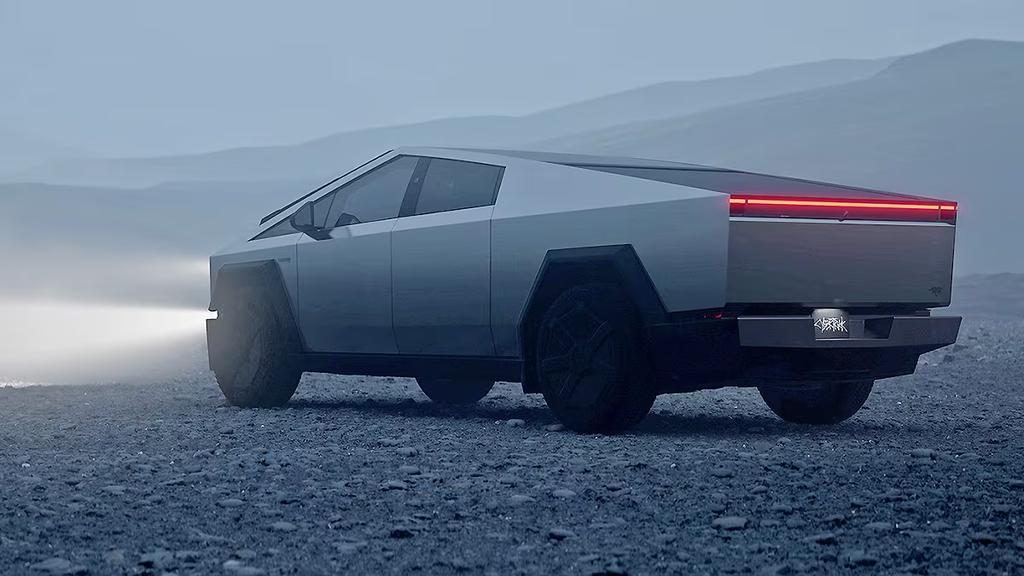
Tesla is officially hitting the brakes on its most radical experiment. Elon Musk announced that Tesla will wind down production of the stainless steel Cybertruck at Gigafactory Texas around the middle of 2027. After years of hype, broken glass demonstrations, polarizing online arguments, and steep delivery struggles, the futuristic pickup is bowing out.
The decision marks an unexpected turning point for an automaker that previously promised the Cybertruck would reinvent how pickup trucks are built and driven. Musk confirmed on X that the factory floor in Austin will transition away from making the heavy pickup to make room for mass production of the autonomous Cybercab robotaxi.
For anyone tracking the wild journey of modern motoring, this announcement closes a loud, contentious chapter. The vehicle that divided the internet from the second it rolled onto a stage in 2019 will soon stop rolling off assembly lines.
What Musk Said About Cybertruck Production
Elon Musk broke the news plainly on X, posting that Tesla will begin winding down Cybertruck production at Gigafactory Texas around mid-2027 to clear factory capacity for increased Cybercab production.
He later clarified that the factory will continue assembling trucks for another eight or nine months before the assembly line pivots completely toward driverless mobility. As Musk put it, there will never be another vehicle quite like it.
The $0 Secret To Launching Your Entire Online Empire
Why pay hundreds every month for separate software? Build funnels, send emails, and make sales with Systeme.io completely free.
Get Started For $0Free Forever • No Credit Card Needed • Beginner-Friendly
The announcement does not outline any concrete plan to shift production to other Tesla facilities. Gigafactory Texas is currently the only site worldwide fitted with the tooling, heavy stamping presses, and cold-rolled alloy hardware necessary to build the truck’s exoskeleton. While Tesla has stopped short of saying the nameplate is terminated forever, industry analysts view this move as the practical end of the vehicle.
Why Is Tesla Pausing the Cybertruck?
The short answer comes down to economics, real-world utility, and assembly floor realities.
When the pickup was first unveiled in late 2019, hundreds of thousands of people put down refundable $100 deposits. Tesla once projected annual sales targets of up to 250,000 units. However, translating that viral enthusiasm into sustained dealership deliveries proved far harder than anticipated.
Kelley Blue Book and Cox Automotive industry trackers revealed that US Cybertruck sales dropped steeply, falling nearly 48% across 2025 to roughly 20,237 units. High ticket prices played an enormous part. Originally advertised as a $39,900 vehicle back in 2019, production versions arrived on the market costing between $75,000 and well over $100,000.
Global expansion also hit a brick wall. Due to the truck’s rigid stainless steel exterior and angular corners, European regulators ruled out certification over pedestrian safety standards. That left Tesla dependent on North America at a time when traditional truck buyers remained loyal to proven utility models.
At the same time, fierce electric competitors have been moving fast. While American automakers have faced their own road bumps, international players have completely transformed global vehicle sales. In fact, as highlighted in how BYD beats Tesla in global EV sales, affordable and practical family cars are taking over worldwide markets much faster than six-figure luxury novelties.
The Machine That Was Simply Too Hard to Build
From the moment the truck debuted, Musk admitted that Tesla had dug its own grave with the Cybertruck’s extreme engineering ambitions.
The truck featured unpainted, ultra-hard 30X cold-rolled stainless steel. While that made the shell durable enough to resist small-arms fire in demonstrations, it wrecked conventional automotive manufacturing processes. Stamping panels without warping required custom tooling, and maintaining consistent panel gaps was an ongoing production headache.
Beyond the body, the pickup became a rolling experiment in radical automotive systems:
- Steer-by-Wire: It completely removed the mechanical steering column in favor of digital actuators.
- 48-Volt Architecture: It ditched the automotive standard 12-volt wiring harness for a lightweight 48-volt setup.
- Etherloop Data Bus: It traded miles of internal copper wiring for a looping gigabit Ethernet communication spine.
Cybertruck lead engineer Wes Morrill acknowledged that while the pickup had a rocky journey, it acted as an incredible technology development platform whose lessons are feeding directly into future autonomous cars.
Yet high manufacturing expenses and multiple safety recalls—ranging from accelerator pedal trim issues to faulty windshield wiper motors—drained resources. For a broader look at the mogul’s habit of taking massive industrial risks, check out our deep dive from broke college student to world’s richest man.
All In on Autonomous Robotaxis: The Cybercab Shift
So why pull the plug now? Because Tesla is executing its largest operational pivot since the rollout of the Model 3.
Tesla is clearing its production lines to build the Cybercab, a dedicated two-passenger autonomous vehicle designed without a steering wheel or foot pedals. Musk believes Tesla’s future valuation will rely primarily on self-driving robotaxi networks and artificial intelligence rather than selling individually owned private vehicles.
Earlier this year, Gigafactory Texas finished building early pre-production batches of the Cybercab, and pilot commercial passenger rides have been running in limited zones across Austin. To make robotaxis profitable at scale, Tesla needs massive manufacturing volume. Dedicating factory space and engineering staff to a slow-moving pickup no longer fit that mission.
Rumors of massive corporate realignments have been circulating for months. As covered when Elon Musk teased merging Tesla and SpaceX, Musk is concentrating corporate resources around automation, high-compute chips, and aerospace applications rather than niche consumer hardware.
Send, Spend & Hold Money Worldwide Without Hidden Fees
Transfer money internationally at the real exchange rate and hold 40+ currencies in one account.
Open a Wise AccountMid-market rate • Fast transfers • 40+ currencies
What Happens to Current Cybertruck Owners?
If you already own a Cybertruck, or you are waiting for a recently confirmed order, you are probably wondering what this wind-down means for daily ownership.
According to Tesla’s engineering leadership, the company will maintain spare parts inventory and honor all vehicle warranties. Service centers will continue repairing existing trucks, and over-the-air software updates will still roll out.
However, the used car market is already shifting. When deliveries started in late 2023, early adopters flipped trucks for double their retail price. As production draws to a close, automotive valuation trackers expect secondary market dynamics to split:
- Short-Term Price Softening: High insurance rates, specialized body repairs, and discontinued production status may push standard used prices lower.
- Collector Value: Top-tier trim models like the tri-motor Cyberbeast could eventually gain collector appeal as a quirky, limited-run piece of American automotive history.
For regular drivers wanting everyday practicality, standard electric crossovers remain the safe bet. You can see how market demand shifted toward roomier consumer options when Tesla brought the roomy Model Y L to the US market.
Global EV Adoption Keeps Surging Elsewhere
While the Cybertruck is stepping aside, the global appetite for electric mobility is far from dead. The shift is simply moving toward sensible, accessible vehicles.
In Europe and Asia, city-friendly battery options and compact utility haulers are seeing record registrations. Our analysis on how UK electric car registrations surged past expectations shows that regular drivers are eager to ditch petrol when vehicles are priced fairly and easy to charge.
Tesla itself continues to dominate mainstream electric car deliveries via the Model Y crossover and Model 3 sedan. With factory lines in Austin being cleared for mass robotaxi deployment, Tesla is betting that the future belongs to autonomous fleets rather than oversized pickup trucks.
Frequently Asked Questions (FAQs)
When will Tesla officially stop building the Cybertruck?
Tesla plans to wind down Cybertruck manufacturing at Gigafactory Texas by mid-2027, with assembly expected to run for roughly another eight to nine months.
Can I still order a new Cybertruck right now?
Tesla has paused orders for entry-level dual-motor configurations while adjusting prices on remaining trims, but higher-tier variants like the Cyberbeast remain listed until available manufacturing allocations fill up.
Will Tesla continue to repair and service existing Cybertrucks?
Yes. Tesla vehicle service centers will continue carrying replacement parts, performing mechanical maintenance, and providing regular over-the-air software updates.
The $0 Secret To Launching Your Entire Online Empire
Why pay hundreds every month for separate software? Build funnels, send emails, and make sales with Systeme.io completely free.
Get Started For $0Free Forever • No Credit Card Needed • Beginner-Friendly
Why didn’t the Cybertruck sell in Europe or the UK?
The rigid stainless steel structure and lack of front crumple zones failed strict European pedestrian impact safety regulations, preventing Tesla from officially launching the truck across those markets.
What vehicle is replacing the Cybertruck at the Texas plant?
Gigafactory Texas will use the freed manufacturing space to scale production of the Cybercab, Tesla’s dedicated self-driving robotaxi.
The Cybertruck was bold, unconventional, and unapologetically strange. While it did not take over suburban driveways the way Elon Musk once imagined, it pushed the boundaries of automotive manufacturing, steer-by-wire mechanics, and low-voltage electrical systems. As Tesla gears up for an autonomous future, the pickup leaves behind a lasting impression as one of the most polarizing concept vehicles to ever hit real streets.
