
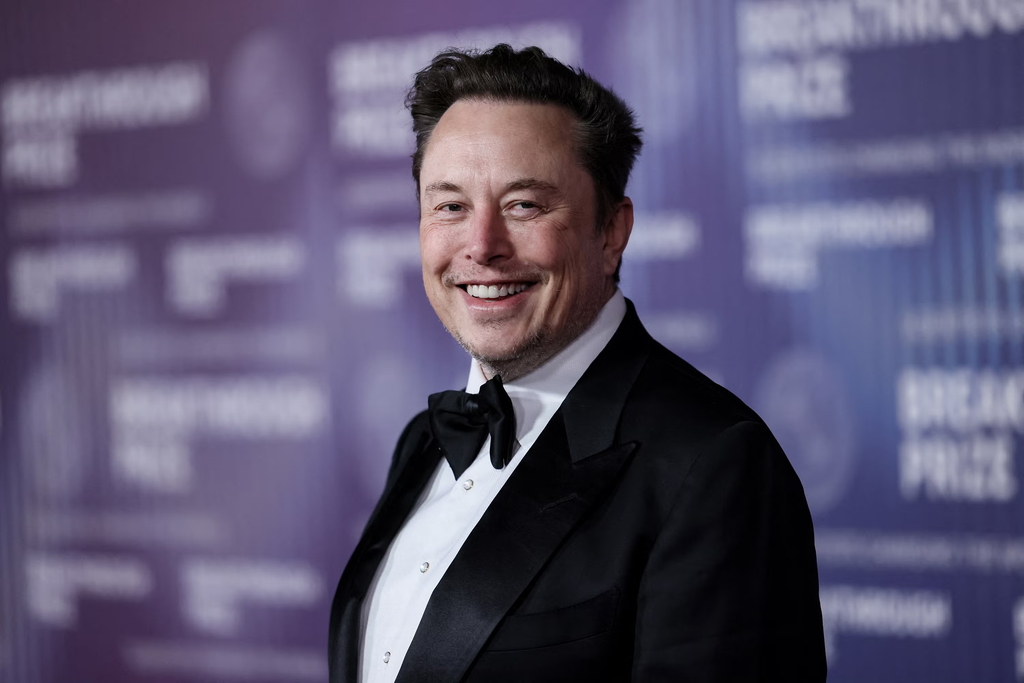
Elon Musk is a name almost everyone recognizes today. He is the person behind some of the most famous companies on the planet. From electric cars driving down suburban streets to giant rockets flying toward outer space, his footprint is everywhere.
Many people view him as a creative genius who is building the future of human life. Others view him as a chaotic risk-taker who makes noisy headlines on social media. No matter what people think of him, nobody can deny that his life story is full of drama, massive gambles, and incredible success.
Understanding how Elon Musk became the richest person in the world requires looking back at where he started. His journey was not easy or smooth. He went through severe bullying as a child, faced multiple business failures, and almost lost all his money more than once.
Early Life in South Africa
A Quiet Kid with Big Dreams
Elon Reeve Musk was born on June 28, 1971, in Pretoria, South Africa. His mother, Maye Musk, was a model and dietitian. His father, Errol Musk, was an engineer and property developer. Elon grew up with his younger brother, Kimbal, and his younger sister, Tosca.
As a young boy, Elon was extremely quiet. He spent hours reading books all by himself. In fact, he read so much that his parents and doctors thought he might be deaf. They even removed his adenoids to see if it would fix his hearing. It turned out he was just daydreaming about inventions and lost in his own thoughts.
The $0 Secret To Launching Your Entire Online Empire
Why pay hundreds every month for separate software? Build funnels, send emails, and make sales with Systeme.io completely free.
Get Started For $0Free Forever • No Credit Card Needed • Beginner-Friendly
When he was eight years old, his parents divorced. Elon decided to live with his father in South Africa. During this time, he discovered his love for computers. At age ten, he got his first computer, a Commodore VIC-20. He taught himself how to write computer code using a simple manual.
By age twelve, he created his own video game called Blastar. It was a simple space shooting game. He sold the code to a technology magazine for 500 dollars. That was his very first business deal and the start of his tech career.
Hardships and School Bullying
School was not a happy place for young Elon. He was smaller than most boys his age and did not fit in easily. Because he was quiet and bookish, bullies targeted him frequently.
One incident at school was particularly dangerous. A group of boys threw him down a flight of concrete stairs and beat him up until he lost consciousness. He had to be rushed to the hospital and needed weeks to recover. That experience left him with physical and emotional scars that stayed with him for years.
To protect himself, he took up martial arts like karate and wrestling as he got older. Combined with a sudden growth spurt, he slowly learned how to defend himself. But the harsh environment made him eager to leave South Africa as soon as possible.
Moving to Canada
At age seventeen, Elon made a big choice. He decided to leave South Africa and move to Canada in 1989. His mother had Canadian citizenship, which made it easier for him to get a passport.
He had two main reasons for leaving. First, he wanted to avoid mandatory military service in South Africa. Second, he believed that moving to North America was the best way to get closer to the United States, where he felt the biggest opportunities in technology existed.
When he arrived in Canada, he had very little money. He worked low-paying odd jobs to survive. He cleaned boiler rooms at a lumber mill, cut logs, and worked on farms. Life was tough, but he stayed focused on getting an education.
He enrolled at Queen’s University in Kingston, Ontario, in 1990. After studying there for two years, he transferred to the University of Pennsylvania in the United States. He graduated with two bachelor’s degrees: one in physics and one in economics from the Wharton School.
The Early Business Ventures
Dropping Out of Stanford for the Internet
In 1995, Elon moved to California to start a graduate program in physics at Stanford University. However, the internet was just starting to explode into public life. Elon realized that waiting several years to finish a degree meant missing out on the biggest tech boom in history.
He made a bold decision. He dropped out of Stanford after just two days. He decided to jump straight into the world of internet software startups.
Zip2: The First Big Success
Elon teamed up with his brother Kimbal to create a company called Zip2 in 1995. Zip2 was an online business directory that helped local businesses set up city guides. It was like an early version of Google Maps combined with the Yellow Pages.
Starting the company was extremely hard. The brothers lived in a small rental office because they could not afford an apartment. They slept on a futon couch, showered at the local YMCA, and shared a single computer. The website ran during the day, and Elon wrote computer code all night long.
Their hard work paid off. Big newspaper publishers like The New York Times bought their software. In 1999, the computer company Compaq bought Zip2 for over 300 million dollars in cash. Elon received 22 million dollars from the deal. At age twenty-eight, he was officially a millionaire.
X.com and PayPal
Instead of taking his money and retiring, Elon put almost all of his millions into his next idea. In 1999, he co-founded X.com, an online bank and money transfer service.
Send, Spend & Hold Money Worldwide Without Hidden Fees
Transfer money internationally at the real exchange rate and hold 40+ currencies in one account.
Open a Wise AccountMid-market rate • Fast transfers • 40+ currencies
Back then, people were afraid to use their credit cards or bank details on the internet. Elon believed online digital payments were the future. X.com merged with another payment company called Confinity, which had a popular transfer service named PayPal.
The combined company took the name PayPal. However, there were major disagreements inside the team. While Elon was on a plane for a vacation, the board of directors removed him as CEO and replaced him. Even though he was pushed out of management, Elon kept his company shares.
In 2002, eBay bought PayPal for 1.5 billion dollars in stock. Elon made over 180 million dollars from that sale after taxes.
Rocket Science and SpaceX
Reaching for Mars
With nearly 180 million dollars in his bank account, Elon looked toward his childhood passion: space exploration. He wanted to spark public interest in sending humans to Mars.
He traveled to Russia to try to buy cheap recycled military rockets. The Russian sellers did not take him seriously and treated him poorly. On the flight home, Elon calculated the cost of raw materials and decided he would build his own rockets instead.
In 2002, he founded Space Exploration Technologies, better known as SpaceX. Most experts in the aerospace industry thought he was bound to fail. Space travel was controlled by giant governments and massive defense contractors. No private individual had ever successfully built a commercial rocket company from scratch.
Near Bankruptcy and the Falcon 1
The early days of SpaceX were full of disaster. Building rockets is extraordinarily hard and expensive. SpaceX’s first rocket, the Falcon 1, failed on its first launch in 2006. It failed again on its second launch in 2007. The third launch in 2008 failed too, destroying expensive satellites on board.
By late 2008, SpaceX was running out of money. Elon had put almost all his personal wealth into SpaceX and Tesla. He had barely enough money left to attempt one final launch. If the fourth launch failed, SpaceX would go bankrupt immediately.
In September 2008, the fourth Falcon 1 rocket launched cleanly and reached orbit perfectly. It was the first time a privately built liquid-fueled rocket reached space. Shortly after, NASA awarded SpaceX a 1.6 billion dollar contract to deliver supplies to the International Space Station. SpaceX was saved.
Reusable Rockets and Starship
SpaceX changed the space industry by introducing reusable rockets. Traditionally, rockets were thrown away after a single flight, making space travel wildly expensive. SpaceX proved that rocket boosters could fly back down and land vertically on a floating platform at sea.
The $0 Secret To Launching Your Entire Online Empire
Why pay hundreds every month for separate software? Build funnels, send emails, and make sales with Systeme.io completely free.
Get Started For $0Free Forever • No Credit Card Needed • Beginner-Friendly
Today, the Falcon 9 rocket carries satellites, cargo, and astronauts into space regularly. SpaceX also created Starlink, a network of thousands of small satellites providing high-speed internet across the globe.
Currently, SpaceX is testing Starship, the largest and most powerful rocket ever constructed. Its goal is to take humans back to the Moon and eventually build a self-sustaining human colony on Mars.
Revolutionizing the Car Industry with Tesla
Joining Tesla Motors
While building SpaceX, Elon also got involved in electric cars. In 2004, he invested 6.5 million dollars into Tesla Motors, a small company founded by Martin Eberhard and Marc Tarpenning. Elon became the chairman of the board and took a hands-on role in designing their first vehicle, the Tesla Roadster.
In 2008, during the global financial crash, Tesla was struggling to produce cars and running out of cash. Elon took over as CEO and invested his last remaining personal funds to keep the business alive.
Making Electric Vehicles Popular
Before Tesla, electric cars were seen as slow, unattractive vehicles that nobody wanted. Elon wanted to prove that electric cars could be faster, sleeker, and cooler than gasoline sports cars.
Tesla released the Model S sedan in 2012, which won major automotive awards and proved that electric vehicles could be luxury performance cars. Later, Tesla introduced the Model 3 and Model Y, which made electric cars accessible to millions of everyday drivers worldwide.
Tesla built massive battery factories called Gigafactories around the world. Over time, Tesla became the most valuable car company in the world, passing traditional legacy automakers.
Buying Twitter and Rebranding to X
The 44 Billion Dollar Purchase
In early 2022, Elon made global news when he announced his plan to buy the social media platform Twitter. He argued that the platform restricted free speech and needed major operational changes.
After months of public debate and legal negotiations, Elon officially completed the purchase of Twitter in October 2022 for 44 billion dollars.
Changing How the Platform Works
Immediately after taking over, Elon made drastic changes. He reduced staff, changed how account verification worked, and changed content moderation rules.
In 2023, he officially renamed the platform to X. His vision for X is to transform it into an “everything app” that handles social networking, video streaming, payments, and digital banking inside a single application.
Other Groundbreaking Projects
Neuralink
In 2016, Elon co-founded Neuralink, a company developing brain-computer interface technology. The goal of Neuralink is to implant small chips into the human brain. This technology aims to help people with paralysis regain movement, restore vision to the blind, and connect human brains directly with computers.
The Boring Company
Stuck in Los Angeles traffic one day, Elon announced that he was going to build a tunnel-boring machine to dig underground transit routes. That idea became The Boring Company in 2016. The company builds underground transportation tunnels to eliminate traffic congestion, including the Vegas Loop under Las Vegas.
xAI and Artificial Intelligence
Elon was an early co-founder of OpenAI in 2015. However, he left the organization in 2018 due to differences over its direction.
In 2023, he launched xAI to build new artificial intelligence tools. xAI created Grok, an AI assistant integrated into the X platform designed to provide real-time information and conversational responses.
Personal Life and Work Ethic
Elon Musk’s personal life is as heavily discussed as his business career. He has been married and divorced three times, including twice to British actress Talulah Riley. He is a father to fourteen children across his relationships.
Musk is famous for his intense work habits. He frequently works 80 to 100 hours per week and has slept on factory floors during intense production crunches at Tesla and SpaceX.
His net worth rises and falls based on the market value of Tesla and SpaceX. He has repeatedly held the title of the world’s richest person, with his total wealth reaching hundreds of billions of dollars.
If you want to read more inspiring success stories, celebrity profiles, and breakdowns of major global events, visit our about page to see what we publish every day. If you ever have a story tip or want to get in touch with our team, feel free to visit our contact page.
You can also follow our community across social media:
Frequently Asked Questions (FAQs)
Where was Elon Musk born?
Elon Musk was born in Pretoria, South Africa, on June 28, 1971. He moved to Canada at age seventeen and later moved to the United States.
How did Elon Musk make his first million dollars?
Elon earned his first big payout from Zip2, an online city guide software company he co-founded. In 1999, Compaq bought Zip2 for over 300 million dollars, earning Elon 22 million dollars.
What companies does Elon Musk manage or own?
Elon Musk leads or co-founded several major companies, including SpaceX, Tesla, X (formerly Twitter), Neuralink, The Boring Company, and xAI.
Did Elon Musk start Tesla?
Elon Musk did not start Tesla, but he was its earliest major investor in 2004. He took over as CEO in 2008 and led the company to global success.
Why did Elon Musk change Twitter to X?
Elon renamed Twitter to X to transform the platform into an all-in-one app that supports social posts, video streaming, payments, and financial banking in one place.
Final Thoughts on Elon Musk’s Journey
The story of Elon Musk shows how bold ideas and massive risks can change whole industries. From a quiet kid reading books in South Africa to the entrepreneur leading space rockets and electric vehicles, his journey is extraordinary.
He has faced heavy criticism, failed rocket tests, and near-bankruptcy. Yet, his ambition to solve huge problems keeps him moving forward. Whether he succeeds in putting humans on Mars or turning X into an all-in-one platform, his impact on technology will be discussed for decades to come.
Which phase of Elon Musk’s career do you think had the biggest impact on modern technology?
