
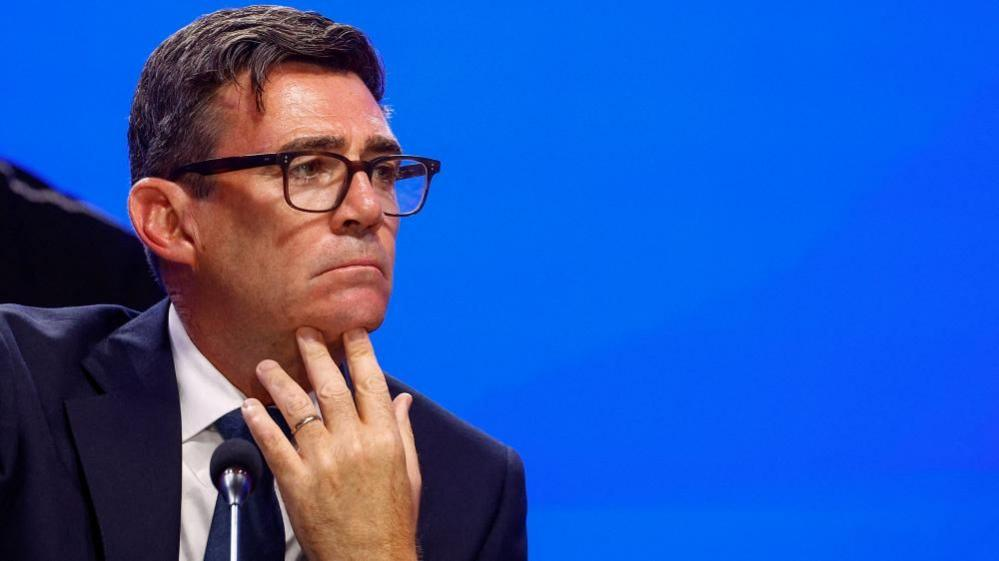
British Prime Minister Andy Burnham has officially indicated that he is open to a formal apology from the UK government for its role in the transatlantic slave trade. While this marks a historic shift in British foreign policy, he made one boundary very clear: the United Kingdom will not pay financial reparations.
Addressing leaders and citizens ahead of the high-stakes Commonwealth Heads of Government Meeting in Antigua and Barbuda, Burnham voiced sorrow and regret for the brutal history of chattel slavery. At the same time, he insisted that modern taxpayers cannot be held financially liable for the actions of previous generations.
His remarks have sparked intense debates across London, the Caribbean, and Africa, placing historic justice, imperial accountability, and international diplomacy right at the center of global headlines.
The Historic Announcement: What Did Burnham Actually Say?
For decades, successive UK administrations avoided giving a direct government apology for the transatlantic slave trade, fearing that admitting liability could trigger massive legal claims for financial compensation. Burnham has broken that official silence by signaling that Britain is prepared to confront its past directly.
Burnham acknowledged that the slave trade was a horrific, barbaric violation of human life that continues to leave deep economic scars. He noted that while Britain celebrates historical abolitionists like Thomas Clarkson, it cannot ignore that its imperial wealth and industrial cities were built on the backs of enslaved human beings.
The $0 Secret To Launching Your Entire Online Empire
Why pay hundreds every month for separate software? Build funnels, send emails, and make sales with Systeme.io completely free.
Get Started For $0Free Forever • No Credit Card Needed • Beginner-Friendly
However, the prime minister drew a firm line regarding money. Burnham stated plainly that British citizens living today did not participate in those atrocities and cannot be held responsible for wrongs committed hundreds of years ago under entirely different legal frameworks.
Why Britain Has Resisted an Apology for Generations
The debate over the transatlantic slave trade is rooted in centuries of imperial expansion. Between the 16th and 19th centuries, Britain transported millions of captured African men, women, and children across the Atlantic Ocean to work on plantations in the Caribbean and the Americas.
When Britain passed the Slavery Abolition Act in 1833, the British government paid 20 million pounds—a massive sum equivalent to billions in modern currency—not to the enslaved people, but to the slave owners as compensation for their lost human property. Modern taxpayers in Britain actually finished paying off the national loan used to compensate those slave owners only a few years ago.
Despite this, British leaders historically limited their language to expressions of “deep sorrow” rather than formal state apologies. Legal advisors warned that issuing a formal apology could open the floodgates to international restitution lawsuits, asset forfeiture disputes, and organized claims in international courts.
Burnham’s announcement seeks to offer emotional and historical acknowledgment while shielding the UK Treasury from trillion-dollar legal liabilities.
Caribbean and African Leaders React: Progress or Half-Measure?
Across the Caribbean and Africa, political leaders and grassroots advocacy groups have responded with mixed feelings.
Prime Minister Gaston Browne of Antigua and Barbuda described Burnham’s willingness to consider a formal apology as a significant step forward. Browne emphasized that acknowledging the truth of history is essential for genuine healing between former colonies and the Crown.
Barbados Prime Minister Mia Mottley similarly noted that disagreements over direct cash payouts should not prevent nations from cooperating on urgent global crises. She pointed to climate vulnerability, modern education initiatives, and sovereign debt burdens as areas where Britain must still step up.
Other leaders and legal advocates argue that an apology without material compensation is an empty gesture. Sir Hilary Beckles, head of the CARICOM Reparations Commission, has argued that an apology without real economic redress fails to fix the deep inequality left behind by centuries of resource extraction. Critics pointed out that moral regret does not build hospitals, pave roads, or alleviate generational poverty caused by imperial exploitation.
This ongoing debate over imperial legacies aligns with broader global pushes for economic fairness, including how the African Union works to cut billions in unfair debt held by Western financial institutions.
The Monarchy Under Pressure: King Charles in the Spotlight
Burnham’s announcement puts King Charles III and the royal family in a delicate position. Because Britain is a constitutional monarchy, the King acts and speaks on the advice of his government.
King Charles has previously acknowledged the lasting impact of slavery and personal sorrow over the suffering it caused. Yet during royal tours of the Caribbean, crowds have greeted royal convoys with placards demanding formal reparations and official royal repentance.
The royal family itself faces increasing public scrutiny over historic ties to transatlantic slaving companies. While Buckingham Palace maintains that royal policy must match government policy, Burnham’s openness gives the palace more room to address imperial history without breaking diplomatic protocol.
Royal controversies continue to capture international attention, from institutional reforms to internal family struggles like Prince Harry seeking reconciliation with King Charles and King Charles reaffirming working royal rules.
British Politics Divided: Right vs Left on Colonial Reckoning
At home in Westminster, Burnham’s statements have ignited sharp debate across party lines.
Send, Spend & Hold Money Worldwide Without Hidden Fees
Transfer money internationally at the real exchange rate and hold 40+ currencies in one account.
Open a Wise AccountMid-market rate • Fast transfers • 40+ currencies
Conservative politicians and right-wing figures argue that Britain has nothing to apologize for. They highlight Britain’s historic role in dispatching the Royal Navy’s West Africa Squadron to suppress the slave trade globally in the 19th century. Figures from Reform UK and traditional conservative wings argue that revisiting imperial guilt damages British pride and divides the country.
Meanwhile, political analysts suggest that Burnham is balancing different political pressures. On one hand, he appeals to progressive voters who want Britain to reckon honestly with historical racism. On the other hand, by rejecting cash reparations, he protects his standing among working-class voters concerned about domestic spending, public services, and economic growth.
This delicate balance comes at a time of rising political competition in the UK, especially with Andy Burnham surging ahead in polls against right-wing challengers and parties like Reform UK pushing hardline nationalist policies.
If Not Cash, Then What? The Drive for Debt Relief and Fair Trade
Burnham has made it clear that while direct checks will not be written to former colonies, the UK is ready to pursue real structural partnerships.
Instead of cash payouts, the British government is focusing on three key economic initiatives:
- Sovereign Debt Restructuring: Former Prime Minister Gordon Brown has joined the UK delegation to help build new international frameworks to relieve crushing sovereign debt burdens on developing nations.
- Climate Transition Funding: Direct investments and low-interest financing for small island states facing rising sea levels and violent storms linked to global climate change.
- Equitable Trade Partnerships: Opening up British markets for Commonwealth exports and investing in educational institutions, healthcare systems, and technology infrastructure across Africa and the Caribbean.
Many developing nations see sovereign debt as the modern continuation of colonial resource extraction, arguing that fair trade and low-interest development loans are essential to bridge the historical wealth gap.
Frequently Asked Questions
Did Andy Burnham formally apologize for the slave trade?
No, Prime Minister Andy Burnham has not delivered an official apology yet. He stated that his administration is open to discussions about issuing a formal apology, marking an important departure from previous government refusals.
Why did Burnham rule out financial reparations?
Burnham stated that British taxpayers living today should not be held financially liable for crimes committed centuries ago by previous generations under different legal systems.
What is CARICOM’s plan for reparations?
CARICOM has a 10-point plan for reparative justice. It includes formal apologies, debt cancellation, funding for public health and educational institutions, technology transfer, and cultural heritage support.
Did Britain pay slave owners when slavery was abolished?
Yes. In 1833, the British government paid 20 million pounds to slave owners to compensate them for their loss of property, while formerly enslaved people received no compensation and were forced into unpaid apprentice labor schemes.
The $0 Secret To Launching Your Entire Online Empire
Why pay hundreds every month for separate software? Build funnels, send emails, and make sales with Systeme.io completely free.
Get Started For $0Free Forever • No Credit Card Needed • Beginner-Friendly
Will King Charles issue an apology?
As a constitutional monarch, King Charles III speaks on behalf of the British government. Buckingham Palace has avoided independent apologies, but the King has repeatedly expressed deep personal sorrow regarding the lasting impact of slavery.
Burnham’s announcement marks a notable turning point in how Britain approaches its colonial past. By opening the door to an apology while keeping the treasury vault firmly locked, the British government is attempting to offer moral accountability without financial liability.
Whether Commonwealth partners and Caribbean leaders will accept words and debt restructuring in place of direct restitution remains to be seen. What is certain is that the global conversation around slavery, imperial wealth, and historical justice has entered an entirely new chapter.
