
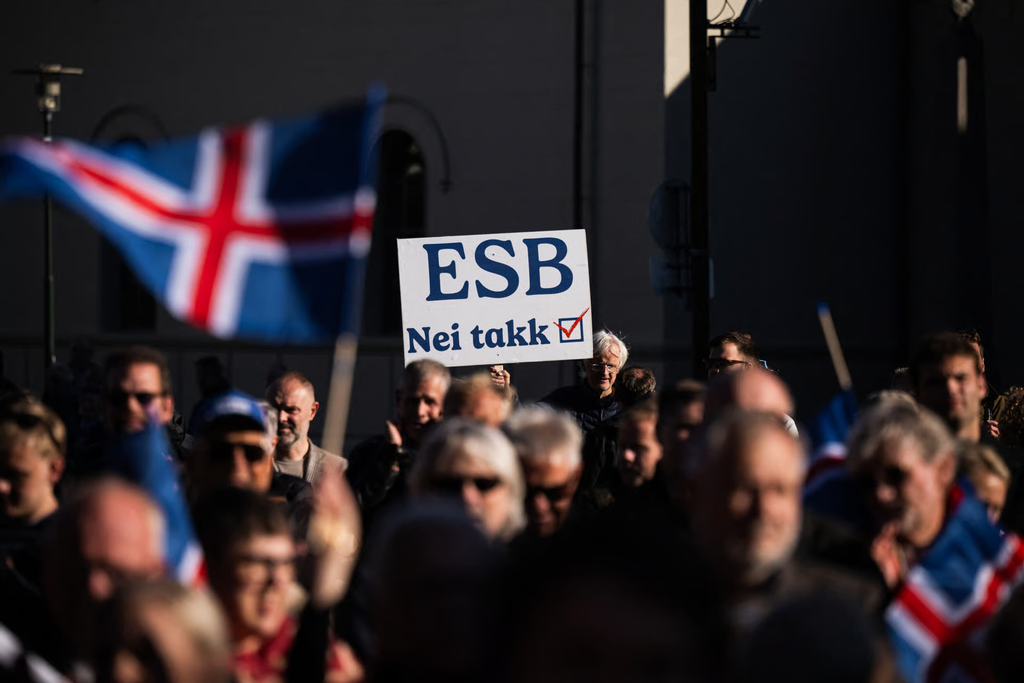
Voters in Iceland have officially decided against restarting talks to join the European Union. In a nationwide referendum that kept the country on edge through the night, 52.8 percent of voters chose “No,” while 47.2 percent voted “Yes”.
The vote was not about joining the European Union immediately. Instead, it asked citizens a straightforward question: should their government sit down with leaders in Brussels to reopen membership negotiations? The government promised to follow the public’s choice, meaning the long-running debate is now officially on hold for years to come.
This decision comes after months of intense public debate across the small North Atlantic island nation. For weeks, communities discussed money, local jobs, national identity, and security. When the final ballots were counted on Sunday morning, the result was clear—most Icelanders prefer to keep their independence rather than become a formal member of the EU.
What Was This Referendum Really About?
To understand why this vote matters, it helps to look at what the ballot paper actually said. Voters were asked if Iceland should restart accession talks with the European Union.
These negotiations originally started back in 2009. At that time, Iceland was recovering from a massive financial crisis that hit its banking sector hard. Many leaders felt joining the EU would bring safety and economic stability. However, by 2013, a new government froze the discussions before any final agreement was made.
The $0 Secret To Launching Your Entire Online Empire
Why pay hundreds every month for separate software? Build funnels, send emails, and make sales with Systeme.io completely free.
Get Started For $0Free Forever • No Credit Card Needed • Beginner-Friendly
The recent vote was brought forward by Prime Minister Kristrún Frostadóttir. She wanted to give citizens a direct say on whether the country should pick up where it left off.
If the “Yes” vote had won, government officials would have traveled to Europe to negotiate a prospective deal. Once those negotiations were finished, Icelanders would have voted a second time to decide whether to accept the terms and join. Because the “No” vote won, those initial conversations will not happen at all.
Why Icelanders Voted “No”
The “No” campaign brought together different groups of people, from local fishermen to business owners who value national independence. Several key reasons pushed voters to reject restarting the negotiations.
1. Protecting Local Fishing Grounds
Fishing is at the very heart of Iceland’s economy and history. For generations, catching fish in the rich waters around the island has kept the nation fed and prosperous.
If Iceland joined the European Union, it would have to follow the EU Common Fisheries Policy. This policy shares fishing rights among member countries. Local fishermen worried that boats from Spain, the Netherlands, or France would gain access to Icelandic waters.
Reports show that roughly 90 percent of companies in Iceland’s fisheries sector opposed EU membership. The nation has fought hard for its marine boundaries in the past, including historical disputes known as the Cod Wars. For many citizens, keeping full control over their oceans is a matter of national survival.
2. Protecting National Sovereignty
Iceland has a population of around 400,000 people. It is a small nation compared to big European countries like Germany or France.
Opponents of the vote argued that joining the EU would mean handing over important decision-making powers to officials in Brussels. They pointed out that Iceland’s representation in the European Parliament would be tiny. As a result, its voice could easily be drowned out when big policies are made.
Staying outside the EU allows Iceland to create its own trade deals directly with other countries around the world, such as China, without needing approval from European leaders.
3. They Already Have Good Access to Europe
One of the biggest arguments made by the “No” side was simple: Iceland already gets most of the perks of European cooperation without needing to join.
Iceland is part of the European Economic Area (EEA) and the Schengen Area. This means:
- Icelandic citizens can travel across most of Europe without showing passports at borders.
- Icelandic companies can sell goods and services across Europe easily.
- Workers can move freely between Iceland and EU countries for employment.
Since Iceland already enjoys free trade and free movement, many voters felt there was no need to take on new EU rules and regulations.
Why Nearly Half the Country Voted “Yes”
While the “No” side won the referendum, the vote was remarkably close. A massive 47.2 percent of voters wanted to reopen talks. Their arguments were centered on economic stability and global partnerships.
The Search for Economic Stability
Iceland uses its own currency, the Icelandic króna. Because Iceland is a small island with a small population, the króna can be volatile. It goes up and down quickly, which often leads to higher inflation and expensive loan interest rates for everyday families.
Supporters of the EU argued that joining the bloc could eventually allow Iceland to adopt the Euro. A larger, stronger currency could bring down inflation, lower mortgage rates, and protect household savings.
Send, Spend & Hold Money Worldwide Without Hidden Fees
Transfer money internationally at the real exchange rate and hold 40+ currencies in one account.
Open a Wise AccountMid-market rate • Fast transfers • 40+ currencies
Global Security and European Solidarity
Recent changes in world politics also influenced the “Yes” vote. Geopolitical tensions around the Arctic region have increased. With unpredictable political statements coming from major world powers, some Icelanders believed closer diplomatic and economic bonds with European neighbors would provide extra protection.
Supporters also pointed out that major global challenges, like climate change, require deep teamwork across borders. They felt that sitting at the table in Brussels would give Iceland a stronger position on the international stage.
The Geographic Split: City vs Countryside
The referendum revealed a clear split in how different parts of Iceland view their relationship with Europe.
In the capital city of Reykjavík, a majority of voters supported reopening negotiations. City residents often work in tech, finance, education, and services. Many of them viewed closer ties with Europe as an opportunity for better trade, easier international business, and financial stability.
Outside the capital, in rural towns and coastal fishing villages, the outcome was very different. In these areas, where fishing and farming are the main drivers of the local economy, the “No” vote won by a large margin. The fear of losing control over fishing quotas outweighed any promises of lower interest rates.
How News and Digital Media Covered the Referendum
Public debates like this referendum spread fast on digital platforms. News coverage, video reports, and social media discussions played a huge role in shaping how voters got their information.
People watched live updates, shared commentary on social platforms, and tuned into online video channels to follow the overnight vote counts. Media creators used video editing and smart digital strategies to break down complex political facts into simple explanations. If you are interested in how creators build digital audiences around global news, check out our guide on YouTube Automation to see how modern media works.
At the same time, artificial intelligence tools helped translate news fast and track public reactions across the web. To learn how modern technology is reshaping communication and information sharing, explore our latest articles on Technology & AI.
What Happens Next for Iceland and Europe?
Now that the results are in, what happens next?
Prime Minister Kristrún Frostadóttir stated that her government will respect the choice of the people. She confirmed that the question of joining the EU will not return to the political agenda during her current term, which runs through 2028.
The $0 Secret To Launching Your Entire Online Empire
Why pay hundreds every month for separate software? Build funnels, send emails, and make sales with Systeme.io completely free.
Get Started For $0Free Forever • No Credit Card Needed • Beginner-Friendly
For the European Union, this result is a clear signal. EU leaders had been eager to bring Iceland back into the negotiation process to strengthen European presence in the strategic Arctic region. However, Brussels will have to accept that Iceland is content with its current status as an EEA partner.
For everyday citizens in Iceland, daily life continues as normal. The country remains closely connected to Europe through trade and travel, but it keeps full control over its oceans, laws, and national decisions.
Frequently Asked Questions (FAQs)
Did Iceland vote to leave the European Union?
No. Iceland was never a member of the European Union. The vote was simply to decide whether the government should restart negotiations to potentially join in the future.
Can Icelanders still travel and work in Europe?
Yes. Iceland is part of the Schengen Area and the European Economic Area (EEA). This means citizens can still travel freely without passports and work across EU countries just as they did before.
Why did the fishing industry oppose the vote?
The EU’s Common Fisheries Policy requires shared access to fishing waters among member states. Icelandic fishing companies feared this would allow foreign fishing fleets into their waters, threatening local jobs and fish stocks.
What currency does Iceland use now?
Iceland uses the Icelandic króna. Supporters of joining the EU wanted to eventually adopt the Euro to stabilize prices, but Iceland will keep using the króna.
Will Iceland ever hold another vote on the EU?
It is possible in the future, but not anytime soon. The current government has promised not to raise the topic again during its term, which lasts until 2028.
Staying Connected with WhatsBuzzn
Keeping up with global news and big world events should be simple and straightforward. We break down major headlines, culture, and trending topics so you always know what is happening around the globe.
To learn more about who we are, head over to our About Us page. If you have questions or want to reach out to our team, feel free to visit our Contact Us page.
You can also follow us on social media to get daily updates, stories, and news directly in your feed:
- Follow our visual stories on Instagram
- Connect with our community on Facebook
- Get real-time updates and commentary on X (formerly Twitter)
Iceland’s choice shows that even in an interconnected world, national identity and local control remain deeply important to citizens. As global events continue to unfold, staying informed helps us understand how these big choices shape our world.
