
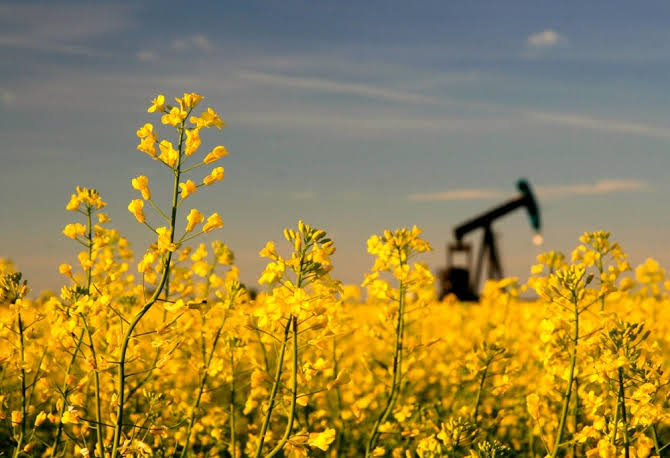
Voters in Alberta are heading to the polls for a historic referendum that could set off the biggest political earthquake in North America. The question facing the province sounds almost unthinkable: should Alberta stay inside Canada, or should the provincial government take the first official legal step to break away and become an independent nation?
Alberta is not just any regular Canadian province. Sitting beneath its soil is the fourth-largest proven crude oil reserve on planet Earth. Every single day, the province pumps out millions of barrels of crude, and over 90% of its oil exports head directly south across the border into American refineries, factories, and gas stations.
Now, decades of bitter anger against the federal government in Ottawa have finally boiled over. What started as an extreme idea on the political fringes has landed squarely on the official provincial ballot. If you want to understand how Canada reached this boiling point and what it means for global energy, here is the full story behind Alberta’s historic vote.
The Historic Vote: What Albertans Are Really Deciding
When voters step behind the voting curtain, they are not voting to pack up and leave Canada by midnight. That is the biggest misunderstanding about this referendum.
The ballot asks voters whether Alberta should remain a province of Canada or whether the provincial government should start the formal legal process required under the Canadian Constitution to hold a binding separation vote down the road.
The $0 Secret To Launching Your Entire Online Empire
Why pay hundreds every month for separate software? Build funnels, send emails, and make sales with Systeme.io completely free.
Get Started For $0Free Forever • No Credit Card Needed • Beginner-Friendly
In simple terms, this vote is an on-ramp. If the “leave” side wins, it does not mean Alberta wakes up tomorrow as a separate country with its own passport and national anthem. Instead, it legally forces the provincial government to kickstart official constitutional negotiations with Ottawa, leading up to a second, fully binding referendum on total independence.
Even though this is technically a preliminary step, the stakes are gigantic. This is the closest any English-speaking province has ever come to walking out of the Canadian confederation. If a majority backs the move, it will spark an unprecedented constitutional crisis that will ripple from Edmonton and Ottawa all the way to Washington, D.C. You can follow the official vote tallies and verification updates directly through Elections Alberta.
The Trillion-Dollar Energy Giant: Alberta’s Mind-Blowing Oil Wealth
To understand why this vote matters so much, you have to look at the ground beneath Alberta. The province is an absolute energy powerhouse.
Alberta holds an estimated 160 billion barrels of proven oil reserves, mostly locked inside the massive Athabasca oil sands. Only Venezuela, Saudi Arabia, and Iran have more crude oil under the ground. That means Alberta holds more oil than Russia, more than China, and far more than the United States.
Almost all of this oil flows straight into the American economy. Over 90% of Alberta’s crude exports go directly to U.S. refineries in the Midwest and along the Gulf Coast. If Alberta were an independent country tomorrow, it would instantly become one of the top five oil producers in the world and the single largest foreign energy supplier to the United States.
Because of this massive resource base, Alberta has long been the economic engine of Canada. It generates huge tax revenues, high-paying jobs, and billions of dollars in foreign investment. But that incredible wealth is also the exact reason why Albertans feel so deeply frustrated. Many locals feel that while their energy fuels the rest of the country, politicians thousands of miles away in Ottawa treat their industry like an embarrassment.
Decades of Resentment: Why Alberta Has Been Boiling at Ottawa
The bad blood between Alberta and the federal government is not new. It has been building up for more than forty years.
In the Canadian West, people call this feeling “Western alienation.” It comes from a simple geographic reality. Canada’s population is heavily concentrated in the eastern provinces of Ontario and Quebec. Because those two provinces have the most seats in Parliament, federal elections are often decided before the ballot boxes even close in the West. Albertans have long felt that national politicians cater to eastern voters while treating the West like an open wallet.
The anger first exploded in 1980, when Prime Minister Pierre Trudeau—the father of Justin Trudeau—launched the National Energy Program. That policy capped domestic oil prices and taxed Alberta’s oil revenues to benefit eastern consumers. It devastated the local economy, sent bankruptcies soaring, and sparked the first modern wave of western separatism.
Decades later, the resentment returned under Justin Trudeau’s Liberal government. Federal carbon taxes, strict emissions caps, and tough environmental review laws made it harder to build new oil pipelines. Alberta leaders argued that while other oil-producing nations were expanding, Canada was tying its own hands and sabotaging its most lucrative natural resource.
Compounding the frustration is Canada’s federal “equalization” program. Under this system, wealthy provinces contribute tax dollars that help fund public services in poorer provinces. Over the decades, Alberta has contributed tens of billions of dollars more to the federal system than it has received back. For many Albertans, sending billions to Ottawa while federal regulations strangle their core industry feels like a raw deal.
How Separatism Shifted from the Fringes to the Mainstream
For most of Alberta’s history, separatist political parties were tiny fringe groups that struggled to win even 1% or 2% of the vote. Mainstream conservatives dismissed them as dreamers who did not understand the real world.
Everything changed during the COVID-19 pandemic. When federal vaccine mandates, business shutdowns, and travel restrictions were put in place, anger across rural Alberta reached a fever pitch. Many conservative voters felt the federal government had crossed the line and invaded their personal freedoms.
That frustration erupted during the 2022 Freedom Convoy, which saw truckers and protesters block downtown Ottawa and key Canada-U.S. border crossings. As the protests died down, those organizers did not pack up and go home. They channeled their energy into a new mission: seizing control of the provincial political machinery.
Separatist-friendly groups, including Take Back Alberta and the Alberta Prosperity Project, began organizing at the grassroots level. They showed up at local party meetings, signed up thousands of new members, and took over constituency boards across the governing United Conservative Party (UCP).
Send, Spend & Hold Money Worldwide Without Hidden Fees
Transfer money internationally at the real exchange rate and hold 40+ currencies in one account.
Open a Wise AccountMid-market rate • Fast transfers • 40+ currencies
When former Premier Jason Kenney resisted their hardline demands, the movement pushed him out of office. His replacement, Danielle Smith, won the leadership by tapping directly into that grassroots anger. A detailed investigation by CBC News revealed how these groups methodically forced the independence question onto the government’s agenda.
Danielle Smith’s High-Wire Act: Caught Between Two Fires
Alberta Premier Danielle Smith now finds herself walking a razor-thin political tightrope.
On one side, she owes her job to the hardline conservative activists who took over the party machinery. They expect her to stand up to Ottawa and deliver on the promise of greater autonomy. On the other side, she knows that the vast majority of everyday Albertans are proud Canadians who do not actually want the chaos of breaking up the country.
Smith has repeatedly stated that she personally supports remaining inside Canada and wants the province to stay. She has called the current level of separatist support—roughly 20% to 23% in public polling—far too high for her liking.
Yet she still went ahead and called the referendum. Her political strategy was to craft a compromise question that gave her base a vote without immediately triggering an unfixable split. But that compromise has ended up angering almost everyone.
Pro-Canada voters accuse her of playing with fire and wasting public money on an unnecessary distraction. At the same time, hardline separatists accuse her of watering down the question to stall their movement. Some separatist organizers have even threatened to challenge her leadership, just as they did with Jason Kenney.
The Ottawa Pushback: Mark Carney and the Threat Across the Border
The federal government is not sitting quietly on the sidelines. Prime Minister Mark Carney has stepped directly into the fight, urging Albertans to reject the separation path before it causes lasting damage.
Carney brings a very different approach to Western Canada than his predecessor. As an economist and former central banker, Carney has made building new energy infrastructure and getting Canadian oil to international ports a stated national priority. His business-friendly approach and open support for West Coast pipelines have earned him surprising respect among some Western industry leaders.
During major rallies in Calgary and Edmonton, Carney delivered a blunt warning. He told voters that separating—or even flirting with it—would leave Alberta isolated at the worst possible time.
He pointed directly south to the United States. With President Donald Trump aggressively pushing trade tariffs and publicly floating remarks about making Canada the 51st American state, Carney argued that breaking apart the country would leave smaller provinces vulnerable to economic domination.
The $0 Secret To Launching Your Entire Online Empire
Why pay hundreds every month for separate software? Build funnels, send emails, and make sales with Systeme.io completely free.
Get Started For $0Free Forever • No Credit Card Needed • Beginner-Friendly
Carney urged Albertans not to treat the vote as a free protest ticket. He warned that voting for the separation process just to send Ottawa an angry message is a dangerous bluff that could derail billions of dollars in foreign investment and destabilize the national economy. For further background on the federal government’s response, PBS NewsHour covered Carney’s Calgary address in detail.
The Legal and Geographic Brick Wall: Could Alberta Actually Leave?
Even if a majority of Albertans were to vote to start the separation process, turning Alberta into an independent nation is a legal and practical nightmare.
First, there is Canada’s highest court. In 1998, when Quebec was flirting with separation, the Supreme Court of Canada issued a landmark ruling known as the Secession Reference. The court ruled that a Canadian province cannot simply declare independence on its own.
Under the ruling, if a province votes on a clear question with a clear majority, the rest of Canada has an obligation to negotiate. But any final exit would require massive constitutional amendments approved by the federal parliament and other provincial legislatures. It would involve years of grueling legal battles over federal properties, military bases, and government assets.
Second, there is the crucial issue of Indigenous rights. All of Alberta sits on the traditional territories of First Nations, covered by historic treaties like Treaty 6, Treaty 7, and Treaty 8. These treaties were signed with the British Crown and the federal government, not the provincial government of Alberta.
Indigenous leaders have made it clear that Alberta cannot unilaterally pull their traditional lands out of Canada. Earlier this year, Alberta courts struck down an initial citizen petition partly because separatist organizers failed to consult with Indigenous communities. Any attempt to separate without First Nations consent would face immediate court injunctions and nationwide blockades.
Finally, there is the map. Alberta is completely landlocked. It has zero access to the ocean.
If Alberta broke away, it would be surrounded on three sides by Canada (British Columbia, Saskatchewan, and the Northwest Territories) and on the south by the United States. To get its oil, beef, and grain to world markets, an independent Alberta would still need pipeline and rail permission from its neighbors. Leaving Canada would not solve Alberta’s pipeline bottlenecks; it would turn domestic pipeline debates into international diplomatic standoffs.
Dollars, Debts, and Hard Borders: The Economic Realities
Beyond the courtroom and the map, the day-to-day economics of independence would create massive uncertainty for families and businesses.
Consider the currency. What money would an independent Alberta use? If it kept using the Canadian dollar, it would have zero say over interest rates or monetary policy, which would still be controlled by the Bank of Canada in Ottawa. If it switched to the U.S. dollar, it would hand monetary control over to the Federal Reserve in Washington. Creating a brand-new “Alberta Dollar” would carry huge exchange-rate risks, especially for an economy tied to volatile global oil prices.
Then there is the national debt. Alberta could not just take its oil wealth and walk away scot-free. Canada currently carries over a trillion dollars in national debt. In any separation negotiation, Alberta would be forced to take on its proportional share of that debt, likely totaling well over $100 billion. Servicing that debt on its own would eat up a massive portion of the new nation’s annual budget.
Trade is another huge question mark. Today, goods flow freely between Alberta and the rest of Canada. An independent Alberta would need to negotiate new trade treaties with Canada, the United States, and Mexico. There is no guarantee that Washington would offer favorable terms. Instead, an independent Alberta could find its exports hit with tariffs and border delays, disrupting supply chains that have run smoothly for generations.
Everyday life would change as well. Millions of people would need new passports. Families with relatives in neighboring provinces could face international border checks. Canadian pensions, healthcare funding, and cross-border employment would all need to be renegotiated from scratch.
What Do Everyday Albertans Actually Want?
With all the noise and heated political speeches, where do regular Albertans actually stand?
Every major independent opinion poll conducted over the past year tells a consistent story. The vast majority of Albertans want to remain part of Canada.
Surveys by reputable polling firms like Leger, Ipsos, and Angus Reid show that between 65% and 73% of voters support staying firmly within Canada. Support for taking the first step toward separation consistently hovers between 20% and 24%, with a small percentage still undecided.
Support for separation is strongest among older voters, men, and people living in rural areas where the oil and gas industry is the lifeblood of the community. In the big cities of Calgary and Edmonton, where modern tech, finance, and healthcare industries are growing rapidly, support for leaving drops off dramatically.
So why is anyone worried about the outcome? The answer is the “protest vote” risk.
Political analysts often point to Britain’s 2016 Brexit referendum. In that vote, thousands of people who did not actually want Britain to leave the European Union voted “Leave” anyway, simply to express their anger at the political establishment in London. When the votes were counted, the Leave side won a shock victory that surprised even the people who ran the campaign.
Ottawa and pro-unity groups worry that frustrated Albertans might use this ballot to deliver a sharp kick to the federal government, without fully considering the chaotic chain reaction that a “Yes” vote would unleash.
Frequently Asked Questions
Is Alberta voting to separate from Canada right now?
No, the vote taking place is not an immediate exit from Canada. Voters are deciding whether to remain a province or to instruct the provincial government to begin the official legal process required under the Canadian Constitution to hold a future, binding referendum on separation.
Why is Alberta so critical to the global energy market?
Alberta holds the world’s fourth-largest proven crude oil reserves, trailing only Venezuela, Saudi Arabia, and Iran. It is the main supplier of crude oil to the United States, with more than 90% of its oil exports flowing directly into American refineries. Any political instability in Alberta has direct consequences for North American energy security.
What are the main grievances driving the independence movement?
The movement is fueled by long-standing feelings of Western alienation. Albertans frequently complain about federal climate regulations that restrict oil production, national carbon taxes, lack of representation in Parliament, and federal equalization payments that transfer billions of dollars generated in Alberta to other provinces.
Can a Canadian province legally break away on its own?
Under Canadian law, a province cannot make a unilateral declaration of independence. The Supreme Court of Canada ruled in 1998 that any secession would require a clear vote on a clear question, followed by comprehensive constitutional negotiations with the federal government and the other provinces. It would also require resolving First Nations treaty rights and dividing the national debt.
Where does Premier Danielle Smith stand on the vote?
Danielle Smith called the referendum to satisfy grassroots activists inside her governing United Conservative Party, but she has stated publicly that she personally plans to vote to remain in Canada. She has repeatedly stated that she prefers reforming Canada’s federal system rather than breaking the country apart.
The vote taking place in Alberta is much more than a routine provincial ballot. It is a critical stress test for Canada’s democracy, its federal system, and its economic future. While the polls suggest that cooler heads will prevail and the majority will choose to stay, the very fact that this question is being voted on shows just how wide the cracks in national unity have become.
Whatever the final tally shows when the ballot boxes are opened, Ottawa cannot simply go back to business as usual. Canada’s energy engine has made its frustration impossible to ignore, and the conversations happening across Alberta right now will shape the country’s political landscape for decades to come.
What are your thoughts on Alberta’s historic vote? Do you think the province has valid complaints against Ottawa, or is flirting with separation a dangerous mistake?
