
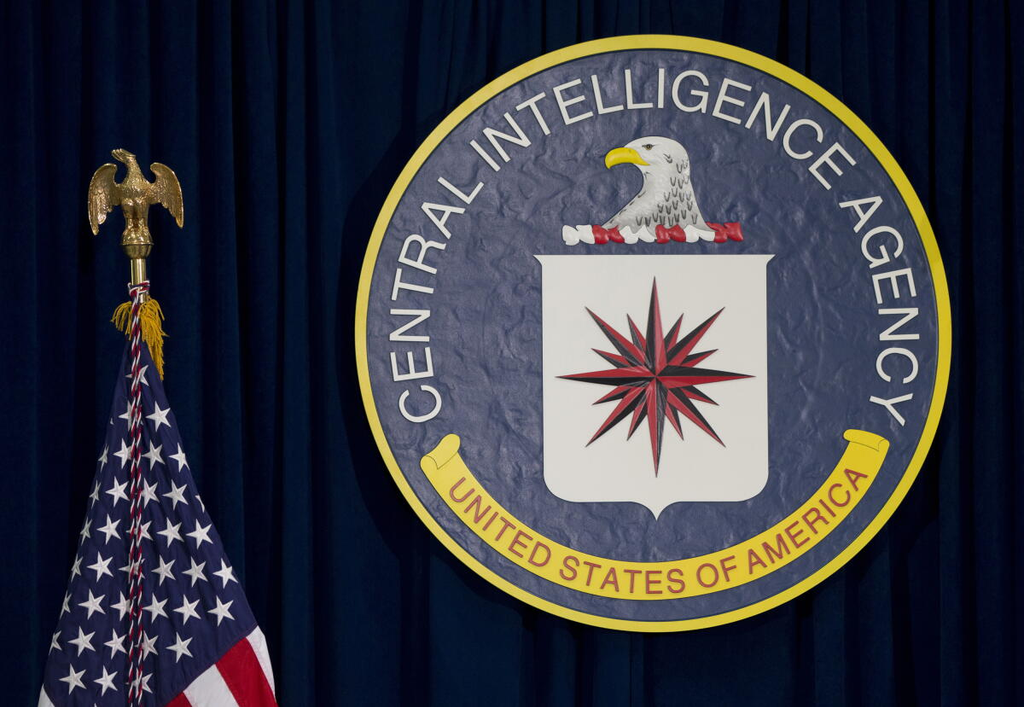
Federal law enforcement agents executing a search warrant at a quiet home in Virginia made a discovery that sounded like the plot of a Hollywood movie. Hidden inside the residence were 303 shiny gold bars weighing over 2.2 pounds each, worth a total of more than $40 million. Along with the heavy gold bullion, agents uncovered $2 million in cash and 35 high-end luxury watches, including a collection of Rolexes.
The owner of that home was David J. Rush. He was not an international cartel leader or a career bank robber. He was a senior executive inside the Central Intelligence Agency (CIA) who had spent 17 years working in the agency’s elite Science and Technology division with top-secret security clearance.
Now, federal prosecutors and defense attorneys have reached a tentative plea deal in principle. The agreement allows both sides to settle the massive theft case before a formal grand jury indictment and avoid a public court trial that could leak sensitive national security secrets.
The story behind how a single official managed to take millions of dollars in gold and cash out of government vaults reveals major security gaps inside America’s most secret agency.
The Discovery That Stunned Federal Investigators
When FBI agents walked into the Virginia residence of David Rush in May 2026, they were investigating what originally appeared to be a standard case of payroll fraud. Investigators knew that Rush had lied on his official government timesheets, but they were not fully prepared for the massive fortune stacked inside the house.
Build Funnels, Email Lists & Sell Online With One Free Tool
Create funnels, send emails, and sell online using Systeme.io without paying for multiple tools.
Create Free AccountFree forever • No credit card • Beginner-friendly
Stacking 303 individual gold bars takes up considerable space and weight. Each bar weighed 1 kilogram, translating to over 660 pounds of pure gold. Along with the stacks of gold, agents pulled out stacks of foreign currency and U.S. dollars totaling roughly $2 million. The collection of 35 luxury watches added hundreds of thousands of dollars more to the hidden hoard.
The sheer volume of wealth raised immediate red flags across the Department of Justice and intelligence agencies. Federal authorities quickly realized this was not a simple case of a worker taking home a few office supplies. It was one of the largest internal thefts of public assets in the history of the United States intelligence community.
Unlike a dramatic art heist on the French Riviera, where physical thieves break into a museum, this operation was pulled off entirely from behind a desk using administrative power, paperwork, and classified secrecy.
How a Fake Secret Government Program Was Used to Steal Millions
The central question facing investigators was simple: How does anyone walk out of a government facility with $40 million worth of physical gold?
According to FBI affidavits and court documents, David Rush exploited the deepest layers of secret bureaucracy. He allegedly created a fictitious Special Access Program (SAP). Inside the federal government, Special Access Programs represent the highest level of security. Information about these programs is restricted on a strict need-to-know basis. Even top officials with high security clearances cannot ask questions or see details unless they are specifically cleared for that individual project.
Rush told colleagues that his secret program focused on continuity-of-government planning. These are official national security measures designed to keep the federal government running during catastrophic emergencies like nuclear war or extreme national disasters. Because these emergency preparedness projects require total secrecy and fast access to funds, they operate with minimal public oversight.
Using the authority of this fake program, Rush submitted requests for huge quantities of foreign currency and physical gold bars between November 2025 and March 2026. He listed these requests as necessary work-related expenses.
To make the requests look legitimate, Rush persuaded at least two colleagues that the project was real. Investigators report that he effectively created a fake government contract to move millions of dollars through official channels. Because officials were afraid of breaching classified security rules, nobody questioned why a senior intelligence officer needed hundreds of gold bars delivered for an emergency project.
A Web of Lies: Fake Degrees, Military History, and Salary Fraud
The gold bar discovery was the centerpiece of the investigation, but the initial criminal complaint against Rush focused on years of systematic fraud.
When Rush applied for his position at the CIA nearly two decades ago, he presented an impressive resume. He claimed to hold advanced degrees from Clemson University in South Carolina and the Rensselaer Polytechnic Institute in New York. He also claimed to have served as a U.S. Navy pilot and a thesis adviser at the Air Force Institute of Technology.
Federal investigators checked those claims with the schools and military branches. None of the credentials were real:
- Clemson University had no record of him receiving a degree.
- Rensselaer Polytechnic Institute could not verify his academic record.
- The Navy confirmed he served, but he was never a pilot.
- The Air Force Institute of Technology had no record of his employment as a thesis adviser.
Rush used these fabricated qualifications to climb the ranks of the CIA and secure a senior executive-level salary.
The fraud extended to his daily timecard submissions. After being honorably discharged from the Navy in 2015, Rush continued to claim military leave hours on his CIA timesheets. Investigators found he falsely claimed 744 hours of military leave, pocketing over $77,000 in unearned taxpayer money.
This paper trail of timesheet fraud gave the FBI the initial search warrant needed to enter his home, which unexpectedly led straight to the $40 million gold stash.
Inside the Tentative Plea Deal and the Courtroom Strategy
After his arrest in May 2026, a federal judge ordered David Rush held in custody without bail, classifying him as a severe flight risk due to his access to foreign currency and immense wealth.
Facing charges of stealing public money under federal law, Rush and his legal team began secret negotiations with prosecutors from the U.S. Attorney’s Office for the Eastern District of Virginia.
On September 11, 2026, prosecutors and defense counsel filed a joint motion requesting a 21-day extension through October 8, 2026. The filing informed U.S. District Judge Leonie Brinkema that the two sides had reached a plea agreement in principle and needed time to finalize the official statement of facts.
The decision to pursue a pre-indictment plea deal helps both sides avoid a long public trial:
- Government Interest: A full criminal trial would require introducing classified documents into court. Prosecutors would have to explain how intelligence funds are stored, moved, and audited, which could expose sensitive operational methods.
- Defense Interest: A plea deal allows Rush to avoid facing a federal grand jury indictment that could carry dozens of additional felony charges and potential decades in federal prison.
- Judicial Efficiency: Settling the case saves substantial government resources and court time.
While defense attorneys previously referred to the gold bars as a sensational tidbit unrelated to the basic salary theft charges, the finalized plea agreement is expected to formally address how the $40 million in gold and cash will be forfeited back to the U.S. Treasury.
This legal maneuvering is similar to other high-profile federal court battles where complex international security issues force prosecutors to seek plea agreements rather than open trials.
Security Failures and Internal Fallout at the CIA
The case has raised serious questions about management and oversight within the intelligence community. How could an employee operate a fake classified program for months, take $40 million in gold bullion out of government inventory, and remain undetected?
Following the raid on Rush’s home, internal leadership reviews were launched across the CIA. Several senior CIA officials were placed on administrative leave while investigators looked into how they approved Rush’s requests for money and gold. The agency’s internal review confirmed potential legal violations before officially referring the case to the FBI.
The investigation also touched other high-level national security offices. Reports indicated that FBI agents interviewed Deputy Defense Secretary Steve Feinberg as part of the broader probe because Rush had served as a CIA liaison to sensitive defense projects, including classified submarine programs. Federal authorities emphasized that Feinberg was interviewed solely as a background source and is not suspected of any wrongdoing.
The scandal has forced the intelligence community to rethink how physical assets are tracked. While modern agencies spend billions of dollars on cutting-edge technology and AI developments to secure digital networks against cyber threats, this case showed that basic physical auditing of gold, cash, and luxury items was dangerously lacking.
It has also highlighted the urgent need to overhaul internal auditing, much like the ways municipal law enforcement agencies are pushed to fix their police intelligence gathering after systemic failures.
Broader Lessons on Internal Fraud and Oversight
The David Rush case serves as a stark reminder that high-level security clearances and impressive job titles do not automatically guarantee integrity. When internal control systems rely heavily on trust rather than continuous verification, the risk of massive fraud increases dramatically.
Key takeaways from the fallout include:
Build Funnels, Email Lists & Sell Online With One Free Tool
Create funnels, send emails, and sell online using Systeme.io without paying for multiple tools.
Create Free AccountFree forever • No credit card • Beginner-friendly
- The Danger of Compartmentalization: Excessive secrecy can create blind spots where fraudulent activities hide behind classified labels.
- Verification of Basic Credentials: Background checks must continuously verify academic and military claims, even for long-tenured employees.
- Strict Physical Asset Audits: High-value physical assets like gold bullion and foreign currency require multi-person authorization and routine physical inventories.
As defense tech continues to advance across national security and private sectors—with major investments pouring into new defense tech initiatives—ensuring internal financial transparency remains just as critical as building advanced software.
Frequently Asked Questions (FAQs)
Who is David J. Rush?
David J. Rush is a former senior executive-level official at the Central Intelligence Agency (CIA). He worked in the agency’s Science and Technology division for approximately 17 years and held top-secret security clearance before his arrest in May 2026.
How much gold and money was seized from David Rush’s home?
FBI agents seized 303 gold bars valued at over $40 million. Each bar weighed 1 kilogram (2.2 pounds). In addition to the gold, agents found roughly $2 million in cash and 35 luxury watches, including multiple Rolexes.
How was he able to request physical gold bars from the government?
Rush allegedly created a fake Special Access Program (SAP) under the guise of continuity-of-government planning. He used the classified status of the fake program to submit requests for gold bars and foreign currency, claiming they were necessary work-related expenses for emergency operations.
Why did prosecutors offer a plea deal instead of going to trial?
A public trial would require presenting classified information and internal government procedures in open court, which could risk leaking sensitive national security details. A pre-indictment plea agreement resolves the case quickly, secures the return of the stolen assets, and saves judicial resources.
What original charges were brought against David Rush?
Rush was initially charged with theft of public money under 18 U.S.C. § 641. The initial criminal complaint focused on falsifying timesheets to steal military leave pay and inflating his salary by lying about his college degrees and military credentials.
Looking Ahead
The tentative plea deal between David Rush and federal prosecutors marks the beginning of the end for one of the most unusual government theft cases in recent memory. As the October 8, 2026 deadline approaches, the court will review the finalized paperwork and statement of facts to seal the agreement.
While the government expects to recover the $40 million in gold bars and cash, the institutional damage to the CIA’s auditing reputation will take much longer to repair. Rebuilding public trust will require tougher oversight, stricter credential checks, and better tracking of high-value assets across all federal agencies.
Connect with Us
Want to stay informed on breaking news, trending stories, and modern digital guides? Check out our latest insights on YouTube automation strategies or read more about our mission on our about us page. If you have questions or tips to share, feel free to reach out directly through our contact page.
Follow our social channels to join the discussion:
