
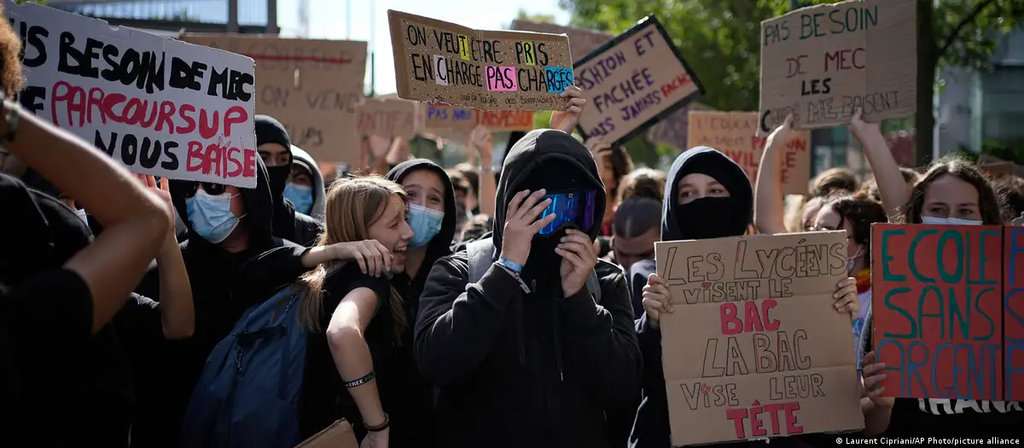
Barricaded school gates, burning rubbish dumpsters on street corners, and police officers in full riot gear launching tear gas outside classroom doors have suddenly become daily sights across France. What began as a localized dispute over missing classroom teachers has erupted into a full-scale national crisis, forcing education authorities to shut down or suspend classes at up to 500 high schools nationwide.
High school students across major French cities have walked out of their classrooms, setting up blockades and marching through urban centers. The nationwide disruption has left hundreds of thousands of teenagers stuck at home, disrupted mid-term exams, and created severe traffic standstills from Paris to Marseille. Government officials are warning that the unrest is escalating faster than security forces can manage, leaving parents, teachers, and business owners deeply concerned about where this movement is headed.
The sheer speed at which these demonstrations spread surprised both the French government and local police forces. While student walkouts are not entirely unheard of in France, the level of intensity and coordination behind this current wave of unrest has pushed the national education system to its breaking point.
How A Suburban Complaint Exploded Into A National Crisis
The sparks for this massive wave of protest were first ignited in late September in the Créteil academy, located just outside the eastern suburbs of Paris. Students at a local high school decided to block their school gates after spending weeks without permanent math and language teachers. What started as a simple, peaceful blockade demanding basic staffing quickly caught fire across social media platforms like TikTok and Instagram, where videos of locked school gates and rallying teenagers went viral.
Within forty-eight hours, high schoolers in neighboring districts began copying the tactic. By the first week of October, the movement had leaped far beyond the Paris suburbs, spreading into major regional hubs including Lille, Toulouse, Perpignan, Rennes, and Lyon. School front entrances were routinely chained shut using heavy bike locks, wooden pallets, and large plastic trash bins.
The $0 Secret To Launching Your Entire Online Empire
Why pay hundreds every month for separate software? Build funnels, send emails, and make sales with Systeme.io completely free.
Get Started For $0Free Forever • No Credit Card Needed • Beginner-Friendly
As local authorities struggled to keep up with the growing number of blockades, police forces faced criticism over their initial handling of the crowd control. Managing large crowds of teenagers presents unique legal and tactical challenges for law enforcement agencies, similar to the broader difficulties surrounding police intelligence and protest monitoring during major public demonstrations. When crowds grew larger, police officers were forced to step in, often leading to tense physical standoffs near school perimeters.
What began as a localized grievance over a few empty teaching posts transformed almost overnight into a nationwide political showdown between the youth and the French state.
Inside The Student Grievances: Overcrowded Classrooms, Absent Teachers, And Parcoursup Stress
While news headlines focus heavily on the chaotic street scenes, the root causes driving teenagers into the streets run much deeper than a few missed classes. Student organizers argue that the state of public education in France has been deteriorating for years, leaving both students and staff feeling completely exhausted.
Chronic Teacher Shortages and Overcrowded Classrooms
One of the central complaints expressed by protesting high schoolers is the shortage of qualified educators. In many schools across the country, classes have gone weeks or even months without permanent replacement teachers for core subjects. At the same time, classroom sizes have swelled, with many teachers forced to manage 35 or more students in a single room. Students complain that these overcrowded conditions make it nearly impossible to receive individual attention or properly prepare for national exams.
Crumbling School Infrastructure
Beyond staffing problems, many students are pointing to physical defects in their learning environment. Reports from protesting high schools highlight broken heating systems in cold autumn weather, leaky roofs, outdated computer labs, and crumbling facility walls. Protesters argue that while the government continues to discuss strict national budgets, basic school maintenance is being neglected.
The Anxiety Surrounding Parcoursup
Another major pain point fueling student anger is Parcoursup, the centralized online web platform used across France to match high school seniors with university courses and higher education programs. Students frequently describe the system as unfair, overly stressful, and opaque. Many fear that missed class time due to teacher shortages will hurt their academic scores, effectively ruining their chances of getting accepted into top university programs through the portal.
Economic Pressure and Future Prospects
These classroom frustrations are taking place against a backdrop of broader economic worry. Young people across Europe are increasingly concerned about job security, rising living costs, and reduced public spending. Many teenagers feel that the government is failing to invest in their future, creating a shared sentiment that young people need real opportunities rather than empty promises or minor government handouts. As a result, thousands of students are turning to alternative skills and seeking out global remote opportunities for youth to secure their financial independence early in life.
Fires, Tear Gas, And Thousands Of Arrests: When Demonstrations Turn Dangerous
As the days progressed, what started as peaceful school gate blockades began taking a much darker turn in several major cities. Radical groups and outside agitators began joining student rallies, resulting in violent clashes with law enforcement, damaged public property, and widespread safety hazards.
According to statements released by French Education Minister Édouard Geffray, at least 24 high schools have been burned, vandalized, or completely ransacked since the protests began. In several instances, trash dumpsters set on fire near school entrances spread to school buildings, causing extensive damage that will cost tens of millions of euros to repair.
The human toll has also escalated quickly:
- Injured Staff: At least 78 national education staff members have been injured during blockades and confrontations around school premises.
- Student Casualties: Dozens of teenage protesters have suffered injuries, ranging from smoke inhalation to head wounds during panics and police dispersals.
- Mass Arrests: Interior Ministry figures indicate that over 5,000 individuals have been taken into police custody since the unrest escalated, with approximately 85% to 90% of those arrested being minors under the age of 18.
Government officials have strongly condemned the violent turns, claiming that militant far-left groups and anarchist factions have hijacked genuine student grievances. Education Minister Geffray publicly noted that extremist political activists had infiltrated the high school movement to incite violence against police officers.
Police prefects in major metropolitan areas took the unusual step of banning public gatherings outside several dozen high schools. In cities like Lille and Paris, riot police armed with shields and batons launched tear gas to clear barricades, leading to dramatic footage broadcast on major news networks like France 24 and reported by international publishers such as Al Jazeera.
This level of violence and destruction around educational institutions has shocked the nation. High-profile incidents involving destruction of public heritage and property frequently dominate European news cycles, recalling historical security events such as the notable art heist on the French Riviera. However, seeing burning barricades directly outside high school front doors has created an unprecedented level of urgency for the government in Paris.
From High Schools To Universities: The Movement Spreads Across Higher Education
The unrest is no longer confined to high schools. Sensing a pivotal moment, university student unions across France have officially voted to join the movement in solidarity with high schoolers, significantly expanding the scope of the crisis.
Prominent university campuses, including Sorbonne University and Paris Cité in Paris, as well as major campuses in Strasbourg, Rennes, Montpellier, and Lyon, have reported blockades and student occupations. Lecture halls have been converted into debate spaces, and university students have joined high schoolers on the streets for large-scale afternoon marches.
Send, Spend & Hold Money Worldwide Without Hidden Fees
Transfer money internationally at the real exchange rate and hold 40+ currencies in one account.
Open a Wise AccountMid-market rate • Fast transfers • 40+ currencies
The Union Syndicale Lycéenne, one of the primary high school student unions driving the mobilization, has called for repeated nationwide days of action. Their leaders insist that blockades will continue until the government guarantees emergency funding for public schools, hires thousands of new permanent teachers, and overhauls the university admissions platform.
This spreading unrest comes at a politically sensitive moment for France. The country is currently negotiating a tight national budget, and the domestic political tension is creating ripples across financial markets. France’s 10-year government bond yield briefly crossed the 5% mark, reaching its highest level in over two decades as investors worry about the government’s ability to maintain social stability and balance its finances.
International observers are watching the situation closely. Ongoing political instability in France frequently impacts diplomatic relations and economic partnerships across Europe, including recent bilateral efforts like the Canada and France space partnership. When political turmoil strikes one of Europe’s largest economies, the consequences are felt far beyond its national borders, much like the diplomatic tensions sparked during major European political debates.
How To Navigate Education Disruption And Build Digital Skills From Home
For families directly impacted by school closures, sudden disruptions to daily routines can create enormous stress. Students who are locked out of their classrooms risk falling behind on critical coursework, while parents are left scrambling to arrange supervision or remote learning setups on short notice.
If you or your family members are facing unexpected school closures or academic interruptions, here are a few practical steps to keep learning on track and make productive use of unexpected downtime:
Set Up A Daily Self-Study Routine
Do not treat closed school days as extended vacations. Set a regular daily alarm, review your syllabus, and dedicate at least three hours every morning to reading assigned textbooks or completing practice problems. Keeping a consistent daily structure helps prevent academic burnout and makes returning to regular classes much easier when school gates reopen.
Utilize Free Educational Resources Online
Take advantage of reputable online platforms for subject-area learning. Channels on YouTube, free university lecture portals, and educational apps offer structured tutorials in mathematics, science, literature, and foreign languages. If your school uses an online portal, log in daily to download uploaded assignments or notes provided by your teachers.
Explore Practical Future-Proof Digital Skills
When traditional academic systems experience downtime, it can be a great moment to explore practical, real-world digital skills that standard school curricula often skip. Learning the basics of coding, digital graphics, content creation, or online research can open up valuable future income channels. Many young people are discovering how easy it is to start transitioning to online freelancing right from home.
Building flexible digital skills provides a reliable backup plan regardless of what happens in the traditional job market or academic world. In fact, there are dozens of legitimate entry-level online jobs with no prior experience that students can explore during weekends or study breaks to gain real work experience and financial independence.
Frequently Asked Questions
Why are hundreds of French high schools closed right now?
Up to 500 high schools across France have closed or suspended classes due to safety concerns stemming from widespread student protests and blockades. Students are protesting against severe teacher shortages, overcrowded classrooms, crumbling school buildings, and the stress caused by the Parcoursup university application portal.
The $0 Secret To Launching Your Entire Online Empire
Why pay hundreds every month for separate software? Build funnels, send emails, and make sales with Systeme.io completely free.
Get Started For $0Free Forever • No Credit Card Needed • Beginner-Friendly
How many schools have been damaged during the protests?
According to official reports from French Education Minister Édouard Geffray, at least 24 high schools have been burned, vandalized, or ransacked during the demonstrations. In addition, nearly 80 education staff members have been injured in clashes surrounding school property.
Are French university students participating in the protests?
Yes. Major university student unions have joined high schoolers in solidarity, resulting in blockades and demonstrations at prominent institutions such as Sorbonne University, Strasbourg, Rennes, Lyon, and Montpellier.
How is the French government responding to the school blockades?
The government has ordered remote learning for schools where physical access is blocked or unsafe. Police prefects have banned public gatherings around dozens of high schools, and riot police have been deployed to clear barricades, resulting in over 5,000 arrests nationwide.
How long are the school closures expected to continue?
Closure durations vary by school and region depending on local safety conditions. While some schools reopen after blockades are cleared, student unions have called for continued national days of action, meaning intermittent closures could persist until formal negotiations occur between student representatives and government officials.
The ongoing crisis across French high schools highlights just how quickly frustration over public services can erupt into nationwide movement. As student unions stand firm on their demands and government officials struggle to restore order, all eyes remain on Paris to see whether dialogue or further security measures will ultimately end the standoffs.
Staying informed on fast-moving global news requires trustworthy, clear coverage that cuts through the noise. You can learn more about our mission by visiting About Whatsbuzzn or get in touch directly through our Contact Us page.
For real-time updates, trending stories, and instant news alerts, connect with us across our official social channels on Instagram, Facebook, and X (formerly Twitter). How do you think the French government should handle these growing student demands?
