
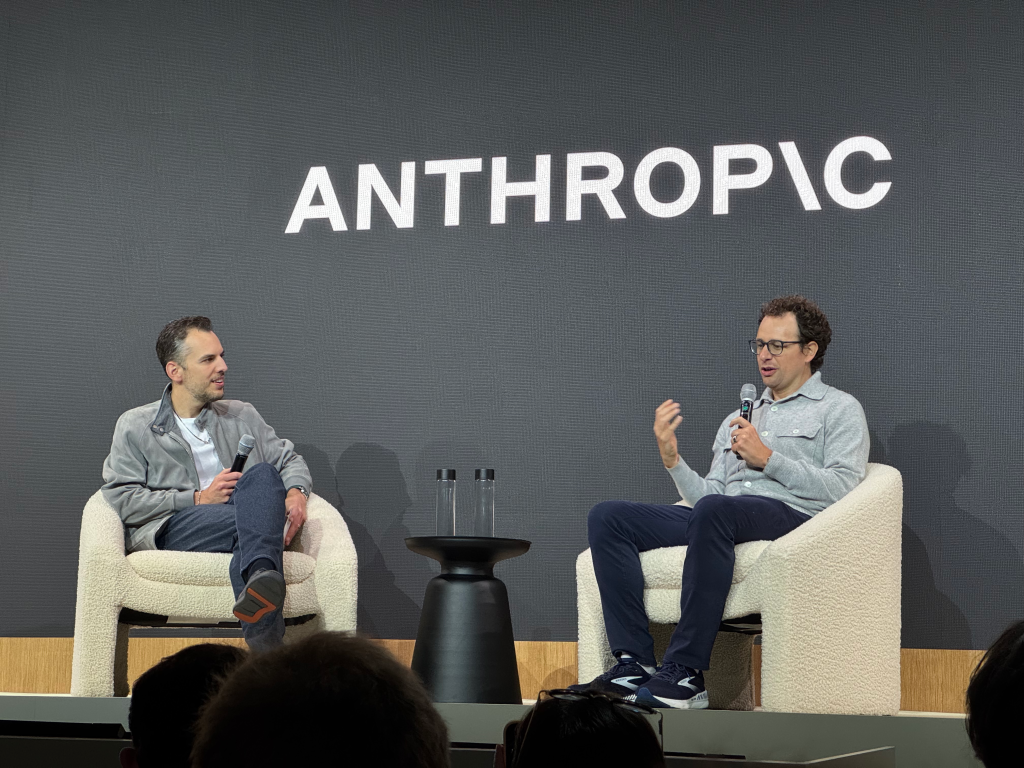
Anthropic just revealed a third-quarter revenue haul of $16.8 billion, and instead of throwing a party, financial circles and social media forums are having an absolute meltdown.
On paper, making nearly $17 billion in a single quarter sounds like pure magic for a startup that wrote its first lines of code only a few years ago. Most traditional companies spend thirty years trying to hit that level of sales. Yet within minutes of the numbers circulating among traders and analysts, the mood turned sour. Famous market voices did not celebrate. Instead, quotes like “not good enough” and “oh, it is over over” spread like wildfire across financial feeds.
The panic centers on a harsh reality hiding behind the shiny numbers. Anthropic grew at an unbelievable pace during the first half of the year, but that speed has hit a brick wall. When you combine slowing monthly gains with hundreds of billions of dollars in guaranteed server bills, the math gets scary fast.
Here is what is really happening inside Anthropic’s balance sheet, why the so-called AI doomers are sounding the alarm, and what this drama means for the future of artificial intelligence.
The Massive Numbers That Started the Chaos
To understand the panic, you have to look at how quickly Anthropic has grown. A year ago, pulling in billions every quarter seemed like an impossible dream for any independent AI lab. But the company behind the Claude chatbot has been on a legendary hot streak.
The $0 Secret To Launching Your Entire Online Empire
Why pay hundreds every month for separate software? Build funnels, send emails, and make sales with Systeme.io completely free.
Get Started For $0Free Forever • No Credit Card Needed • Beginner-Friendly
Earlier this year, reports showed that Anthropic revenue surged past $11.5 billion in Q2 as big businesses rushed to install its software. Jumping from $11.5 billion in the second quarter to $16.8 billion in the third quarter looks like fantastic momentum. In fact, on an annualized basis, Anthropic is now generating more sales than software giants like Adobe, Salesforce, and Workday.
The company also pointed out that its adjusted gross margins sat at an impressive 85 percent, and it even claimed to have reached adjusted operating profitability for the quarter.
If you glance at the surface, everything seems to point toward an unstoppable tech powerhouse gearing up for one of the biggest public stock listings in human history. Financial outlets like Reuters and Bloomberg have noted that Anthropic has been laying the groundwork for a public market debut that could value the firm at roughly $2 trillion.
So why did the mood suddenly collapse?
The trouble began when sharp financial analysts broke down the monthly numbers instead of just staring at the quarterly total.
The Growth Cliff: Why Critics Are Screaming “It’s Over”
The main reason skeptics are ringing alarm bells comes down to a simple concept: deceleration. In the startup world, losing speed is often treated like a fatal disease, especially when your company is valued on the promise of infinite growth.
Throughout late 2025 and the first half of 2026, Anthropic expanded at a blistering pace. Its monthly compound growth rate hovered around 33 percent. Money was pouring in from every direction as banks, legal firms, software developers, and universities bought Claude subscriptions. By the end of July, the company boasted an annualized run rate of $65 billion.
That is where the math stops looking pretty.
When analysts at firms like Tiger Brokers and independent researchers at Citrini Research worked backward from the $16.8 billion quarterly result, they noticed something alarming. To hit that total, August and September had to bring in around $11.4 billion combined.
That means monthly growth plummeted from 33 percent down to somewhere between 3.4 percent and 6.6 percent.
Going from 33 percent monthly gains to single digits is what traders call a growth cliff. Prominent market watcher Geiger Capital posted the phrase that instantly became the center of the debate: “Not good enough. It’s over.”
The skepticism quickly migrated to community platforms, where a viral Reddit discussion on the AI revenue numbers saw thousands of developers and market watchers debating whether the consumer and business appetite for expensive AI models has finally peaked.
When a company is valued at hundreds of billions—or even trillions—investors demand hyper-growth. If revenue growth flattens out, the justification for astronomical valuations disappears overnight.
The Trap Behind “Adjusted Profitability”
The second major issue making people nervous is how Anthropic calculates its profits.
Anthropic told prospective investors that it achieved adjusted profitability in the third quarter. While that sounds reassuring, the word “adjusted” does an enormous amount of heavy lifting in corporate accounting.
Send, Spend & Hold Money Worldwide Without Hidden Fees
Transfer money internationally at the real exchange rate and hold 40+ currencies in one account.
Open a Wise AccountMid-market rate • Fast transfers • 40+ currencies
Adjusted numbers usually strip out huge real-world expenses, including stock compensation given to employees, one-time legal fees, and financing charges. To see how dangerous this can be, look at the company’s full-year 2025 performance. During 2025, Anthropic booked roughly $4.6 billion in revenue, but posted a jaw-dropping net loss of about $42 billion.
Around $34 billion of that loss came from non-cash accounting charges tied to fundraising, but even after removing those charges, the actual cash operating loss was still more than $8 billion.
There is also a lively debate over how Anthropic reports its sales. Analysts from Goldman Sachs have pointed out that Anthropic uses a gross revenue model. That means when a customer spends money using Claude through an external cloud provider, Anthropic counts the entire customer payment as revenue, and then records the cloud partner’s cut as an operating cost.
By comparison, other firms like OpenAI have traditionally reported net revenue, which only counts the money left over after cloud fees are paid. Because of this method, Anthropic’s top-line revenue looks noticeably larger, even if the net money kept in the bank is much smaller.
This accounting divide is becoming a major talking point across the industry. When OpenAI shocked Wall Street with its own massive revenue report, it also sparked intense debates about whether any of these massive numbers represent real, durable profits. In fact, skepticism grew even louder when news broke that OpenAI sought another $30 billion in funding just to keep its data centers running.
The Half-Trillion-Dollar Bill Coming Due
You cannot understand the fear surrounding Anthropic without looking at its bills. Building, training, and running cutting-edge artificial intelligence is the most expensive business activity on earth.
Confidential documents reviewed by financial reporters show that Anthropic has signed long-term computing power and cloud infrastructure agreements totaling at least $518 billion over the next ten years.
Even more shocking is that roughly 80 percent of those commitments are completely irrevocable. Anthropic cannot simply cancel them if business slows down. It must pay those data center bills whether customers keep buying Claude tokens or not.
Consider what Anthropic has to pay for:
- Hundreds of thousands of high-end graphics processing units running 24 hours a day
- Massive electricity bills that consume enough power for medium-sized cities
- High-speed optical networking cables and custom server racks
- Gigantic cooling systems to stop server farms from melting
- Expensive cloud partnership contracts that kick in later this year
Much of this compute capacity is tied to major corporate backers. For instance, Amazon made headlines with a massive multibillion-dollar investment in Anthropic to secure Claude on Amazon Web Services. Anthropic also has giant agreements with Microsoft that begin hitting the books in late 2026.
The $0 Secret To Launching Your Entire Online Empire
Why pay hundreds every month for separate software? Build funnels, send emails, and make sales with Systeme.io completely free.
Get Started For $0Free Forever • No Credit Card Needed • Beginner-Friendly
When you have committed to spending over $500 billion on servers, pulling in $16.8 billion in a quarter is simply not enough margin for error. If growth drops from double digits to low single digits, paying off half a trillion dollars in server contracts becomes a terrifying prospect.
This eye-watering spending spree is not unique to Anthropic. Across the entire technology landscape, Alphabet and other major tech giants are burning through cash on AI infrastructure at rates never seen before. The entire market is racing ahead at breakneck speed, hoping that customer demand catches up before the cash piles run out.
Shadows of the Dot-Com Crash
The growing chorus of doomers is not just worried about Anthropic. They are worried about the entire global economy.
Many experienced Wall Street veterans are drawing direct comparisons between the current AI boom and the telecom bubble of the late 1990s. Back then, internet providers and telecommunications companies borrowed hundreds of billions of dollars to lay millions of miles of fiber-optic cables underground. Everyone believed the internet would change the world—and they were right. But the companies laid way more cable than society could use at the time. When the bills came due, dozens of telecom giants went bankrupt, triggering a brutal stock market crash.
Today, critics see the exact same pattern playing out with graphics cards and data centers instead of fiber-optic cables. Serious market commentators are asking whether history is repeating itself with dot-com style crash fears as interest rates stay high and infrastructure debts pile up.
The fundamental question is simple: Can businesses actually generate enough new profit from AI to justify paying trillions of dollars for it?
Right now, many corporations are running small experiments. They use AI to summarize meetings, write basic computer code, and handle customer service questions. But many chief executives are finding that AI tools do not immediately replace entire departments or create massive new profit streams. If enterprise customers decide to trim their AI budgets going into next year, the growth rates for companies like Anthropic could drop even further.
Moving Fast Versus Playing It Safe
Anthropic finds itself caught in an ideological tug-of-war.
The company was originally founded by former OpenAI researchers who left because they worried the industry was moving too fast and ignoring safety. Anthropic built its brand as the responsible, safety-first alternative. Its leadership has consistently warned the public about catastrophic risks, with public records showing why Anthropic’s CEO has argued for slowing down AI development.
Anthropic has regularly put this philosophy into practice. It recently published findings showing how Anthropic blocked biological weapons experiments on its models. It also joined other major tech developers in supporting safety rules, including landmark AI safety legislation signed into law in California.
However, operating as a cautious, safety-oriented lab is hard when you also need to justify a $2 trillion valuation. While Anthropic preaches safety and careful evaluation, political leaders and aggressive competitors are pushing to remove all guardrails. Washington politicians have pushed for speed, with Donald Trump promising an AI force while brushing off doomsday warnings.
Anthropic is trying to ride two horses at once. On one hand, it wants to be the ethical, cautious guardian that prevents digital disasters. On the other hand, it has signed half a trillion dollars in server contracts, which forces it to sell as many computing tokens as humanly possible to commercial enterprises.
When revenue growth drops, those two goals slam into each other. You cannot slow down to inspect every safety guardrail if your survival depends on doubling your sales every few months.
Can an IPO Save Anthropic?
All of these financial revelations arrive at the most delicate possible moment: right before Anthropic attempts to go public.
The company is preparing to file its public registration documents, known as an S-1, with regulators in late October. This filing will be the first time Anthropic is forced to show every single dollar, debt, and contract to the public under strict federal accounting rules.
An initial public offering allows early investors and founders to cash out, while raising billions of dollars in fresh cash from everyday public market investors. But public market investors are notoriously unforgiving. Venture capitalists might be willing to ignore huge losses as long as the story sounds exciting, but Wall Street mutual funds and pension managers look closely at cash flow, profit margins, and quarterly growth trends.
If the upcoming S-1 filing confirms that monthly growth has flattened to the low single digits, Anthropic may struggle to convince Wall Street that it deserves a valuation anywhere near $2 trillion.
A lower valuation would not just hurt Anthropic’s prestige. It could send shockwaves through the entire startup ecosystem. Hundreds of smaller AI startups have raised money at sky-high valuations based on the idea that industry leaders like Anthropic and OpenAI would go public at record-setting numbers. If Anthropic’s public debut stumbles, the valuation bubble across the entire AI ecosystem could deflate quickly.
Frequently Asked Questions
What did Anthropic report in its latest financial figures?
Anthropic reported third-quarter revenue of $16.8 billion, representing a steep increase compared to previous quarters. It also claimed an adjusted gross margin of 85 percent and reported adjusted operating profitability.
Why are critics and investors upset with $16.8 billion in revenue?
Critics are concerned because the company’s monthly growth rate slowed down significantly toward the end of the quarter. While sales grew at roughly 33 percent per month earlier in the year, monthly growth dropped to between 3 percent and 6 percent in August and September.
What does “adjusted profitability” mean?
Adjusted profitability is an accounting calculation that removes certain expenses—like stock-based compensation, interest payments, taxes, and one-time restructuring costs—from the final ledger. While it makes operational numbers look healthier, it does not mean the company produced net GAAP profit.
How much money does Anthropic owe for computing power?
Anthropic has signed long-term commitments for cloud computing and data center infrastructure totaling over $518 billion across the next decade. About 80 percent of these commitments are legally binding and cannot be canceled.
Is Anthropic planning to go public?
Yes. Financial reports indicate that Anthropic is preparing to file its public S-1 prospectus with regulators ahead of an initial public offering that could take place as early as November.
The Reality Behind the Hype
The fierce argument over Anthropic’s revenue is a healthy reality check for an industry that has lived inside a hype bubble for three straight years.
Making $16.8 billion in a single quarter is a historic technical achievement. It proves that businesses around the world are genuinely using Claude to write code, analyze data, and run operations. Artificial intelligence is not a toy, and the revenue proves that customers are willing to spend serious money on it.
At the same time, the critics have a completely valid point. When you spend hundreds of billions of dollars on server farms, you cannot afford to have your growth rate hit a ceiling. The cost of running these giant computer brains is so high that even massive sales figures can leave a company vulnerable if the growth curve flattens out.
The coming months will decide whether Anthropic can find a second wind of growth or whether the AI market is finally settling down into a slower, more realistic pace. As the company gets ready to open its books to Wall Street, the world will finally see what AI is really worth.
