
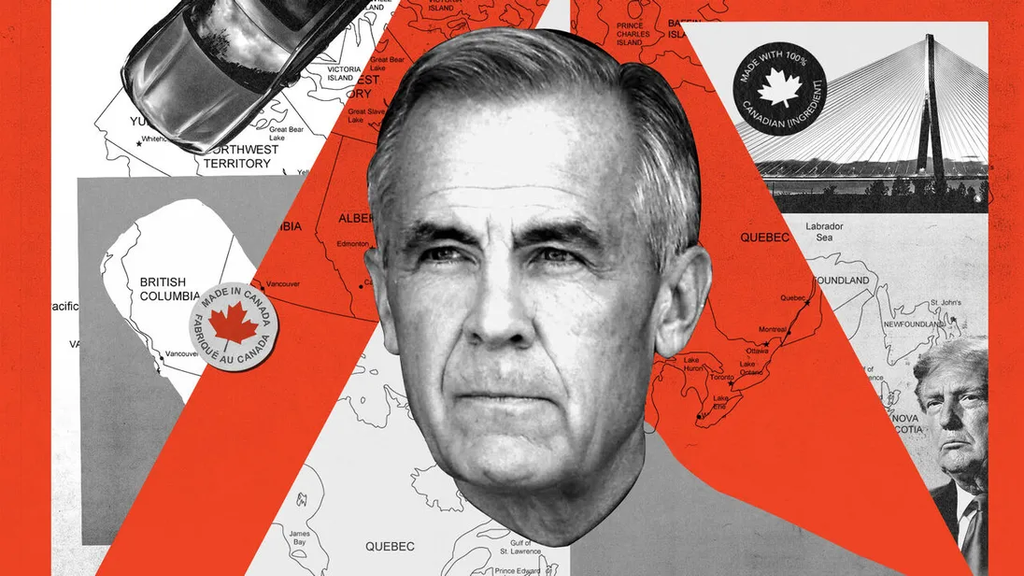
The bitter trade war between the United States and Canada just took a sudden turn. Canadian Prime Minister Mark Carney revealed that trade discussions with Donald Trump’s administration have picked up momentum in recent days. But Carney made one thing crystal clear to reporters: if the White House is suddenly eager to talk, it is not because Canada gave up ground. It is because Washington is finally moving closer to Ottawa’s position.
For months, the two neighbors have been locked in a tense economic fight marked by heavy border taxes, fiery speeches, and canceled meetings. Yet with the United States midterm elections taking place in November 2026, the political ground under Washington is shaking. American manufacturers are hurting, farmers along the northern border are furious, and Republican candidates in key battleground states are begging for relief.
The standoff has shifted from pure economic posturing to high-stakes political survival. As Washington begins offering tariff carve-outs and softening its tone, Carney is keeping his guard up.
What Just Happened Between Mark Carney and Donald Trump?
Speaking to reporters in Toronto, Prime Minister Mark Carney confirmed that cross-border trade talks have intensified after weeks of silence. Earlier in the year, talks had fallen apart completely when Canadian negotiators walked away from a deal that crossed national economic red lines. At the time, Carney bluntly described Washington’s proposal by saying American negotiators asked for too much and offered far too little.
In response, Donald Trump launched a series of aggressive 50 percent tariffs targeting roughly $20 billion in Canadian goods. He publicly blasted Canada, even going so far as to claim Canada wanted to become America’s 51st state.
The $0 Secret To Launching Your Entire Online Empire
Why pay hundreds every month for separate software? Build funnels, send emails, and make sales with Systeme.io completely free.
Get Started For $0Free Forever • No Credit Card Needed • Beginner-Friendly
Now, the tone coming out of the White House has suddenly shifted. During a campaign rally in Michigan, Trump told the crowd that Canada was ready to agree to terms and claimed an agreement would be reached very soon. In a follow-up interview with a local Detroit television station, Trump went further, suggesting a signed pact could happen before election day, even if final technical details take months to iron out.
When reporters asked Carney about Trump’s sudden optimism, the Canadian Prime Minister did not mince words. He explained that any actual progress at the negotiation table is happening because the Americans are finally stepping toward Canada’s demands. Carney also reminded the public of his past warning that Washington’s signatures are sometimes written in pencil rather than permanent ink. When asked if Trump would actually sign a binding deal in pen this time, Carney smiled and said honestly: “I don’t know that.”
The Midterm Election Panic: Why Washington Is Scrambling
The sudden change in tone from the Oval Office did not happen by accident. On November 3, 2026, American voters will head to the polls to decide who controls the United States Senate and House of Representatives.
The economic fallout from this trade war is landing squarely on key swing states that Republicans cannot afford to lose. Across states like Michigan, Wisconsin, Ohio, and Maine, industries rely heavily on cross-border supply chains. When raw materials from Canada get taxed at 50 percent, American factories face immediate cost spikes, and local jobs end up on the chopping block.
The internal political pressure on the White House has reached a boiling point. In Michigan, Republican Senate candidate Mike Rogers launched television advertisements directly challenging the administration’s approach. Rogers bluntly stated on camera that Canada is not our enemy and urged the White House to end the tariff war immediately.
At the same time, Republican Senator Susan Collins of Maine pressed the administration to ease taxes on Canadian goods used every day by local farmers, loggers, and small businesses. In direct response to that pressure, Washington quietly announced emergency tariff exemptions on dozens of Canadian products heading into Maine and other border areas.
When politicians face tight races, theoretical trade fights quickly lose out to practical pocketbook realities. With vulnerable candidates warning of a November backlash, the White House has found itself pushed toward a compromise it refused to entertain just two months ago. For more background on how election pressure is reshaping domestic races, you can see our coverage on why Republicans are panicking heading into the midterm elections.
The Story So Far: How the Trade War Exploded
To understand why this moment matters, it helps to look at how relations between Ottawa and Washington deteriorated so quickly throughout 2026.
The trade relationship between Canada and the United States has historically been one of the deepest and most stable in the world. Billions of dollars in goods cross the shared border every single week, ranging from automotive parts and crude oil to dairy, lumber, and aluminum.
Everything began to unravel in August 2026. After weeks of closed-door negotiations over trade rules, the White House presented Ottawa with an ultimatum. The American team demanded sweeping concessions on Canadian agricultural supply management, particularly dairy protections, while demanding priority access to Canadian critical minerals and energy reserves.
Ottawa refused to bow. Carney declared that protecting Canadian sovereignty and local industries was non-negotiable. When Ottawa walked away, the White House retaliated swiftly:
- Massive Border Taxes: The U.S. slapped 50 percent tariffs on $20 billion worth of Canadian imports, including dairy, alcohol, specialty metals, and motorcycles.
- Heated Public Rhetoric: Trump publicly labeled Canada an abuser of trade rules, declaring that America did not need Canadian products.
- Retaliatory Punches: Ottawa did not blink. Canada responded by rolling out $27.6 billion in targeted counter-tariffs on American goods, specifically aiming at consumer items produced in politically sensitive American congressional districts.
The swift retaliation hit American exporters hard. Canadian consumers began boycotting American-made goods, leaving U.S. produce and packaged foods sitting untouched on Canadian supermarket shelves. If you want to understand the true price tag of these measures on everyday families, read our breakdown on what the tariff war will really cost you.
Signed in Pen or Written in Pencil? The Trust Problem
Even as talks show signs of life, Canadian officials are proceeding with deep skepticism. Trade agreements are not just about warm words at a campaign stop; they require durable legal commitments that will not be tossed aside the moment political winds change.
Historically, trading partners have struggled with the unpredictable nature of modern American trade policy. Executive orders can be signed in minutes, bypassing legislative debate, and they can be revoked just as quickly. Carney previously captured this frustration when he observed that international partners often worry Washington signs its agreements in pencil.
That concern remains active today. Even though Trump told Michigan voters that a deal could come before the midterms, Canadian negotiators know that verbal promises on the campaign trail do not always translate into solid treaties.
Send, Spend & Hold Money Worldwide Without Hidden Fees
Transfer money internationally at the real exchange rate and hold 40+ currencies in one account.
Open a Wise AccountMid-market rate • Fast transfers • 40+ currencies
Ottawa’s primary objective is securing a permanent, predictable framework that shields Canadian businesses from sudden tariff threats. Canadian negotiators have made it clear that a temporary truce designed merely to help American candidates survive the midterm elections will not be enough. Ottawa is demanding:
- Clear Removal of Punitive Tariffs: Immediate and permanent cancellation of the 50 percent penalty tariffs on Canadian goods.
- Protection for Core Sectors: Absolute safeguards for Canadian agriculture, dairy farming, and cultural industries.
- Binding Dispute Mechanisms: Independent legal systems to resolve cross-border trade disputes without unilateral executive interference.
Until those elements are spelled out in legally binding language, Canadian leaders insist they will not sign anything.
Canada’s Strategic Pivot: Building Alliances Beyond Washington
One reason Canada has been able to maintain a firm bargaining position is that Prime Minister Carney did not spend the autumn waiting by the phone for Washington to call. Instead, Ottawa began actively diversifying its economic and security relationships across the Atlantic.
This week, Carney is hosting European Union leaders in Montreal for high-stakes economic summits. European Commission President Ursula von der Leyen has proposed creating an unprecedented associate member status for Canada within the European framework.
This move toward Europe represents a major strategic shift. By opening deeper trade routes, defense cooperation, and clean energy partnerships with the EU, Canada is systematically reducing its economic dependence on the United States market. You can explore the full details of this diplomatic maneuver in our report on Canada’s pivot to Europe and the push for EU associate status.
At the same time, domestic political hurdles that the White House hoped would weaken Canada’s resolve have failed to materialize. Earlier in the month, conservative factions in Alberta pushed for an independence referendum, hoping to use energy exports to build closer direct ties with the U.S. However, Canadian voters decisively rejected division, with over 76 percent voting to remain united within the Canadian federation.
With national unity solidified at home and fresh economic alliances forming in Europe, Carney arrived at the latest negotiation table holding a much stronger hand than Washington anticipated. For an in-depth look at how that vote shifted the geopolitical balance, read our analysis on how Alberta handed Mark Carney the leverage to stand up to Washington.
What Does This Mean for Everyday People?
Trade disputes often sound like abstract political chess games between politicians in capital cities. But when trade barriers go up, ordinary people feel the impact in their daily lives.
Higher Grocery and Household Bills
When tariffs were placed on cross-border agriculture and food items, grocery prices spiked on both sides of the border. Everything from dairy products to packaged snacks became noticeably more expensive. If a permanent agreement is reached, those border taxes will drop, helping bring everyday grocery bills back down.
Construction and Housing Prices
The tariff fight heavily targeted Canadian softwood lumber and steel products. In the United States, home builders warned that tariffs added thousands of dollars to the construction cost of a typical single-family home. A trade breakthrough would immediately reduce building material costs, offering much-needed relief to a tight housing market.
The $0 Secret To Launching Your Entire Online Empire
Why pay hundreds every month for separate software? Build funnels, send emails, and make sales with Systeme.io completely free.
Get Started For $0Free Forever • No Credit Card Needed • Beginner-Friendly
Auto Industry and Factory Jobs
The North American automotive sector does not operate in separate silos. A single car part often crosses the border between Ontario, Michigan, and Ohio multiple times before a vehicle is fully assembled. Heavy tariffs threaten this integrated manufacturing line. Easing these trade restrictions protects thousands of well-paying manufacturing jobs across the Great Lakes region.
Frequently Asked Questions (FAQs)
What did Mark Carney say about the U.S. trade talks?
Prime Minister Mark Carney stated that cross-border trade negotiations have intensified slightly. However, he emphasized that progress is happening because Washington is moving closer to Canada’s demands, not because Canada compromised on its core positions.
Why is Donald Trump softening his stance on Canada right now?
The primary driver is the upcoming U.S. midterm elections on November 3, 2026. Vulnerable Republican candidates in industrial and border states like Michigan and Maine have faced intense pushback from voters, farmers, and factory owners who are suffering from tariff costs.
What caused the trade war between Canada and the U.S. in 2026?
The conflict erupted in August 2026 after bilateral negotiations collapsed. Ottawa rejected U.S. demands that targeted Canadian dairy supply management and natural resource control. The U.S. retaliated with 50 percent tariffs on $20 billion of Canadian products, and Canada answered with $27.6 billion in counter-tariffs.
Is an official trade agreement guaranteed before the midterms?
No. While President Trump expressed confidence that a deal could be completed quickly, Prime Minister Carney noted that verbal optimism does not equal a legally binding document. Canada remains cautious until written terms meet all national standards.
How does Canada’s outreach to Europe affect its talks with the U.S.?
By negotiating closer economic and security ties with the European Union, Canada has created alternative markets for its energy, technology, and natural resources. This diversification gives Canadian negotiators greater leverage, preventing Washington from dictating terms.
The sudden movement in cross-border trade talks proves that economic reality eventually catches up with political bravado. As the midterm clock ticks down, the White House has realized that carrying a costly trade war into election day is a political liability it can no longer afford. Canada has held its ground, defended its industries, and broadened its global alliances. The coming days will show whether Washington is genuinely prepared to sign a fair, permanent agreement in pen, or if this latest push is merely a temporary pause to survive an election cycle.
