
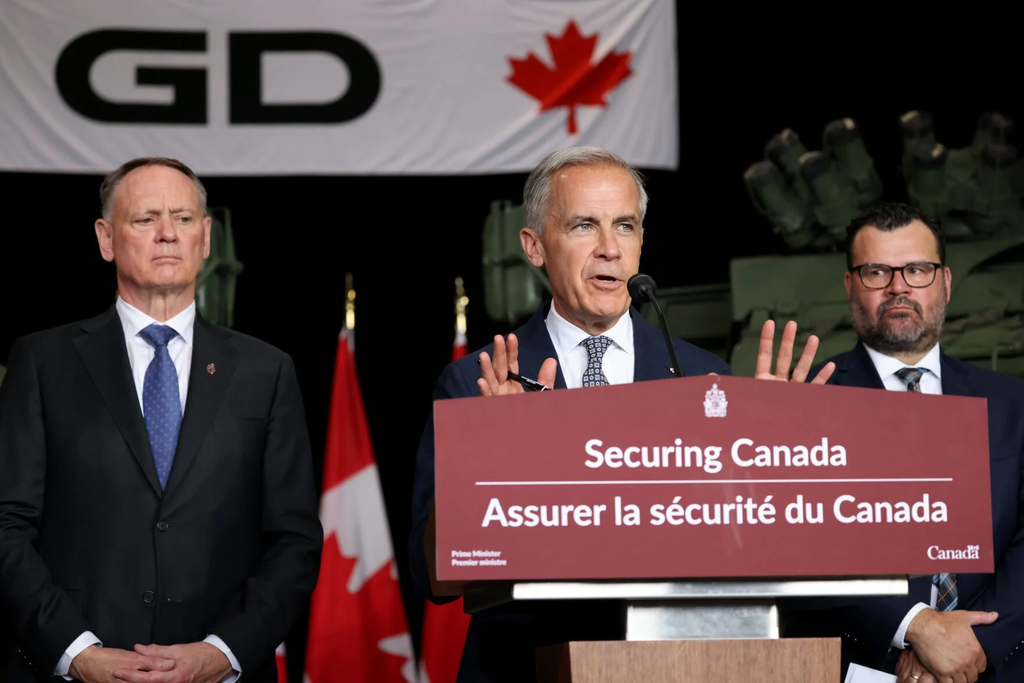
Canada stood right on the edge of a political earthquake, and the entire continent was watching. For months, whispers of a national breakup grew louder as Alberta debated whether to take its first formal steps away from the rest of the country. Pundits speculated, separatist groups held rallies, and south of the border, Donald Trump was watching closely, ready to exploit any crack in Canadian solidarity.
When the ballots were counted across the province, the answer came back with the force of a thunderclap. More than 75 percent of voters in Canada’s energy heartland cast their ballots to stay firmly inside the Canadian confederation. Only about 25 percent supported taking steps toward independence.
The outcome did more than settle a bitter domestic argument. It gave Canadian Prime Minister Mark Carney a massive political mandate at the exact moment he needed it most. With the United States pushing aggressive tariffs and Donald Trump openly floating threats about absorbing Canada into the American sphere, Carney now has the united backing of his country’s richest economic engine.
Here is the complete story behind how Alberta rejected the push to break away, why Trump’s trade threats backfired, and what this dramatic turning point means for the future of North American politics.
What Just Happened in Alberta?
The vote held across Alberta was not an immediate declaration of independence. Instead, it was an official referendum asking voters whether the provincial government should start the legal and constitutional process toward separation.
The $0 Secret To Launching Your Entire Online Empire
Why pay hundreds every month for separate software? Build funnels, send emails, and make sales with Systeme.io completely free.
Get Started For $0Free Forever • No Credit Card Needed • Beginner-Friendly
If the “leave” campaign had won, it would have kicked off formal negotiations with Ottawa and set the stage for an eventual binding vote on full independence. A win for separation would have thrown Canada into its deepest constitutional crisis since the Quebec referendum in 1995.
Instead, the result was a landslide victory for Canadian unity. From major urban centres like Calgary and Edmonton to rural farming towns and energy corridors, voters turned out in massive numbers. According to official reports from Associated Press, roughly three out of every four voters chose to remain.
Crowds of pro-Canada supporters gathered in cities across the province waved flags and celebrated the clear result. Thomas Lukaszuk, a former deputy premier who helped lead the cross-partisan Forever Canadian campaign, told cheering supporters that the vote proved Canada remains solid from coast to coast.
Meanwhile, leaders of separatist groups admitted the night was a major setback. While they managed to put the topic into daily headlines, their dream of pulling Alberta out of Canada crashed against a wall of voter caution, national pride, and economic reality.
Why Were People Talking About Leaving Canada?
To understand how things got this far, you have to understand the deep frustrations that have simmered in Western Canada for decades. Alberta is home to the world’s third-largest proven crude reserves. For generations, the province’s oil and natural gas have powered the Canadian economy, creating hundreds of thousands of well-paying jobs and generating billions of dollars in tax revenue.
Yet many Albertans have long felt that the federal government in Ottawa takes their wealth for granted while ignoring their concerns. This feeling is known locally as Western alienation.
Several key grievances fueled the separatist push over the past few years:
- Energy and Pipeline Battles: Many Albertans felt that strict federal environmental rules, carbon pricing, and delays in approving pipeline projects were choking their primary industry while other countries expanded production.
- Equalization Payments: Alberta contributes billions more to federal coffers than it receives back in direct federal spending. Many local workers felt that their hard-earned money was being sent east to fund social programs in provinces that opposed Alberta’s energy projects.
- Political Frustration: Because the majority of Canada’s parliamentary seats are concentrated in populous Ontario and Quebec, Albertans often feel that federal elections are decided before the votes in the West are even tallied.
- Cost of Living and Public Services: Everyday citizens were feeling squeezed by high living costs, housing shortages, and strained public services. Separatist campaigners argued that keeping all tax dollars inside the province would solve these problems overnight.
Alberta Premier Danielle Smith tapped directly into this resentment when she initially cleared the path for the referendum earlier this year. She argued that Albertans needed a chance to speak their minds and force Ottawa to pay attention.
However, when the moment finally arrived to choose between fixing Canada or walking away from it, voters made a clear distinction between being angry with federal policies and actually wanting to destroy the country.
The Trump Threat: How Washington Accidentally Saved Canadian Unity
If there is one person who unintentionally helped push Albertans back toward Ottawa, it was Donald Trump.
Following his return to the White House, Trump reignited fierce trade battles with America’s closest allies. Canada found itself directly in the crosshairs. Trump introduced sweeping tariff threats across Canadian goods, including steel, aluminum, lumber, and even automotive manufacturing.
Even more shocking to Canadians was Trump’s aggressive rhetoric. He repeatedly joked about Canada becoming the “51st state” of the United States and openly questioned whether Canada’s borders and sovereignty should be respected if trade demands were not met.
For separatist organizers, the chaos in Washington seemed like an opportunity. Some argued that an independent Alberta could bypass Ottawa and make a sweetheart bilateral trade and energy pact directly with the White House.
That gamble backfired completely.
Instead of seeing an opportunity, ordinary Albertans saw a massive threat. They recognized that a small, breakaway nation of four and a half million people would have zero leverage when sitting across the bargaining table from Donald Trump. Without the protection of a large, unified country, Alberta would be completely vulnerable to American economic bullying.
Send, Spend & Hold Money Worldwide Without Hidden Fees
Transfer money internationally at the real exchange rate and hold 40+ currencies in one account.
Open a Wise AccountMid-market rate • Fast transfers • 40+ currencies
Many voters across the political spectrum realized that fighting among themselves was reckless while a foreign superpower was threatening their livelihoods. As documented by reporting from CBC News, people who were critical of Ottawa still voted to remain because they understood that Canada is far stronger together.
Rather than driving a wedge between Alberta and the rest of the nation, the pressure from Washington triggered a powerful wave of Canadian patriotism.
Mark Carney Steps into the Ring
The referendum was the ultimate test of leadership for Canadian Prime Minister Mark Carney.
Carney did not come up through the traditional political machine. Before stepping into the country’s top political job, he served as Governor of the Bank of Canada and later as Governor of the Bank of England. He built an international reputation by steering major economies through brutal financial storms, including the 2008 global financial meltdown.
When the Alberta separation debate threatened to tear Canada apart, Carney took a direct and pragmatic approach. He did not lecture Albertans or dismiss their grievances as simple extremism. Instead, he traveled directly to the province, met with workers, energy leaders, and local communities, and made a steady, economic case for unity.
Carney reminded Albertans that their resources are essential to Canada’s future. He outlined plans for major national infrastructure, streamlined energy corridors, and practical economic partnerships that benefit both resource-producing provinces and the national economy.
His message was simple and direct: breaking Canada apart would cause catastrophic financial harm, destroy business confidence, and leave everyone poorer. But working together as an economic powerhouse gives Canada the scale, leverage, and resilience to go toe-to-toe with anyone in the world, including Donald Trump.
When the results came in, Carney spoke to reporters in Ottawa with obvious relief and renewed confidence. He emphasized that Albertans had chosen to build together, take care of each other, and face international headwinds as one united nation.
Why This Vote Changes Everything for the Trump Trade War
The Alberta vote is not just a feel-good domestic story. It completely reshapes the balance of power between Ottawa and Washington.
Donald Trump’s negotiation strategy has always relied on division. In trade disputes, his administration consistently attempts to isolate sectors, pit regions against each other, and pressure foreign governments when they look weak or distracted at home.
The $0 Secret To Launching Your Entire Online Empire
Why pay hundreds every month for separate software? Build funnels, send emails, and make sales with Systeme.io completely free.
Get Started For $0Free Forever • No Credit Card Needed • Beginner-Friendly
If Alberta had voted to begin separation, Carney’s government would have been paralyzed. Canada would have been bogged down in emergency constitutional talks, legal battles over land and debts, and political infighting. Trump would have had free rein to push brutal tariffs, knowing the Canadian federal government was fighting for its own survival.
Because Albertans rejected separation so convincingly, the script has flipped completely:
1. Canada Speaks with One Voice on Energy
The United States relies heavily on Canadian crude oil, natural gas, uranium, and electricity. Had Alberta broken away, cross-border energy agreements would have been thrown into total chaos. With Alberta firmly committed to Canada, Carney controls the single most critical energy spigot supplying American refineries and industrial hubs. That gives Ottawa immense leverage in trade talks.
2. Carney Gains Massive Domestic Backing
Political leaders who have strong support at home are much harder to bully internationally. By securing a decisive victory on national unity, Carney has proven that Canadians are willing to stand together when external pressures mount. He can sit down at the bargaining table with the White House knowing that his country is not on the verge of fracturing.
3. Cross-Border Trade Alliances Grow Tighter
Canada is the number one export destination for dozens of American states. With domestic uncertainty off the table, Carney can rally business groups, state governors, and congressional representatives across the American border who rely on smooth, tariff-free trade with a stable Canada.
According to international coverage from The Economic Times, the outcome removes the biggest cloud hanging over Canada’s sovereign stability and puts Carney in an unusually strong position to counter unilateral trade demands.
The Reality Check: What Separatists Got Wrong
Separation always sounds appealing to frustrated voters when it is sold as a simple protest slogan. But when people examined what independence would look like in daily practice, the idea fell apart quickly.
Here are the harsh economic and legal hurdles that convinced the silent majority in Alberta to vote no:
Being Landlocked
Alberta has no ocean coastline. Under international law, landlocked nations have rights of transit, but getting energy products to foreign markets requires pipelines and rail through neighbouring territories. An independent Alberta would still need permission from Canada or the United States to move its oil to tidewater. Leaving Canada would have made Alberta’s pipeline access harder, not easier.
Indigenous Treaties
The vast majority of Alberta’s land is governed by historic Numbered Treaties signed between First Nations and the British and Canadian Crown. First Nations leaders made it abundantly clear throughout the campaign that their treaties are with Canada, not an independent Alberta. They warned that any attempt to split the province away from Canada without their consent would violate international law and lead to immediate legal freezes across natural resource projects.
Currency, Debt, and Banking
Separatist leaders never presented a clear plan for what money an independent Alberta would use. Setting up a new central bank and currency takes years and creates massive inflation risks. Relying on the Canadian or US dollar without having a seat on their central bank boards would leave Alberta completely powerless over its own interest rates. On top of that, an independent Alberta would have had to take on its proportional share of Canada’s multi-billion-dollar national debt.
Business and Job Flight
Major energy corporations, pension funds, and foreign investors hate uncertainty. A victory for separation would have triggered immediate credit downgrades, spiked borrowing costs for local businesses, and caused international capital to flee the province.
When ordinary workers, small business owners, and retirees weighed those risks against staying in one of the most stable and prosperous countries on earth, the choice was straightforward.
How Danielle Smith and Alberta’s Leadership Are Reacting
The referendum outcome leaves Alberta Premier Danielle Smith in a delicate position.
Smith walked a tightrope for months. She wanted to harness voter anger to squeeze concessions out of Ottawa without driving the province over an economic cliff. Following the vote, she formally pledged to honor the results, declaring that the province had spoken clearly and that a second referendum on separation is off the table.
However, Smith also cautioned that Ottawa should not mistake this vote for total satisfaction. Albertans voted to keep the country together, but they still want real reforms:
- They want federal environmental regulations to respect provincial jurisdiction over natural resources.
- They want major pipeline and energy infrastructure fast-tracked so Canadian energy can reach international buyers.
- They want a fair review of how federal transfer payments are calculated.
- They want more autonomy over local policing, pensions, and immigration targets.
Intergovernmental Affairs Minister Dominic LeBlanc stated after the vote that the federal government is fully committed to working collaboratively with Alberta’s leadership. The ball is now in Ottawa’s court to show Albertans that staying in Canada was the right choice not just in theory, but in their bank accounts and daily lives.
What This Means for Everyday Citizens
It can be easy to view this referendum as a game played by politicians and corporate executives. But the ripple effects touch everyday people across Canada and beyond.
For Alberta Families
The vote brings immediate stability. Families do not have to worry about their pensions losing value, their mortgages skyrocketing due to provincial credit downgrades, or their Canadian passports being revoked. It allows the local economy to focus on job creation, innovation, and resource development without the constant shadow of political turmoil.
For the Canadian Energy Sector
Energy companies can now move forward with long-term capital investments knowing that the rules of the game will not be rewritten by a messy separation. Global investors who were sitting on the sidelines waiting to see if Alberta would fracture can now deploy capital with confidence.
For North American Consumers
With Canadian unity affirmed, supply chains across the border remain predictable. Canada and the United States share one of the largest bilateral trading partnerships in human history. Keeping that partnership intact prevents artificial shortages, stabilizes cross-border energy flows, and helps protect workers on both sides of the border from unnecessary economic pain.
Frequently Asked Questions (FAQs)
What was the Alberta referendum question about?
The referendum was not an immediate declaration of independence. It asked Albertans whether the provincial government should start formal negotiations and legal procedures toward separation from Canada. Voting yes would have led to constitutional talks and potentially a second, final vote on independence down the road.
What were the final results of the vote?
More than 75 percent of voters chose to remain in Canada, while roughly 25 percent voted in favor of starting the separation process. Voter turnout was remarkably high across both urban and rural areas.
Why did Donald Trump play such a big role in this vote?
Trump’s aggressive trade tariffs and his public jokes about absorbing Canada as the “51st state” made many Albertans realize the danger of breaking away. Voters understood that an independent Alberta would be too small to defend itself against American economic pressure, making unity with the rest of Canada the safer and smarter choice.
How does this vote help Prime Minister Mark Carney?
The decisive unity vote removes a major constitutional headache for Mark Carney and gives him a united country to represent. Instead of spending his time managing a national breakup, he can negotiate with foreign leaders from a position of economic and political strength.
Does this mean the Alberta separatist movement is gone forever?
Separatist sentiment will likely never vanish entirely. A core group of voters will always feel alienated from the federal government. However, this overwhelming result puts any official talk of separation on ice for the foreseeable future and forces political leaders to seek solutions within Canada.
What happens next between Alberta and Ottawa?
Premier Danielle Smith and Prime Minister Mark Carney will focus on practical negotiations. Ottawa will need to address Western concerns about energy project approvals, taxes, and federal transfers to make sure the goodwill earned during this campaign is not wasted.
The Road Ahead: A Stronger, More Resilient Canada
When the pressure was on, Albertans sent an unmistakable message to the world: Canada is not for sale, and it is not breaking apart.
The decision to stay reflects a grounded understanding of how modern global power works. In an era dominated by trade disputes, tariff wars, and geopolitical friction, small regions that break away quickly discover how harsh the international arena can be. By choosing unity, Alberta preserved its own economic stability and gave Canada the muscle it needs to hold its ground against outside pressure.
For Mark Carney, this is a career-defining moment. He has shown that calm, practical leadership can cut through intense political noise and keep a sprawling, diverse federation together. With Alberta firmly by his side, he can walk into upcoming trade negotiations with the United States ready to defend Canadian workers, protect Canadian resources, and push back against Donald Trump’s aggressive trade agenda.
The debate over federal policy will never stop, and that is a healthy part of any democracy. But the fundamental question of whether Alberta belongs in Canada has been answered with absolute clarity. Canada moves forward united, resilient, and ready to face whatever comes next.
