
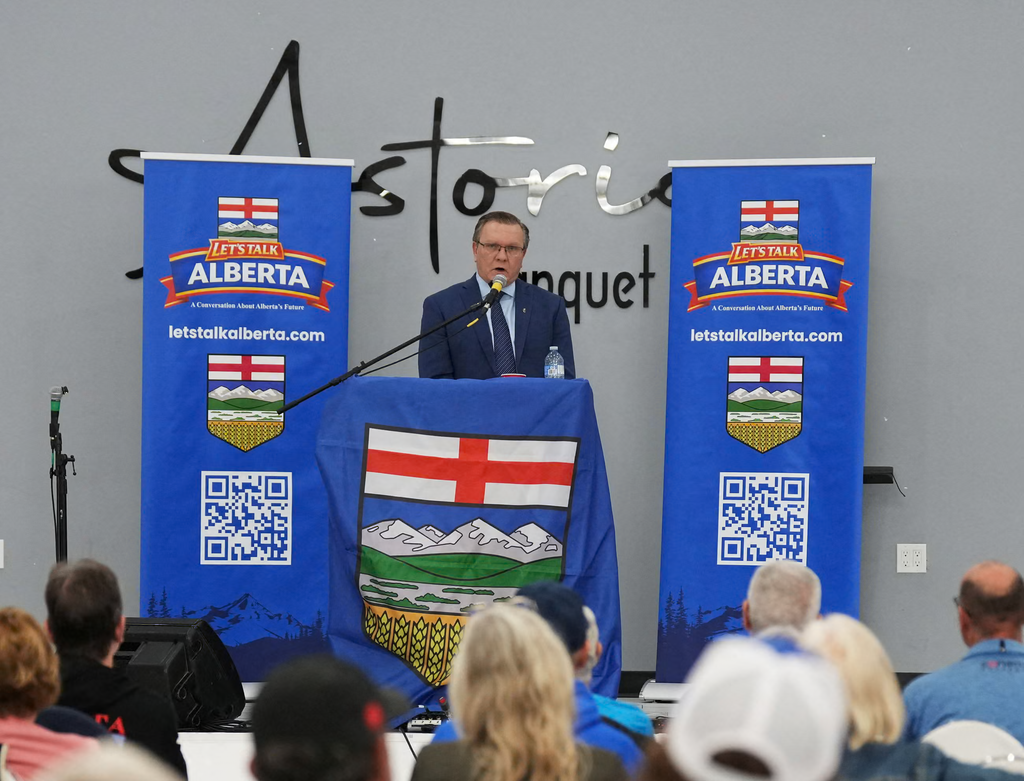
Millions of Albertans are preparing to cast their ballots in a historic provincial referendum, but digital watchdogs say foreign political operators have crashed the party. Independent disinformation researchers have detected a dramatic spike in coordinated online influence campaigns originating south of the border, all designed to push Alberta toward breaking away from Canada.
These digital networks are pumping thousands of inflammatory posts into local social media feeds every single day. Instead of letting Albertans debate their economic future among themselves, foreign actors are spending serious money to turn up the volume on regional anger, promote talk of U.S. annexation, and plant baseless doubts about the integrity of the provincial election system.
With polling booths opening across the province, the discovery has triggered urgent warnings from national security experts, political analysts, and election monitors. The battle for Alberta’s future is no longer just a domestic argument between Edmonton and Ottawa. It has turned into a high-stakes digital proxy war.
The Hard Evidence: How U.S. Political Networks Infiltrated Alberta Feeds
The findings come from independent research organizations, including researchers connected to the Centre for Media, Technology and Democracy, who have been tracking political propaganda across Canadian digital networks. For months, foreign activity surrounding the western Canadian separation movement followed an expected pattern dominated by offshore bot farms.
That dynamic shifted dramatically as voting day drew near. Data analyzed by digital monitors revealed that automated and coordinated accounts originating from the United States suddenly multiplied across social networks like X and Facebook. By late September, the American share of foreign separatist messaging directed at Albertans surged to roughly 24 percent, eating into traffic streams previously dominated by Russian bot networks.
The $0 Secret To Launching Your Entire Online Empire
Why pay hundreds every month for separate software? Build funnels, send emails, and make sales with Systeme.io completely free.
Get Started For $0Free Forever • No Credit Card Needed • Beginner-Friendly
Overall volume numbers make the scale of the operation impossible to ignore. Researchers track tens of thousands of targeted political messages flooding the province each month, which breaks down to hundreds of automated or foreign-directed posts every few hours.
The accounts behind this content do not behave like genuine voters sharing personal thoughts. They operate around the clock, reuse identical sentence structures, blast coordinated hashtags, and aggressively amplify fringe separatist creators to distort what normal political debate looks like in Alberta communities.
What the Messages Actually Say: Annexation, Oil Grievances, and “Stolen Vote” Rumors
The content filling Albertan news feeds is engineered to trigger emotional reactions and deepen political resentment. A significant portion of the material takes legitimate regional frustrations—such as pipeline development, energy regulation, and federal taxation—and twists them into apocalyptic warnings about staying inside confederation.
Even more striking is the open push for Alberta to cut ties with Canada entirely and align with Washington. Online accounts linked to American right-wing networks and political action committees have started aggressively promoting the idea of Alberta becoming the 51st American state.
This annexation rhetoric became so loud that federal conservative leader Pierre Poilievre felt compelled to draw a line in the sand, publicly rejecting the idea and declaring to American audiences that Canada will never be the 51st state.
Beyond annexation, foreign campaigns have imported classic American election denial tactics. Researchers observed an immediate surge in baseless claims alleging that Elections Alberta is preparing to steal the referendum through mail-in ballots and special advance voting procedures.
These posts borrow the exact vocabulary used during recent U.S. presidential races, claiming without evidence that ballots are being discarded or that non-citizens are voting in droves. The goal is straightforward: if the independence initiative loses at the ballot box, foreign influencers want voters to believe the outcome was rigged from the start.
How Did We Get Here? Understanding the Alberta Referendum
To understand why foreign influence operations found fertile ground in the province, it helps to examine the real political battle happening on the ground. Western alienation has existed for decades, rooted in the belief that Ottawa ignores the economic contributions and energy potential of western provinces while collecting substantial federal tax revenue.
The current referendum asks voters whether Alberta should stay a Canadian province or begin the formal constitutional process to negotiate separation from the federation. It also features a slate of additional questions dealing with provincial control over immigration, provincial police powers, and mandatory citizenship checks for local elections.
Separatist organizations gathered hundreds of thousands of petition signatures to push the question onto the official ballot. Despite facing court challenges regarding treaty rights and consultation with First Nations, the provincial government pushed forward with the public vote.
The movement has developed deep roots. Grassroots separatist organizers have made it clear that a single referendum loss will not slow them down, and as political reporters have documented, Alberta independence leaders refuse to back down even if the referendum fails. That stubborn momentum has made the province an attractive target for outside groups eager to weaken Canadian national unity.
The Pushback: “Forever Canadian” and the Battle for National Unity
While foreign-boosted separatist voices have dominated digital algorithms, opposition inside Alberta remains formidable. The “Forever Canadian” remain campaign, organized by former provincial politicians and civic leaders, collected more than 400,000 verified signatures from residents who want Alberta to remain inside the Canadian confederation.
Federal leaders have also scrambled to bridge the divide before voting day. Prime Minister Mark Carney has spent considerable time in western communities attempting to cool regional tempers, directly holding high-stakes meetings with local figures. You can read more about how Mark Carney met Alberta remain campaigners in Banff to coordinate messaging around national unity and economic stability.
Carney’s team has argued that splintering Canada would trigger immediate economic chaos, create trade barriers between Canadian provinces, and strand Alberta’s landlocked energy resources without guaranteed coastal access.
Federal officials are also pointing out that breaking away would leave Alberta entirely at the mercy of international trade battles without the negotiating power of a G7 nation behind it.
Send, Spend & Hold Money Worldwide Without Hidden Fees
Transfer money internationally at the real exchange rate and hold 40+ currencies in one account.
Open a Wise AccountMid-market rate • Fast transfers • 40+ currencies
Why Do U.S. Political Groups Care About an Alberta Referendum?
Why would American political groups, donors, and digital strategists spend time and money interfering in a Canadian provincial vote? The answer comes down to energy, trade leverage, and ideological alignment.
Alberta sits on the third-largest proven crude oil reserve in the world. For certain industrial and political factions in the United States, an independent or U.S.-aligned Alberta offers unrestricted access to heavy crude, natural gas, and critical minerals without having to deal with federal Canadian climate policies or export regulations.
The timing of this interference also connects directly to broader cross-border tensions. Washington and Ottawa have been locked in escalating disputes over trade policy, retaliatory duties, and cross-border shipping. As trade fights intensify, Canadian households are already learning what the US-Canada tariff war will really cost them in everyday living expenses.
Federal leaders have responded by promising domestic safeguards, and Ottawa has gone to great lengths explaining how Mark Carney is promising government support for Canadians as the trade war deepens. A divided, fractured Canada with a breakaway energy powerhouse gives American negotiators massive leverage over North American supply chains.
The Modern Propaganda Playbook: Bots, AI Deepfakes, and Micro-Targeting
Foreign influence in 2026 no longer looks like clumsily written emails or obvious spam accounts. Today’s disinformation operations use sophisticated digital tools designed to blend into everyday social interactions seamlessly.
Disinformation researchers have flagged three primary tactics being used to sway Alberta voters:
- Synthetic Video and Audio: Campaign monitors have tracked hyper-realistic, AI-generated video clips mimicking Canadian political figures and news broadcasts. Some of these clips show fabricated statements claiming that ballots have been tampered with or that federal troops are preparing to monitor provincial polling stations.
- Coordinated Micro-Targeting: Foreign advertising accounts buy granular digital ad placements targeting specific demographic groups in rural Alberta communities, feeding them steady diets of fear-based content about impending federal regulations.
- Astroturfing Political Momentum: By using thousands of automated profiles to like, comment on, and share specific separatist posts within seconds of publication, influence networks trick platform algorithms into recommending radical content to regular users who would not normally seek it out.
The sophistication of these campaigns has exposed major gaps in how national security agencies monitor domestic digital threats. Security analysts have repeatedly pointed out similar problems during civil unrest, noting in past investigations into far-right port protests why police are being urged to fix intelligence gathering when dealing with networked, online-driven political agitation.
Real Harm: How Foreign Meddling Corrupts Local Democracy
When foreign political actors manipulate domestic voting debates, ordinary citizens lose the ability to have an honest discussion about their own communities.
Real Albertans have genuine disagreements about balancing the provincial budget, managing natural resource revenues, funding local hospitals, and protecting provincial jurisdiction under the Canadian Constitution. These are serious, complex issues that require calm civic dialogue and accurate facts.
When foreign influence networks pour millions of algorithmic impressions into the conversation, nuanced local debates get drowned out by manufactured outrage. Neighbors end up fighting over fabricated stories about voter fraud that never occurred, while actual policy proposals get buried beneath sensational viral headlines.
The $0 Secret To Launching Your Entire Online Empire
Why pay hundreds every month for separate software? Build funnels, send emails, and make sales with Systeme.io completely free.
Get Started For $0Free Forever • No Credit Card Needed • Beginner-Friendly
Worse still, foreign-driven election denial undermines public trust in the basic machinery of local democracy. Once voters believe their ballots do not count, democratic institutions suffer long-lasting damage that takes decades to repair.
How to Spot Political Disinformation Before You Cast Your Vote
Protecting yourself from foreign digital influence does not require a degree in computer science. It simply requires a healthy dose of skepticism whenever a piece of content tries to make you furious.
Here are a few practical habits to keep in mind when scrolling through political content before an election:
- Check the Original Source: If a post makes an outrageous claim about election rigging, candidate corruption, or secret government plots, search for confirmation from reputable news organizations like CBC News or CTV News. If only anonymous social accounts are talking about it, the story is likely fabricated.
- Examine Account Profiles: Automated bot accounts often have randomly generated strings of numbers in their handles, were created very recently, post dozens of times an hour, and have virtually no personal photos or organic interactions with friends.
- Rely on Official Election Portals: For voting locations, advance ballot rules, and identification requirements, go straight to official sources like the Elections Alberta Portal rather than trusting social media graphics or comment sections.
- Watch for Emotional Triggers: Disinformation campaigns are intentionally designed to make you angry, afraid, or panicked. If a post causes an immediate emotional spike, step away from your screen before sharing it with family and friends.
Frequently Asked Questions
What is the Alberta referendum actually about?
The main referendum question asks Albertans whether the province should remain part of Canada or begin the constitutional process to hold a binding vote on separating from the Canadian federation. The ballot also includes nine additional policy questions addressing provincial control over immigration, provincial policing powers, and citizenship requirements for local elections.
Did researchers prove that the U.S. government is running these campaigns?
No. The research identifies the physical and digital origin of the influence campaigns as coming from private American political action committees, partisan media networks, conservative interest groups, and coordinated commercial bot operations located in the United States. There is no evidence indicating official U.S. government intelligence involvement.
Why are foreign bot farms targeting Alberta instead of a federal election?
Provincial referendums generally have smaller overall voting pools than national elections, meaning that moving a few tens of thousands of votes can significantly alter the outcome. Additionally, Alberta’s vast oil reserves and ongoing cross-border trade negotiations give outside financial interests a direct economic stake in provincial politics.
Is it illegal for foreign groups to run political ads in Canadian provincial votes?
Canadian provincial and federal election laws place strict caps and prohibitions on foreign third-party spending. However, decentralized digital influence networks, offshore bot farms, and algorithmic amplification on global platforms like X and Facebook often operate in legal gray zones outside the reach of domestic regulators.
Will Alberta automatically leave Canada if the separation question passes?
No. A winning vote on the referendum question does not legally trigger an immediate declaration of independence. Instead, it mandates the provincial government to initiate formal constitutional negotiations with the federal government and other Canadian provinces to discuss terms and determine whether a final, binding referendum on separation can take place.
The sudden wave of American-based influence campaigns targeting Alberta’s referendum serves as an urgent reminder of how vulnerable modern elections are to digital sabotage. When outside political groups weaponize social media algorithms to distort local issues, the real victims are everyday voters trying to make informed decisions for their families and communities. The ultimate defense against foreign interference is an informed, critical public that demands verified facts, questions viral outrage, and protects the integrity of its democratic vote.
