
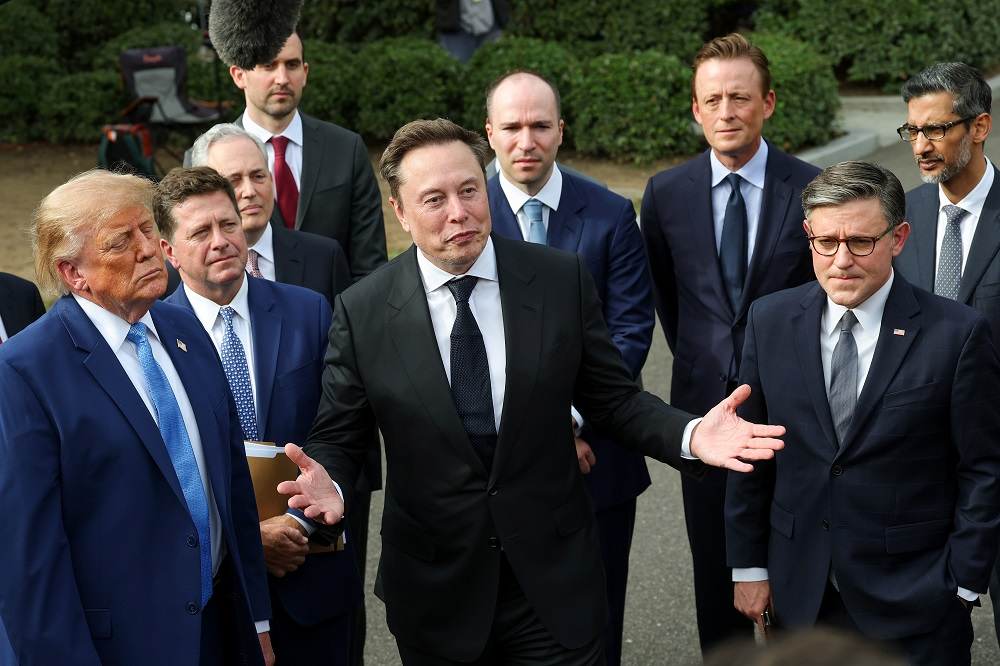
Elon Musk has sparked a massive political debate across North America after publicly stating that Quebec should separate from Canada. The billionaire entrepreneur posted his comments on social media, adding that the provinces of Alberta and Saskatchewan should break away from the federal government as well. His statements immediately triggered strong reactions from Canadian politicians, political analysts, and everyday citizens who are now debating national unity and foreign interference.
The unexpected commentary comes during a sensitive political moment for Canada. Quebec recently completed a historic provincial election, while broader trade tensions between Canada and the United States continue to strain cross-border relations. As political leaders defend the country’s sovereign future, many citizens are left asking why the world’s wealthiest individual decided to jump into Canadian constitutional politics.
Elon Musk Causes Online Storm Over Quebec Separation
The entire controversy started when Elon Musk replied to a social media post discussing the recent Quebec provincial election. The original post highlighted statements made by Quebec’s newly elected premier-designate, Paul St-Pierre Plamondon, who declared that his goal of an independent Quebec would be realized one day.
Musk responded directly to the post with a brief statement saying, “Good. Quebec should separate.” Shortly after, he added another comment claiming that Quebecers would be better off on their own and suggested that Alberta and Saskatchewan should separate too.
Within hours, the comments received tens of thousands of likes, reposts, and comments from users across Canada and around the world. While some online followers supported his perspective, many Canadians expressed deep frustration that an American tech tycoon was commenting on internal Canadian unity.
The $0 Secret To Launching Your Entire Online Empire
Why pay hundreds every month for separate software? Build funnels, send emails, and make sales with Systeme.io completely free.
Get Started For $0Free Forever • No Credit Card Needed • Beginner-Friendly
How the Debate Started: Quebec’s Historic Election
To understand why Musk’s comments triggered such an intense reaction, it helps to look at what recently happened in Quebec politics. Voters in Quebec went to the polls on October 5, 2026, resulting in a dramatic comeback for the Parti Québécois (PQ). Under the leadership of Paul St-Pierre Plamondon, the party secured 59 seats, winning a minority government.
The Parti Québécois is historically known for promoting Quebec sovereignty and advocating for independence from Canada. During his victory speech, St-Pierre Plamondon reaffirmed his commitment to making Quebec an independent nation, exciting long-time sovereigntists across the province. You can read more about how the provincial election unfolded in our detailed report on Quebec’s separatist leader victory.
Despite his long-term goal of independence, St-Pierre Plamondon clarified in the days following the election that holding a referendum is not his immediate priority. Instead, his new administration plans to focus first on pressing local challenges, including addressing homelessness, capping salaries for government executives, and reviewing public spending. He also noted that any potential referendum would not take place in the immediate future.
Prime Minister Mark Carney and Canadian Leaders Hit Back
Canadian leaders were quick to respond to Musk’s public declarations regarding provincial separation. Canadian Prime Minister Mark Carney delivered a firm message during a national press briefing, making it clear that foreign figures have no say in the nation’s political structure.
Carney emphasized that Canada’s democratic future will be decided solely by Canadian citizens through their democratic institutions. His response reflected a widespread feeling among political leaders in Ottawa that foreign commentary on Canadian sovereignty should be rejected regardless of who makes it. Carney’s firm stance aligns with his broader leadership approach, which has seen strong public backing as highlighted in our coverage of PM Mark Carney rejecting U.S. trade pressures.
Reactions from provincial leaders came just as quickly. Premier Scott Moe of Saskatchewan responded directly to Musk on social media with a simple, one-word reply: “No.”
In Alberta, Premier Danielle Smith also addressed the situation. Speaking to reporters in Edmonton, Smith explained that while her province has faced long-standing economic grievances with federal policies, separatist sentiment in Alberta has softened recently. She pointed out that federal and provincial officials have been working together more constructively to address local concerns, reducing the appetite for separation. Alberta campaigners continue to push for national unity, as explored in our report on Mark Carney meeting Alberta Remain campaigners.
Why Elon Musk Cares About Canadian Politics
Many people wonder why Elon Musk takes such an active interest in Canadian political matters. Although he is widely recognized as an American business titan, Musk actually holds Canadian citizenship through his mother, Maye Musk, who was born in Regina, Saskatchewan. Musk spent time living and studying in Canada during his youth before moving to the United States to build his technology companies.
This personal connection is one reason Musk regularly comments on Canadian news events. In recent years, he has repeatedly shared his thoughts on Canadian government policy, immigration laws, and economic decisions.
His latest comments on provincial separation reflect his broader interest in political decentralization. Musk frequently speaks about reducing central government oversight and encouraging local governance. However, critics argue that using his global media platform to encourage the breakup of a democratic nation crosses a line into inappropriate commentary.
Could Quebec Really Separate From Canada?
The idea of Quebec becoming an independent country is not new. Quebec has held two official referendums on sovereignty in modern history, once in 1980 and again in 1995.
The 1995 referendum was exceptionally close, with the option to remain in Canada winning by less than one percentage point. Since that time, national unity discussions have fluctuated, but full independence has remained a central goal for sovereigntist parties like the Parti Québécois.
Political experts emphasize that separating a province from Canada is an extraordinarily complicated process. Political science scholars at McGill University note that current support for Quebec independence sits around 30 percent among residents. Many voters backed the Parti Québécois in the recent election out of a desire for new leadership and administrative change rather than a desire to form a new country immediately.
Legal and practical realities make separation very difficult:
- Constitutional Requirements: Any attempt by a province to leave Canada requires complex negotiations, constitutional amendments, and formal approval steps outlined by the Supreme Court of Canada.
- Economic Questions: An independent province would need to establish its own monetary system, trade agreements, international border controls, and national defense structures.
- Indigenous Rights: Indigenous leaders across Quebec have repeatedly stated that their traditional lands cannot simply be removed from Canada without their full consent and consultation. Learn more about these legal hurdles in our analysis on Indigenous leaders and Quebec separation.
- National Defense and Alliances: Leaving Canada would mean renegotiating memberships in international bodies like NORAD and NATO.
Official reports covered by major outlets like CTV News Montreal confirm that while the political debate is passionate, Quebec remaining part of Canada remains the baseline reality.
Send, Spend & Hold Money Worldwide Without Hidden Fees
Transfer money internationally at the real exchange rate and hold 40+ currencies in one account.
Open a Wise AccountMid-market rate • Fast transfers • 40+ currencies
What Everyday Canadians and Quebecers Are Saying
Online reaction across Canada to Musk’s endorsement of separatism was swift and mixed, though predominantly critical. On social media platforms, French-language and English-language users shared vastly different opinions regarding his statements.
In Quebec, many sovereigntists were hesitant to embrace Musk’s endorsement. Several commentators pointed out that having a controversial foreign billionaire support their movement could actually hurt their credibility with moderate voters. Other users openly mocked the comments, telling Musk to focus on space travel rather than Canadian geography.
Among English-speaking Canadians, many raised practical questions regarding how separation would even work. Users asked questions about whether a separated Quebec would continue using the Canadian dollar or how travel between Atlantic Canada and Ontario would be affected if a new country sat between them.
Despite differences of opinion, political figures across party lines reaffirmed that Canada will remain united against outside pressure. Opposition leaders have similarly emphasized that Canada will never give up its independence or stability, as noted in coverage regarding Pierre Poilievre asserting Canada’s sovereignty.
What Alberta and Saskatchewan Are Doing Right Now
Musk’s decision to bring Alberta and Saskatchewan into the separation conversation highlighted ongoing political developments in Western Canada. Western provinces have long expressed frustration over federal natural resource policies, energy regulations, and tax distribution.
Alberta is scheduled to hold a provincial vote on October 19 regarding its relationship with the federal government and whether to pursue future autonomy measures. However, Premier Danielle Smith has publicly reaffirmed her commitment to staying within Canada, pointing out that recent dialogues with Ottawa have yielded positive results for local industries.
Similarly, Saskatchewan has focused on strengthening its regional economy while remaining a central pillar of Canadian agriculture and resource production. Premier Scott Moe’s direct rejection of Musk’s suggestion demonstrated that Western leadership prefers working within the Canadian system rather than attempting a high-risk separation.
According to reporting from The Independent, federal and provincial governments are actively cooperating to ensure long-term stability and economic growth across all regions.
Why This Moment Matters for North America
This public feud between Elon Musk and Canadian leadership comes at a time when Canada is navigating economic challenges and trade disputes with the United States. Federal policymakers in Ottawa are currently managing international trade policy, economic growth strategies, and cross-border commercial relationships.
When major global business leaders weigh in on national unity during economic negotiations, it adds extra attention to existing policy debates. Prime Minister Carney’s government has continually reassured the public that Canadian economic stability remains strong, as detailed in our analysis on Mark Carney promising government support during trade tensions.
The $0 Secret To Launching Your Entire Online Empire
Why pay hundreds every month for separate software? Build funnels, send emails, and make sales with Systeme.io completely free.
Get Started For $0Free Forever • No Credit Card Needed • Beginner-Friendly
The conversation triggered by Musk highlights how quickly social media comments can influence mainstream political discussions. While social media posts create quick headlines, the day-to-day governance of Canada remains grounded in formal democratic processes, constitutional law, and constructive dialogue between federal and provincial leaders.
Frequently Asked Questions (FAQs)
Why did Elon Musk say Quebec should separate from Canada?
Elon Musk made the comments on his social media platform X in response to news about Quebec’s newly elected premier-designate, Paul St-Pierre Plamondon, who expressed his long-term dream of Quebec independence. Musk stated that Quebec and Western provinces like Alberta and Saskatchewan would be better off separating.
Is Quebec officially separating from Canada?
No. Quebec is not separating from Canada. Although the Parti Québécois won a minority government in October 2026, Premier-designate Paul St-Pierre Plamondon stated that an independence referendum is not an immediate priority for his government.
How did Canadian Prime Minister Mark Carney react to Musk’s statements?
Prime Minister Mark Carney pushed back strongly, stating that Canada’s democratic future will be decided strictly by Canadian citizens, not by foreign tech billionaires or online commentators.
What did leaders in Alberta and Saskatchewan say about separating?
Saskatchewan Premier Scott Moe rejected Musk’s comments with a simple “No.” Alberta Premier Danielle Smith stated that separatist sentiment in her province has weakened and affirmed her commitment to remaining part of Canada while working with the federal government on shared goals.
Can a Canadian province legally separate on its own?
No. Under Canadian constitutional law and Supreme Court rulings, a province cannot unilaterally declare independence. Separation would require extensive constitutional negotiations, democratic referendums, federal approval, and complex agreements regarding national debt, borders, Indigenous land rights, and treaties.
The public reaction to Elon Musk’s comments shows that while social media can easily stir up political debate, the future of Canada belongs entirely to its citizens. Canadian federal and provincial leaders remain focused on delivering economic growth, strengthening public services, and protecting national unity through democratic decision-making.
To learn more about our team and mission, visit our About Us page or reach out directly through our Contact Us page. Stay connected with our latest updates, breaking news analysis, and viral stories by following our official social media channels on Instagram, Facebook, and X (formerly Twitter).
