
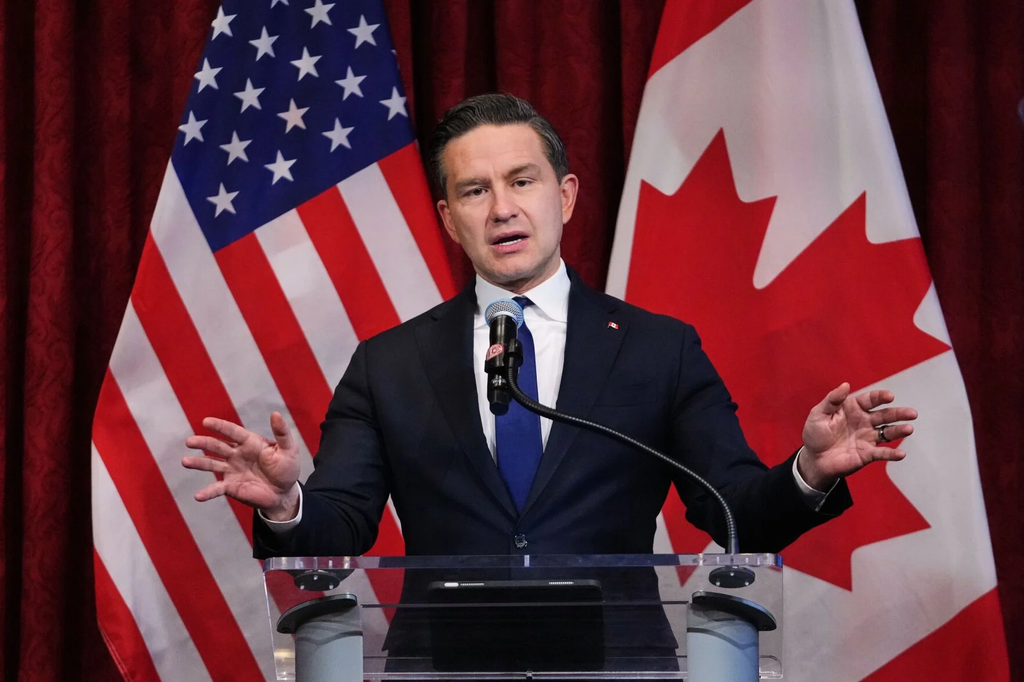
Canadian Conservative Leader Pierre Poilievre took a firm stand on American television and digital networks, declaring directly to an international audience that Canada will never become the 51st state of the United States. His high-profile U.S. media tour marks a dramatic shift in how Canadian politicians are addressing mounting trade tensions, aggressive tariff threats, and annexation comments coming out of Washington.
According to reporting by The Toronto Star, Poilievre used interviews across major American outlets to defend Canadian sovereignty. He made it clear that while Canadians might have internal political disagreements, the nation stands completely united against foreign trade pressures and threats to its independence.
Why Poilievre Took the Sovereign Message to American TV
Political leaders usually reserve their biggest speeches for voters at home. However, the political landscape between Ottawa and Washington has changed rapidly over the past few years. When talk in the U.S. started floating around the idea of annexing northern territory or treating Canada as an economic extension of the United States, Poilievre decided to take the conversation straight to the American public.
During appearances on major U.S. networks, Poilievre pushed back hard against the idea that Canada could ever merge into the American republic. He described Canadians as feeling slightly wounded and confused by the sudden hostility from a long-time ally, but firm in their resolve to defend their independence.
Reaching American Viewers Directly
American media consumers rarely hear directly from Canadian opposition leaders. By booking slots on major financial channels and popular podcast networks, Poilievre ensured his message reached millions of everyday Americans who might not realize how deeply offended Canadians were by annexation jokes.
Build Funnels, Email Lists & Sell Online With One Free Tool
Create funnels, send emails, and sell online using Systeme.io without paying for multiple tools.
Create Free AccountFree forever • No credit card • Beginner-friendly
He explained that Canada and the United States have built one of the most successful peaceful partnerships in human history. Threatening that partnership with trade wars or belittling remarks does not help working-class families on either side of the border. Instead, it damages trust between two neighbors who rely heavily on each other for energy, manufacturing, and security.
Setting Aside Domestic Rivalries Abroad
One notable aspect of Poilievre’s U.S. media appearances was his choice to stop domestic political bickering at the border. In Canadian parliament, Poilievre is known as a fierce critic of the governing Liberals. But when American interviewers asked him if Canadian leadership was to blame for the trade breakdown, he refused to throw his country’s prime minister under the bus.
Instead of attacking Prime Minister Mark Carney on foreign airwaves, Poilievre focused his criticism on Washington’s unilateral decision to impose heavy tariffs. He pointed out that when a country faces external pressure, politicians across party lines must present a united front. This approach surprised many political observers who were used to seeing party leaders attack each other constantly.
The Escalating Tariff War and Its Real-World Cost
The underlying reason for this sudden media push is the escalating trade war between North American neighbors. What began as posturing over trade deficits and border policies has spiraled into sweeping tariffs that affect millions of businesses and consumers.
When Washington threatened across-the-board tariffs on Canadian exports, Ottawa responded with targeted duties of its own. For a deeper breakdown of how these initial trade measures developed, you can read our guide on how Canada hits back with new tariffs on US goods.
How Trade Barriers Hurt Everyday Consumers
Poilievre used simple economic facts to explain why tariffs harm Americans just as much as Canadians. He pointed out that key Canadian exports—like aluminum, lumber, crude oil, and critical defence minerals—are essential building blocks for American industry.
When the U.S. government places a tax on Canadian aluminum, it does not magically create cheap aluminum factories in America overnight. Instead, it simply increases the cost of making everyday products, including America’s best-selling pickup trucks. Similarly, tariffs on Canadian timber raise the price of building new homes across North America, making housing even more expensive for young families.
Understanding the broader impact of these policies is crucial for anyone following economic news. If you want to see how these trade barriers hit your daily budget, check out our report on what the US-Canada tariff war will really cost you.
The Danger of a Prolonged Economic Standoff
Economists have warned for months that a prolonged trade conflict could drag down economic growth across the continent. Businesses delay investments when they do not know what trade rules will look like next month or next year.
Canadian officials have been making long-term contingency plans in case trade disputes persist. For more context on how national leaders are navigating this extended uncertainty, read our coverage on how Canada prepares for a long trade war with the US.
Canada as a Resource Superpower Rather Than a 51st State
A central point of Poilievre’s message to the American media was that Canada does not need to become a state to be a valuable partner. Canada is already an indispensable supplier of key resources that keep the American economy running.
Canada ranks among the world’s top producers of crude oil, uranium, potash, and essential minerals needed for modern electronics and defence hardware. Rather than treating Canada as an economic competitor to be bullied, Poilievre argued that Washington should view Canada as the anchor of a secure North American supply chain.
Energy Security and Critical Minerals
With global geopolitical uncertainty rising, energy security has become a primary concern for North American leaders. Canada supplies a massive portion of the energy consumed in the United States. Furthermore, Canadian mines hold key reserves of critical minerals that are necessary for building electric vehicles, solar panels, microchips, and military hardware.
By building stronger trade connections rather than erecting tax walls, both nations can secure their supply chains without relying on unstable overseas markets. For more details on how Canadian leadership plans to fast-track resource developments, read our article on how Canada overhauls energy rules under Prime Minister Mark Carney.
Diversifying Global Alliances
Because trade with the U.S. has hit rocky ground, Canadian policymakers have also been forced to look beyond North America. While maintaining strong ties with the U.S. remains a top priority, Canada is actively strengthening economic relationships with European and Asian allies.
When trade negotiations stall in Washington, Canadian leaders look for alternative markets for Canadian agricultural products, energy, and tech services. You can explore how these diplomatic shifts are happening in our report on why Canada is turning to Europe after US trade talks.
Political Shift: Why Sovereignty Transcends Party Lines
In Canadian domestic politics, defending national sovereignty is one issue where voters across all political spectrums find common ground. Recent public opinion polls show that Canadians strongly reject any suggestion of giving up their independence or backing down from trade threats.
When political figures express firm opposition to external pressure, public support tends to align quickly. You can read more about public sentiment in our story on how Canadians strongly stand behind PM Mark Carney’s decision to reject US trade deals.
The Impact on Domestic Political Strategy
For Conservative strategists, Poilievre’s U.S. press tour serves multiple goals. Nationally, it counters claims by political opponents that Conservative policies are overly aligned with right-wing American political movements. By standing up to American interviewers and defending Canadian identity, Poilievre reinforces his image as a leader who puts his own country first.
Strategically, showing unity on foreign policy allows political leaders to focus domestic debates on internal issues like housing costs, government spending, and domestic tax policy. When foreign threats arise, voters expect their politicians to protect national interests above all else.
Public Reactions and Social Media Buzz
The reaction to Poilievre’s interview tour spread quickly across social platforms. Clips of his statements on U.S. channels were shared widely across digital media, sparking conversations about national pride, trade security, and political leadership.
Online users debated whether the move was purely strategic or a necessary public relations campaign to set the record straight in the American press. This cultural reaction highlights how modern political messages move beyond traditional news channels and thrive on public digital platforms.
Geopolitics, Digital Media, and Modern News Coverage
In modern political campaigns, traditional television interviews are only one part of the equation. News breaks online, spreads through digital video clips, and reaches audiences around the globe in seconds.
Political leaders now rely on diverse media channels to bypass traditional filters and speak directly to global audiences. Whether through long-form podcasts or viral video clips, reaching people where they spend their time has become essential for political communication.
The Role of Technology and AI in Shaping Public News
As political events unfold rapidly, technology plays an increasingly vital role in how information is verified, formatted, and distributed to millions of readers. From automated news aggregation to artificial intelligence tools that track media trends, modern newsrooms rely on fast digital platforms to keep people informed.
If you are interested in exploring how advanced digital tools and automation are changing modern media, explore our dedicated section on Technology and AI news.
How Content Creators Cover Global Events
It is not just mainstream journalists covering major political stories anymore. Independent creators and digital media specialists build entire channels around analyzing global news, trade conflicts, and political speeches.
Build Funnels, Email Lists & Sell Online With One Free Tool
Create funnels, send emails, and sell online using Systeme.io without paying for multiple tools.
Create Free AccountFree forever • No credit card • Beginner-friendly
Through modern video platforms, independent commentators break down complex news items into easy-to-understand formats for millions of subscribers. To learn more about how digital video channels operate and grow in today’s digital landscape, check out our specialized section on YouTube automation strategies.
Frequently Asked Questions (FAQs)
What did Pierre Poilievre say during his U.S. media tour?
Pierre Poilievre stated clearly on American television and podcast appearances that Canada will never become the 51st state of the United States. He emphasized that Canada is a sovereign nation and an independent trade partner, not an extension of American territory.
Why did Donald Trump talk about Canada becoming the 51st state?
During trade disputes and discussions regarding border security and tariffs, former U.S. President Donald Trump made several public comments and jokes suggesting Canada could become the 51st state if it could not resolve economic differences with Washington. These comments sparked widespread backlash across Canada.
Did Pierre Poilievre criticize Prime Minister Mark Carney while in the United States?
No. During his U.S. media appearances, Poilievre explicitly declined to criticize Prime Minister Mark Carney on foreign soil. He argued that while Canadians may disagree on domestic policies at home, they stand united against unfair tariffs and threats to national sovereignty when speaking to international audiences.
How do tariffs between Canada and the U.S. affect everyday consumers?
Tariffs act as a tax on imported goods. When the U.S. places tariffs on Canadian supplies like steel, aluminum, and lumber, American businesses pay higher prices for materials, which leads to higher prices for consumer goods and housing. Conversely, Canadian retaliatory tariffs increase the cost of imported U.S. products for Canadian shoppers.
Where can I learn more about global news and political trends?
You can find updated coverage on global politics, business trends, entertainment, and technology by exploring our content on the WhatsBuzzn About page or by reaching out directly through our WhatsBuzzn Contact page.
Navigating complex international news requires clear context and straightforward facts. The relationship between Canada and the United States remains one of the most important economic partnerships in the world, and both nations stand to gain far more from peaceful cooperation than economic confrontation. As political leaders continue to negotiate trade agreements and defend national borders, keeping up with accurate information is essential for understanding how these global decisions impact your everyday life.
To stay updated on breaking news, viral stories, and modern trends across multiple industries, follow our official social channels on Instagram, Facebook, and X (formerly Twitter). Feel free to share your thoughts on this story and join the conversation on our social media pages.
