
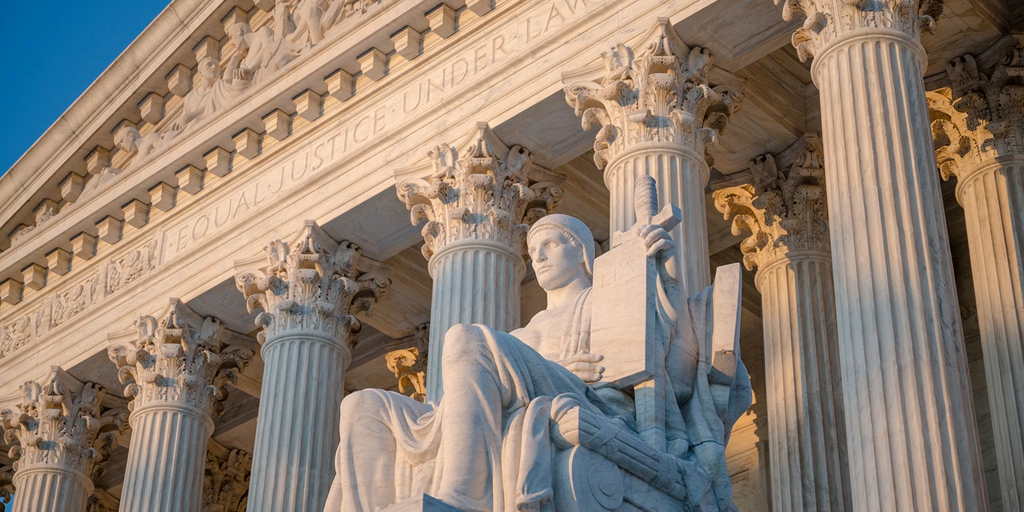
The United States Supreme Court has given the green light to major parts of President Donald Trump’s executive order on mail-in voting. In a tight 6-3 emergency decision, the high court decided that the U.S. Postal Service can move forward with enforcing new regulations on how states handle mail-in ballots.
This major ruling comes with just over 50 days left before the crucial 2026 midterm elections. Across the nation, state and local election workers are expressing deep concern. They warn that adapting to these sudden legal changes on such short notice creates an almost impossible deadline for county election offices.
Millions of Americans rely on voting by mail during federal elections. Now, state election boards are scrambling to understand what these new requirements mean for voters, local budgets, and ballot printing schedules. What started as a policy debate in Washington has suddenly turned into an urgent logistical challenge for local election clerks across the country.
Understanding the Supreme Court Decision
The highest court in the nation voted 6-3 to allow key parts of President Donald Trump’s executive order on mail-in voting to take effect. The six conservative justices voted in favor, while the three liberal justices dissented. This ruling temporarily lifts a legal hold that was placed on the rules by a lower federal judge in Boston.
Under the approved regulations, the U.S. Postal Service gains new authority to oversee the design and processing of mail ballot envelopes. The ruling allows the federal government to set specific standards for how envelopes are printed and how state election offices communicate voter data with federal systems.
Build Funnels, Email Lists & Sell Online With One Free Tool
Create funnels, send emails, and sell online using Systeme.io without paying for multiple tools.
Create Free AccountFree forever • No credit card • Beginner-friendly
However, the Supreme Court did not approve every single item in the executive order. A separate court challenge still blocks a provision that would require the Postal Service to verify voter eligibility for every single person who receives a mail-in ballot. You can read more about the initial legal battle in our breakdown of the Supreme Court showdown over mail-in voting limits.
Even with that eligibility check still paused, the rules that were allowed to proceed create major shifts in how mail voting will operate this fall. Mainstream news outlets like Quartz report that legal teams on both sides are preparing for further court motions in the coming days.
What the New USPS Rules Demand From States
The new Postal Service rules establish two major conditions that state election offices must satisfy before their mail ballots can be processed through federal postal networks. If a state fails to comply, its mail-in ballots might not get sent out or delivered by the post office.
First, states must adopt a standardized layout for all envelopes containing mail ballots. This layout requires specific dimensions, clear marking codes, and unique voter-specific barcodes printed on every single envelope. The intention behind this rule is to streamline tracking and ensure that every mail piece fits federal scanning machines.
Second, states must upload their official voter lists to a new federal web portal operated by the government. Access to postal services for election mail is made conditional on submitting these voter lists beforehand.
For many state election directors, these changes represent a huge shift in how local elections are run. Historically, individual states have had full authority over the design of their own election materials. For additional context on how these postal guidelines developed, check out our guide on how a Postal Service rule could bar millions from voting by mail.
Why Election Workers Say the Deadline Is Impossible
The biggest issue for local election workers is not just the rules themselves, but the timing. With November midterms right around the corner, election preparations in most states are already far along.
Envelopes and paper ballots for the 2026 midterms have already been printed in a large majority of counties. In fact, states like North Carolina, Delaware, and Alabama have already started mailing out early ballots to military service members, overseas citizens, and absentee voters.
Changing envelope designs at this stage requires starting the entire printing process over again. Local officials point out that professional printing companies cannot simply turn around millions of specialized envelopes overnight. Paper supply chains are tight, and commercial printing presses are booked months in advance.
In court filings reported by CNN, election directors from several states explained that finding available printers who can meet these new standards before Election Day is nearly impossible. Many commercial vendors have told local governments that they cannot guarantee delivery before the legal deadlines for mailing out absentee ballots.
High Costs and Technical Risks for Local Governments
Re-printing millions of ballot envelopes carries a massive price tag for local taxpayers. Election offices operate on strict annual budgets that are approved long before election season begins. Finding extra cash on short notice is a severe burden for small towns and rural counties.
For example, the state election director in Washington state, Stuart Holmes, submitted court documents stating that reprinting ballot envelopes statewide would cost nearly $2 million. When his office reached out to the three main printing vendors that supply the state, not a single vendor could guarantee timely delivery, even if the funding were immediately available.
In King County, Washington, local officials managed to negotiate a rushed envelope redesign to add the required voter barcodes. That single local adjustment cost taxpayers $70,000. Most smaller counties across the country do not have that kind of spare budget or quick vendor access.
Beyond the dollar costs, there are serious technical risks. An internal whistleblower report highlighted in federal court filings warned about potential software bugs in automated barcode systems. According to the report, a single mismatched barcode on one envelope could cause an entire batch of mailings to be flagged or rejected by automated sorting machines. That could potentially stall thousands of valid votes at once.
The Federal Portal Controversy and Missing Infrastructure
Another point of frustration for state election boards is the federal portal where states are required to submit voter lists. According to reporting from the Los Angeles Times, the government web portal was not fully operational when the Supreme Court issued its ruling.
Election administrators argue that it is unreasonable to demand compliance with a system that is still being built. State election systems store voter registration data in unique formats that differ from state to state. Translating that data so it fits a single federal database takes time, testing, and technical support.
When software systems are rushed without thorough testing, technical glitches often follow. Election staff worry that data formatting errors could lead to accidental rejections or delays when submitting voter files to the U.S. Postal Service.
For states that are already experiencing heavy workloads, setting up secure data connections with a new federal portal adds an intense administrative burden during their busiest month of the year. For more insights on high-stakes political developments ahead of November, read our piece on why Republicans are panicking about Donald Trump heading into the midterm elections.
Political Reactions and Legal Strategy
The Supreme Court ruling has sparked strong reactions from political leaders across the spectrum. Supporters of President Donald Trump argue that uniform envelope rules and mandatory voter list submissions are necessary steps to protect election integrity and build trust in mail voting results.
The White House maintains that these envelope changes are modest administrative updates designed to ensure that the postal system can process election mail smoothly and securely. President Donald Trump has consistently made election security a central theme of his campaign events, as detailed in our report on how Donald Trump promises a full campaign blitz for the midterms.
On the other side, Democratic officials from 23 states and Washington, D.C. have joined forces to fight the executive order in federal court. They argue that the U.S. Constitution grants individual states and Congress the primary authority to set voting rules and manage elections, not the executive branch.
Legal scholars note that the Supreme Court’s unsigned order is a temporary measure while lower court litigation continues. According to the official U.S. Supreme Court website, the justices specifically pointed out that they have not yet made a final decision on whether the executive order is constitutional. This means the legal battle is far from over, and additional court orders could arrive before Election Day.
How This Ruling Could Affect Voters in Different States
Because election laws vary widely across the country, the practical impact of this Supreme Court ruling depends heavily on where you live. Voters in different regions face very different situations as state officials figure out their next steps.
In states that rely primarily on vote-by-mail systems, such as Washington, Oregon, and Colorado, local officials are working around the clock to ensure ballot delivery remains uninterrupted. These states have used mail voting for years and have built robust relationships with local postal facilities, but sudden federal rules still create operational strain.
In states with strict absentee ballot deadlines, any postal delay could mean that a ballot arrives after the official deadline. Some states require ballots to be received by the time polls close on Election Day, while others count ballots that are postmarked on or before Election Day.
Military personnel stationed overseas and citizens living abroad face additional challenges. Mail sent from international locations often takes longer to navigate postal channels, making rapid changes to envelope designs especially difficult to coordinate for overseas voters.
How Technology and Automation Shape Modern Elections
Managing mail-in ballots for tens of millions of voters is a massive technical challenge. Modern election operations rely heavily on advanced sorting machinery, automated list management, and specialized database platforms to track every step of the process.
Build Funnels, Email Lists & Sell Online With One Free Tool
Create funnels, send emails, and sell online using Systeme.io without paying for multiple tools.
Create Free AccountFree forever • No credit card • Beginner-friendly
From barcode scanners at postal hubs to automated email notifications that tell voters when their ballot has been received, technology plays a vital role in modern civic life. For those interested in how modern digital tools and workflows operate behind the scenes, explore our coverage on Technology & AI and YouTube Automation to see how automation is transforming different industries.
When federal agencies introduce new technical mandates for ballot envelopes, election offices must update their scanning software and retrain staff. When those updates are forced through quickly without proper testing, the risk of automated system errors increases significantly.
Local election offices often rely on external digital infrastructure, including specialized tools like Systeme.io vs Mailchimp or guides on how to create an email list from scratch, to send mass updates and keep citizens informed about deadlines and ballot status. Proper communication tools help prevent confusion whenever voting policies change unexpectedly.
Practical Steps for Voters Planning to Use Mail-In Ballots
With rules shifting and election officials facing tight deadlines, voters who plan to cast their ballot by mail should take proactive steps to make sure their vote counts. Staying organized and acting early is the best way to avoid potential postal delays or envelope confusion.
Here are basic steps every mail-in voter should follow this election season:
- Check Your Voter Registration Early: Confirm that your current home address and contact details are up to date on your state or county election website well before registration deadlines.
- Request Your Absentee Ballot Promptly: Do not wait until the last minute to request your mail ballot. Requesting it as early as possible gives local clerks enough time to process your application and mail out your packet.
- Follow Envelope Instructions Carefully: Pay close attention to all instructions included in your ballot package. Make sure to sign the outer return envelope in the designated area and follow any specific guidelines regarding signature matching or date requirements.
- Consider Official Secure Drop Boxes: If you are worried about postal delays or tight deadlines, check if your local county offers official ballot drop boxes. Dropping your completed ballot directly into an official election drop box eliminates mail transit time entirely.
- Track Your Ballot Online: Most states offer online tracking systems where you can see when your ballot was mailed out, when it was received by your local clerk, and when it was accepted for counting.
Taking these straightforward precautions ensures that your voice is heard, regardless of ongoing legal arguments in federal courtrooms.
Judicial Power and Voting Rights
This latest ruling highlights the central role that federal courts play in shaping national election procedures. Over the past few years, emergency rulings from the Supreme Court have repeatedly altered election rules in the final weeks leading up to major elections.
The ongoing debate over federal judicial power has even prompted discussions in Congress about court structure and judicial limits. You can read more about how lawmakers have approached these constitutional debates in our article on why Congress rejected a constitutional amendment to limit the Supreme Court.
As political candidates make their final campaign pitches, the debate over mail voting rules will remain top of mind for voters, election workers, and political strategists alike. Some policy proposals even include broader economic promises aimed at attracting voters, such as discussions surrounding the Trump $5000 dividend promise to Americans.
Regardless of political preferences, election experts agree that clear rules and sufficient preparation time are essential for running smooth elections. When rules change late in the cycle, local workers bear the brunt of the extra labor required to keep the system running.
Frequently Asked Questions
What did the Supreme Court decide regarding mail-in voting?
The Supreme Court ruled 6-3 to allow the U.S. Postal Service to enforce new regulations from President Trump’s executive order on mail-in voting. These regulations govern ballot envelope designs and require states to submit voter lists to a federal web portal.
Are all parts of President Trump’s executive order taking effect?
No. A separate legal challenge continues to block a provision that would require the Postal Service to verify the eligibility of every individual receiving a mail ballot. Only the envelope design rules and voter list submission requirements are currently allowed to proceed.
Why are election officials concerned about these new rules?
Election officials warn that implementing new envelope designs and connecting to a new federal portal with just over 50 days until the November midterms is practically impossible. Millions of envelopes have already been printed, and printing vendors cannot guarantee quick replacements.
Will my mail-in ballot still be counted if I already received it?
Yes, if you follow your state’s voting instructions and submit your ballot according to local deadlines. States like North Carolina, Delaware, and Alabama that have already mailed out ballots are continuing their normal processes while local election attorneys review the Supreme Court ruling.
How can I make sure my mail ballot arrives on time?
To ensure your ballot is counted, request it early, fill it out accurately, sign the required signature line on the return envelope, and return it as soon as possible. Using an official local ballot drop box or returning it in person to your county election office can help you avoid potential postal delays.
Where can I find more information about WhatsBuzzn?
To learn more about our mission and team, visit our About Us page or reach out directly through our Contact Us page. You can also connect with us on social media via Instagram, Facebook, and X (Twitter).
Navigating changing election rules can feel overwhelming, but staying informed and taking early action makes all the difference. Local election officials across the country are working hard to overcome logistical obstacles and protect every citizen’s right to vote. By keeping track of state deadlines, checking your voter registration status, and returning your ballot promptly, you can participate with confidence in the upcoming 2026 midterm elections.
