
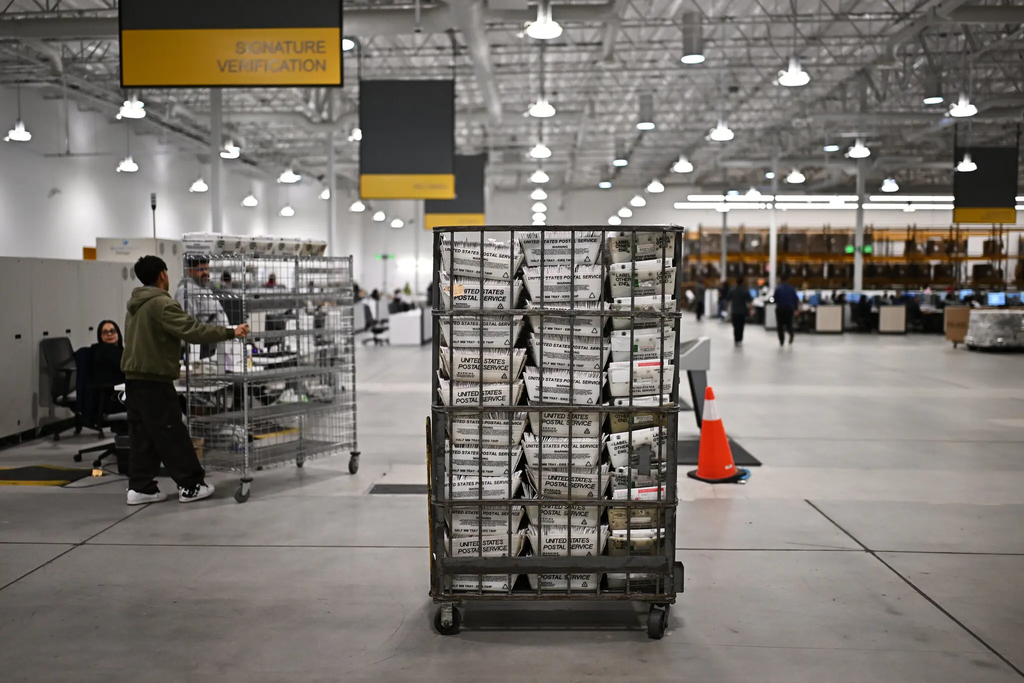
The United States Postal Service is preparing to enforce a restrictive new policy that could prevent tens of millions of Americans from voting by mail. Under this new mandate, the post office will no longer deliver mail-in ballots unless state election offices hand over detailed voter lists to a brand-new federal portal.
In addition to sharing voter data, state and local election officials must print custom federal barcodes on all outbound and return ballot envelopes. If a state refuses to share its voter rolls or fails to format its envelopes with these exact barcodes, the Postal Service has stated it will refuse to deliver those ballots to voters or return them to election offices.
With major elections approaching rapidly, this decision has created widespread concern among local election administrators, voting rights advocates, and everyday citizens. Millions of people who rely on mail voting to cast their ballots are left wondering whether their votes will count.
Legal challenges are moving quickly through federal courts across the country as states fight to protect their constitutional right to manage their own elections. Understanding what this rule requires, who it affects, and how you can protect your vote is critical as election deadlines draw near.
What Is the New USPS Mail Voting Rule?
The new policy stems from an executive order signed earlier this year that aims to change how mail-in ballots are handled across the nation. Under the rule, the postal service moves from being a simple, nonpartisan delivery service to taking on an active screening role in elections.
The $0 Secret To Launching Your Entire Online Empire
Why pay hundreds every month for separate software? Build funnels, send emails, and make sales with Systeme.io completely free.
Get Started For $0Free Forever • No Credit Card Needed • Beginner-Friendly
To send out mail ballots, local election clerks must first register with a newly created federal portal known as the Federal Ballot Mail Portal. Officials must upload lists of approved mail-in voters directly to this federal system before sending out any physical mail.
Once the data is uploaded, election offices and their printing vendors are required to print a unique federal barcode on every single envelope. When a ballot envelope arrives at a postal facility, mail processors check the barcode against the central federal list. If the envelope lacks the proper federal barcode, postal workers are instructed to stop the ballot from moving forward.
Historically, state and county election boards have maintained complete authority over how ballots are created, distributed, and collected. By refusing to deliver ballots that do not meet these federal criteria, the postal agency is introducing a layer of federal oversight that has never existed in American election history.
You can read detailed breakdown reports on these policy updates directly from organizations like the Voting Rights Lab and reporting from The Guardian.
Who Stands to Lose Access to the Ballot?
Mail-in voting has become a standard, convenient option for tens of millions of voters across the political spectrum. If this restrictive policy takes full effect, several specific groups of citizens face the highest risk of being shut out.
Voters in Universal Mail-In States
Several states send mail-in ballots to every registered voter automatically. States like Oregon, Washington, Colorado, Utah, and Hawaii conduct their elections almost entirely by mail. If these state governments refuse to comply with federal demands or encounter technical glitches, entire state populations could see their primary voting method disrupted.
Senior Citizens and Older Americans
Older voters frequently choose to vote by mail because it allows them to take their time reviewing choices at home without standing in long lines on Election Day. Many seniors live in assisted living facilities or have mobility issues that make in-person voting difficult. Cutting off or delaying mail options puts extra pressure on this group.
Rural Residents
In vast rural areas, local polling places can be located miles or even hours away from a voter’s home. Rural communities rely heavily on regular postal carriers to pick up and drop off their signed ballots. Disruption to mail delivery leaves rural voters with few reasonable alternatives.
People Living in Non-Complying States
Some state officials have publicly stated that handing over sensitive voter records to a federal agency violates state privacy laws. If a state government refuses to upload voter data to the federal portal on principle, voters in that state could be completely stripped of their mail voting options through no fault of their own.
Technology, Privacy, and Logistical Hurdles
Implementing a massive federal tracking system just months before a major national election poses serious technical challenges. Building, testing, and securing a database designed to hold personal records for tens of millions of voters normally takes years of careful development.
Election experts express deep concern about privacy. Uploading voter names, addresses, and individual tracking numbers to a single centralized portal creates a massive target for cyber threats and data leaks. Many states are reluctant to expose their voters’ personal information to unverified external databases.
Logistics present an equally difficult problem. Local election boards contract with commercial commercial printing companies to print Millions of envelopes months in advance. Re-engineering these printing operations to accommodate new federal barcode standards takes significant time and money that local governments simply do not have.
Smaller counties with limited budgets and small staff sizes are hit hardest. Many local clerks do not have the software tools or IT support required to connect their internal registration systems with the federal portal on short notice.
As technology continues to reshape public infrastructure and governance, staying up to date on these technical shifts is essential. You can explore more insights on modern systems and digital developments in our dedicated Technology and AI Section.
The Legal Battle in Federal Courts
The fight over the mail voting rule has sparked an intense legal tug-of-war across multiple federal courts. Opponents of the rule argue that it violates the U.S. Constitution, which explicitly assigns the power to run elections to individual states rather than federal agencies.
Send, Spend & Hold Money Worldwide Without Hidden Fees
Transfer money internationally at the real exchange rate and hold 40+ currencies in one account.
Open a Wise AccountMid-market rate • Fast transfers • 40+ currencies
Federal judges in states like Massachusetts, California, and Washington, D.C., initially issued injunctions and temporary restraining orders to block the postal service from enforcing the rule. These lower courts noted that forcing radical changes so close to an election creates unnecessary chaos and disenfranchises eligible citizens.
However, recent rulings from higher courts have complicated the legal landscape. The U.S. Supreme Court temporarily lifted lower court holds, allowing arguments over the administration’s authority to proceed.
Legal experts point out that the situation remains extremely fluid. Lawsuits filed by state attorneys general and civil rights groups are moving through emergency appeals. With hearings scheduled throughout the late summer, a final determination on whether the postal rule can be enforced during the midterms could come down to the wire.
How This Rule Could Disrupt Election Day
If the postal service is permitted to block non-compliant mail ballots, the knock-on effects on Election Day will be massive.
When voters realize that their requested mail-in ballots were never delivered or cannot be returned through the post office, many will decide to vote in person instead. Polling locations that were set up to handle typical in-person numbers could suddenly be overwhelmed by thousands of unexpected voters.
This sudden surge in physical turnout leads directly to several problems:
- Long lines and multi-hour wait times at local polling stations.
- Shortages of paper ballots, voting machines, and poll workers.
- Confusion surrounding provisional ballots for voters who received mail ballots but were unable to use them.
- Increased stress on poll workers who must manually verify voter eligibility on site.
Furthermore, the rule ignores millions of voters who choose to hand-deliver their mail ballots directly to official drop boxes or county election offices. By treating every ballot envelope as a postal item subject to federal screening, the policy creates confusion even for people who do not rely on postal delivery.
Steps You Can Take to Protect Your Vote
While court cases continue to play out, you do not have to leave your vote to chance. Taking proactive steps early helps ensure your ballot is counted regardless of postal policy changes.
Check Your Voter Registration Status Early
Visit your local election office website or state voter registry to confirm that your registration details are correct and up to date. Verify your address, name, and party affiliation as early as possible.
Request Your Mail Ballot Promptly
If your state allows you to request a mail-in ballot, do it at the earliest possible date. Requesting your ballot early gives local officials plenty of time to process your request and gives you time to track its status.
The $0 Secret To Launching Your Entire Online Empire
Why pay hundreds every month for separate software? Build funnels, send emails, and make sales with Systeme.io completely free.
Get Started For $0Free Forever • No Credit Card Needed • Beginner-Friendly
Use Official Election Drop Boxes
If your community offers secure election drop boxes, consider using them instead of mailing your completed ballot. Drop boxes bypass the postal system entirely, placing your ballot directly into the hands of local election officials.
Deliver Your Ballot in Person
You can often bring your completed, signed mail-in ballot directly to your county clerk office or designated early voting location. This eliminates any risk of shipping delays or postal delivery rejections.
Track Your Ballot Online
Most states offer online tracking systems that send text or email notifications when your ballot is printed, mailed out, received, and counted. Sign up for these tracking services to follow your ballot every step of the way.
The Digital Media Landscape and Staying Informed
In moments of legal uncertainty, clear and accurate communication becomes vital. Millions of citizens rely on independent online reporting, digital creators, and video updates to make sense of complex breaking news.
Many digital media producers use automated content workflows to quickly analyze public records, break down court rulings, and keep audiences informed as events happen. If you want to understand how modern creators produce fast-paced digital updates, explore our guide on YouTube Automation strategies.
Following verified news updates on social platforms is another great way to keep up with fast-breaking legal decisions. You can follow real-time coverage, news updates, and community discussions on our active social channels:
- Connect with us on Instagram for visual updates and news summaries.
- Join the conversation on Facebook to share your thoughts with others.
- Follow our latest posts on X (formerly Twitter) for instant news updates.
Frequently Asked Questions (FAQs)
Can the Postal Service legally refuse to deliver my mail-in ballot?
Under current law, election procedures are primarily managed by individual states. The postal service’s new rule claims authority to reject ballots that do not carry approved federal portal barcodes. However, this authority is actively being challenged in federal courts, where judges are deciding if the policy violates state constitutional powers.
Does this new rule apply to all 50 states?
The executive order and postal rule were written to cover all federal elections nationwide. However, state responses vary widely. Some states are complying with the portal requirements, while others have filed federal lawsuits refusing to share voter data.
What happens if my state refuses to hand over voter data to the federal portal?
If your state refuses to comply and the courts allow the postal rule to stand, postal facilities in your state could decline to transport mail-in ballots. In that scenario, election officials would direct voters to cast ballots in person or use local drop boxes.
Are military and overseas voters affected by this mail ballot rule?
Ballots sent to military personnel stationed overseas and civilians living abroad are currently exempt from the barcode portal requirement. However, overall postal sorting changes and administrative strain could still cause indirect delivery delays for overseas mail.
How do I know if my mail ballot was received and counted?
Most states provide online portal tools where you can enter your name and date of birth to track your ballot’s journey. You can see when your ballot was sent to you, when the election office received it back, and when your vote was officially verified.
The ongoing dispute over mail voting rules highlights how quickly election rules can change and how important it is to remain proactive. Whether you choose to vote by mail, drop your ballot in a secure box, or stand in line on Election Day, staying informed ensures your voice is heard.
To learn more about our mission to bring you clear, straightforward breakdowns of major events, visit our About Page. If you have questions, feedback, or story ideas you would like us to cover, feel free to reach out through our Contact Page.
