
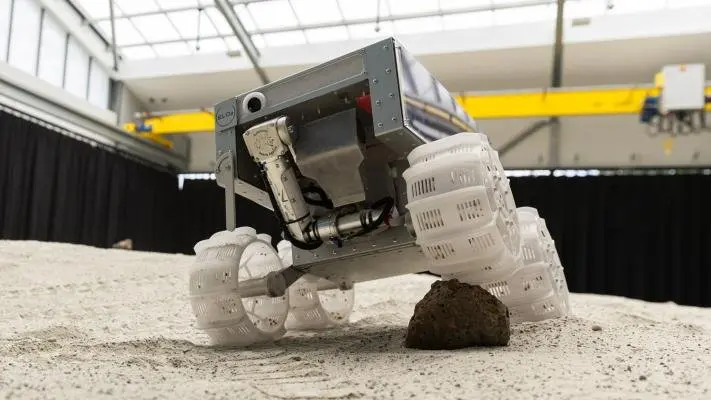
A Seattle-based space startup called Interlune is building technology to mine the surface of the Moon for a resource valued at an incredible $20 quadrillion.
The company is actively bringing together engineers and space experts to create machines capable of digging up lunar soil. Their primary goal is to extract Helium-3, a super rare gas that could change the future of clean energy and advanced computing.
This project is not a science fiction story. It is a commercial venture led by former executives from Blue Origin, including former president Rob Meyerson and chief technical officer Gary Lai. They are joined by Apollo 17 astronaut Harrison Schmitt, who is the only geologist to ever walk on the Moon. The team plans to launch its first test mission, named Prospect Moon, as early as 2027.
The $20 quadrillion price tag might sound like an exaggeration, but scientists and space economists base that number on the total estimated amount of Helium-3 trapped in the lunar soil. With technology advancing rapidly, extracting resources beyond Earth is shifting from a distant dream to a real business plan.
What Is Helium-3 and Why Is It Worth So Much Money?
Helium-3 is a non-radioactive isotope of helium. It has two protons and one neutron, unlike the standard helium gas used to fill party balloons, which has two neutrons. This tiny structural difference makes Helium-3 one of the most valuable materials in existence.
The $0 Secret To Launching Your Entire Online Empire
Why pay hundreds every month for separate software? Build funnels, send emails, and make sales with Systeme.io completely free.
Get Started For $0Free Forever • No Credit Card Needed • Beginner-Friendly
The gas is created inside the Sun through nuclear reactions. The Sun blows Helium-3 across the solar system through solar winds. Earth has a thick atmosphere and a powerful magnetic field that blocks solar winds, so very little Helium-3 ever reaches our ground. Our planet produces less than 20 kilograms of it per year, mostly as a byproduct of maintaining nuclear weapons.
The Moon is completely different. It has no atmosphere and no protective magnetic field. For billions of years, solar winds have slammed directly into the lunar surface. As a result, millions of metric tons of Helium-3 are trapped inside the top layer of dirt, which scientists call regolith.
Helium-3 Supply Comparison:
- Earth: Less than 20 kg produced per year
- Moon: Estimated 1 million metric tons trapped in soil
On Earth, small amounts of Helium-3 sell for thousands of dollars per liter because several industries urgently need it:
- Quantum Computing: Tech companies like Google, Amazon, and IBM rely on Helium-3 to cool their quantum computers down to temperatures near absolute zero. Quantum processors cannot function properly without extreme cold.
- Border Security: Radiation detectors at ports and international borders use Helium-3 to spot smuggled nuclear materials or dangerous bombs.
- Nuclear Fusion: The biggest long-term goal for Helium-3 is nuclear fusion power plants. When Helium-3 reacts with deuterium, it releases massive amounts of clean energy without producing harmful nuclear waste.
One single gram of Helium-3 can produce energy equal to roughly 40 tons of coal. If human engineers can collect it efficiently, a few ship loads could power entire cities without carbon emissions or radioactive hazardous waste.
How Interlune Plans to Mine the Lunar Surface
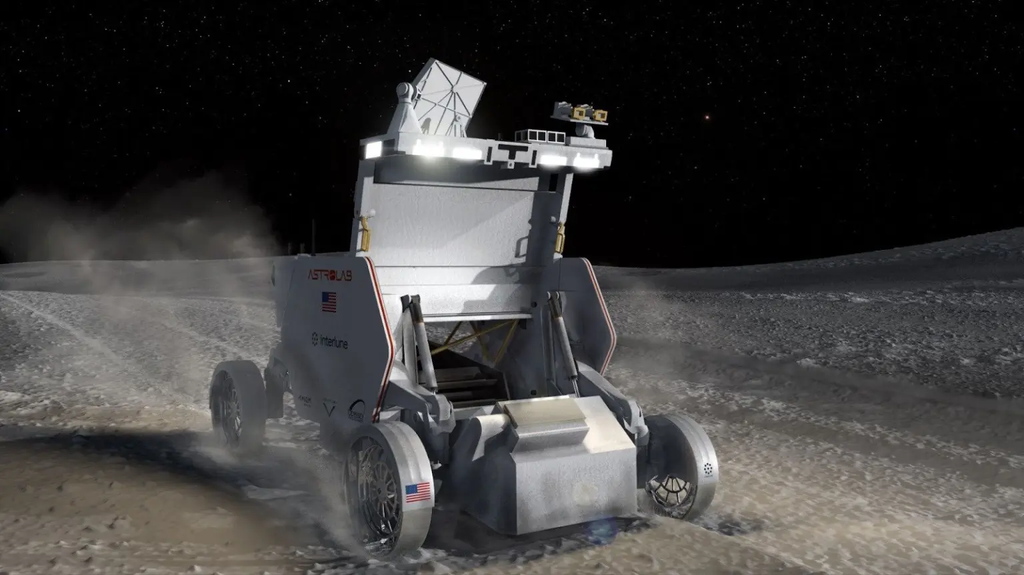
Mining on the Moon sounds straightforward in concept, but executing it in space requires brand-new technology. Interlune has designed an automated excavator named the Harvester to perform the hard labor.
The Harvester will be sent to the Moon aboard a commercial lunar lander contracted through programs supported by space agencies like NASA. Once on the ground, the machine will operate autonomously. It will scoop up heavy layers of lunar regolith and feed the dirt into an onboard processing chamber.
The machine will heat the soil to high temperatures inside the chamber. Heating the regolith breaks the bond between the gas and the dirt particles, releasing trapped Helium-3 alongside other gases like hydrogen and water vapor. The system will separate the Helium-3, compress it into heavy-duty storage tanks, and discard the processed soil back onto the surface.
Shipping heavy metals like gold or platinum from the Moon to Earth would cost far more money than the metals are worth. Helium-3 is different because it is lightweight and extremely valuable per pound. A small container of concentrated Helium-3 gas can worth tens of millions of dollars, making the transportation costs mathematically viable.
Interlune has already secured private funding to turn this design into reality. The company raised over $15 million in seed funding led by Alexis Ohanian’s venture firm, Seven Seven Six. The United States Department of Energy also awarded Interlune a grant to help develop domestic supplies of Helium-3, even signing a contract to purchase initial samples collected from the Moon.
Developing autonomous robotics and automated machinery relies heavily on modern breakthroughs in technology and AI. These smart algorithms allow machines to navigate tricky terrain without human drivers steering them in real time from Earth.
The Massive Challenges of Lunar Mining
Digging dirt on Earth is hard work, but operating machinery on the Moon comes with severe environmental challenges that engineers must overcome.
Extreme Temperatures
The Moon does not have an atmosphere to regulate temperature. During the lunar day, surface temperatures rise above 120 degrees Celsius. During the lunar night, temperatures plummet to below minus 240 degrees Celsius. Mining equipment must survive these wild shifts without electronic failures, cracked metals, or frozen lubricants.
Jagged Lunar Dust
Earth dust is worn down over time by wind and water, making particles relatively round and smooth. Moon dust is completely different. Because there is no wind or water erosion, lunar dust particles are sharp, jagged shards of volcanic glass. This abrasive powder gets into moving joints, destroys seals, grinds down gears, and sticks to solar panels through electrostatic charges.
Distance and Communication Delays
Radio signals take roughly 1.3 seconds to travel between Earth and the Moon. A two-way communication check takes nearly three seconds. That means humans cannot drive a moon digger using a joystick in real time. The mining machines must be smart enough to navigate around rocks, detect crater edges, and fix minor mechanical errors by themselves.
Send, Spend & Hold Money Worldwide Without Hidden Fees
Transfer money internationally at the real exchange rate and hold 40+ currencies in one account.
Open a Wise AccountMid-market rate • Fast transfers • 40+ currencies
Financial Risk
Building space hardware is expensive. Launching heavy equipment into orbit costs millions of dollars per attempt. If a lander crashes during touchdown or a single sensor fails on the surface, investors can lose their entire capital in seconds. Startup companies must prove that their machines work reliably before commercial profits can cover the enormous initial investments.
The Legal and Ethical Debate Over Space Ownership
As private companies prepare to harvest lunar soil, world leaders and space lawyers are asking a critical question: Who owns the Moon?
The foundational law of space is the 1967 Outer Space Treaty, signed by major world nations. This treaty clearly states that no nation can claim sovereignty or ownership over the Moon or any other celestial body. The Moon belongs to all humankind, and no nation can plant a flag and claim the land as private territory.
However, national laws have evolved to distinguish between owning land and owning extracted resources. In 2015, the United States passed the Commercial Space Launch Competitiveness Act. This law allows American citizens and companies to own, move, and sell materials they extract from asteroids or the Moon, even if they cannot own the land itself. Other nations, including Luxembourg, Japan, and the United Arab Emirates, have passed similar laws to encourage private space investment.
This situation is often compared to fishing in international waters. No single country owns the ocean, but a fishing boat that catches fish in open waters owns those fish and can sell them legally at market.
Not everyone agrees with this legal interpretation. Some international scholars and developing nations argue that commercial mining violates the spirit of the Outer Space Treaty. They worry that wealthy countries and private corporations will claim the most valuable lunar spots, such as water-rich polar craters, leaving nothing for smaller nations.
Environmentalists and cultural researchers also raise concerns about altering the Moon’s natural landscape. The Moon has remained largely untouched for billions of years. Large-scale mining operations could permanently change famous lunar landscapes or create clouds of dust that float across the surface, potentially interfering with scientific research and telescopes.
The Broader Race for Moon Resources
Interlune is not the only player entering the commercial lunar space race. A whole ecosystem of startups, established aerospace contractors, and nation-states are building hardware for Moon exploration.
| Resource | Primary Location on Moon | Main Use Cases |
| Water Ice | Deeply shadowed polar craters | Drinking water, oxygen, rocket fuel |
| Helium-3 | Lunar regolith (sunlit areas) | Fusion energy, quantum cooling, radiation sensors |
| Rare Earth Elements | Volcanic rocks and maria | Electronics, magnets, solar panels |
Water ice is another target for space startups like Shackleton Energy and ispace. Water can be split into hydrogen and oxygen through electrolysis. Hydrogen and oxygen are the primary components of liquid rocket fuel. Turning lunar ice into fuel stations in space could lower the cost of traveling to Mars or deeper parts of the solar system, because rockets would not need to haul all their return fuel from Earth’s heavy gravity field.
Other companies focus on rare earth metals like silicon, titanium, aluminum, and iron, which exist in high concentrations in lunar rocks. Mining these materials directly on the Moon could allow future crews to build lunar bases using 3D printers, reducing the need to ship heavy construction supplies from Earth.
The $0 Secret To Launching Your Entire Online Empire
Why pay hundreds every month for separate software? Build funnels, send emails, and make sales with Systeme.io completely free.
Get Started For $0Free Forever • No Credit Card Needed • Beginner-Friendly
Lower launch costs are accelerating this commercial rush. Companies like SpaceX have lowered the cost per kilogram of launching cargo into orbit with reusable rocket boosters. As launch prices continue to decline, business models that once seemed impossible are suddenly becoming financially practical.
The rapid growth of the space industry has created massive global interest online. Creators and media platforms cover these developments closely, using modern digital distribution tools and YouTube automation strategies to publish educational updates to millions of curious viewers worldwide.
What Happens Next for Lunar Prospectors?
The next few years will decide whether lunar mining turns into a multi-trillion-dollar industry or remains an expensive experiment.
Interlune’s primary short-term focus is completing the engineering for its Prospect Moon payload. The company needs to prove that its small-scale separator can successfully extract pure Helium-3 gas from lunar dirt in actual space conditions.
If the 2027 pilot mission goes according to plan, Interlune intends to send larger fleet excavators to the Moon by 2029. Those full-scale missions will harvest commercial quantities of gas, seal them in return capsules, and bring them back to Earth for commercial clients like quantum computing manufacturers and research laboratories.
Success will depend on tight collaboration between private innovators, government agencies, and international partners. As companies build hardware that operates hundreds of thousands of miles away, humanity is taking its first step toward becoming a multi-planetary economy.
To learn more about how independent teams cover global trends, check out the team details on the About page to see how modern digital publications research high-impact stories.
Frequently Asked Questions
What is Helium-3 used for on Earth?
Helium-3 is used to cool quantum computers down to temperatures near absolute zero, power neutron detectors for border security, and conduct medical research. In the future, it could serve as a clean fuel for nuclear fusion power plants.
Is it legal for a private company to mine the Moon?
Yes, under current domestic laws in countries like the United States, Japan, and Luxembourg. While international treaties forbid any nation from claiming ownership of the Moon’s land, these country-specific laws permit companies to own and sell materials they dig up from space.
How much is Helium-3 worth per pound?
Helium-3 is estimated to be worth roughly $1.4 million per pound ($3 million per kilogram). Its high value per unit of weight makes it one of the few materials that is financially worth shipping back from space to Earth.
How much Helium-3 is on the Moon?
Scientists estimate there are around 1 million metric tons of Helium-3 embedded in the top layer of lunar soil. By comparison, Earth has less than 20 kilograms of usable Helium-3 produced naturally or synthetically each year.
When will the first commercial moon mining mission launch?
Startup company Interlune plans to launch its first prospecting mission, Prospect Moon, as early as 2027. Commercial extraction and return missions are planned to start around 2029 if early tests are successful.
Will mining damage the Moon’s surface?
Early mining missions will focus on tiny areas of lunar soil, so the overall physical change to the Moon will be minimal. However, experts and scientists are actively discussing international guidelines to protect historic sites and prevent dust pollution during future larger operations.
The race to harvest energy from the Moon is moving from science fiction to real-world engineering. As private companies build machines designed for space, the next decade will show how off-planet resources shape technology back home.
Got questions or thoughts about space mining? Feel free to reach out via the Contact page to share your feedback. You can also follow updates on social media through Instagram, Facebook, and X (formerly Twitter) to stay connected with breaking stories across tech, science, and world news.
