
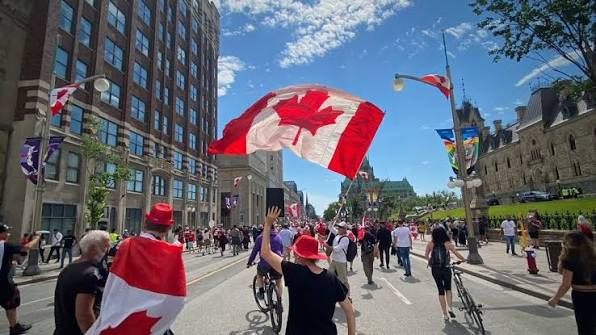
Canada has officially updated its immigration policies and clarified the primary routes to becoming a full Canadian citizen. Holding a Canadian passport remains one of the ultimate long-term goals for foreign workers, students, and families around the world.
Beyond giving you the right to vote and access to high-quality healthcare and social benefits, Canadian citizenship provides unmatched personal security and global travel freedom.
Immigration, Refugees and Citizenship Canada (IRCC) continues to refine how foreign nationals, permanent residents, and foreign-born family members can make Canada their official forever home. While many people assume there is only one route—getting a job and waiting a few years—there are actually seven distinct pathways to becoming a Canadian citizen.
Understanding how these routes work can save you years of effort and help you pick the quickest, most practical route for your personal situation. This guide breaks down every single pathway in simple terms, explains the basic requirements, and shows you how to navigate the system with confidence.
General Eligibility Requirements You Need to Know
Before looking at each individual pathway, it is important to understand the basic prerequisites that apply to most naturalized applicants. For most adults, moving from permanent resident (PR) status to full citizenship requires meeting specific rules set by IRCC. You can check official government updates directly on the IRCC Citizenship Page.
The $0 Secret To Launching Your Entire Online Empire
Why pay hundreds every month for separate software? Build funnels, send emails, and make sales with Systeme.io completely free.
Get Started For $0Free Forever • No Credit Card Needed • Beginner-Friendly
Physical Presence Requirement
You must live in Canada for at least 1,095 days (3 full years) out of the 5 years immediately before you submit your application. If you lived in Canada as a temporary resident—such as a student, temporary worker, or visitor—before becoming a permanent resident, you can count each day spent as a half-day credit. This credit is capped at a maximum of 365 days.
Income Tax Filing
You must file your Canadian income tax returns for at least 3 years within that same 5-year window, provided you were required to file taxes under Canadian tax law. Keeping clean financial and tax records with the Canada Revenue Agency (CRA) is essential.
Language Proficiency
Applicants between the ages of 18 and 54 must prove they can speak and listen in English or French at Canadian Language Benchmark (CLB) level 4 or higher. You can prove this using approved language test results or post-secondary school diplomas taught in English or French.
Citizenship Knowledge Test
Applicants aged 18 to 54 must pass a 20-question test covering Canadian history, geography, economy, government, and symbols. The test takes 30 minutes, and you need at least 15 correct answers out of 20 to pass.
Clear Legal Record
You cannot be under an active removal order, serving a prison sentence, on probation, or subject to serious criminal prohibitions in Canada.
1. Naturalization Through Economic Permanent Residency
This is the most popular route taken by skilled professionals, foreign tradespeople, and international graduates. To use this pathway, you first move to Canada as a permanent resident through an economic immigration stream.
Once you land in Canada and secure your permanent residence, you complete your 1,095 days of physical presence, pay your local taxes, meet your language standards, and apply online for citizenship. The primary economic feeder programs that lead to PR include:
- Express Entry (Federal Skilled Worker Program): For professionals with international work experience, degrees, and strong language scores.
- Canadian Experience Class (CEC): For individuals who already have at least one year of skilled Canadian work experience.
- Provincial Nominee Programs (PNP): For workers who meet the specific labor market needs of individual Canadian provinces.
The main advantage of this route is control. Once you gain permanent resident status, your transition to full citizenship is clear. As long as you stay in Canada, obey the laws, and keep accurate records of your travel dates, you can apply as soon as you hit your three-year residence milestone.
2. Citizenship Via Family Sponsorship
If you have a spouse, common-law partner, parent, or legal guardian who is already a Canadian citizen or permanent resident, you can obtain permanent residency through family class sponsorship.
A common misconception is that marrying a Canadian citizen gives you instant citizenship. Marriage itself does not automatically make you a citizen. Your Canadian partner must first sponsor you to become a permanent resident.
After your permanent residence application is approved, you follow the standard naturalization requirements. You must reside in Canada for 3 out of 5 years, meet tax filing rules, pass the citizenship test, and take your citizenship oath. This path offers strong social support, but it still requires meeting all physical residency timelines.
3. Citizenship by Birth on Canadian Soil (Jus Soli)
Canada remains one of the few developed nations that practices birthright citizenship, legally referred to as jus soli.
Under Canadian nationality law, if a child is born anywhere on Canadian land, in Canadian territorial waters, or in Canadian airspace, that child is automatically a Canadian citizen at birth. The legal status of the parents does not matter. It applies whether the parents are permanent residents, temporary workers, international students, or visitors.
The only exception to this rule applies to children born in Canada to foreign diplomats or official government representatives who hold diplomatic immunity. Outside of that rare scenario, birth in Canada confers immediate, unconditional citizenship for life.
4. Citizenship by Descent (Parentage)
If you were born outside Canada, you may still be a Canadian citizen from birth if at least one of your legal or biological parents was a Canadian citizen when you were born.
Send, Spend & Hold Money Worldwide Without Hidden Fees
Transfer money internationally at the real exchange rate and hold 40+ currencies in one account.
Open a Wise AccountMid-market rate • Fast transfers • 40+ currencies
For several years, Canada enforced a strict rule known as the “first-generation limit.” This rule prevented Canadian citizens who were born outside Canada from passing citizenship to their own children born abroad. However, legislative updates under Bill C-71 have created a fairer path for families who maintain close connections to Canada.
Under current standards, children born abroad to Canadian parents can claim citizenship if the Canadian parent can show a substantial connection to Canada. This usually means the parent spent a combined total of at least 1,095 days physically living in Canada prior to the child’s birth. If you qualify under this route, you do not need to apply for permanent residency first. You simply apply directly for a Proof of Citizenship certificate through IRCC.
5. The Direct Adoption Pathway
When a Canadian citizen adopts a child born in another country, Canada provides a direct pathway to citizenship that bypasses the step of becoming a permanent resident first.
This pathway ensures that internationally adopted children receive the exact same legal rights as biological children born to Canadian parents. Parents can choose between two main processing routes: the citizenship route and the permanent residence route. Most families choose the citizenship route because it awards citizenship as soon as the adoption is legally completed.
To qualify for this stream, the adoption must meet strict conditions:
- It must be legally valid under the laws of both Canada and the child’s home country.
- It must create a genuine parent-child relationship.
- It must be done in the best interest of the child rather than for immigration convenience.
6. Fast-Track Citizenship for Canadian Armed Forces Members
Canada offers an accelerated citizenship route for individuals serving in the Canadian Armed Forces (CAF). This program rewards permanent residents who commit to defending and serving the country.
Under this pathway, the physical presence requirements are shortened. Permanent residents serving in the military can qualify for citizenship with fewer days of physical residence compared to civilian applicants. IRCC calculates military service days using accelerated credits, allowing service members to reach eligibility faster.
Furthermore, IRCC gives priority processing to applications submitted by qualified military personnel. This allows dedicated service members and their immediate family members to finalize their citizenship without unnecessary delays.
7. Humanitarian, Refugee, and Special Discretionary Grants
The seventh pathway serves individuals who enter Canada through humanitarian programs, refugee protection channels, or special discretionary grants.
For protected persons and resettled refugees, the process starts by receiving permanent resident status through humanitarian streams. Once permanent residency is granted, refugees can count the time spent in Canada as protected persons toward their physical presence requirement. Every day spent in Canada before becoming a permanent resident counts as a half-day credit, up to a maximum of 365 days.
The $0 Secret To Launching Your Entire Online Empire
Why pay hundreds every month for separate software? Build funnels, send emails, and make sales with Systeme.io completely free.
Get Started For $0Free Forever • No Credit Card Needed • Beginner-Friendly
Additionally, under Section 5(4) of the Citizenship Act, the Minister of Immigration holds discretionary power to grant citizenship in extraordinary situations. This grant is reserved for exceptional circumstances, such as resolving cases of statelessness or honoring individuals who have provided services of extraordinary value to Canada.
Step-by-Step Instructions: How to Apply in 2026
Once you identify the right pathway for your situation, submitting your application involves a clear, step-by-step process. IRCC processes almost all citizenship applications online, making it easier to track your status.
Step 1: Calculate Your Days
Use the official IRCC Physical Presence Calculator online. Enter every trip you took outside Canada during your 5-year eligibility window. Make sure you have at least 1,095 days logged. It is good practice to wait until you have 1,110 or 1,120 days before submitting, just in case there are minor discrepancies in your travel records.
Step 2: Gather Your Supporting Documents
Collect all required documentation before starting your online application:
- Your valid Permanent Resident (PR) card.
- All valid and expired passports covering your 5-year eligibility period.
- Proof of English or French language proficiency if you are between 18 and 54 years old.
- Notice of Assessment (NOA) forms from the Canada Revenue Agency for 3 tax years.
- Two digital photos meeting IRCC citizenship photo specifications.
Step 3: Fill Out the Online Application
Log in to your IRCC Secure Account at Canada.ca and fill out Form CIT 0002. Double-check all dates, addresses, and employment records to ensure they match your tax filings and passport stamps.
Step 4: Pay Your Government Fees
Pay the application fees online through the IRCC portal. The total fee for adults aged 18 and older is $630 CAD (including a $530 processing fee and a $100 Right of Citizenship fee). For minors under 18, the application fee is $100 CAD.
Step 5: Submit and Track
Submit your application electronically. IRCC will send you an Acknowledgement of Receipt (AOR) email with an application number once they open your file. You can use this number to check your status online.
Step 6: Complete the Test and Ceremony
If you are between 18 and 54, you will receive an invitation to take the online citizenship test. After passing the test and completing background checks, you will be invited to a citizenship ceremony. At the ceremony, you will take the Oath of Citizenship and receive your citizenship certificate.
Mistakes That Can Delay Your Application
Even small mistakes can cause long delays or lead to a rejected application. Avoiding these common errors will keep your file moving smoothly:
- Applying Too Soon: Submitting your application with 1,094 days instead of 1,095 days will result in an immediate rejection. Always verify your physical presence total before sending.
- Forgetting Short Trips: Leaving out short weekend trips across the border or brief vacations will create inconsistencies between your application and border control logs. Record every single departure and arrival date.
- Missing Tax Records: Make sure your income tax returns are fully assessed by the Canada Revenue Agency before submitting your file.
- Unclear Language Proof: Ensure your language certificate or school transcript meets IRCC criteria. Expired test scores from non-approved organizations will be rejected.
Staying Connected and Informed
Navigating global immigration, policy changes, and career opportunities requires reliable information. If you want to know more about our story and mission, feel free to visit our About Page to see what drives our work.
If you are interested in modern digital skills and emerging industries, check out our insights on Technology & AI and explore content creation trends in YouTube Automation.
Have questions, suggestions, or media inquiries? Reach out to us directly through our Contact Page. You can also follow us across our social channels to join the community:
- Follow us on Instagram
- Connect with us on Facebook
- Join the conversation on X (formerly Twitter)
Frequently Asked Questions (FAQs)
How long does it take to process a Canadian citizenship application in 2026?
Processing times usually range from 8 to 12 months from the day IRCC receives your complete application. Complex files requiring extra verification can take longer.
Can I leave Canada after submitting my citizenship application?
Yes, you can travel or temporarily live outside Canada after sending your application. However, you must keep your permanent resident status valid, attend your scheduled test or interview, and return for your official ceremony.
Does buying property in Canada make you eligible for citizenship?
No. Buying real estate or investing in property does not give you permanent residency or citizenship. You must qualify through an authorized immigration pathway and fulfill all residency rules.
What happens if I do not pass the Canadian citizenship test?
If you do not pass on your first attempt, IRCC will schedule a second test. If you do not pass the second attempt, you will meet with a citizenship officer for an interview to demonstrate your knowledge.
Do I have to give up my current citizenship when I become Canadian?
Canada allows dual and multiple citizenship. You do not have to give up your original citizenship unless your home country’s laws restrict dual nationality.
Final Thoughts on Becoming a Canadian Citizen
Becoming a Canadian citizen is a major personal milestone that brings legal peace of mind, equal rights, and a strong sense of belonging. By picking the pathway that matches your life situation, tracking your residence days carefully, and following each IRCC step, you can complete your journey to citizenship smoothly. Take your time, stay organized, and prepare your documents carefully as you work toward your goal.
