
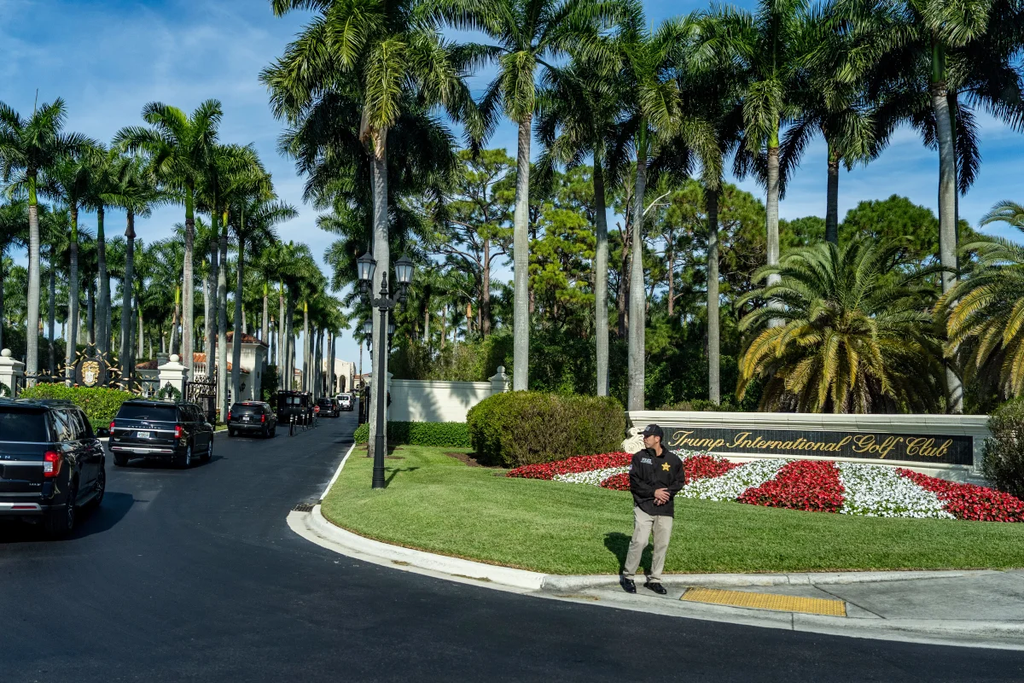
Donald Trump has officially proposed creating a brand-new, Camp David-style presidential retreat right inside his private golf club in West Palm Beach, Florida. The plan aims to transform a portion of the Trump International Golf Club into a permanent official retreat for current and future American leaders.
The announcement has stirred up nationwide conversation across political lines. Critics are raising questions about ethics, property ownership, and security, while supporters view it as a generous gift to the presidency.
Understanding what this plan actually entails requires looking closely at the specific details submitted to local officials, the long history of presidential retreats, and the legal questions surrounding the proposal.
What Is Donald Trump Proposing for His West Palm Beach Golf Club?
The formal proposal was submitted to Palm Beach County officials by representatives acting on behalf of Donald Trump. According to the filings, the goal is to designate a section of the Trump International Golf Club as an official, permanent presidential retreat.
This designated area would be designed to give sitting U.S. presidents a secure, high-end location to host world leaders, hold international summits, and relax during official visits to South Florida. The plan calls for a separate, dedicated entrance away from the main private club facilities.
The $0 Secret To Launching Your Entire Online Empire
Why pay hundreds every month for separate software? Build funnels, send emails, and make sales with Systeme.io completely free.
Get Started For $0Free Forever • No Credit Card Needed • Beginner-Friendly
It would also include private lodging units specifically built for foreign dignitaries and official government guests. Land development requests handed to local authorities show that the project aims to create a fully functioning compound capable of meeting the strict security demands of the Secret Service.
Trump’s team states that the entire project will be funded at the president’s personal expense rather than using taxpayer money. His representatives emphasized that because construction will take time, Trump himself will likely be out of office before the facility is completed. They describe the project as a lasting gift to future commanders-in-chief, regardless of their political party.
Reports published by major news outlets like the Washington Post and the Associated Press note that the proposal would mark one of the most unusual physical additions to the infrastructure of the American presidency in modern memory.
Understanding the Original Camp David and Why It Exists
To see why this Florida proposal is generating so much attention, it helps to understand what the original Camp David is and how it became part of American political history.
Camp David is located in Catoctin Mountain Park in Frederick County, Maryland. It covers about 125 acres of dense, heavily wooded forest. It was originally built by the federal government in the 1930s as a camp for federal employees and their families.
In 1942, President Franklin D. Roosevelt converted the site into a private presidential retreat. Roosevelt famously named it “Shangri-La,” after the fictional mountain paradise in James Hilton’s novel Lost Horizon.
President Dwight D. Eisenhower later renamed the retreat “Camp David” in honor of his grandson, David Eisenhower. Eisenhower also added a golf putting green and modernized the cabins.
For more than 80 years, Camp David has served three primary purposes for American leaders:
- Security: Surrounded by thick forests, fence perimeters, and protected airspace, it offers maximum security away from city crowds.
- Privacy: It gives presidents a quiet place to escape the non-stop pressure of the White House without leaving easy reach of Washington, D.C.
- Diplomacy: It provides a secluded, neutral space for high-stakes foreign diplomacy. Famous events held there include the 1978 Camp David Accords between Egypt and Israel, as well as crucial World War II planning sessions between Franklin D. Roosevelt and Winston Churchill.
Unlike a luxury resort, Camp David is basic and rustic. It features simple wooden cabins, walking trails, a swimming pool, and basic sports facilities. That rustic atmosphere was designed on purpose to promote quiet reflection and candid talks between world leaders.
How Trump’s Preference for Luxury Resorts Differs from Past Presidents
Donald Trump’s approach to presidential free time has always looked very different from his predecessors. During his terms in office, he has spent relatively little time at the rustic Maryland retreat. Instead, he has consistently preferred his own commercial properties, including his Mar-a-Lago estate in Palm Beach and his golf clubs in Bedminster, New Jersey, and West Palm Beach, Florida.
Trump has often referred to Mar-a-Lago as the “Winter White House.” He has hosted key world leaders there, including foreign prime ministers and presidents, using his private facilities to conduct high-level diplomacy.
However, there is a distinct difference between Mar-a-Lago and the West Palm Beach golf club involved in this new plan. Mar-a-Lago is an oceanfront estate and private social club, whereas the Trump International Golf Club is a gated, 27-hole golf facility located a few miles inland.
The West Palm Beach golf course already features heavy security measures, high perimeter walls, and space for large motorcades. Converting a portion of this specific property into a permanent government retreat represents an attempt to institutionalize Trump’s preferred style of Florida hosting for all future leaders.
Ethics, Finances, and Legal Questions Surrounding the Proposal
Whenever a sitting president mixes private business assets with official government operations, intense public debate follows. This Florida proposal is no exception.
Critics and government ethics experts have raised several key concerns about the plan:
Send, Spend & Hold Money Worldwide Without Hidden Fees
Transfer money internationally at the real exchange rate and hold 40+ currencies in one account.
Open a Wise AccountMid-market rate • Fast transfers • 40+ currencies
- Commercial Intermingling: The proposal would tie a permanent government institution directly to a private, revenue-generating golf business owned by the Trump family. Financial disclosure reports show that the West Palm Beach club generated nearly $37 million during his first year back in office.
- Taxpayer Costs for Security: Even if Trump covers the physical building construction costs, taxpayers would likely pay millions of dollars annually for Secret Service protection, secure communications equipment, military staff, and airspace enforcement whenever the facility is used.
- Future Property Rights: Questions remain about who would own the land underneath the new structures over the long term. If the facility sits on private club land, legal mechanics regarding access rights, zoning, and future maintenance costs must be clearly defined.
- Willingness of Future Presidents to Use It: Political analysts point out that future presidents from opposing political parties might feel uncomfortable vacationing or hosting diplomatic summits at a property explicitly bearing the Trump name.
On the other hand, supporters argue that the plan offers real advantages:
- Private Funding: Trump’s team insists that building the retreat with private money saves taxpayers the upfront capital expense of constructing a brand-new Southern retreat from scratch.
- Modern Facilities: A newly designed facility in Florida would offer updated accommodations, advanced technology, and high-level comfort that rustic Camp David cabins cannot easily provide.
- Better Winter Climate: Washington, D.C., and Maryland suffer cold winters. Having a permanent, government-recognized retreat in sunny South Florida gives presidents an ideal winter option.
Coverage on major news platforms like CNN and NPR highlights that local county commissioners and federal security officials will need to review zoning laws, safety requirements, and operational plans before anything can be officially approved.
Historical Precedents: How Past Presidents Handled Estates and Retreats
The idea of a president donating land or setting aside property for public and government use is not entirely new in American history. In their filings, Trump’s legal representatives referenced several historic examples where former presidents gifted personal land to the nation:
- Dwight D. Eisenhower: President Eisenhower and his wife Mamie bought a farm in Gettysburg, Pennsylvania, in 1950. They used it as a weekend escape during his presidency and retired there afterward. Eisenhower later donated the farm to the National Park Service. Today, it is preserved as the Eisenhower National Historic Site.
- Franklin D. Roosevelt: FDR donated his home and estate in Hyde Park, New York, to the American people. It became the Home of Franklin D. Roosevelt National Historic Site and houses the nation’s first presidential library.
- Mar-a-Lago’s Original Story: Interestingly, Mar-a-Lago itself was once intended to be an official presidential retreat. In 1973, cereal heiress Marjorie Merriweather Post willed the 126-room mansion to the U.S. government upon her death, hoping it would serve as a “Winter White House”. However, the federal government found the annual maintenance costs—around $1 million per year at the time—too expensive and returned the property to the Post estate in 1980. Donald Trump subsequently bought the property in 1985.
While Eisenhower and Roosevelt gifted fully private homes to the public, Trump’s current proposal involves a property that functions as an active commercial golf business. That difference is central to the ongoing public debate.
What Happens Next for the Proposed Retreat?
Turning a portion of a private golf course into a designated presidential retreat is a multi-step process that requires approvals across several levels of government.
First, Palm Beach County officials must review the zoning modifications requested by Trump’s team. The county needs to evaluate traffic impacts, noise levels, land use classifications, and public safety needs.
Second, federal law enforcement agencies—most notably the United States Secret Service and the Department of Defense—must conduct thorough security audits. They need to ensure that the site can be fully secured against physical and electronic threats, especially when housing visiting foreign dignitaries.
Third, Congress may need to review any agreements that involve long-term federal operational commitments or taxpayer spending for staffing and maintenance.
Because of these regulatory steps, construction and official setup will take significant time. As Trump’s team noted in their public statements, the facility will not be fully operational until well after his current presidential term ends.
Frequently Asked Questions (FAQs)
Why does the United States need a new presidential retreat when Camp David already exists?
Camp David in Maryland remains fully operational and continues to serve as the official presidential retreat. However, Camp David is rustic and located in a cold winter climate. Proponents argue that having an official, permanent retreat in South Florida gives leaders a modern, warm-weather alternative for hosting international guests during winter months.
The $0 Secret To Launching Your Entire Online Empire
Why pay hundreds every month for separate software? Build funnels, send emails, and make sales with Systeme.io completely free.
Get Started For $0Free Forever • No Credit Card Needed • Beginner-Friendly
Will taxpayers have to pay to build this new retreat?
According to the proposal submitted by Donald Trump’s representatives, the construction and development of the retreat will be funded out of his own pocket. However, taxpayers would likely cover standard operational costs associated with presidential security, Secret Service detail, military communications, and official transportation whenever the site is used by a sitting president.
Where exactly will the new retreat be located?
The proposed retreat would be built on land inside the Trump International Golf Club in West Palm Beach, Florida. It would feature its own separate entrance and distinct facilities set apart from the standard private golf club operations.
Can future presidents use the facility if they belong to a different political party?
Yes. The formal proposal explicitly states that the retreat is designed as a permanent gift to the American presidency, intended for use by all future sitting presidents regardless of their political party affiliation.
Has a private property ever been turned into a presidential retreat before?
Yes. Historical examples include Dwight D. Eisenhower’s Gettysburg farm and Franklin D. Roosevelt’s Hyde Park estate, both of which were transitioned into public historic sites. Additionally, Mar-a-Lago was originally donated to the federal government in 1973 for use as a winter retreat, though the government later returned it due to high upkeep costs.
How This Proposal Reshapes the Presidential Legacy Debate
The debate over creating a Camp David-style retreat in Florida highlights how different presidents view their official duties, personal comfort, and physical legacy.
For decades, Camp David’s simple mountain cabins have symbolized quiet, unpretentious American leadership focused on privacy and diplomatic hard work. Trump’s vision reflects a very different style—one built around warm weather, luxury amenities, world-class golf, and high-visibility hosting.
Whether the Palm Beach County planning board approves the necessary zoning changes or future presidents choose to utilize the facility remains to be seen. What is certain is that the proposal has sparked a major debate on how public duties and private property should intersect in modern American politics.
To stay informed on breaking news stories, political analysis, and trending topics from around the world, visit our about page or get in touch through our contact page. You can also follow all our updates across social media on Instagram, Facebook, and X (formerly Twitter).
