
Solar energy has spent the past decade getting cheaper, bigger, and easier to put on your roof. Yet behind all the shiny black glass and green marketing lies an annoying technical problem that the clean energy business has quietly tolerated for over thirty years. If a single tree branch shades one corner of a panel, or a flock of birds leaves a mess on a cell, the power output of the whole system can fall off a cliff.
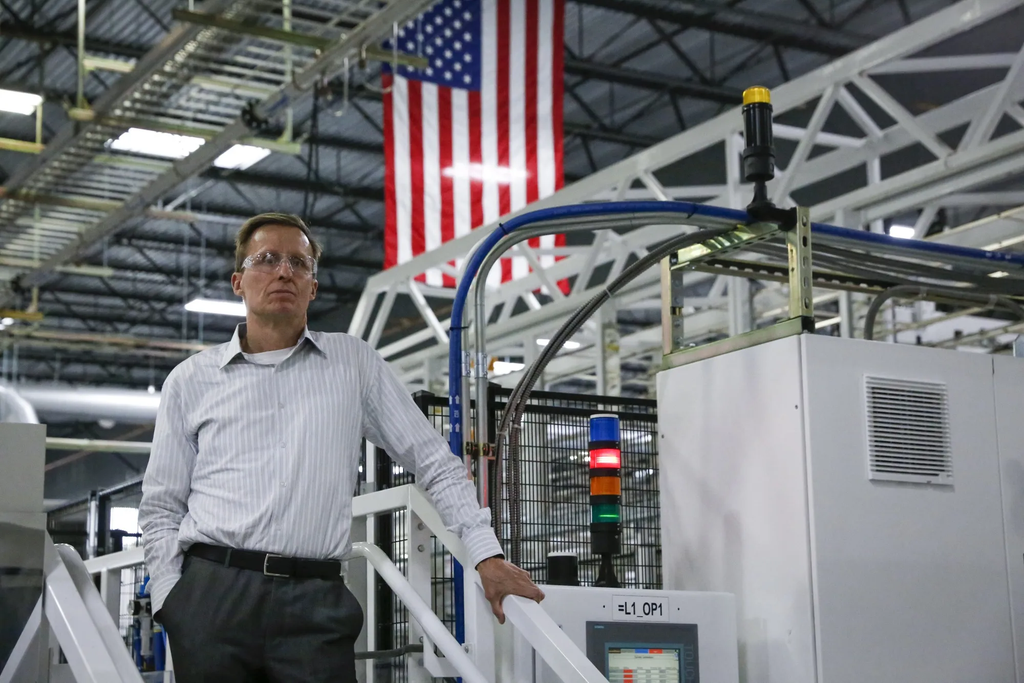
That persistent headache is why the renewable energy world took notice when former SunPower Chief Executive Officer Tom Werner put his money and reputation behind a nine-year-old hardware startup called Optivolt.
Optivolt Labs has closed a massive $32 million Series A funding round. The investment round was led by VXI Capital, a venture firm founded by Orin Hoffman, the former chief technology officer of the United States Defense Innovation Unit. Total funding for the company now sits at $42 million, and the investor roster reads like a who’s who of solar pioneers. Alongside Werner, early Enphase Energy founding CEO Paul Nahi, former New York energy chairman Richard Kauffman, RA Capital, Valo Ventures, and Atlas Innovate joined the round.
This is not just another check written to an ordinary solar installation business. It is a major financial bet on a tiny electronic device that aims to give standard solar panels something they have never had before: an active brain.
Why Is a Solar Industry Giant Betting on Optivolt?
To understand why Tom Werner’s backing matters, you have to look at what SunPower accomplished under his leadership. For years, SunPower set the global gold standard for solar panel efficiency. Engineers pushed the limits of materials and chemistry to squeeze every decimal point of sunlight into clean electricity.
The $0 Secret To Launching Your Entire Online Empire
Why pay hundreds every month for separate software? Build funnels, send emails, and make sales with Systeme.io completely free.
Get Started For $0Free Forever • No Credit Card Needed • Beginner-Friendly
Yet even the most advanced panels shared the exact same Achilles’ heel. They functioned great inside clean test labs under simulated lamps, but real life on an actual roof is messy. Real life brings dust, fallen leaves, passing clouds, chimney shadows, snow drifts, and micro-cracks from hailstorms.
Werner noted that the industry spent almost thirty years obsessing over lab ratings, but the next generation of clean power has to solve what happens when conditions are far from ideal. When a solar project produces reliable power throughout its full life cycle regardless of grime or shadows, the entire financial equation of green energy changes.
That realization led Werner to Optivolt founder and CEO Rohit Kalyanpur. Kalyanpur launched the company nearly a decade ago with an audacious goal. He argued that solar panels had become cheap enough to compete with fossil fuels, but they were not yet smart enough to power modern society without regular drops in performance.
Instead of waiting for chemical companies to invent a magic new silicon wafer, Optivolt spent nine years building aerospace-grade power electronics designed to live directly inside the solar module itself.
The Hidden Flaw Inside Everyday Solar Panels
Most people assume a solar panel operates like a sponge that uniformly soaks up sunlight across its entire surface. When light hits it, power simply pours into your house.
The physical reality is far more fragile. A standard solar panel is built out of dozens of small solar cells wired together in series, much like an old string of holiday tree lights. In a classic string of holiday lights, if a single bulb blows out or gets loose, the entire strand goes dark.
Solar panels suffer from a similar design limitation:
- The weak link effect: Electricity flowing through a string of cells is limited by the weakest cell in that chain.
- The shadow trap: If shade from a telephone pole covers just five percent of a panel, output does not drop by five percent. It can drop by half, or shut down that section of the panel entirely.
- The heat problem: When an unshaded cell tries to push current through a shaded cell that cannot conduct it, that shaded cell turns into an electrical roadblock. It heats up, creating a hotspot that slowly degrades the panel materials over time.
Traditional installers try to patch this problem from the outside. They mount bulky boxes called microinverters or DC power optimizers on the rack behind the panel. While those external boxes help manage electricity after it leaves the panel, they cannot fix the mismatch happening across individual cell groups inside the panel itself.
Optivolt attacks the bottleneck at the microscopic level with a piece of hardware called the Power Balancer.
How Optivolt’s “Power Balancer” Actually Works
The Power Balancer is an active micro-device embedded directly into the circuit connections of the solar panel during manufacturing. Rather than letting a shaded cell drag down its neighbors, the device continuously monitors power generation across separate cell clusters.
If a cloud passes over or bird droppings hit the top left corner of the module, the Power Balancer reroutes current across the panel in real time. It balances the voltage and moves excess energy around shaded zones so every functioning cell continues generating power at full throttle.
Independent tests have shown that panels equipped with this technology can recover a huge portion of the energy that standard panels waste every afternoon. The system is designed to withstand harsh outdoor conditions for twenty-five years without requiring extra maintenance from rooftop technicians.
Optivolt has already shipped more than 20,000 panels equipped with the Power Balancer to pilot partners, off-grid hardware makers, and commercial users. The fresh $32 million injection will fund automated assembly lines so the company can manufacture millions of these chips and supply mainstream panel makers around the world.
Follow the Money: Who Is Backing the $32 Million Round?
Venture funding for clean energy has become far more selective lately, especially as interest rates made hardware manufacturing expensive. Investors are no longer throwing cash at vague green promises. They want proven technology with clear intellectual property and immediate commercial demand.
Optivolt’s Series A ranks among the top eight percent of all early-stage energy financing rounds in the United States this year. The list of people involved explains why:
Send, Spend & Hold Money Worldwide Without Hidden Fees
Transfer money internationally at the real exchange rate and hold 40+ currencies in one account.
Open a Wise AccountMid-market rate • Fast transfers • 40+ currencies
- VXI Capital: The lead investor is run by Orin Hoffman, whose background at the Pentagon’s Defense Innovation Unit focused on funding tough hardware that must operate reliably in hostile field environments.
- Tom Werner: The former CEO of SunPower brings decades of manufacturing knowledge, global supply chain contacts, and deep credibility with utility boardrooms.
- Paul Nahi: As the founding CEO of Enphase Energy, Nahi helped turn microinverters into a multi-billion-dollar global standard. His involvement signals that panel-level intelligence is seen as the next logical hardware evolution.
- Richard Kauffman: Known across the United States as New York State’s former energy czar, Kauffman understands how utility regulations, grid connections, and wholesale power markets work.
- Institutional Funds: Venture firms including RA Capital, Valo Ventures, and Atlas Innovate provided the balance of the capital to fuel factory expansion.
When top executives who built the modern solar ecosystem start backing the same startup, it usually means the industry is about to undergo a significant shift in standards.
The AI Data Center Boom Is Driving Urgent Demand for Smarter Solar
One unexpected driver behind this funding round is artificial intelligence. The sudden global explosion of generative AI software has created an unprecedented hunger for electricity.
Massive computing facilities run around the clock, consuming as much power as whole cities. Tech companies have promised their shareholders that they will power these facilities with carbon-free electricity, but local utility grids are running out of capacity. As covered in reports on how giant AI data centers are sparking intense local pushback, tech giants are facing severe resistance from communities worried about strained electrical grids and rising utility bills.
Big institutional investors have grown increasingly uneasy about these energy bottlenecks. Many financial analysts are watching why big investors are worried about the growing pushback against AI data centers as tech firms scramble to secure private, dedicated power plants.
Solar farms are the fastest clean power sources to build, but data centers need predictable power output every single hour of the day. A solar farm that loses twenty percent of its output whenever dust storms blow through or clouds roll past creates serious grid stability issues.
By building panels that remain productive under hazy, cloudy, or dusty conditions, Optivolt gives industrial developers a way to harvest far more megawatt-hours from the exact same footprint of land.
What This Breakthrough Means for Everyday Homeowners
While large utility solar farms and industrial data hubs will likely be first in line to buy these smart panels, the long-term benefits for ordinary homeowners are just as significant.
Putting solar panels on a house has historically been an all-or-nothing proposition. If your roof faced slightly east instead of south, or if your neighbor had a tall oak tree that threw shadows across your shingles from 2:00 PM onward, many installers would simply tell you that your house was unsuitable for solar.
Even homeowners who went forward often had to purchase expensive supplementary electronics or trim healthy trees to keep their systems working at rated capacity.
Panel-embedded intelligence changes those ground rules:
The $0 Secret To Launching Your Entire Online Empire
Why pay hundreds every month for separate software? Build funnels, send emails, and make sales with Systeme.io completely free.
Get Started For $0Free Forever • No Credit Card Needed • Beginner-Friendly
- Flexible roof layouts: You can install solar panels on dormers, multi-angle roofs, and partially shaded sections without destroying the electrical output of the entire array.
- Lower installation costs: Because the balancing happens inside the panel itself, contractors do not need to wire complex individual optimizer boxes under every single panel, speeding up installation times.
- Better cold-weather performance: Snow melts unevenly on a roof. On traditional setups, a strip of remaining snow at the bottom of a panel disables the whole unit. Smart panels keep producing energy from whatever glass surface is clear.
- Resilience over time: Panels degrade at different rates over twenty years. Internal balance controls make sure that an older, degraded cell does not pull down the output of adjacent healthy cells.
As governments re-evaluate climate spending and renewable incentives—similar to the debates highlighted when leaders re-evaluate green tax plans and net-zero commitments—technologies that lower consumer energy bills without requiring taxpayer subsidies will win the market.
How Optivolt Fits into the Global Startup Landscape
Optivolt’s successful funding comes at a moment when global tech investment is experiencing a major rebound. While software and app funding slowed down over the past two years, climate hardware, defense technology, and energy infrastructure are drawing serious capital.
We are seeing a similar resurgence across emerging markets. For example, African startups bounced back with nearly four billion dollars raised, showing that investors worldwide are eager to fund real-world solutions that tackle fundamental challenges like connectivity, logistics, and clean power generation.
The challenge for Optivolt will not be proving that its science works; the company has spent nine years testing prototypes in extreme conditions. The real test will be scaling manufacturing quickly enough to meet the demand of tier-one panel makers across North America, Europe, and Asia.
Silicon Valley history has shown that the biggest profits often do not go to the companies that manufacture raw commodities like glass or aluminum frames. The highest value belongs to the companies that own the intellectual property and microchips operating inside the machinery.
If Optivolt succeeds in licensing its Power Balancer across mainstream production lines, it could become the “Intel Inside” of the clean energy generation.
Frequently Asked Questions (FAQs)
What company did former SunPower CEO Tom Werner invest in?
Tom Werner joined a $32 million Series A funding round for Optivolt Labs, a technology startup founded by Rohit Kalyanpur that develops embedded electronics for solar panels.
What is the Optivolt Power Balancer?
The Power Balancer is an active microchip and circuit system built directly into a solar panel. It dynamically reroutes electricity between groups of solar cells to stop shade, grime, or minor damage from ruining the power output of the whole panel.
How much money has Optivolt raised so far?
With the latest $32 million Series A round led by VXI Capital, Optivolt has raised a total of $42 million in venture capital since its founding.
How is this different from existing solar microinverters or optimizers?
Microinverters and DC optimizers are external boxes mounted to the racking behind a solar panel. They balance power at the whole-panel or multi-panel level. Optivolt’s device lives inside the panel glass and laminate, managing electricity cell-by-cell before it ever exits the module.
When will smart solar panels with Optivolt technology be available?
Optivolt has already deployed over 20,000 units in pilot commercial projects and specialized hardware applications. The new funding will expand factory capacity, with wider consumer and commercial deployment expected over the coming months.
The Next Era of Smart Energy
For decades, the clean energy industry operated under a blunt philosophy: if you need more electricity, just build bigger panels and buy more acres of land.
That brute-force strategy brought the cost of solar down low enough to beat coal and gas on paper. But as society attempts to power artificial intelligence data centers, electric vehicle fleets, and electrified homes, efficiency in messy, real-world conditions matters more than ideal laboratory test scores.
Tom Werner, Paul Nahi, and VXI Capital are placing their capital on the premise that the future of renewable energy is smart hardware, not just cheap glass. By putting brains inside individual panels, Optivolt is turning passive roofing materials into responsive power networks capable of delivering dependable energy rain or shine.
