
Anyone who travels on a packed bus, sits in a crowded coffee shop, or works inside a busy office knows the uncomfortable feeling of wandering eyes. People naturally glance at nearby bright screens, whether reading a personal WhatsApp message, watching a video, or catching a glimpse of an account login.
To prevent this, millions of smartphone owners buy third-party tempered glass privacy protectors. These plastic and glass sheets work through micro-louvers, which act like microscopic vertical blinds. When looked at head-on, light passes straight through. When viewed from an angle, the blinds block the light path, making the display look completely pitch-black to anyone standing beside you.
However, physical privacy protectors create annoying daily problems. They ruin the natural vibrant colors of premium OLED panels, cut down display brightness, create strange rainbow artifacts, and interfere with ultrasonic in-display fingerprint sensors.
Samsung aims to solve this problem entirely at the hardware level, ditching the plastic film for an intelligent, switchable digital privacy layer baked directly inside the glass.
How the Samsung Privacy Display Actually Works
The Privacy Display is an electronic system built directly into the smartphone’s panel assembly. Instead of relying on a permanent physical filter stuck on top of the glass, the screen itself controls how light spreads out sideways.
The $0 Secret To Launching Your Entire Online Empire
Why pay hundreds every month for separate software? Build funnels, send emails, and make sales with Systeme.io completely free.
Get Started For $0Free Forever • No Credit Card Needed • Beginner-Friendly
When the phone operates in standard mode, the panel emits light broadly in every direction. This provides the ultra-wide viewing angles people love when watching movies or sharing photos with friends sitting nearby.
When you turn on the Privacy Display mode, the screen changes how individual pixels disperse light. Liquid crystal or micro-collimating layers guide the light rays forward, directly toward your face, while cutting off horizontal illumination.
To the person holding the phone straight on, everything stays sharp and easy to read. To a nosey stranger sitting next to you on a train, the screen looks completely dark or heavily shadowed, hiding sensitive details.
Samsung also lets users customize how this privacy filter behaves:
- You can toggle the feature on or off manually using a quick toggle inside the One UI quick settings panel.
- The phone can be set to turn on privacy filtering automatically when opening banking apps, crypto wallets, or private photo albums.
- Localized privacy dimming can automatically hide incoming floating notifications so only the person holding the phone can read incoming alerts.
More detailed technical breakdowns of display architectures can be found in detailed hardware analyses on Notebookcheck and SamMobile.
What Changes on the Galaxy S27 Series?
The first iteration of this feature introduced on the Galaxy S26 Ultra was innovative, but it arrived with a major drawback: serious brightness loss.
Testing showed that activating the privacy feature cut the panel’s luminance significantly. In several tests, setting the display to 1,000 nits and flicking on privacy mode dropped brightness down to around 636 nits. Outdoors in bright sunlight, that sharp drop in illumination made the screen almost impossible to read comfortably.
Supply chain leaks now indicate that Samsung has reworked the underlying panel chemistry and light-guiding layers. The Galaxy S27 Pro and Galaxy S27 Ultra will feature a much more efficient privacy system designed to sustain high brightness even with narrow viewing angles activated. This ensures users can maintain confidentiality while walking outside under direct sunlight.
Galaxy S27 Pro vs Galaxy S27 Ultra: A Shared Flagship Identity
The decision to offer Privacy Display on both the Galaxy S27 Pro and the Galaxy S27 Ultra marks an important shift in product strategy.
In previous years, Samsung reserved top display and camera features exclusively for the largest, heaviest Ultra handset. Buyers who wanted pocket-friendly dimensions often had to compromise on display tech, battery charging, or high-end cameras.
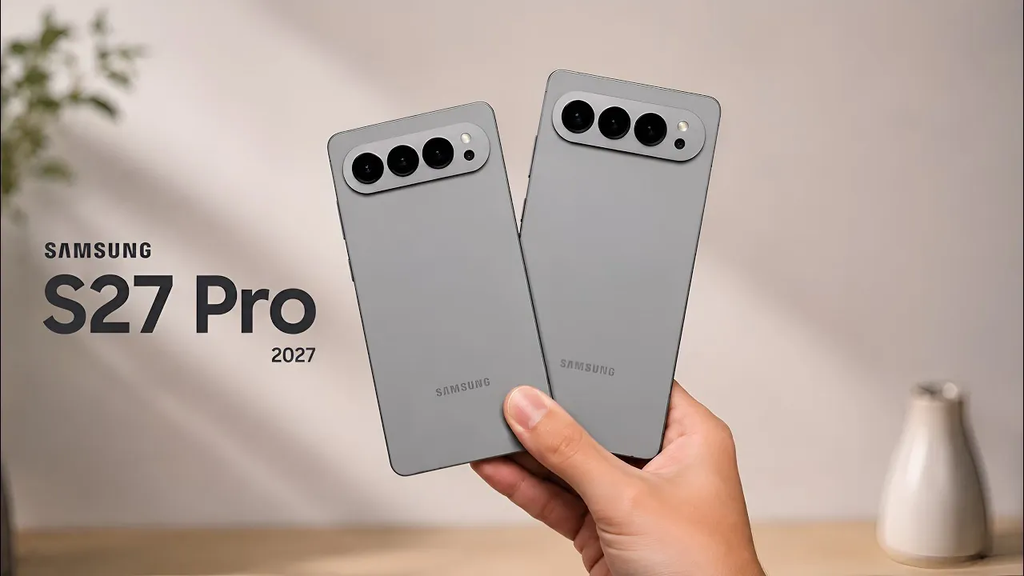
The Galaxy S27 Pro bridges that gap. It is planned as a compact powerhouse that carries over several top-tier Ultra components without forcing users to carry a giant 6.9-inch slab.
Expected Differences Across the Flagship Twins
The Galaxy S27 Pro will reportedly feature a 6.47-inch dynamic OLED display, a 5,200mAh battery, and 60W fast wired charging. It brings the flagship 200MP main camera sensor into a device that remains easy to use with one hand.
The Galaxy S27 Ultra will remain the no-compromises giant. It is expected to carry a massive 6.89-inch screen using next-generation M16 OLED materials, offering extreme peak brightness and built-in S Pen stylus support. It pairs that display with an upgraded 5,700mAh battery and a specialized periscope telephoto zoom lens.
Both devices will share the same upgraded Privacy Display mechanism and premium design language, meaning you do not have to buy the biggest phone just to get peak screen privacy.
For further specifications on mobile camera innovations and processor benchmarks, check out continuous industry updates on 9to5Google and PhoneArena.
Send, Spend & Hold Money Worldwide Without Hidden Fees
Transfer money internationally at the real exchange rate and hold 40+ currencies in one account.
Open a Wise AccountMid-market rate • Fast transfers • 40+ currencies
Bad News for the Standard Galaxy S27 and S27 Plus
While the Pro and Ultra are getting major display upgrades, buyers planning to pick up the standard Galaxy S27 or Galaxy S27 Plus will be left out.
Reports confirm that the standard and Plus variants will not feature the Privacy Display hardware. These two entry flagships will keep traditional OLED panels with standard wide viewing angles.
Leaving the feature off the lower models comes down to two simple factors:
Manufacturing Costs
Electronic privacy panels require specialized dual-layer micro-optics and proprietary driving circuits. Adding these components to baseline phones would push retail prices up, making them less competitive against rival budget-flagship smartphones.
Up-Selling Strategy
Samsung wants clear reasons for customers to spend extra money on the Pro or Ultra. By keeping enterprise-grade privacy protection exclusive to the top two models, Samsung gives professionals, corporate buyers, and tech enthusiasts a clear reason to upgrade.
If you pick up a standard Galaxy S27 or S27 Plus, you will still need to buy an old-fashioned stick-on privacy screen protector if you want to block side glances.
Why Built-In Privacy Tech Is the Next Big Smartphone Battleground
Smartphone design has hit a plateau in several areas. Megapixel numbers are already high, processor speeds exceed what normal daily apps need, and device form factors are well refined.
Phone makers are shifting attention toward daily quality-of-life features that solve real frustrations. Privacy is one of the most pressing concerns for modern phone owners.
People carry their whole lives inside their phones:
- Private banking, stock portfolios, and real-time bank transfers
- Work emails containing company secrets and sensitive client data
- Medical records and prescription deliveries
- Personal conversations that should remain private
In many parts of the world, public transit commuters face real risks of financial theft from onlookers spotting PIN codes, account balances, or authentication screens. An automatic, un-hackable hardware filter built right into the screen prevents opportunistic snooping before it can happen.
The $0 Secret To Launching Your Entire Online Empire
Why pay hundreds every month for separate software? Build funnels, send emails, and make sales with Systeme.io completely free.
Get Started For $0Free Forever • No Credit Card Needed • Beginner-Friendly
By perfecting this hardware, Samsung has an advantage over competitors like Apple and Google, who currently rely strictly on software-based notification masking and biometric lock screens.
Frequently Asked Questions
Does the Privacy Display drain battery faster?
Because the system uses active optical filtering or auxiliary pixel rows to guide light, it can consume a bit more power than the standard wide-view mode. However, Samsung’s software is designed to activate the feature only inside selected apps or when prompted, keeping extra battery drain negligible during daily use.
Will a regular screen protector ruin the Privacy Display?
A standard clear tempered glass or PET plastic screen protector will work normally. The privacy effect happens beneath the exterior cover glass, so adding a basic clear layer for scratch protection will not interfere with the viewing-angle controls.
Can I share my screen with a friend when I want to?
Yes. The feature is an active digital switch. If you want to show someone a photo or watch a video together, you simply switch off Privacy Display in quick settings, returning the screen to its natural wide viewing angles.
Is Privacy Display coming to older Galaxy phones via software updates?
No. Privacy Display requires dedicated physical hardware layers inside the OLED screen assembly. Phones without these micro-optical layers cannot replicate the hardware-level angle blocking through software updates alone.
Looking Ahead to Samsung’s Next Flagship Launch
Samsung’s decision to bring an improved, brighter Privacy Display to both the Galaxy S27 Pro and Galaxy S27 Ultra shows a welcome focus on practical daily security. Instead of relying on gimmicks, the company is fixing real pain points—keeping private data shielded without forcing users to ruin their screens with plastic sticky films.
As we get closer to the official launch early next year, we will see whether other smartphone makers rush to build similar anti-peeping display panels into their own flagships.
