
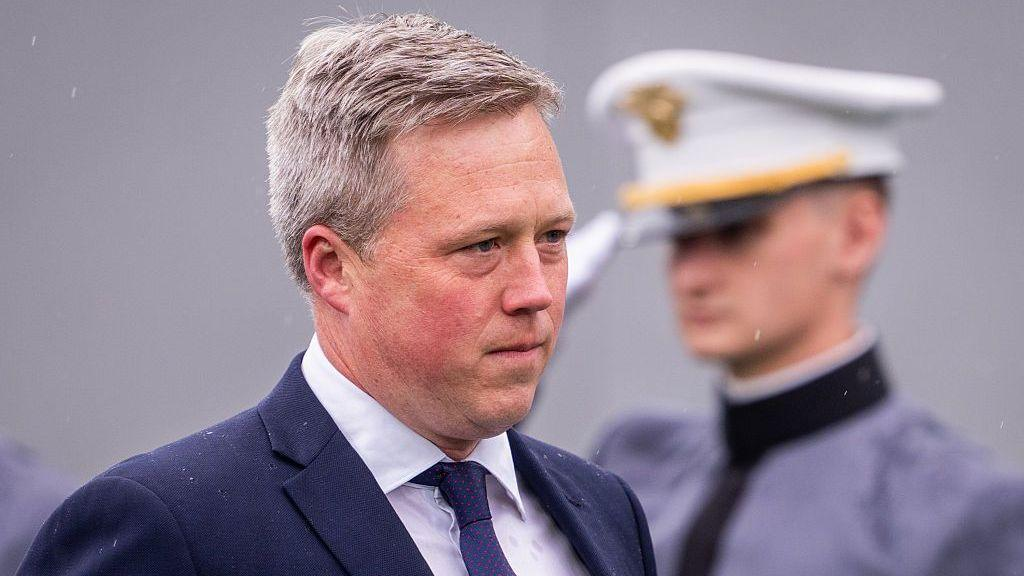
U.S. Army Secretary Dan Driscoll has officially submitted his resignation to President Donald Trump. The sudden departure comes after months of quiet tension and direct disagreements with Defense Secretary Pete Hegseth over how the military branch should be run.
Driscoll was confirmed early last year as the youngest Army Secretary in modern history. He handed over his resignation letter after speaking directly with President Trump about the current state of the Army.
This move marks another major shake-up inside the top ranks of the Pentagon. With Driscoll stepping down, the Army is left without a Senate-confirmed civilian leader at a time when military forces are actively managing complex operations around the world.
The Core Reasons Behind Dan Driscoll’s Resignation
The decision to step down was not made overnight. For months, insiders reported a growing divide between Driscoll and Defense Secretary Pete Hegseth. Both men entered their positions with strong ideas about reshaping the military, but their visions often pulled in completely different directions.
Driscoll brought a background in venture capital and modern technology to his role. He believed the Army needed to work more like a fast-moving tech firm—cutting through heavy government bureaucracy, adopting artificial intelligence, and buying cheap drones in large quantities.
The $0 Secret To Launching Your Entire Online Empire
Why pay hundreds every month for separate software? Build funnels, send emails, and make sales with Systeme.io completely free.
Get Started For $0Free Forever • No Credit Card Needed • Beginner-Friendly
On the flip side, Hegseth focused heavily on instilling a traditional military culture. He frequently stepped into internal Army decisions, ordering leadership changes and overruling plans created by senior military officers.
According to reports initially published by The Wall Street Journal, the constant friction over personnel and high-level strategy made it difficult for Driscoll to execute his plans. Rather than continuing an ongoing battle inside the Pentagon, he decided to submit his resignation.
The Falling Out Over Top Military Generals
A primary source of tension between Driscoll and Hegseth involved how high-ranking officers were managed. Driscoll believed in supporting experienced generals who had deep knowledge of modern ground operations. Hegseth, however, took a much more hands-on approach to changing the top ranks.
The Sudden Ousting of General Randy George
The rift became public when Hegseth forced out General Randy George, the Army Chief of Staff. General George and Driscoll had formed a strong working partnership. They traveled together across military bases, advocating for updated equipment and new tactical strategies.
Hegseth asked General George to retire nearly a year before his official term was set to end. The move surprised military observers and deeply upset Driscoll. Driscoll did not hide his feelings about the loss of his colleague. During testimony on Capitol Hill, Driscoll openly shared that he and his family drove directly to General George’s house on the day he was pushed out just to give him a hug.
More Departures Across the Top Ranks
General George was not the only senior leader to leave. Shortly after his exit, General Chris Donahue—who served as the commander of U.S. Army forces across Europe and Africa—also decided to retire unexpectedly.
Reports from outlets like CBS News indicate that Hegseth repeatedly overruled Army leadership. He stepped in to remove specific officers from promotion lists, including female and Black leaders, which Driscoll pushed back against behind closed doors. As these top generals departed, Driscoll’s efforts to transform the service lost critical support inside the Pentagon.
Who is Dan Driscoll? A Disruptor Inside the Military
To understand why this resignation is attracting widespread attention, it helps to examine Dan Driscoll’s background and how he arrived at the Pentagon.
Unlike traditional government officials who spend decades climbing administrative ladders, Driscoll took a different path. He served as an Army officer in Iraq before transitioning into private equity and venture capital. He earned his law degree from Yale Law School, where he became close friends with Vice President JD Vance.
When President Trump nominated Driscoll to lead the Army, he praised him as a disruptor who would challenge old habits inside the military. Driscoll was confirmed by the Senate with broad support, pledging to modernise weapons development and fix long-standing recruitment challenges.
Throughout his tenure, Driscoll spoke candidly about systemic issues. He openly criticized old-school defense contractors for charging high prices while delivering slow results, arguing that the military needed to adapt much faster to survive modern warfare.
Dan Driscoll’s Special Roles Beyond the Army
During his time in office, Driscoll took on unique assignments that went far beyond the standard duties of an Army Secretary. President Trump frequently trusted Driscoll with high-stakes projects outside normal defense channels.
Negotiating Peace Talks Between Russia and Ukraine
In an unusual move for an Army Secretary, Driscoll was chosen to serve as a key U.S. negotiator in diplomatic efforts aimed at resolving the war between Russia and Ukraine.
Typically, high-level diplomatic talks are led by diplomatic officials or the Secretary of State. By placing Driscoll in this role, the administration signaled high confidence in his negotiating skills and direct connection to the President. Driscoll met directly with international leaders to explore terms for ending the conflict.
Pushing for Tech and AI Transformation
On the military side, Driscoll created several initiatives designed to modernize ground operations. One of his main projects was “Operation Jailbreak,” an effort to connect separate communication systems so military hardware could share real-time data on the battlefield.
Send, Spend & Hold Money Worldwide Without Hidden Fees
Transfer money internationally at the real exchange rate and hold 40+ currencies in one account.
Open a Wise AccountMid-market rate • Fast transfers • 40+ currencies
He also led the charge to build cheaper air-defense systems and unmanned aerial weapons. Driscoll argued that expensive, highly complex weapons take too long to build, and that the military should focus on lower-cost technology that can be manufactured quickly in large numbers.
How Military Modernization Fits Into the Bigger Tech Picture
Driscoll’s focus on software, speed, and smart automation highlights a larger shift happening across almost every major industry today. Organizations everywhere are trying to replace outdated, slow systems with efficient digital tools.
Whether in public service or private enterprise, understanding modern tools is essential for keeping up with change. If you are curious about how smart tools are reshaping industries and changing how teams work, take a look at our detailed guides on technology and AI.
This shift toward automation isn’t limited to large organizations or defense projects. Digital creators and small business owners are using automated software systems to build platforms, produce content, and grow audiences without working round-the-clock manual hours. To explore how creators build smart online channels using streamlined digital tools, read our breakdown of YouTube automation.
Just as tech innovators try to cut through bureaucracy to build better tools, modern digital platforms rely on simple, fast workflows to stay ahead.
What Happens Now for the U.S. Army?
The timing of Driscoll’s resignation creates a significant leadership gap at the top of the Army.
No Senate-Confirmed Leader in Charge
With Driscoll stepping down, the Army will be left without a Senate-confirmed civilian chief. Undersecretary Michael Obadal is expected to step into the role of acting secretary for the immediate future. However, additional leadership changes are underway, with Deputy Army Undersecretary Dave Fitzgerald also expected to exit.
This turnover comes during an active period for U.S. forces, as the military continues managing security challenges in the Middle East and oversees structural changes to troop deployments in Europe.
White House Reaction and Public Statements
Official statements from the administration praised Driscoll’s work. White House spokesperson Anna Kelly highlighted his contributions in an official statement, noting:
“Secretary Driscoll has been highly effective in advancing President Trump’s agenda to Make America Strong Again at the Department of the Army by providing outstanding leadership during historic military operations, restoring an emphasis on readiness and lethality, assisting with negotiations between Russia and Ukraine, and more.”
The $0 Secret To Launching Your Entire Online Empire
Why pay hundreds every month for separate software? Build funnels, send emails, and make sales with Systeme.io completely free.
Get Started For $0Free Forever • No Credit Card Needed • Beginner-Friendly
Reporting from defense outlets like DefenseScoop noted that while the resignation letter was formally handed in, the administration has worked to manage the transition smoothly as military operations continue uninterrupted.
Frequently Asked Questions (FAQs)
Why did Army Secretary Dan Driscoll resign?
Dan Driscoll submitted his resignation following several months of growing friction and strategic disagreements with Defense Secretary Pete Hegseth. The main points of contention included leadership decisions, the removal of top military generals, and conflicting views on military modernization.
Who is Pete Hegseth, and why were there clashes with Driscoll?
Pete Hegseth serves as the U.S. Secretary of Defense. Tensions arose because Hegseth frequently intervened directly in Army management, removing senior leaders and altering promotion lists, while Driscoll preferred a tech-focused, business-oriented approach centered on rapid innovation.
Who will lead the Army after Dan Driscoll leaves?
Undersecretary of the Army Michael Obadal is next in line to step in as acting secretary while the administration works to select a permanent nominee for Senate confirmation.
What special roles did Dan Driscoll handle outside the Army?
Driscoll served as a key negotiator in diplomatic talks between Russia and Ukraine. He also briefly held a dual role overseeing domestic law enforcement efforts as acting head of the ATF, making his tenure unusually broad for an Army Secretary.
How did Dan Driscoll try to change military technology?
Driscoll focused on introducing cheaper drones, artificial intelligence, and counter-drone systems into the Army. He created programs like “Operation Jailbreak” to improve communication between military hardware and urged defense companies to build lower-cost equipment more quickly.
Looking Ahead: The Future of Pentagon Leadership
Dan Driscoll’s exit illustrates the challenges of attempting to transform large government institutions. While his venture-capital background brought a fresh approach to Army technology and equipment procurement, ongoing policy and personnel clashes inside the Pentagon ultimately brought his tenure to an end.
As the administration prepares to name a successor, attention will focus on whether the Army maintains its push toward high-tech modernization or pivots to align more closely with Defense Secretary Pete Hegseth’s traditional leadership vision.
Want to learn more about our team and what we do? Visit our about us page to see our story, or reach out directly through our contact page.
Stay connected with our community across social media:
- Follow our latest photo and news updates on Instagram.
- Join the discussion with our community on Facebook.
- Catch real-time news alerts and trending topics on X (formerly Twitter).
