
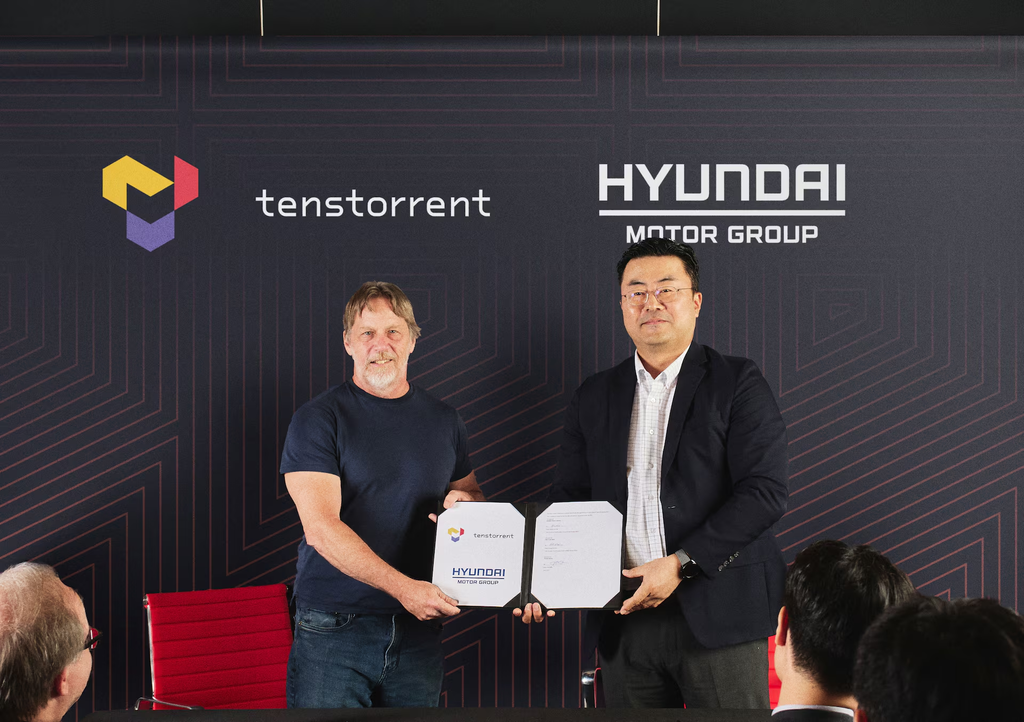
Silicon Valley has been looking for a real challenger to Nvidia, and that challenger just secured one of the biggest paydays in semiconductor history. Tenstorrent, the artificial intelligence chip startup steered by legendary computer architect Jim Keller, has raised $1.5 billion in a Series E funding round. The fresh cash injection more than doubles the company’s valuation to a massive $6.2 billion.
The round proves that global investors are ready to back serious hardware alternatives to the giant chipmakers dominating the market. Just two years ago, in late 2024, Tenstorrent raised roughly $693 million at a $2.6 billion valuation. Reaching $6.2 billion in 2026 highlights a massive surge in investor appetite for practical, affordable, and flexible AI compute.
Tech giants everywhere have been burning through hundreds of billions of dollars trying to buy graphics processing units (GPUs) for artificial intelligence. As companies look for relief from rising cloud expenses and hardware bottlenecks, Tenstorrent is stepping in with an open-architecture approach that promises to deliver more computing power for a fraction of the cost.
The Billion-Dollar Round: Who Is Backing Tenstorrent?
Raising $1.5 billion in a single venture funding round is rare, even in the booming artificial intelligence industry. The round was co-led by Trace Capital, a firm launched by Quiet Capital co-founder Ben Mahdavi, alongside Innovation X.
The roster of participating investors brings together traditional Wall Street financial powerhouses, venture funds, and major industrial leaders. Notable backers include:
The $0 Secret To Launching Your Entire Online Empire
Why pay hundreds every month for separate software? Build funnels, send emails, and make sales with Systeme.io completely free.
Get Started For $0Free Forever • No Credit Card Needed • Beginner-Friendly
- Trace Capital and Innovation X as lead investors
- Institutional heavyweights Fidelity Management & Research Company, T. Rowe Price Group, and ARK Investment Management
- Tether Investments, putting cryptocurrency treasury reserves to work in foundational AI hardware
- Global industrial partners including Hyundai Motor Group, Samsung Securities, and LG Electronics
- Prominent tech players and venture firms like Cadence Ventures, Sandisk, Valor Equity Partners, Agostinelli Group, Eclipse Ventures, and Bezos Expeditions
- Export Development Canada, highlighting the startup’s deep roots in the Canadian technology ecosystem
Strategic participation from Asian conglomerates like Samsung and LG mirrors broader government moves across the Pacific. For instance, South Korea unveiled a record $597 billion budget to power the global AI revolution, prioritizing memory chips, next-generation silicon, and domestic supercomputing projects. Tenstorrent already maintains active engineering centers in Tokyo and Bangalore alongside its North American hubs in Toronto, Austin, and Santa Clara.
Why Is Jim Keller Such a Big Deal in the Tech World?
To understand why investors handed Tenstorrent $1.5 billion, you have to look at its chief executive officer, Jim Keller. In the semiconductor universe, Keller is treated like a rock star. Over a career spanning more than three decades, he has helped build the fundamental chips that run our digital lives.
At Apple, Keller was instrumental in designing the A4 and A5 mobile processors. Those chips launched the custom silicon strategy that turned the iPhone and iPad into performance powerhouses. Over at AMD, he helped create the Zen architecture, the game-changing chip design that rescued AMD from irrelevance and allowed it to compete toe-to-toe with Intel. Later, he led hardware engineering teams at Tesla to design the custom Autopilot chip before spending time leading chip development at Intel.
Tenstorrent itself was founded in 2016 by former AMD engineers Ljubisa Bajic, Milos Trajkovic, and Ivan Hamer. When Keller joined the company as president in early 2021 and subsequently took over the CEO seat, industry watchers knew Tenstorrent was not going to be just another generic startup. His reputation for rethinking computer architecture from a clean slate has attracted both elite silicon designers and billions of dollars in growth capital.
The Secret Weapon: How RISC-V Changes the Silicon Game
Most computers and smartphones in the world run on one of two major computer architectures: x86 (used by Intel and AMD) or ARM (used by Apple, Qualcomm, and smartphone makers). Both architectures come with heavy licensing fees, closed proprietary designs, and restrictive rules.
Tenstorrent chose a completely different path by embracing RISC-V.
Think of RISC-V as the open-source equivalent of Linux, but for hardware chips. Anyone can use the core instruction set without paying expensive royalties to a single monopoly company. Keller and his engineering team have used RISC-V to build modular, customizable AI processor cores known as Tensix.
Instead of building one giant, power-hungry chip that is hard to manufacture, Tenstorrent links smaller, specialized chiplets together. These processors use a network-on-chip design, allowing chips to communicate directly with one another without hitting common memory bottlenecks.
This modular approach cuts manufacturing costs and lets customers buy exactly what they need. A customer can license Tenstorrent’s chip designs to build their own processors, buy standalone PCIe add-in cards to plug into standard servers, or buy full rack-mounted computing systems. That degree of flexibility is unheard of in an ecosystem dominated by closed, proprietary ecosystems.
The Secret Takeover Bids: Why Tenstorrent Refused to Sell Out
Before closing this $1.5 billion round, Tenstorrent had multiple opportunities to cash out. According to reporting from Bloomberg, established tech leaders including Intel and Qualcomm engaged in serious acquisition talks with the startup earlier this year.
Both legacy giants were eager to absorb Tenstorrent’s intellectual property and instantly bolster their own competitive positions against Nvidia. Buying Tenstorrent would have given either buyer instant access to Jim Keller’s architecture pipeline and a proven team of over 1,150 semiconductor engineers.
Instead of selling out and becoming a small division inside a legacy conglomerate, Tenstorrent chose independence. The leadership team gambled that remaining an open, standalone supplier would give them greater leverage across the global tech market. Raising $1.5 billion at a $6.2 billion valuation gives them the runway they need to commercialize their products without having to surrender their vision to legacy corporate boardrooms.
What Does Tenstorrent Actually Sell?
Startups in the AI hardware space often face criticism for selling hype rather than working silicon. Tenstorrent has worked hard to show that its technology is already rolling off assembly lines.
The company offers a multi-tiered product line designed for everyone from hobbyist developers to multi-billion-dollar enterprise data centers:
1. Galaxy AI Servers
Galaxy systems are complete server racks packed with Tenstorrent’s Wormhole and Blackhole processors. These systems are designed to train and run massive open-source AI models efficiently. Tenstorrent plans to use a large share of its new $1.5 billion funding round to expand manufacturing lines and speed up Galaxy deliveries to commercial clients worldwide.
Send, Spend & Hold Money Worldwide Without Hidden Fees
Transfer money internationally at the real exchange rate and hold 40+ currencies in one account.
Open a Wise AccountMid-market rate • Fast transfers • 40+ currencies
2. PCIe Accelerator Cards
For companies that already own server racks, Tenstorrent sells add-in accelerator cards that slot directly into standard computer motherboards. These cards allow data centers to boost their AI capabilities without ripping out their existing IT infrastructure.
3. Developer Workstations
Developers can run local AI models on desktop-sized workstations powered by Tenstorrent cards. This setup gives programmers a sandbox to write and test code locally without paying hourly cloud fees to Amazon Web Services or Microsoft Azure.
4. Licensable IP
Unlike companies that only sell physical hardware, Tenstorrent licenses its RISC-V CPU and Tensix AI accelerator designs to other businesses. Automotive manufacturers, consumer electronics brands, and defense contractors can take Tenstorrent designs and integrate them directly into their own custom microchips.
Can Anyone Truly Challenge Nvidia?
Nvidia holds an overwhelming grip on the AI processor market. Wall Street values the graphics giant in the trillions because almost every major foundation model in existence was trained on Nvidia hardware. However, that near-monopoly has created serious pain points for the rest of the tech industry.
Nvidia processors are expensive, draw massive amounts of electrical power, and often have waitlists that stretch out for months. Tech companies have spent billions competing for limited supplies. For example, Elon Musk dropped $40 billion on Nvidia chips to build out massive superclusters for his AI ventures.
At the same time, companies are feeling the financial pain of these hardware bills. Major cloud providers are actively seeking alternatives, which is why Microsoft dropped a 1-million-chip project to crush its Nvidia bill.
Nvidia’s real competitive advantage has never been just the silicon; it is CUDA, the software platform that software engineers have used for twenty years to program Nvidia GPUs. To beat Nvidia, a competitor must offer software that works effortlessly with modern frameworks like PyTorch and TensorFlow.
Tenstorrent tackles this problem with an open-source software stack known as TT-Buda and TT-Metalium. Rather than forcing developers to rewrite their software from scratch, Tenstorrent aims to let engineers run standard machine learning models on its hardware with minimal code changes. If developers find it easy to run their workloads on alternative hardware, Nvidia’s primary competitive moat begins to narrow.
The Pressure on Power, Land, and Data Centers
The rush to purchase artificial intelligence chips has created unexpected physical consequences in the real world. Giant data centers packed with power-hungry processors place enormous demands on local municipal electrical grids and water cooling supplies.
Communities and local governments are starting to push back against this unchecked infrastructure growth. In Texas, republicans turned against massive data centers over energy grid concerns. Similar tensions are spreading across financial markets, with big investors worried about the growing pushback against AI data centers that consume entire town power supplies.
The $0 Secret To Launching Your Entire Online Empire
Why pay hundreds every month for separate software? Build funnels, send emails, and make sales with Systeme.io completely free.
Get Started For $0Free Forever • No Credit Card Needed • Beginner-Friendly
Efficiency is where startups like Tenstorrent see their biggest market opportunity. Training and running AI models on hardware that uses less electricity and produces less heat helps data center operators stay within their power budgets. If a startup can deliver equivalent compute performance while drawing noticeably fewer watts, data center operators will jump at the chance to cut their utility bills.
What This Funding Round Means for Everyday Users
You might wonder why a funding round for an enterprise chip company matters if you are not managing a server facility. The answer lies in how everyday applications are priced and delivered.
Every time you ask an AI chatbot a question, generate an image, or use automated editing tools on your phone, computing cycles run in a data center somewhere in the world. Running those calculations costs real money. When chip supply is monopolized and expensive, consumer app developers pass those expenses onto users through higher subscription prices and restricted usage limits.
Consumer tech manufacturers are feeling the pressure to put AI chips directly into personal devices. In personal computing, Apple accelerated custom chip releases due to AI pressure, hoping to run intelligent features on laptops and phones instead of offloading everything to remote cloud facilities.
When companies like Tenstorrent drive competition into the hardware layer, the cost of processing artificial intelligence workloads drops. That helps lower subscription costs for consumer software, speeds up application response times, and encourages smaller startups to build innovative tools without going bankrupt on computing fees.
Frequently Asked Questions (FAQs)
What is Tenstorrent?
Tenstorrent is an artificial intelligence computing company that designs open-architecture processors, software, and complete server systems. Founded in 2016, the company focuses on delivering efficient, customizable hardware for AI training and inference.
Who is the CEO of Tenstorrent?
The company is led by Jim Keller, an acclaimed semiconductor architect famous for his leadership roles in designing Apple’s early iPhone chips, AMD’s Zen architecture, Tesla’s self-driving processors, and high-performance hardware at Intel.
How much money did Tenstorrent raise in its latest round?
Tenstorrent raised $1.5 billion in a Series E funding round in October 2026, which more than doubled its valuation to $6.2 billion.
How does Tenstorrent compete with Nvidia?
Tenstorrent uses the open-source RISC-V architecture and modular chiplet technology rather than closed proprietary designs. It allows customers to license chip intellectual property or buy complete servers, providing flexible options designed to deliver higher power efficiency at lower purchase prices.
Did Intel or Qualcomm try to buy Tenstorrent?
Yes. According to industry reports, both Intel and Qualcomm held acquisition discussions with Tenstorrent earlier in the year, but Tenstorrent chose to remain an independent business and raise outside funding instead.
Tenstorrent’s $6.2 billion valuation proves that the semiconductor landscape is entering an exciting new phase of intense competition. The era of treating a single supplier as the only option for AI computing is coming to an end as open architectures, lower power footprints, and innovative designs challenge the old guard. With $1.5 billion in fresh capital and Jim Keller directing engineering operations, the race to build the next generation of computing infrastructure is just getting started.
