
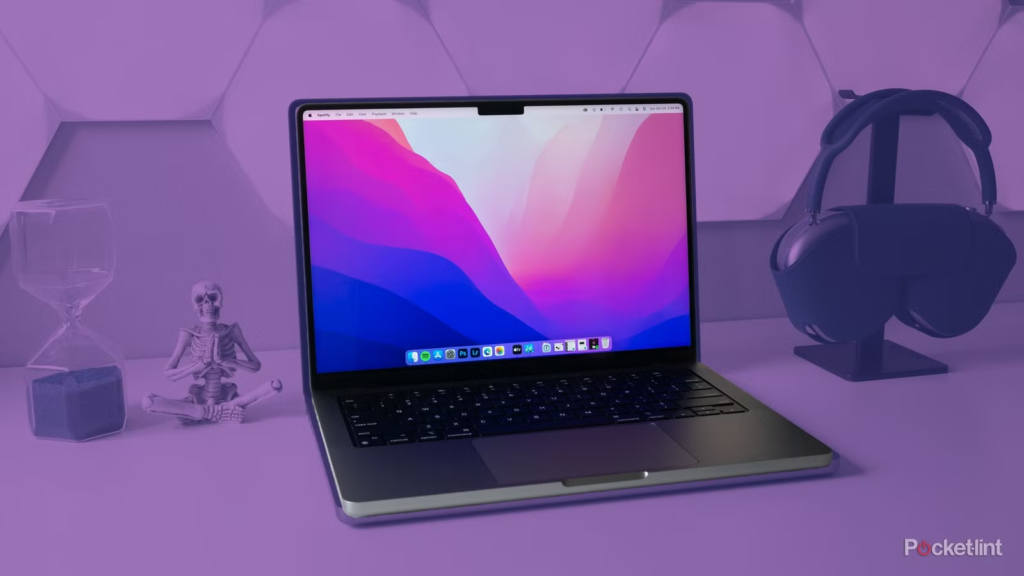
Apple has historically operated on its own clock. For years, the tech giant followed a slow and steady playbook. They would watch other brands launch buggy, half-baked features, take notes, and then release a polished, highly refined version of their own. It was a strategy that worked beautifully for the iPhone, the Apple Watch, and AirPods. However, the explosive rise of generative artificial intelligence has broken that traditional playbook.
Today, the heat is on, and Apple is feeling the burn. Tech giants across the world are pouring billions of dollars into advanced machine learning. Apple realizes that it cannot afford to take a leisurely approach anymore. Recent reports from top industry insiders reveal that the company is dramatically accelerating its custom chip roadmap. If you want to keep up with how these rapid developments are shaping the future, you can read more about it in our Technology & AI section.
This sudden shift in strategy is a massive deal. It means the company is breaking its traditional hardware cycles, skipping planned chip versions, and pushing its engineering teams to the limit. The goal is simple: ensure your next Mac, iPad, and iPhone have enough local computing power to handle massive AI tasks without relying entirely on remote cloud servers. Let’s look closely at what is happening behind the scenes in Cupertino and why this matters for your next computer upgrade.
The Big Shift: Why Apple is Shaking Up Its Chip Release Cycle
To understand why this is a historic shift, we need to understand how Apple usually builds its processors. Typically, the company designs a base chip, like the M1 or M2. After releasing the base model, they slowly roll out more powerful versions for professional users, such as the Pro, Max, and Ultra variants. This cycle usually takes anywhere from 12 to 18 months, giving consumers time to digest the new technology and giving Apple’s factories a steady production pace.
But artificial intelligence has changed the rules of the game. According to highly reliable industry sources, Apple recently completed the “tape-out” phase of its upcoming M7 chip. In the semiconductor world, “tape-out” is the absolute final step of the design process before the blueprints are sent to the factory for physical manufacturing. What makes this shocking is that Apple completed this step just six months after finishing the design for the M6 chip.
The $0 Secret To Launching Your Entire Online Empire
Why pay hundreds every month for separate software? Build funnels, send emails, and make sales with Systeme.io completely free.
Get Started For $0Free Forever • No Credit Card Needed • Beginner-Friendly
Designing a state-of-the-art computer chip in six months is an incredibly fast turnaround. Because Apple is moving at such a breakneck pace, they have had to make some radical sacrifices. The biggest sacrifice is that Apple is reportedly skipping the high-performance M6 Pro, M6 Max, and M6 Ultra chips entirely.
Instead of spending precious time and engineering resources perfecting intermediate versions of the M6, Apple is jumping straight to the M7 generation. The company wants to pull the M7 family forward as fast as possible because it is designed from the ground up to handle heavy-duty AI processing. By bypassing the high-end M6 models, Apple can focus all of its energy on delivering a massive leap in neural performance with the M7.
Breaking Down Apple’s Aggressive New Chip Timeline
With Apple throwing its old roadmap out the window, the release schedule for upcoming Macs and iPads looks very different than we expected. Here is how the new timeline is shaping up based on the latest industry reports:
The M5 Family (The Current Era)
The M5 chip represents the current generation of Apple silicon. It brought impressive on-device AI enhancements and boosted memory bandwidth. The high-end M5 Pro and M5 Max chips utilize advanced packaging to link two dies together, offering incredible processing speeds. While these are highly capable chips, they are already being treated as the stepping stones to Apple’s true AI future.
The M6 Chip (Late 2026)
The base M6 chip is expected to arrive in late 2026, likely powering a budget-friendly 14-inch MacBook Pro. However, because Apple is prioritizing the M7, there will be no high-end M6 variants. If you are a creative professional waiting for a massive M6 Max or M6 Ultra machine, you are going to be waiting in vain. Apple is leaving those out of the lineup to focus on the next generation.
The M7 Generation (2027 to 2028)
The M7 is where the magic really happens. The baseline M7 chip is projected to launch in the first half of 2027, potentially debuting in a completely redesigned MacBook Pro lineup.
- M7 Pro and M7 Max: Scheduled for release by late 2027.
- M7 Ultra: Slated to arrive in 2028. This workstation-class chip is rumored to power a brand-new Mac Studio that can support up to a massive 1.5TB of system memory.
The M8 Chip (Looking Toward 2028 and Beyond)
Apple is not stopping at the M7. The company is already actively developing the M8 chip. Because competition for semiconductor manufacturing is fierce, Apple has reportedly secured early access to TSMC’s upcoming 1.4-nanometer production process. This cutting-edge process will allow Apple to pack billions of additional transistors into a microscopic space, leading to unbelievable efficiency and speed.
| Chip Generation | Estimated Release Window | Expected Key Feature / Focus |
| M5 Pro / Max | Early 2026 | Dual-die fusion architecture, 30% more memory bandwidth |
| M6 (Base only) | Late 2026 | Standard entry-level performance upgrade |
| M7 (Base) | Early 2027 | First-generation deep AI integration |
| M7 Pro / Max | Late 2027 | High-performance neural engines for pro apps |
| M7 Ultra | 2028 | Workstation-level local AI, massive memory support |
| M8 | 2028+ | TSMC 1.4-nanometer process, extreme efficiency |
The On-Device AI Battle: Apple vs. The Giants
Why is Apple rushing so fast? The answer lies in the fierce battle over how and where artificial intelligence processes your data.
Major players like Microsoft, Google, Meta, and OpenAI rely heavily on cloud-based AI. When you type a prompt into ChatGPT or Google Gemini, your request travels across the internet to a massive data center filled with energy-hungry graphics processors (GPUs), usually built by Nvidia. This works well, but it has three major flaws:
- Privacy Concerns: Your private data, photos, and documents have to be sent to an external server to be processed.
- Latency: You have to wait for the data to travel back and forth over the internet, causing delays.
- Connectivity: If you do not have a strong internet connection, your AI tools simply will not work.
Apple is taking a very different path. They want to make on-device AI the gold standard. They want your Mac, iPad, or iPhone to run complex artificial intelligence tasks locally on the machine itself, using its built-in Neural Engine.
For on-device AI to work smoothly, your computer needs a massive amount of brainpower. Running a large language model locally requires incredible memory bandwidth and a highly advanced neural processing unit (NPU). This is why Apple is under so much pressure to upgrade its silicon. The M7 chip is specifically engineered to bring local AI performance much closer to the level of dedicated, warehouse-sized AI accelerators. This means you will be able to run advanced voice assistants, real-time photo generators, and smart coding assistants directly on your laptop, instantly and privately, even when you are completely offline.
Leadership and Cultural Changes Inside Apple
This shift in the chip roadmap is not just about engineering; it is also a reflection of a major changing of the guard at the highest levels of Apple. Reports indicate that hardware chief John Ternus is taking over as CEO in the fall of 2026.
John Ternus has a deep background in hardware design and engineering. Having a product engineer step into the CEO seat sends a powerful signal to the entire tech industry. It shows that silicon design and hardware innovation are now the absolute core organizing principles of Apple’s future.
Under this new leadership, Apple is making a massive, silicon-first bet. Instead of trying to build giant cloud data centers to compete with Nvidia, Apple is focusing on turning your personal laptop into a private workstation-class AI powerhouse.
The Cost of the AI Boom: What This Means for Your Wallet
While the promise of lightning-fast local AI is incredibly exciting, there is a major catch. The global rush to build AI systems is putting an unprecedented strain on the electronics supply chain, and everyday consumers are starting to pay the price.
Send, Spend & Hold Money Worldwide Without Hidden Fees
Transfer money internationally at the real exchange rate and hold 40+ currencies in one account.
Open a Wise AccountMid-market rate • Fast transfers • 40+ currencies
Memory chip manufacturers like Micron are currently prioritizing orders for enterprise-level AI chipmakers. Because AI data centers require massive amounts of high-bandwidth memory, the cost of standard memory (DRAM) has skyrocketed. Analysts have dubbed this supply squeeze “Ram-ageddon.”
Apple has already felt the pressure. The company had to raise prices on select iPads and Macs, pointing directly to the surging costs of memory and storage components. For example, the starting price of their budget-friendly laptops increased by up to a hundred dollars, while high-end configurations saw jumps of several hundred dollars.
If you are planning to purchase a high-end M7 MacBook Pro or a custom Mac Studio in the future, you should start saving now. These advanced AI-centric machines are likely going to carry a premium price tag.
If you want to prepare your wallet for these upcoming price hikes, it might be a great time to explore new ways to boost your income. Many people are turning to modern online opportunities to fund their tech upgrades. For instance, you can look into running automated channels by checking out our guide on YouTube Automation.
If you prefer building websites or promoting products you love, you might want to read up on our tips for Affiliate Marketing. There are also plenty of creative ideas in our Side Hustle section and our general guide on how to Make Money Online.
Earning some extra cash on the side can help you afford the best hardware without putting a dent in your monthly budget, especially if you are living the location-independent lifestyle as a Digital Nomad.
Is It Still Worth Upgrading Your Mac Every Year?
With Apple releasing chips faster than ever, you might feel a sudden urge to upgrade your computer every time a new model drops. However, it is important to take a step back and look at the actual performance gains before parting with your hard-earned money.
Apple’s marketing teams are excellent at making every minor upgrade sound like a revolution. They love to show off charts with 15% or 20% performance jumps. But in real-world, day-to-day use, a 15% increase in speed is almost impossible to notice. If you are mostly using your computer to browse the web, write emails, watch videos, and edit light spreadsheets, an older M1 or M2 Mac will still feel incredibly fast.
The truth is that Apple Silicon has made computers last much longer than they used to. In the old Intel days, software updates would quickly slow down older laptops, forcing you to buy a new one every three years. Today, Apple’s custom chips are so powerful that they have incredibly long lifespans.
Unless you are a professional software developer, a heavy 3D renderer, or a high-end video editor who absolutely needs the absolute fastest local AI processing, upgrading your computer annually simply does not make financial sense.
The $0 Secret To Launching Your Entire Online Empire
Why pay hundreds every month for separate software? Build funnels, send emails, and make sales with Systeme.io completely free.
Get Started For $0Free Forever • No Credit Card Needed • Beginner-Friendly
A much smarter approach is to adopt a four-to-five-year upgrade cycle. This allows the minor, incremental upgrades to accumulate over several years. When you finally do make the jump from an older machine to a newer model, the difference in speed, battery life, and overall capability will feel truly mind-blowing.
FAQs About Apple’s Accelerated AI Chip Strategy
Why is Apple skipping the M6 Pro, Max, and Ultra chips?
Apple is skipping these high-performance M6 variants to focus all of its engineering resources on pulling forward the M7 chip family. The M7 generation is designed from scratch to offer a massive leap in local AI and neural processing capabilities, which Apple needs to compete in the current AI arms race.
What is “tape-out” and why does it matter?
“Tape-out” is the final phase of the chip design process where the digital blueprint of the chip is completed and sent to the semiconductor foundry for manufacturing. The fact that Apple taped out the M7 chip just six months after the M6 shows that they are developing hardware at an incredibly accelerated pace.
How does Apple’s AI chip strategy differ from companies like Microsoft or Google?
While competitors rely heavily on cloud-based servers and remote data centers to run AI programs, Apple is focusing on on-device AI. They want your Mac or iPad to handle complex machine learning tasks locally. This approach keeps your data private, reduces delays, and allows you to use smart features without an internet connection.
Will the new AI chips make older Macs obsolete?
No, your older Mac will continue to work perfectly for everyday tasks. However, older chips do not have the specialized neural processing cores or the high-speed memory required to run advanced local AI models locally. While your older Mac will still get software updates, some of the most advanced, offline AI features might be restricted to newer hardware like the M7 family.
Why are Mac and iPad prices going up?
The massive global demand for AI systems has caused a severe shortage of memory chips. Because memory manufacturers are prioritizing high-end AI data center clients, the price of DRAM and storage components has surged. Apple has had to raise prices on several Mac and iPad models to cover these increased component costs.
Finding the Right Balance
The rapid acceleration of Apple’s chip design process is an exciting sign of things to come. It proves that the era of local, private, and lightning-fast AI is arriving much sooner than we ever expected. But as a consumer, it is important not to get caught up in the constant cycle of tech hype.
If you decide to save up for the powerhouse M7 machines or stick with your reliable current setup, the key is to make technology work for your specific needs and budget.
If you want to learn more about our team and what we do, feel free to visit our About page. If you have any questions, feedback, or just want to share your thoughts on Apple’s new chip strategy, we would love to hear from you. Get in touch with us anytime through our Contact page. Share your thoughts on Apple’s rapid new pace and how it affects your future tech purchases.
