
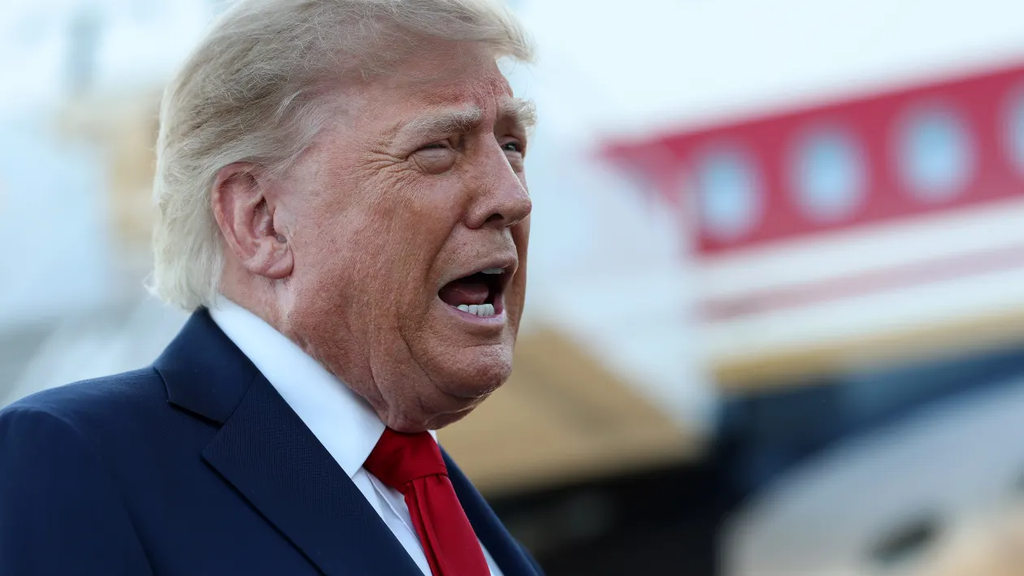
Donald Trump just dropped a huge statement during a stop in North Carolina. He told reporters that the United States is hopefully nearing the end of its nearly seven-month war with Iran. He claimed that officials in Tehran want to make a deal and hinted that direct talks have already taken place between Washington and Iranian representatives.
The announcement sound like great news at first glance. Everyone wants to see an end to a conflict that has dragged on since late February 2026. However, if you look at what is actually happening across the Middle East right now, the situation tells a very different story.
While the American president speaks about peace deals, bombs and drones are still flying. Heavy fighting has flared up in Yemen, where Iran-backed Houthi fighters are trading heavy strikes with Saudi Arabia. Energy pipelines have been knocked offline, global oil prices are jumping around, and world leaders are scrambling to prevent a total economic crisis.
Understanding this complicated mess requires looking past the political headlines. The gap between what is being said at campaign stops and what is happening on the ground is massive. Here is a breakdown of what Trump actually said, what is happening in the desert and on the seas, and how this entire situation hits your wallet.
What Donald Trump Actually Said in North Carolina
During a press briefing on Wednesday evening, Donald Trump was asked about the status of the military campaign against Iran. The war, which began on February 28, 2026, has been one of the most intense foreign policy challenges of his presidency.
The $0 Secret To Launching Your Entire Online Empire
Why pay hundreds every month for separate software? Build funnels, send emails, and make sales with Systeme.io completely free.
Get Started For $0Free Forever • No Credit Card Needed • Beginner-Friendly
Trump expressed optimism that the heavy military fighting might finally be coming to a close. He noted that the Iranian government appears ready to talk because the economic and military pressure on them has been so severe. He claimed that direct communication channels have opened up between the two nations, though he refused to give specific details about who met or where those discussions took place.
His exact words reflected hope, but they were far from a signed peace treaty. He emphasized the word “hopefully” multiple times, leaving plenty of room to back out if negotiations stall.
This is not the first time since February that the administration has suggested the war was almost won. Over the past seven months, official statements have periodically claimed that Iranian military strength was broken. Yet, every single time those statements were made, new clashes broke out in neighboring countries.
How Iran Responded to the Claims
Over in Tehran, the reaction to Trump’s comments was cool, cautious, and somewhat contradictory. Iranian officials did not rush out to celebrate a peace deal. In fact, top military leaders in Iran warned that words mean very little without real action.
Mohsen Rezaei, a key national security official in Iran, publicly stated that the United States cannot be trusted without concrete steps. He pointed out that Washington has made contradictory demands throughout the conflict. While some diplomatic channels in Oman might be open, Iranian leaders are insisting that all sanctions must be lifted before any formal peace agreement is signed.
This creates a serious standoff. Trump wants a quick win that he can present to voters and international allies. Iran wants massive political concessions before they agree to stop their proxy forces across the region. Until those two sides meet somewhere in the middle, talking about an end to the war remains wishful thinking.
The Situation in Yemen: A War Within a War
While diplomats whisper in air-conditioned rooms, the military reality in Yemen is growing worse by the day. The war between the U.S. and Iran has spilled over completely into the Arabian Peninsula, dragging Saudi Arabia back into heavy combat.
Houthi rebels in Yemen, who receive training, weapons, and financial support from Iran, have launched a massive new military offensive. Instead of backing down because of U.S. air strikes, the Houthis have doubled down. They are targeting Saudi military bases, urban areas, and vital commercial infrastructure.
Saudi Arabia has responded with heavy air strikes of its own, but the fighting has escalated to levels not seen in years. The battle is no longer just about Yemen’s internal politics. It has turned into a major frontline of the regional war.
Why the Bab el-Mandeb Strait Matters to Everyone
To understand why this local fighting matters so much to the rest of the world, you have to look at a map. Houthi forces are pushing hard to gain total control over the Bab el-Mandeb Strait.
This narrow body of water sits right between Yemen on the Arabian Peninsula and the Horn of Africa. It is the southern gateway to the Red Sea and the Suez Canal. Millions of barrels of crude oil, natural gas, and commercial container ships pass through this tiny stretch of water every single day.
If the Houthis gain control of this choke point, they can effectively block international maritime traffic. They can decide which ships pass through and which ones get hit with anti-ship missiles or drone strikes.
That is why this local conflict is a global nightmare:
- A huge portion of Europe’s oil supply flows through this exact route.
- Container ships carrying electronics, clothes, and food have to detour around the entire continent of Africa if the path is blocked.
- Detours add weeks to shipping times and millions of dollars in fuel costs for cargo companies.
- Those extra costs get passed directly to everyday consumers at the grocery store and retail shops.
Oil Pipelines, Energy Markets, and Inflation
The real impact of this military conflict is being felt far away from the battlefield. Energy markets are hyper-sensitive to every missile strike in the Middle East, and recent events have sent shockwaves through global finance.
A few days ago, a coordinated Houthi drone attack targeted Saudi Arabia’s strategic East-West Pipeline. This pipeline is critical because it carries crude oil from the eastern oil fields across the desert to the Red Sea port of Yanbu. The damage was severe enough that Saudi authorities had to shut down the pipeline for emergency repairs.
Send, Spend & Hold Money Worldwide Without Hidden Fees
Transfer money internationally at the real exchange rate and hold 40+ currencies in one account.
Open a Wise AccountMid-market rate • Fast transfers • 40+ currencies
When a pipeline carrying millions of barrels of oil a day gets shut down, panic hits the commodity markets immediately. Crude oil prices jumped significantly, crossing $100 per barrel mark in international trading.
To prevent a total collapse in supply, Saudi Arabia had to make emergency deals to move crude oil through alternative ports in Oman using complex ship-to-ship transfers. While that move helped stabilize prices slightly according to reporting by CNBC Africa, energy analysts warn that the system is stretched to its absolute limit.
How War in the Middle East Hits Your Local Bank Account
Many people wonder how a military conflict thousands of miles away affects their day-to-day life. The connection comes down to basic economics: energy runs the world.
When oil prices stay high, the cost of transporting everything goes up. A trucking company delivering food to your local supermarket has to pay more for diesel fuel. A factory manufacturing goods has to pay more for electricity and raw plastic materials.
This dynamic recently forced the U.S. Federal Reserve to make a dramatic economic move. Federal Reserve Chair Kevin Warsh announced a quarter-point hike in benchmark interest rates. That was the first interest rate increase in years, specifically designed to fight the rising inflation caused by war-driven energy spikes.
Higher interest rates mean higher monthly payments for mortgage loans, car financing, and credit cards. So even if you never read a single military news report, the conflict in the Middle East is actively costing you money every month.
Secret Meetings and Behind-the-Scenes Diplomacy
Despite the loud public statements and heavy air strikes, quiet diplomatic moves are happening in the background. Reports have surfaced that senior American officials recently held secret talks with Houthi representatives in Muscat, the capital of Oman.
Oman has long served as a neutral meeting ground for back-channel diplomacy in the Middle East. During these closed-door sessions, U.S. diplomats reportedly pushed the Houthis to stop targeting commercial shipping vessels in the Red Sea. In exchange, the U.S. offered to stay out of certain Saudi military operations in Yemen.
These secret talks highlight how strange modern warfare can be. On one hand, the U.S. is heavily bombing Iranian infrastructure. On the other hand, U.S. diplomats are sitting in quiet hotel conference rooms talking to Iran’s closest proxy allies to keep trade flowing.
The Upcoming UN Meeting in New York
The diplomatic calendar is heading toward a major turning point next week. Donald Trump is scheduled to host leaders from the six Gulf Cooperation Council (GCC) nations on the sidelines of the United Nations General Assembly in New York.
The $0 Secret To Launching Your Entire Online Empire
Why pay hundreds every month for separate software? Build funnels, send emails, and make sales with Systeme.io completely free.
Get Started For $0Free Forever • No Credit Card Needed • Beginner-Friendly
The GCC includes:
- Saudi Arabia
- The United Arab Emirates
- Qatar
- Bahrain
- Kuwait
- Oman
This high-stakes meeting will focus entirely on creating a “day-after” plan for the Middle East. The White House wants to establish a clear post-war strategy that allows American forces to pull back while keeping regional energy supplies secure.
However, constructing a lasting postwar strategy is incredibly complicated. Gulf leaders are deeply worried that if the U.S. pulls back too quickly without fully neutralizing Iranian missile capabilities, their countries will remain constant targets for future attacks.
European leaders and the United Nations Secretary-General António Guterres have continuously called for an immediate ceasefire and open diplomatic negotiations. They argue that military force alone cannot solve the deep political divisions in the region.
Media, Technology, and How We Track Conflict Today
One of the most remarkable aspects of this conflict is how quickly information moves. Decades ago, citizens had to wait for evening news broadcasts or morning newspapers to find out what was happening on the other side of the world. Today, satellite images, raw video footage, and financial market data are broadcast live within seconds of a missile strike.
This speed of information creates both clarity and confusion. Social media platforms are flooded with official military claims, verified news reports, and unverified rumors.
If you are interested in how modern digital media and online content platforms break down complex world events for global audiences, take a look at our Technology and AI section. We break down the tools and systems shaping modern news consumption.
Similarly, creators who run modern digital news operations rely heavily on automated media tools to bring updates to millions of viewers in real time. You can learn more about how digital channels manage automated video production in our guide on YouTube Automation.
Having access to clear, simple, and accurate breakdown of current events is essential when rumors can move financial markets in seconds.
Frequently Asked Questions (FAQs)
Did President Trump officially declare that the Iran war is over?
No, President Trump did not declare an official end to the war. He told reporters in North Carolina that the U.S. is “hopefully” nearing the end of the conflict and mentioned that Tehran appears interested in making a deal. No formal treaty or ceasefire agreement has been signed yet.
Why is Saudi Arabia still fighting if the U.S. wants to end the war?
While Washington is seeking a diplomatic exit strategy, Iran-backed Houthi forces in Yemen have expanded their attacks on Saudi Arabia. The Houthis are attempting to capture crucial maritime trade routes, forcing Saudi Arabia to launch air strikes to protect its borders and energy infrastructure.
How is this conflict affecting crude oil prices?
Drone attacks on key transport infrastructure, such as Saudi Arabia’s East-West Pipeline, have restricted the flow of oil to global markets. This supply pressure drove crude oil prices past $100 per barrel, leading to higher fuel costs and driving global inflation up.
What is the Bab el-Mandeb Strait and why is it important?
The Bab el-Mandeb Strait is a narrow waterway located between Yemen and East Africa. It connects the Red Sea to the Gulf of Aden and serves as a primary shipping route for oil and commercial cargo moving between Asia, the Middle East, and Europe. Any blockages there disrupt global shipping lines.
What is expected to happen at the upcoming UN meeting in New York?
President Trump is set to meet with leaders from the Gulf Cooperation Council (GCC) to discuss a postwar strategy for the region. The goal of these discussions is to establish long-term security measures and ensure open shipping routes before any major reduction in U.S. military presence occurs.
What to Expect Next
The claim that the U.S. is nearing the end of the war with Iran brings a wave of hope, but the situation on the ground remains deeply fragile. A few positive diplomatic words cannot instantly erase seven months of heavy military conflict, damaged energy pipelines, and complex regional proxy fights.
The real test will come over the next few weeks. Watch closely to see if the upcoming meetings at the United Nations lead to a genuine ceasefire framework. Pay attention to whether oil pipelines can be fully restored and whether shipping channels through the Red Sea stay open and safe.
Until formal agreements are signed and verified by all sides, the Middle East remains on a knife-edge. Stay informed, keep an eye on how these global events impact local economies, and check back regularly for simple, straight-to-the-point updates on the stories that matter most.
If you want to learn more about our mission to bring clear and honest reporting on global trends, visit our About Us page. If you have questions, feedback, or news tips you want us to cover, feel free to reach out directly through our Contact Page.
You can also join our growing community on social media to share your thoughts on this story:
- Follow our latest updates on Instagram
- Connect with us on Facebook
- Join the conversation on X (formerly Twitter)
