
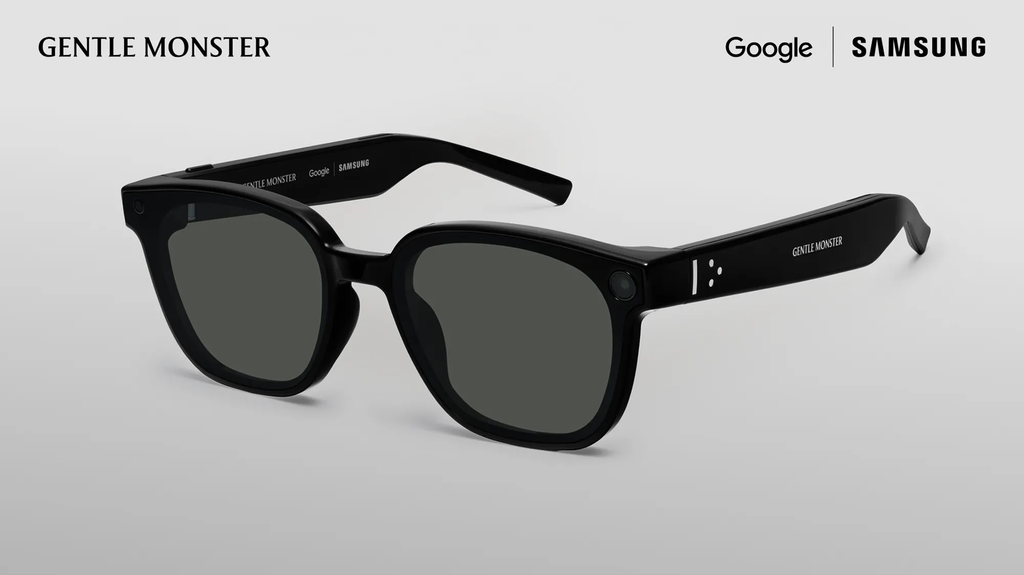
Google and Samsung have officially opened pre-orders for their long-awaited Intelligent Eyewear smart glasses, bringing everyday artificial intelligence straight to your face without the bulk of a heavy headset. Announced on November 12, 2026, the new wearable lineup is built in partnership with two major eyewear brands, Warby Parker and Gentle Monster, and starts at $395. General retail sales begin on December 10, 2026, giving tech fans and fashion lovers just weeks to decide if they are ready to wear Google Gemini on their daily commute.
For months, rumors swirled after Samsung leaked 41-gram smart glasses built to challenge Meta in the wearable race. Now the real hardware is finally here, and it looks remarkably like a normal pair of stylish eyeglasses or sunglasses. Instead of strapping a computer screen over your eyes, Google and Samsung are betting that lightweight frames, open-ear audio, a sharp camera, and real-time voice help are what regular people actually want to wear all day.
What Are Google and Samsung Intelligent Eyewear Smart Glasses?
Google and Samsung Intelligent Eyewear are lightweight, camera-and-audio smart glasses powered by Google Gemini and built on the Android XR platform. Weighing roughly 41 grams, they look and feel like everyday prescription frames or sunglasses while letting you take photos, listen to music, translate conversations, and ask your AI assistant questions about whatever you are looking at.
One very important detail to understand before buying is that these first-generation frames do not have a digital screen inside the lenses. You will not see floating text messages or video windows hovering in front of your eyes. Instead, everything works through voice commands, touch controls on the side of the frame, and private open-ear speakers that direct sound toward your ears. Google has already confirmed that smart glasses with built-in lens displays are coming later in 2027, making this 2026 release a direct competitor to the popular Ray-Ban Meta smart glasses.
When Samsung first unveiled its smart glasses features to challenge Meta, the company emphasized comfort and style above everything else. Nobody wants to walk into a coffee shop or a work meeting looking like a sci-fi robot. By handing the exterior frame design over to Warby Parker and Gentle Monster, Google and Samsung solved the biggest fashion headache in wearable tech. Across both brands, buyers can pick from nine core frame designs and 30 total color and lens variations.
The $0 Secret To Launching Your Entire Online Empire
Why pay hundreds every month for separate software? Build funnels, send emails, and make sales with Systeme.io completely free.
Get Started For $0Free Forever • No Credit Card Needed • Beginner-Friendly
Pricing, Frame Styles, and Where to Pre-Order
Pre-orders went live on November 12, 2026, through the official websites and select retail stores of Warby Parker and Gentle Monster. If you want to try a pair on before spending your money, live hands-on demo units are already set up at more than 360 Warby Parker stores across the United States, select Gentle Monster boutiques, and official Google Store locations.
Warby Parker Intelligent Eyewear Collection ($395 and Up)
Warby Parker is handling the classic, everyday side of the launch with three familiar frame shapes called the Alden, the Reid, and the Wren. Together, these three silhouettes come in 14 different finish and lens combinations.
Standard non-prescription models from Warby Parker start at $395, which undercuts several competing AI glasses on the market. If you need vision correction, Warby Parker supports single-vision prescription lenses starting at $495, while prescription sunglasses come in at $595. Shoppers can also pay $50 extra for a blue-light filtering coating or $60 for thinner 1.67 high-index lenses. Note that ultra-thin 1.74 high-index lenses are not offered because the frame temples house delicate microphones, speakers, and touch sensors that need specific structural support. You can explore the full frame options directly on the Warby Parker website or read the official Google Blog launch announcement for full ordering details.
Gentle Monster Intelligent Eyewear Collection ($449 to $489)
If you prefer bold, fashion-forward frames that make a statement, Gentle Monster is offering six distinct designs spread across 16 variations. The South Korean luxury eyewear label is known for oversized silhouettes and daring colors, and its Intelligent Eyewear lineup includes finishes in dark red, pink, gray, and yellow.
Prices for the Gentle Monster models range from $449 to $489 depending on the specific frame you choose. Most designs accept prescription lenses and can be paired with clear, tinted, brown, or blue lenses. You can view the entire fashion lineup on the Gentle Monster online store.
Release Date and Launch Regions
While pre-orders are active right now, the official release date is December 10, 2026. At launch, sales and account activation are restricted to the United States and South Korea. To set up and use the glasses, buyers must have a compatible Google Account registered in either the U.S. or South Korea, and the account holder must be at least 18 years old. Neither Google nor Samsung has shared an exact timeline for when the glasses will officially ship to Europe, Africa, or other international markets.
Hardware Specs, Camera Quality, and Battery Life
Fitting a smart assistant, camera, battery, and wireless radios into a 41-gram frame takes serious engineering. Under the hood, Samsung packed these glasses with Qualcomm’s Snapdragon AR1 Gen1 processor, 64GB of built-in storage, Bluetooth, and fast Wi-Fi 6E support including the 6 GHz band.
For capturing memories, the front corner of the frame houses a 12-megapixel ultra-wide camera. It shoots sharp photos and records video at up to 3K resolution at 30 frames per second or standard 1080p. Built-in HDR processing and electronic image stabilization keep your footage steady even when you are walking down a busy street or riding a bike.
Audio hardware gets just as much attention. Four directional microphones work together to pick up your voice clearly while filtering out background traffic and crowd noise. Those same mics also capture spatial audio when you record video clips. Meanwhile, tiny open-ear speakers built into the arms play music and Gemini’s spoken answers while minimizing sound leakage so people sitting next to you do not overhear your private messages.
Battery life is rated at up to nine hours on a single charge under typical mixed use. Every pair ships with a matching portable charging case—weighing about 166.8 grams for Warby Parker and 194.5 grams for Gentle Monster—that holds up to seven full extra recharges. That gives you up to 72 hours of total listening and AI time away from a wall outlet. Controlling playback is simple too: you can tap the side touchpad, use a double-pinch finger gesture, turn your wrist to go back, or even trigger Gemini with a palm-up double pinch if you wear a compatible Pixel Watch.
Everyday Gemini AI Features You Can Actually Use
Hardware only matters if the software makes your daily routine easier. Because Google Gemini has grown past 950 million monthly users, Google had plenty of real-world feedback when designing how the assistant behaves on your face.
Saying “Hey Gemini” wakes up the assistant without forcing you to reach into your pocket. Once active, the glasses can handle a wide mix of practical tasks:
- Visual Context and Object Recognition: Because Gemini can see through the 12-megapixel camera when you ask it a question, you can look at a foreign restaurant menu, a broken appliance part, or an unfamiliar landmark and ask what it is. Gemini explains what you are seeing in plain language right in your ear.
- Live Speech Translation: Traveling abroad becomes far less stressful thanks to real-time spoken translation across more than 70 languages. You hear the translated meaning directly through the frame speakers.
- Hands-Free Navigation and Schedules: Google Maps feeds turn-by-turn walking directions straight into your ear so you can keep your head up instead of staring down at a phone screen. You can also ask Gemini to summarize incoming notifications, reply to text messages, make phone calls, or add reminders to your calendar.
- Music, Podcasts, and Audiobooks: The frames double as everyday open-ear headphones with native support for YouTube Music, Spotify, Apple Music, and Audible. One neat trick lets you look at the page of a physical paperback book so Audible can sync your audiobook right to the exact line where you stopped reading.
- Accessibility Tools: Google included Guided Vision to help blind and low-vision users read small print, identify colors, and navigate rooms. Users can also say “Hey Gemini, open Aira Explorer” to stream a live camera feed to a trained human visual interpreter when they need extra help.
You can read more technical details about these features in the Samsung Newsroom official release.
Phone Compatibility: Do They Work With iPhones?
Yes, Google and Samsung Intelligent Eyewear work with both Android smartphones and Apple iPhones, though there are a few specific hardware and software requirements to check before placing a pre-order.
To pair the glasses with your phone using the companion app, you must own one of the following devices:
Send, Spend & Hold Money Worldwide Without Hidden Fees
Transfer money internationally at the real exchange rate and hold 40+ currencies in one account.
Open a Wise AccountMid-market rate • Fast transfers • 40+ currencies
- Google Pixel Phones: Pixel 7 series and newer models running at least the Android 17 September 2026 update.
- Samsung Galaxy Phones: Galaxy S series, Galaxy S FE models, and Galaxy Z Fold, Z Flip, or Fold Ultra devices running One UI 9.0 or higher. If you have not updated your Galaxy device yet, check out our guide on how Samsung dropped the Android 17 One UI 9 update.
- Apple iPhones: iPhone 13 and newer models equipped with at least 6GB of RAM (including iPhone 13 Pro and up) running iOS 26.6 or later.
Google has been working hard to bridge the gap between ecosystems—much like when Google brought Quick Share directly to iPhone and Android apps. Even so, iPhone owners should note a couple of launch limitations. At release, Guided Vision, Aira Explorer, and Audible integration work only when paired with a compatible Android phone. Core features like Gemini voice help, photo and video capture, calls, messages, and music streaming on Apple Music or Spotify work across both platforms.
How Google and Samsung Are Tackling Smart Glasses Privacy
Smart glasses have always carried a heavy trust problem. Over a decade ago, the original Google Glass failed largely because people felt uncomfortable sitting across from someone wearing a tiny face-mounted camera. More recently, privacy advocates have been up in arms as Meta floods the market with smart glasses, sparking heated debates over secret filming and data handling. In response to those fears, Meta even introduced no-camera smart glasses for people who want AI audio without a lens.
Google and Samsung decided to keep the camera on Intelligent Eyewear, but they built strict hardware and software rules around it to reassure both wearers and bystanders:
- Tamper-Resistant Recording Light: Whenever you snap a photo or shoot a video, a bright outward-facing LED light turns on so people nearby know the camera is active. If someone tries to cover the light with tape or block it with a finger, built-in sensors detect the interference and immediately stop the camera from recording.
- Automatic Face Redaction: When you ask Gemini a visual question about your surroundings, the glasses automatically blur out the faces of bystanders in the frame before sending the image to Gemini for processing. That rule is so strict that if you walk past a mirror while asking Gemini a question, the system even blurs your own face.
- No AI Training on Camera Visuals: Google states that the visual snapshots Gemini processes through your glasses are encrypted in transit, are never saved to your Gemini History, and are not used to train AI models or target advertisements.
- Physical Off Switch and Wear Detection: Every frame includes a physical power switch so you can shut the electronics off completely and wear them as regular glasses. Built-in wear detection also turns off the camera automatically the moment you take the glasses off your face.
- Strict App and User Rules: During setup, owners must agree not to film people without consent or record in sensitive locations like locker rooms. Google also bans Play Store apps from using the glasses camera for live social media streaming or real-time facial recognition. Breaking these rules can result in Google remotely disabling the smart features on the frames.
You can review the complete list of safeguards on the Google Security and Privacy Blog.
Should You Pre-Order Now or Wait?
Deciding if you should spend $395 to $489 on pre-order day comes down to what you expect from wearable tech.
You should consider pre-ordering now if:
- You already wear prescription glasses or sunglasses every day and want hands-free audio, calls, and AI help without carrying earbuds everywhere.
- You travel frequently and want live spoken translation and turn-by-turn walking directions without constantly looking down at your phone.
- You love the styling of Warby Parker or Gentle Monster and want smart glasses that actually look like high-end eyewear rather than bulky gadgets.
You should probably wait if:
- You want true augmented reality with digital text, maps, or notifications floating inside the lenses. Google has already confirmed display-equipped models are arriving in 2027, so waiting a year will get you a screen.
- You live outside the United States or South Korea, since international account activation is not supported at launch.
- You are deeply invested in Apple’s ecosystem and want to see how Apple enters the smart glasses war to beat Meta and Samsung before committing your cash.
Frequently Asked Questions About Google and Samsung Intelligent Eyewear
How much do Google and Samsung Intelligent Eyewear cost?
Warby Parker Intelligent Eyewear frames start at $395 for non-prescription lenses, $495 with single-vision prescription lenses, and $595 for prescription sunglasses. Gentle Monster Intelligent Eyewear models range from $449 to $489 depending on the frame design.
When do Google and Samsung smart glasses come out?
Pre-orders opened on November 12, 2026. General availability in retail stores and online begins on December 10, 2026.
Do Google and Samsung Intelligent Eyewear have a screen in the lenses?
No. The first-generation Intelligent Eyewear lineup relies entirely on open-ear speakers, microphones, and a 12-megapixel camera. Google has stated that smart glasses with built-in lens displays are scheduled to launch in 2027.
The $0 Secret To Launching Your Entire Online Empire
Why pay hundreds every month for separate software? Build funnels, send emails, and make sales with Systeme.io completely free.
Get Started For $0Free Forever • No Credit Card Needed • Beginner-Friendly
Can you use Google and Samsung smart glasses with an iPhone?
Yes. The glasses work with iPhone 13 and newer models that have at least 6GB of RAM and run iOS 26.6 or later. However, certain features like Guided Vision, Aira Explorer, and Audible require a compatible Android phone at launch.
Can you put prescription lenses in Intelligent Eyewear?
Yes. Both Warby Parker and Gentle Monster offer prescription lens options for most of their Intelligent Eyewear frames, along with clear, tinted, and blue-light filtering choices.
Which countries can buy Intelligent Eyewear at launch?
At launch on December 10, 2026, the glasses are only available in the United States and South Korea, and they require a valid 18+ Google Account registered in one of those two countries.
Final Thoughts
Google and Samsung have finally turned their years of Android XR promises into real, wearable hardware you can actually buy. By teaming up with Warby Parker and Gentle Monster, keeping the weight down to a comfortable 41 grams, and building serious bystander privacy protections directly into the frames, they have created the strongest rival yet to Meta’s smart glasses dominance. While the lack of an in-lens display and the U.S.-and-South-Korea launch limit will hold some buyers back, December 10 marks a huge step forward for everyday AI wearables.
